Last updated November 2026: Mount Etna is one of Europe's tallest active volcanoes, rising above Catania on Sicily's east coast. Routes up range from a cable car ride to a six-hour guided trek, with a quieter north side as the alternative. Use this guide to match an option to your time, budget and fitness.
Featured image: Cayambe, CC BY 4.0, via Wikimedia Commons.
Mount Etna at a Glance
Etna sits in the Metropolitan City of Catania, between Catania and Messina on Sicily's east coast. UNESCO inscribed the volcano as a World Heritage Site in 2013 (listing 1427). Published summit heights run from 3,327 m to 3,403 m, or roughly 10,915 to 11,165 ft. Eruptions add and remove rock at the summit, so no single figure stays fixed. INGV's Catania observatory publishes current bulletins and height data. If you are weighing Etna against Tenerife's volcano, our Teide vs Etna comparison sets the two summits side by side.
| Fact | Detail |
|---|---|
| Location | Metropolitan City of Catania, Sicily, Italy |
| Status | Active volcano with frequent summit and flank eruptions |
| UNESCO listing | World Heritage Site since 2013, listing 1427 |
| Summit height | Published figures from 3,327 m to 3,403 m; it changes with eruptions |
| Cable car top station | About 2,500 m |
| Main access points | South: Rifugio Sapienza. North: Piano Provenzana |
Is Mount Etna Active and Safe to Visit Right Now?
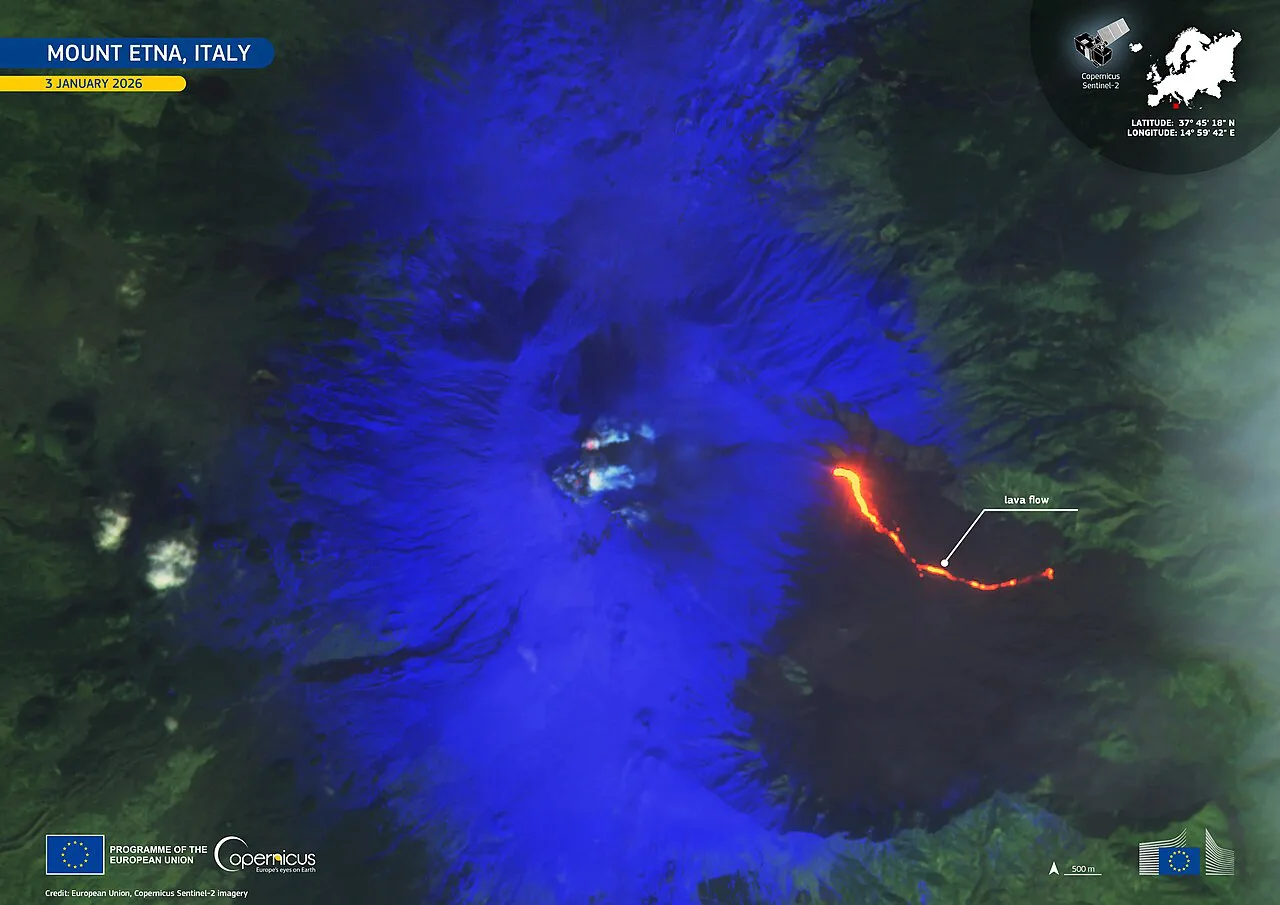
Yes, Etna is active, and it erupted again in 2026. Summit activity is normal here and rarely threatens villages. Flank eruptions differ, because vents can open a few hundred metres above sea level near towns. Visitors are rarely at risk, though two tourists died near the summit in 1987 after a sudden explosion. Authorities set which upper zones are open, and those limits shift with activity. Rules and zones are posted by the Parco dell'Etna authority. Our activity explainer goes deeper on current status. Past events are covered in the eruption record. Live conditions show on the Etna webcam. If the summit is closed, the Alcantara canyon, a wine tour and the Circumetnea trains are the usual fallbacks.
12 Best Things to Do on Mount Etna
Prices and hours checked November 2026. Prices below are per-person "from" figures quoted by operators, and they shift with season. Entries run from easy lower-slope stops to a full summit trek.
1. Cable Car and 4x4 to the Upper Craters
The Funivia runs up from the Sapienza base on the south side, which sits at about 2,000 m, and reaches roughly 2,500 m (about 8,200 ft). Operators quote €30 per person for that ride. Unimog 4x4 buses continue to about 3,000 m for a closer look at the upper zone, where authorities allow it.
Plan a half day, and pack a windproof layer, because the upper station is far colder than Catania. Our cable car options guide covers the ride in detail. Skip it if cloud is forecast, since views vanish and the upper leg may be cut.
2. Guided Summit Trek
A guided trek is the way to stand highest on the volcano, up to about 3,350 m. Operators list the full tour at about six hours, rated moderate, from €140. The climb itself can take up to five hours of walking. A guide is required for the upper zone, and the authorities decide which craters are open on the day.
Our summit hike guide covers the route. Read our summit crater notes for what you can see at the top. Skip it with a bad knee or without sturdy boots, since a long ascent punishes weak footwear.
3. Silvestri Craters
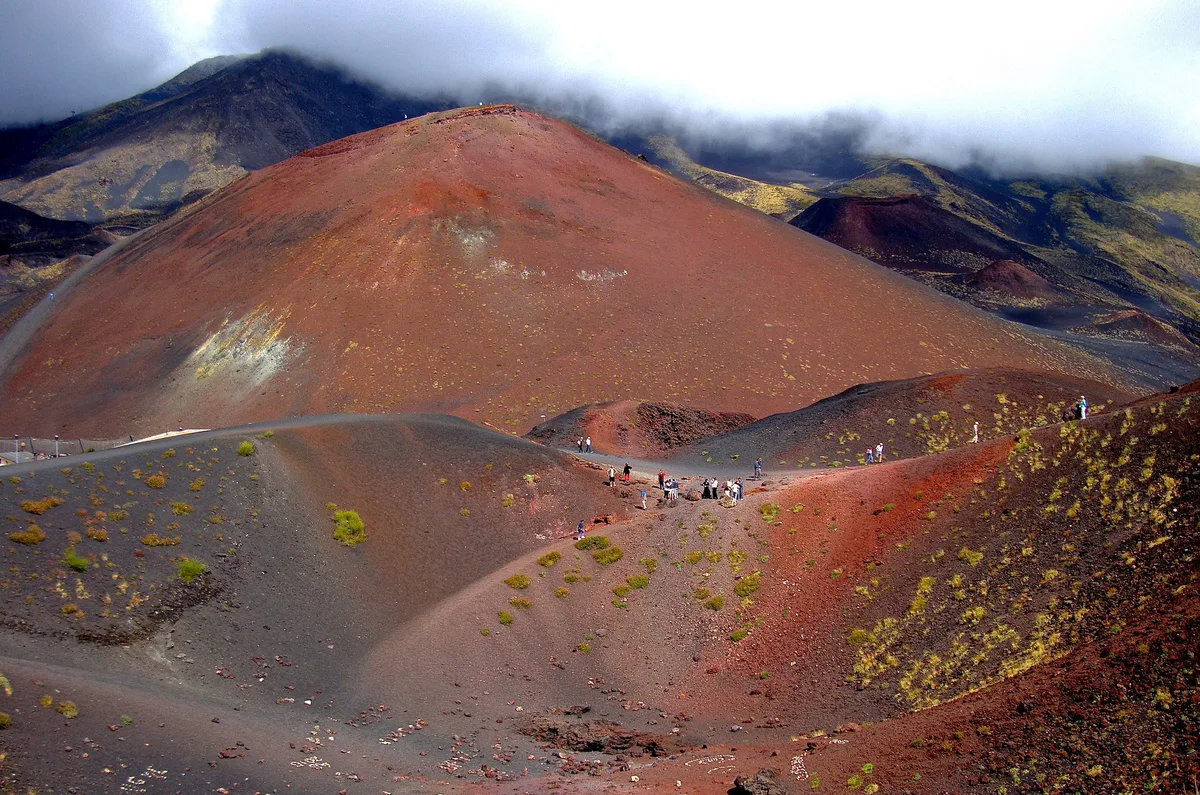
The Silvestri cones on the south side make a lower-slope walk that you can do without a guide. Expect volcanic ground underfoot, strong wind and little shade. The park's trail maps give difficulty ratings for each path, so pick one that matches your fitness.
Dress as for the summit: windproof jacket and closed shoes, even in summer. Our guide to the Silvestri cones covers access and timing. Skip them if you want summit-level altitude, because they stay on the lower slopes.
4. Valle del Bove
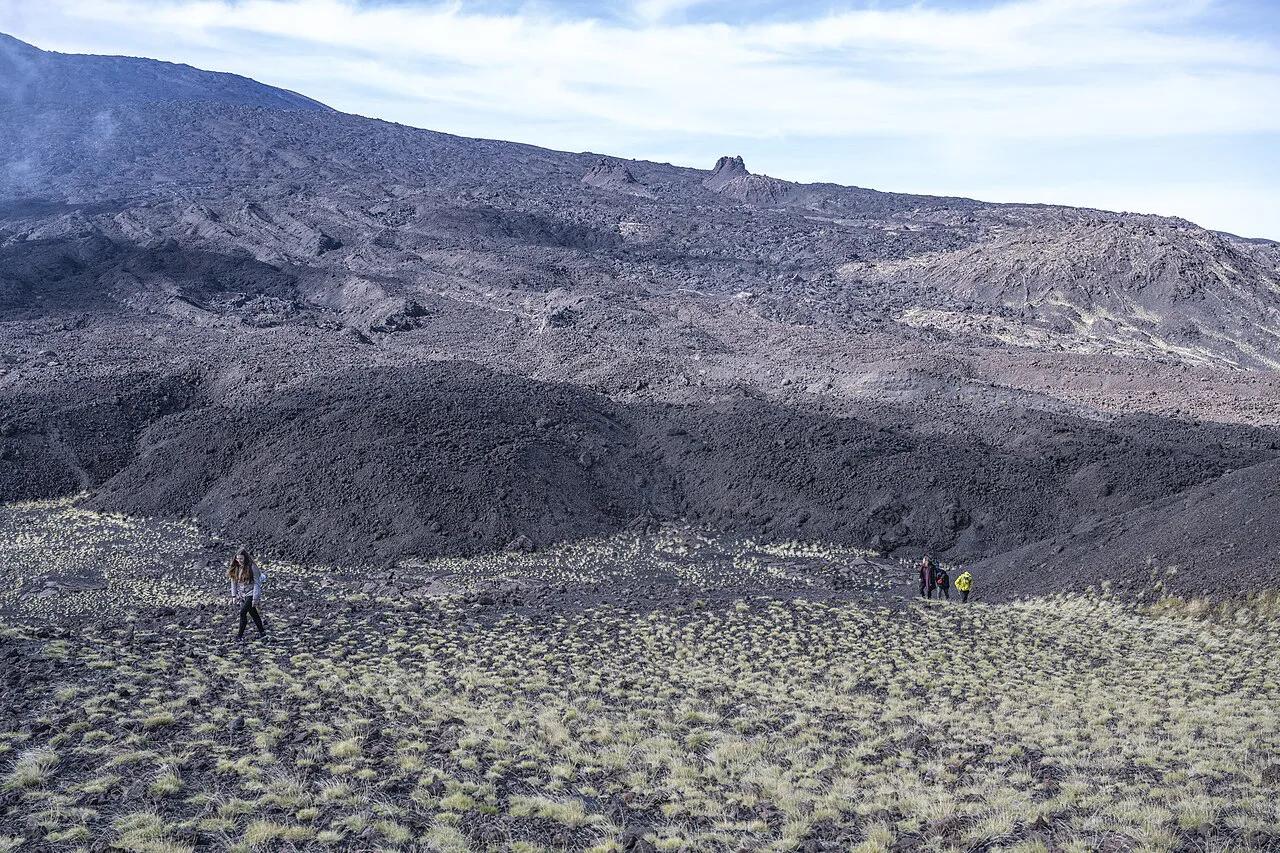
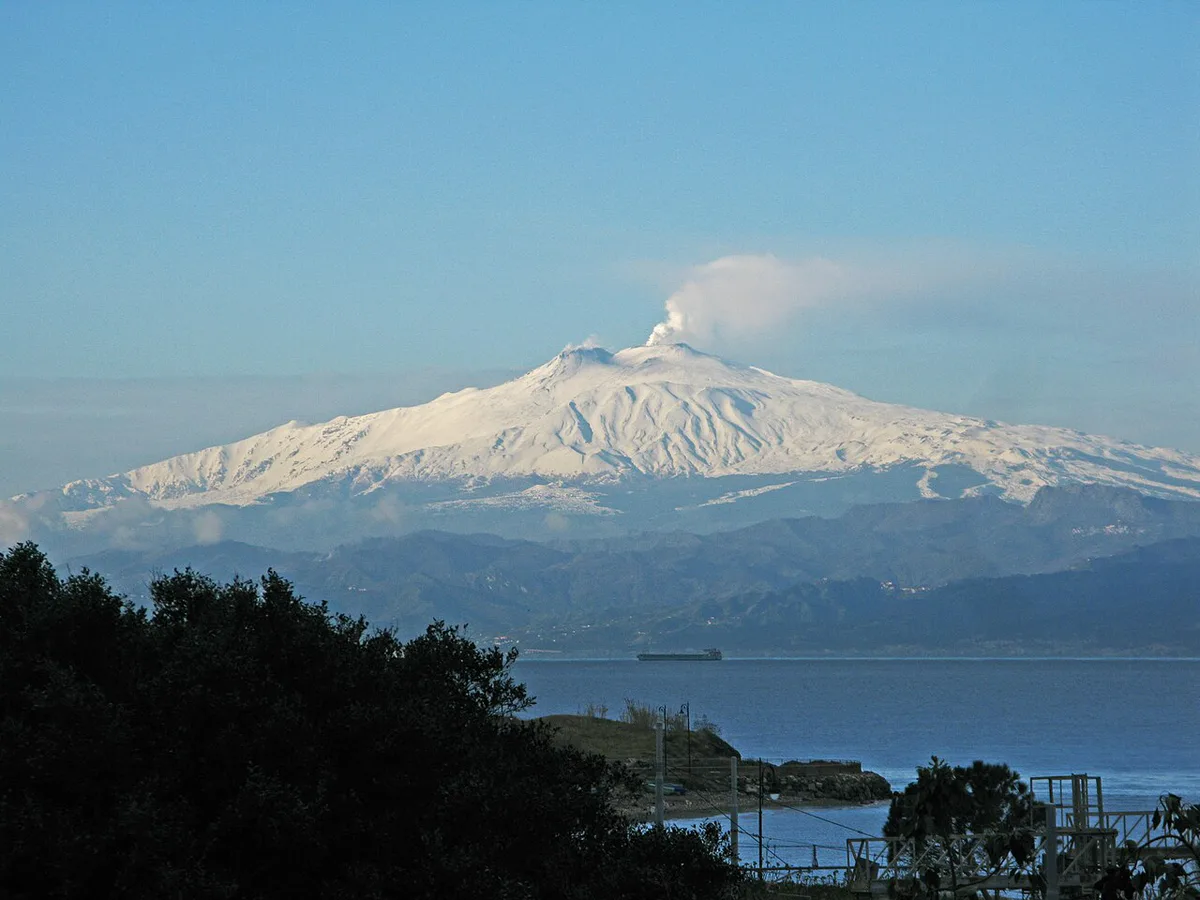
Valle del Bove is a vast depression on the eastern flank, left when part of the volcano's side collapsed. Its steep walls expose layers that record Etna's eruptive history. Operators run a guided hike here from the cable car's upper station, and it is more strenuous than the 4x4 option.
Published ages for the collapse differ widely, so treat any single date as approximate. Our guide to the valley explains the viewpoints. Skip it if uneven ground and a long day on foot do not appeal.
5. Grotta dei Lamponi and Lava Caves
Lava caves are tunnels left by flowing lava, and Grotta dei Lamponi dei Ladroni is among the best known. Visits are accompanied by expert speleological guides. Grotta del Gelo, another famous cave, holds the southernmost glacier in Europe.
Our Lamponi lava cave visit page covers what to expect. A cave trip suits visitors who want an underground alternative when the summit is cloudy. Skip it if tight spaces or uneven footing worry you.
6. Piano Provenzana and the North Side
Piano Provenzana is the north-side ski area, grouped with Linguaglossa, and the Mareneve road leads to it. Operators run a six-hour Etna Nord top crater tour, rated easy, from €89. In winter, ski lifts serve red and blue slopes, and Nordic trails also run here.
The north side suits visitors who want a different approach to the craters than the south. Skip it if you rely on the AST bus from Catania, because the route operators describe ends at Sapienza on the south side.
7. Jeep Tour
A jeep tour covers the mountain by 4x4 with a guide, and operators rate it easy. Operators list these tours at 5 to 8 hours, from €75 per person, in small groups. Private versions exist, with the price on request. Itineraries vary by operator, so compare stops before booking.
Our jeep tour guide compares the main routes. It suits first-timers who want a guide without a long hike. Skip it if you want to walk to the summit.
8. Sunset 4x4 Tour
Sunset tours run the 4x4 route late in the day for evening light over the slopes. Operators list them at 5 to 8 hours, from €75, in small groups. Temperatures drop sharply after sundown, so bring gloves and a hat.
Our sunset tour guide explains timing and what to wear. Skip it if you dislike returning in the dark or if cloud is forecast.
9. Helicopter and Eruption Flights
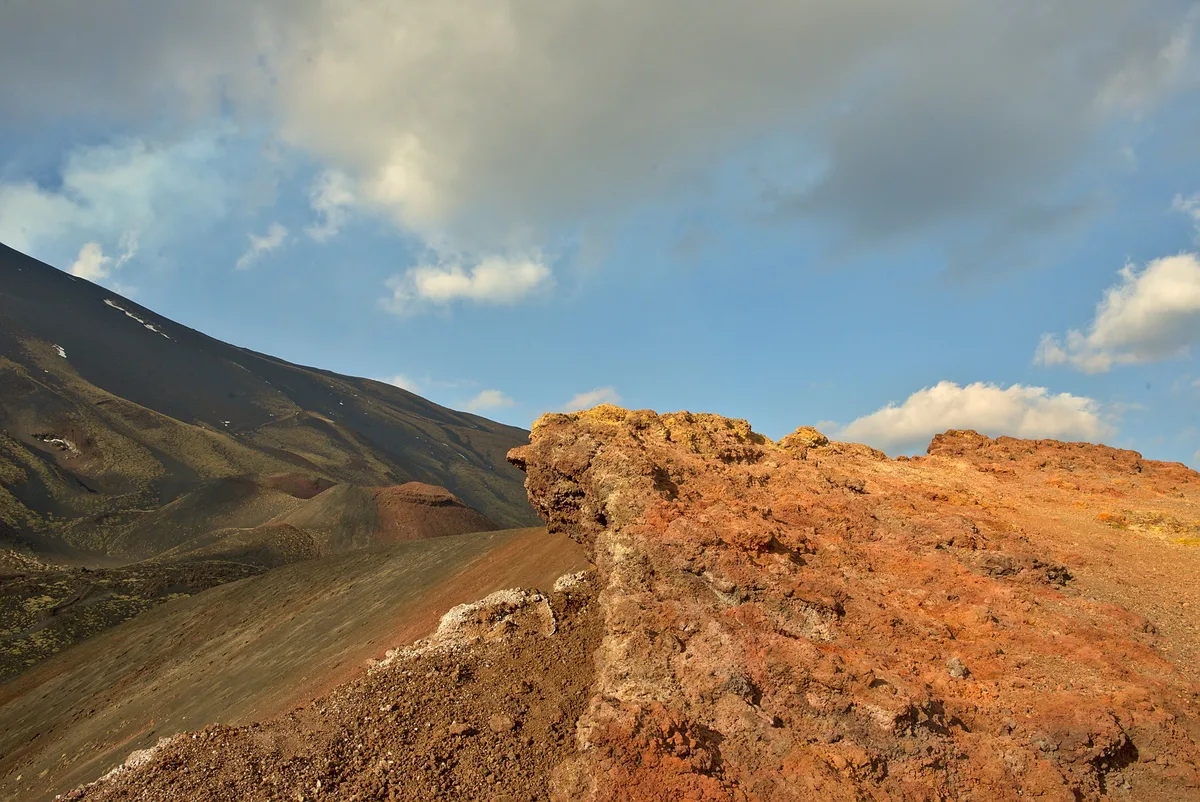
Helicopter flights show the craters and lava fields from above, which no trail offers. Operators describe the flight as a unique way to see the volcano. Our helicopter flight guide explains what to expect. Eruption trips depend on activity, so dates stay flexible.
See eruption flight options for trips when the volcano is active. Prices vary by operator and are not fixed here, so request quotes. Skip these on a tight budget.
10. Etna Wine Tour
Etna wine tours pair a 4x4 ride with tastings in local cellars on the fertile lower slopes. Operators list the full wine tour at about eight hours, rated easy, from €173. Etna wine holds PDO status, and cellars serve it with local food.
Bronte pistachios, also a PDO product, grow on the north-western side. A wine day is a solid choice when cloud hides the summit. Skip it if you want altitude, since the day focuses on the lower slopes.
11. Alcantara Gorge
The Alcantara river runs north of the volcano, and its gorge was carved by an ancient lava flow. The Parco Fluviale dell'Alcantara covers the river corridor. Operators add the gorge to Etna day trips as a lower-altitude stop.
Our canyon guide covers access. It makes a reliable fallback when the summit is closed or in cloud. Skip it if craters and altitude are your goal.
12. Circumetnea Railway
Circumetnea trains run from Catania Borgo Station to Riposto along the lower slopes. Rail suits slow travel and needs no guide. Cyclists can bring a bike on the Two-Wheeled Train, according to regional tourism listings.
Our Circumetnea rail guide covers the line. Check the current timetable with Circumetnea before you plan around a departure. Skip it if you want to see craters, because the railway is about landscape, not altitude.
Which Way to Visit? Options Compared
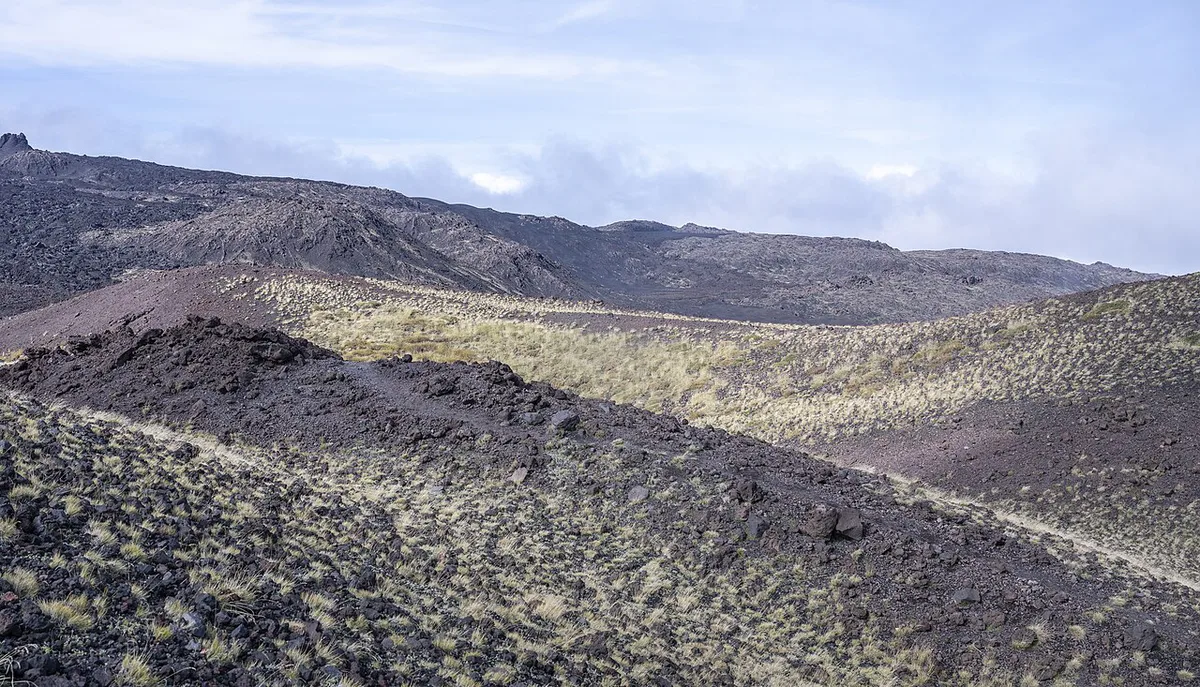
Choose by access level first, then by budget and fitness. First-timers get the most from the cable car and 4x4 combination. Families can start with a jeep tour, which operators rate easy. Cruise passengers need a tour built around a five-hour window. Hikers should book the guided summit trek, which operators rate moderate. Wine lovers can add tasting to a jeep ride or book the eight-hour wine tour. Winter visitors should look at north-side skiing and snowshoe hikes.
| Option | Time needed | Indicative cost | Fitness | Guide required | Best for |
|---|---|---|---|---|---|
| Independent lower-slope walk | Half day | Check current parking and transport costs | Easy to moderate | No | Self-planners |
| Public bus from Catania | Full day | Check the current AST fare | Easy | No | Budget travelers |
| Cable car plus 4x4 | Half day | €30 for the cable car to 2,500 m; check the 4x4 price | Easy | Upper zones follow authority rules | First-timers |
| Guided summit trek | About 6 hours | From €140 | Moderate | Yes | Hikers |
| Jeep tour | 5 to 8 hours | From €75 | Easy | Included | Families |
| Wine tour | About 8 hours | From €173 | Easy | Included | Wine lovers |
| Cruise-port excursion | About 5 hours | From €90 | Easy | Included | Cruise passengers |
South Side vs North Side
South and north offer different Etnas. Southern access runs along the SP92 road to the Sapienza refuge area, about 2,000 m above sea level. Nicolosi is the village below, and the cable car to 2,500 m starts at Sapienza. Northern access follows the Mareneve road to the Provenzana ski plateau. Skiers find lifts, ski schools and rental shops there. For a full side-by-side, read our north versus south comparison.
| Feature | South side | North side |
|---|---|---|
| Road | SP92 | Mareneve road |
| Base | Rifugio Sapienza, about 2,000 m | Piano Provenzana |
| Nearby town | Nicolosi | Linguaglossa |
| Lifts | Cable car to 2,500 m, then 4x4 to about 3,000 m | Ski lifts in winter |
| Winter | Nordic trails at Piano Vetore | Red and blue slopes, ski schools |
| Tour option | Cable car, jeep, summit trek | Etna Nord top crater tour, 6 hours, from €89 |
When to Go: Season, Weather and What to Wear
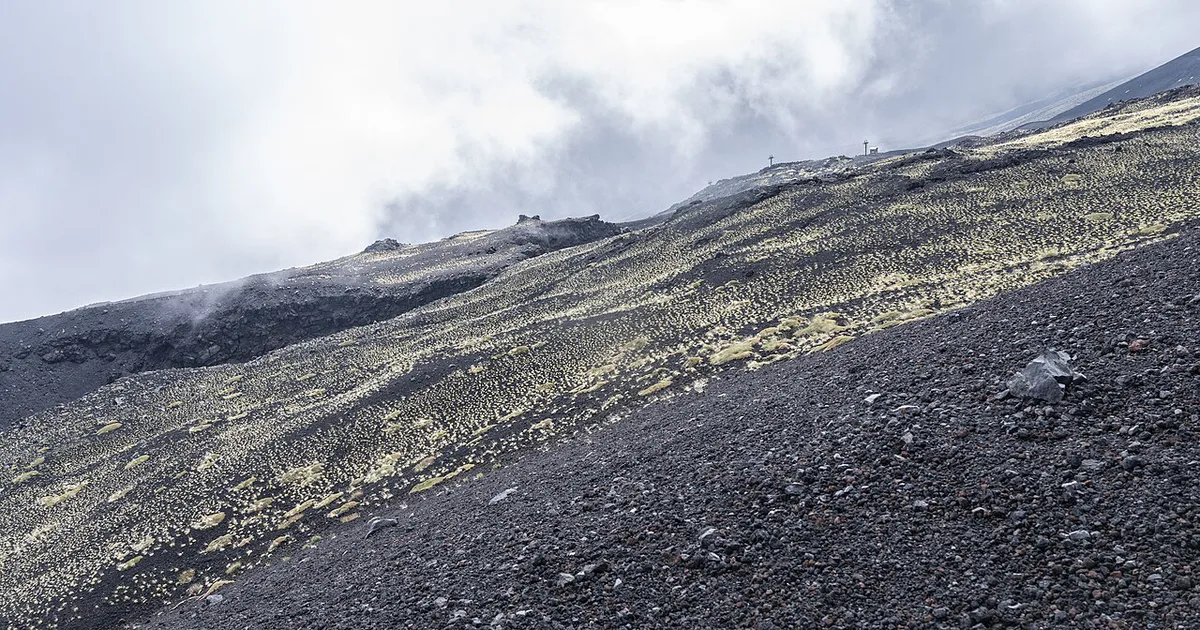
Etna can be visited year-round, and hikes run best from March to September. Operators name May and late September to October as the best months. July and August bring the heaviest crowds. Average temperature on the mountain is about 10°C, and July averages 22°C. January and the other winter months can drop below freezing. Summit zones add wind, so pack a windproof jacket even in July. Closed shoes are the minimum footwear. From December to March, add gloves, a hat and a scarf. Seasonal detail is in our month-by-month guide. Forecasts are covered on the weather page. Winter sports are covered in our ski guide.
How to Get to Mount Etna
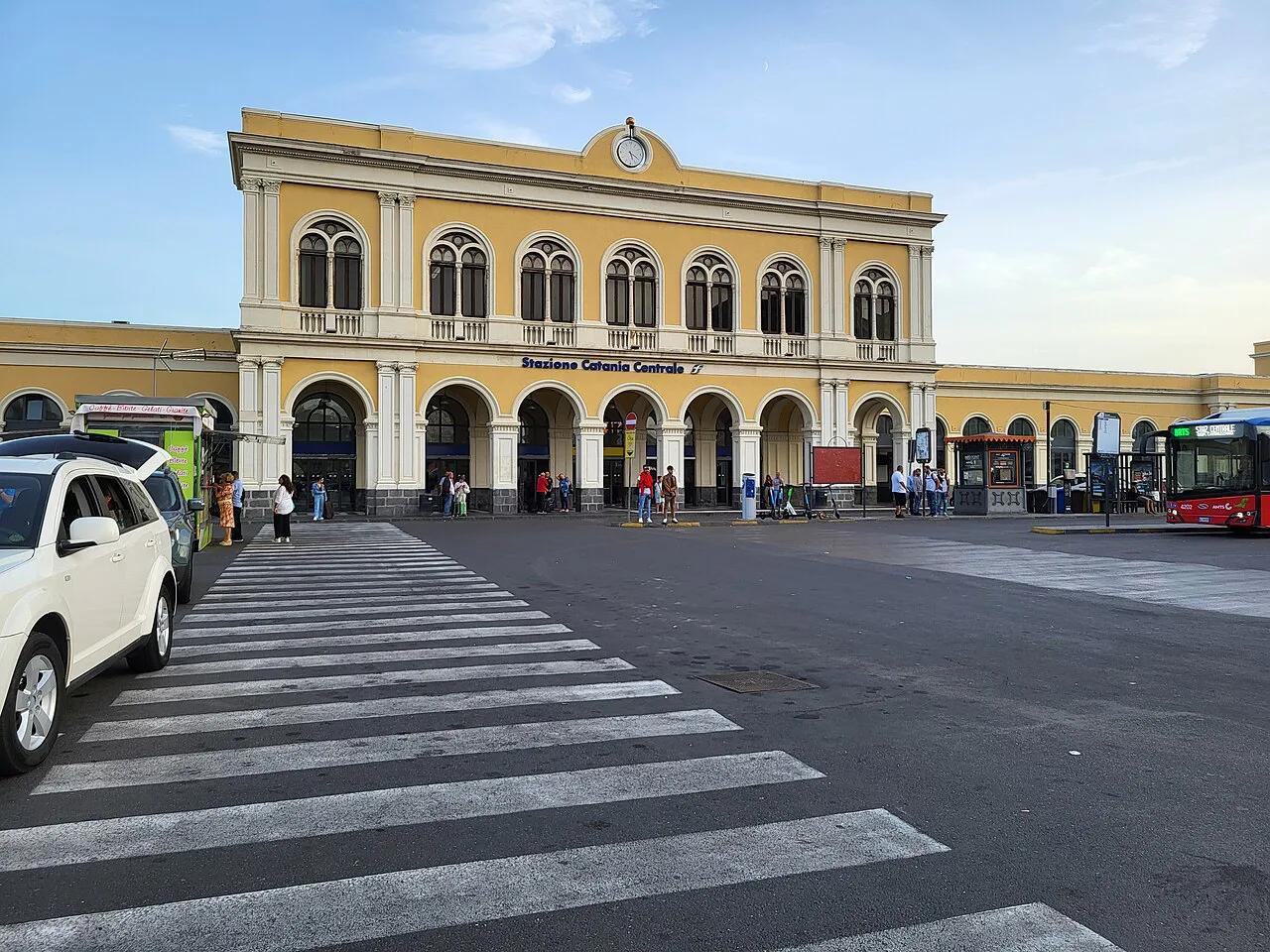
Catania is the easiest starting point for public transport. AST buses leave from the lot nearest Catania's train station, stop at Nicolosi and reach Sapienza at about 2,000 m. Operators have listed an 08:15 departure and a 16:30 return, arriving back in Catania around 18:00. Confirm times with AST, because a missed last bus strands you on the mountain. Drivers take the SP92 to Sapienza or the Mareneve road to Piano Provenzana. Private transfers and tours with hotel pickup avoid the timetable risk. From Taormina, take the train to Catania and change to the bus, or join a tour with pickup. Palermo travelers can take a SAIS Autolinee bus to Catania, then continue as above. Our Palermo route guide has the detail. Syracuse visitors can use our Syracuse route notes. Cruise passengers can book a five-hour excursion from Catania port from €90. Start with our Catania transport guide for the full comparison.
Operators list a 16:30 return, so a missed last bus leaves you stranded on the mountain.
Costs, Tickets and Opening Hours
A cable car ticket to 2,500 m costs €30 per person, based on operator listings. Unimog 4x4 buses continue from there to about 3,000 m at a separate price. Funivia dell'Etna lists current prices, hours and closures. Guided tours range from €75 for a jeep ride to €173 for the eight-hour wine tour. Above the cable car, access depends on paid transport or a guide, so cost buys altitude. Compare departures on our tour roundup before booking. Parking and 4x4 fees vary, so ask the operator at booking.
Ticket to 2,500 m costs €30, while the guided trek to about 3,350 m starts at €140.
| Item | Indicative price |
|---|---|
| Cable car to 2,500 m | €30 per person |
| Jeep tour (5 to 8 hours) | From €75 |
| Sunset 4x4 tour (5 to 8 hours) | From €75 |
| North-side top crater tour (6 hours) | From €89 |
| Cruise-port excursion (5 hours) | From €90 |
| Guided summit trek (6 hours) | From €140 |
| 3,000 m tour (8 hours) | From €155 |
| Wine tour (8 hours) | From €173 |
Where to Stay Near Mount Etna
Staying in Nicolosi puts you on the AST bus route to Sapienza. Zafferana Etnea's lodging options suit slower trips, and the town is known for honey and for the 1991 to 1993 lava threat. Linguaglossa's northern base serves the Provenzana ski area. Catania and Taormina suit travelers who book tours with pickup. Early starts matter: the bus from Catania reaches Sapienza after a two-hour ride on operator timings. Browse hotels near the volcano by side before you book.
A Short History: Eruptions and Why Etna Matters
Etna's best-documented disaster began on 11 March 1669. Lava destroyed at least 10 villages and reached Catania's walls five weeks later, on 15 April. Contemporary accounts record no deaths, despite later claims of 15,000. Read more in our 1669 eruption account. In 1928 lava destroyed most of Mascali, the first loss of a town since 1669. Lava in 1971 buried the observatory and the first cable car. At Zafferana Etnea, engineers diverted the 1991 to 1993 flow with an explosion on 23 May 1992. Flow behaviour is explained in our lava flow guide. Eruptions in January and August 2026 show the activity continues. Geologists classify Etna as a stratovolcano, and our volcano-type explainer covers the details. Quick figures live on our facts page. Vesuvius, the next largest Italian volcano, stands well below it; see our Vesuvius comparison. Locals call it Muncibbeḍḍu in Sicilian and Mongibello in Italian. Myth placed the forge of Hephaestus, or Vulcan, beneath it.
Common Mistakes to Avoid
Most problems on Etna come down to cold, timing and closed zones. Use this table to avoid the usual ones.
| Mistake | Better approach |
|---|---|
| Wearing sandals or thin trainers | Wear closed shoes at minimum, and boots for a trek |
| Skipping a wind layer | Carry a windproof jacket even in July |
| Missing the last bus | Check the AST return time, or book a tour with pickup |
| Assuming the summit is open | Check INGV bulletins and the operator, since authorities set the zones |
| Booking a cloudy day with no fallback | Keep a wine tour, the Alcantara canyon or a rail trip in reserve |
| Ignoring guide-only zones | Book a guide for anything above the authorized area |
Frequently Asked Questions
Is Mount Etna still erupting now?
Etna erupted in January and August 2026 and stays under constant watch. For today's status, read the latest INGV Catania bulletin before you travel.
How many people died when Mount Etna erupted?
Only 77 deaths are attributable with certainty to Etna eruptions in recorded history. The 1987 explosion that killed two tourists near the summit is the most recent. Reports of 15,000 deaths in 1669 are not supported by contemporary accounts.
Is Mount Etna in Sicily or Italy?
Both: it rises in the Metropolitan City of Catania on Sicily's east coast, and Sicily is part of Italy.
Is Mount Etna always erupting?
Etna is in an almost constant state of activity, though not every day brings a visible eruption. Most episodes are summit events that rarely threaten villages.
Explore More Guides
Keep planning your trip with these guides.
Guides
- Mount Etna Tours: Which One to Book (Catania & Taormina)
- Mount Etna Eruptions: What Visitors Need to Know
- Mount Etna Weather: Altitude, Seasons & What to Pack
- Mount Etna Webcam: Which Live Camera to Watch
- Mount Etna Hike: Routes, Guides, Costs & Access
- Alcantara Gorge Guide
- What Type of Volcano Is Mount Etna? Stratovolcano Explained
- Mount Etna Facts: Height, Age, Eruptions & Safety
- Nicolosi, Sicily
- Rifugio Sapienza, Etna
- Is Mount Etna Active? Current Status & What It Means for Your Trip
- Linguaglossa, Sicily
- Zafferana Etnea Guide
- Mount Etna Map: Sides, Roads, Trails & Access Points
- Mount Etna Cable Car: Tickets, Hours & Tips
- Valle del Bove, Etna
- Mount Etna Skiing: North vs South, Season and Costs
- Piano Provenzana: Etna North Side Access and Seasons
- Silvestri Craters, Etna
- Mount Etna Summit
- Catania to Mount Etna: Bus, Car, Tour or Taxi
- Mount Etna Lava
- Mount Etna 1669 Eruption: What Happened and Where to See the Lava Today
- Mount Etna From Palermo: Day Trip, Tours & Transport
- Hotels Near Mount Etna: Best Areas to Stay by Side & Trip Type
- Grotta dei Lamponi, Etna
- Mount Etna Jeep Tour: Types, Routes, Costs & What to Expect
- Circumetnea Railway: Route, Current Service Status & Tickets (2026 Guide)
- Etna vs Vesuvius: Which Volcano to Visit in Italy
- Mount Etna Helicopter Tour: Types, Cost & Tips
- Mount Etna Sunset Tour: What to Expect and How to Choose
- Monti Rossi, Etna
- Best Time to Visit Mount Etna: Month-by-Month Guide
- Mount Etna From Syracuse: Routes and Which to Pick
- Etna North vs South Side: Which to Visit (2026 Guide)
- Mount Etna Eruption Flights: If Catania Airport Closes