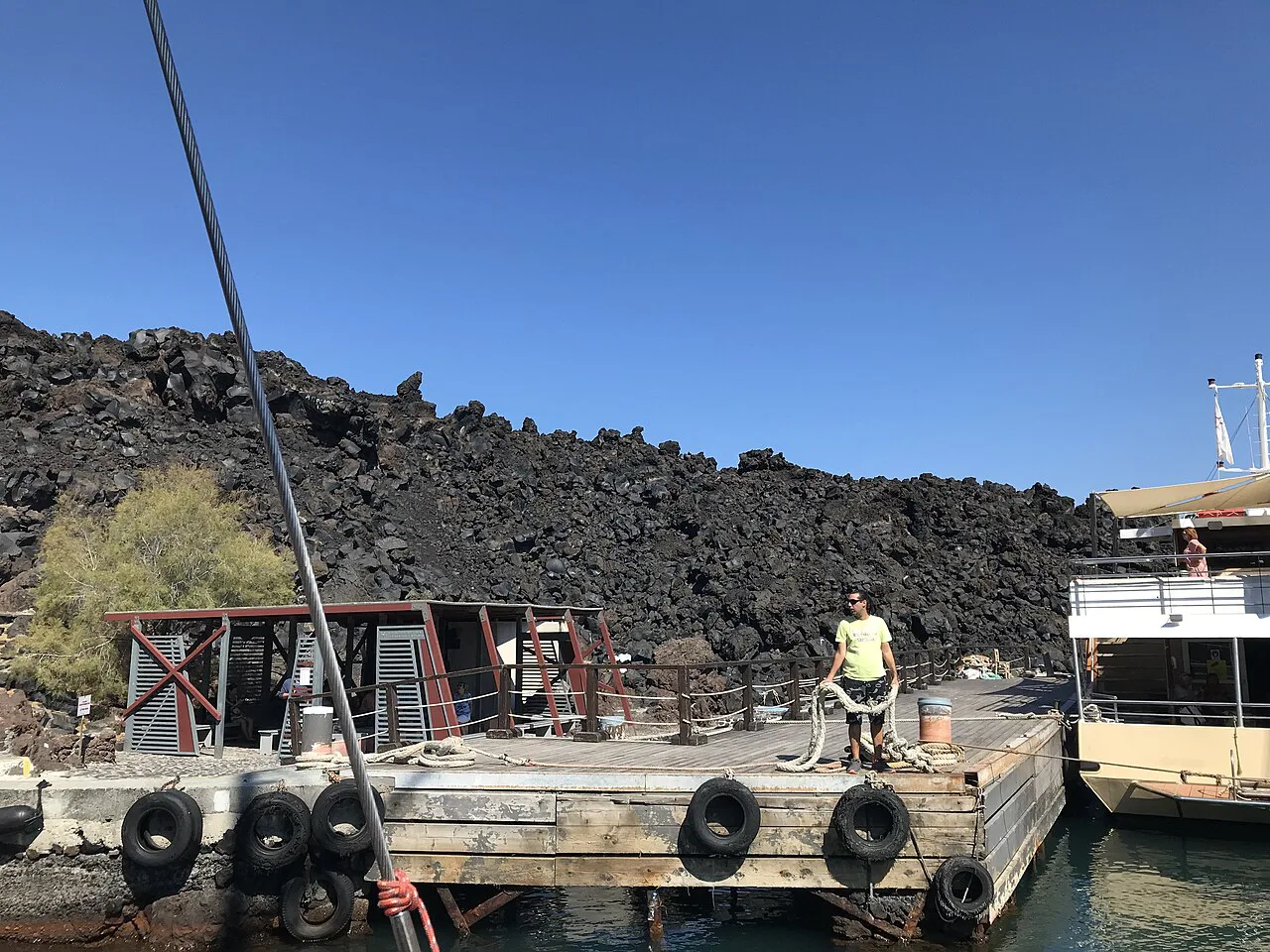
Last updated November 2026: the Santorini volcano is a flooded caldera about 12 by 7 km in the southern Aegean, not a single cone. Nea Kameni, a young lava island at its center, is the part you can walk on, and boats reach it and neighboring Palea Kameni. Below you will find what you see, what the 2024–2025 unrest means for a trip, and five ways to see the volcano.
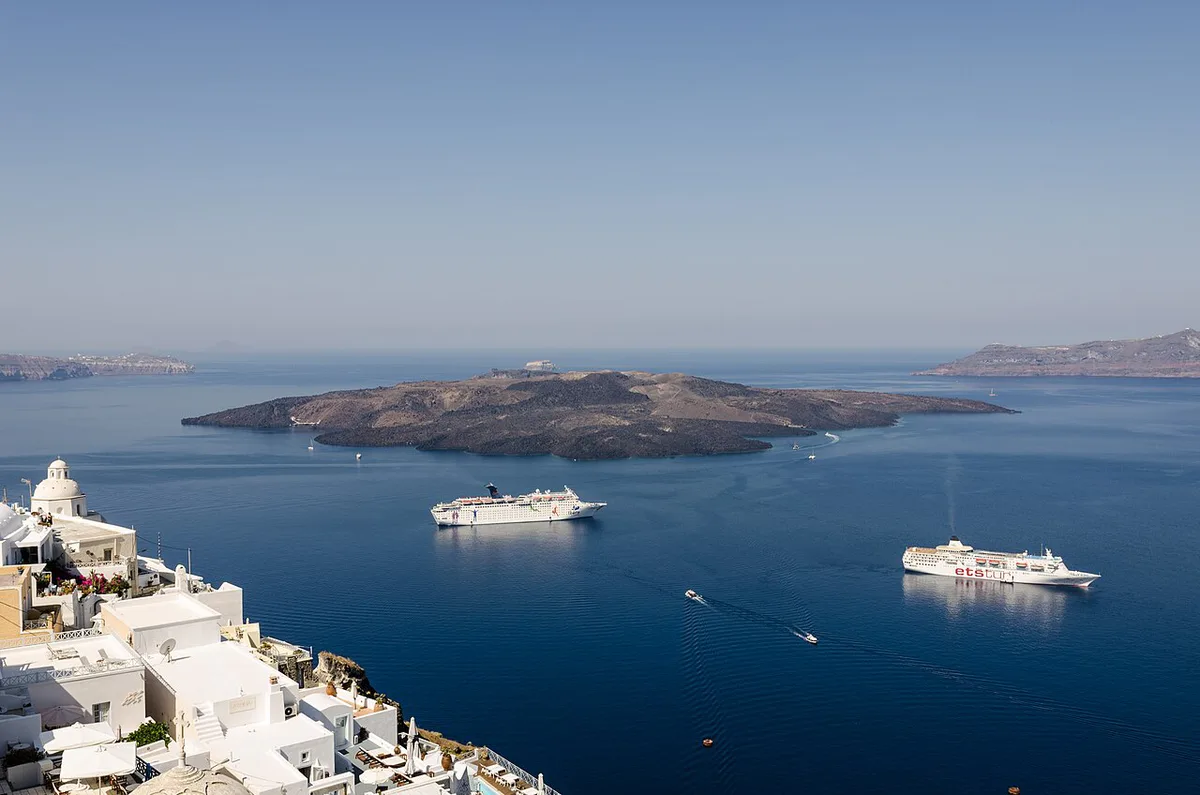
Featured image: Zde, CC BY-SA 4.0, via Wikimedia Commons.
Where the Santorini Volcano Is: Caldera, Islets and Seabed
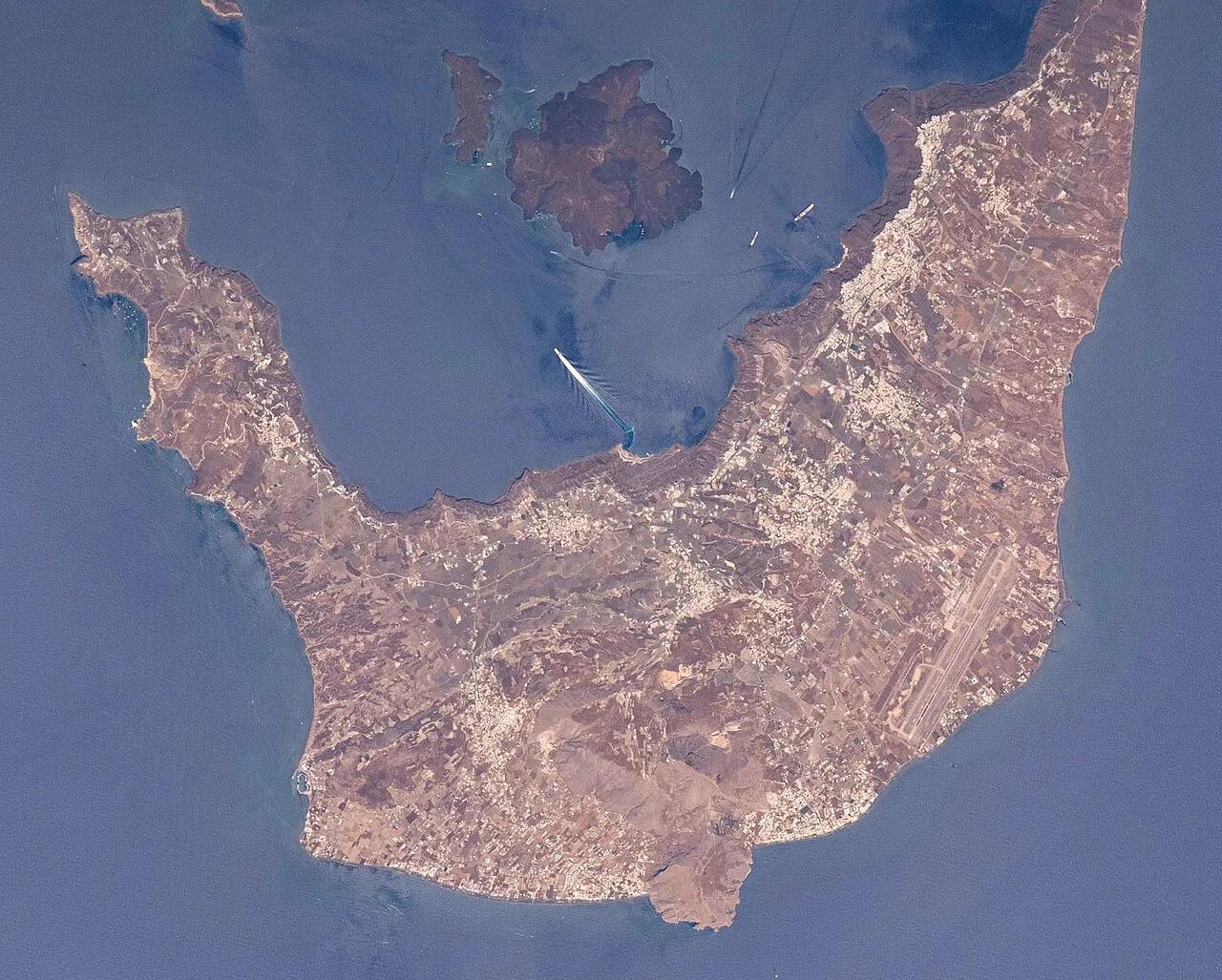
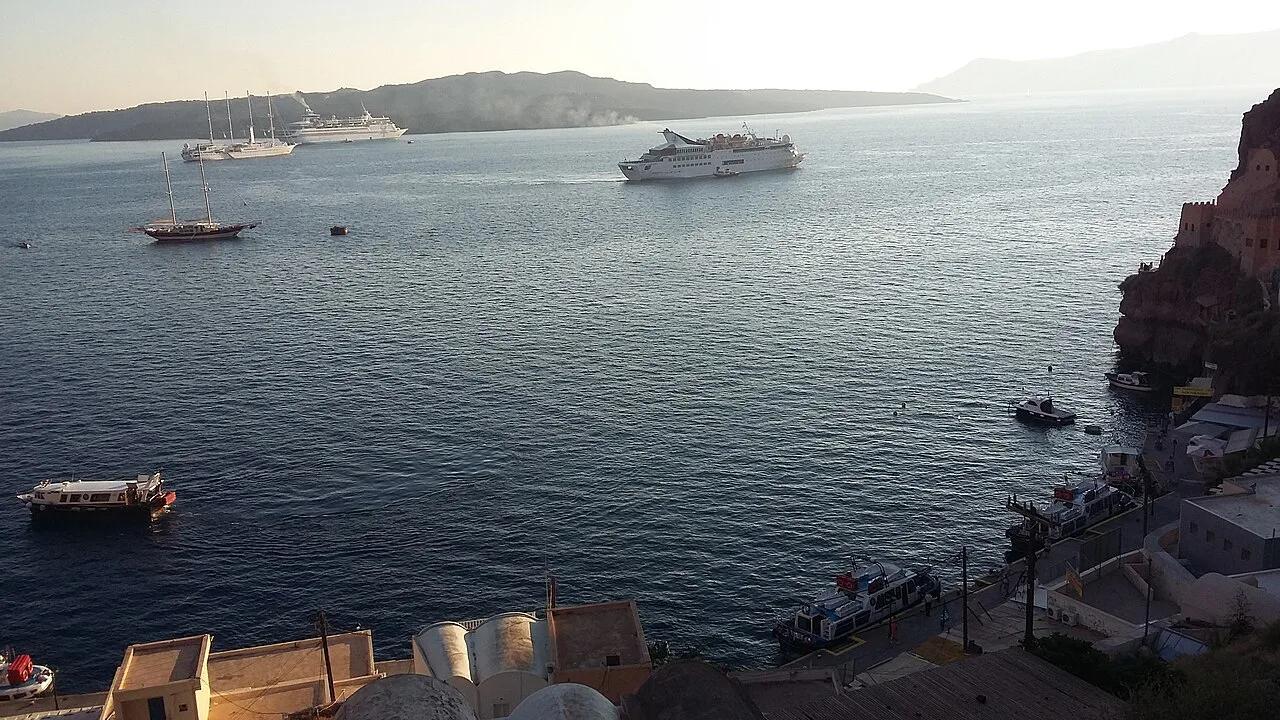
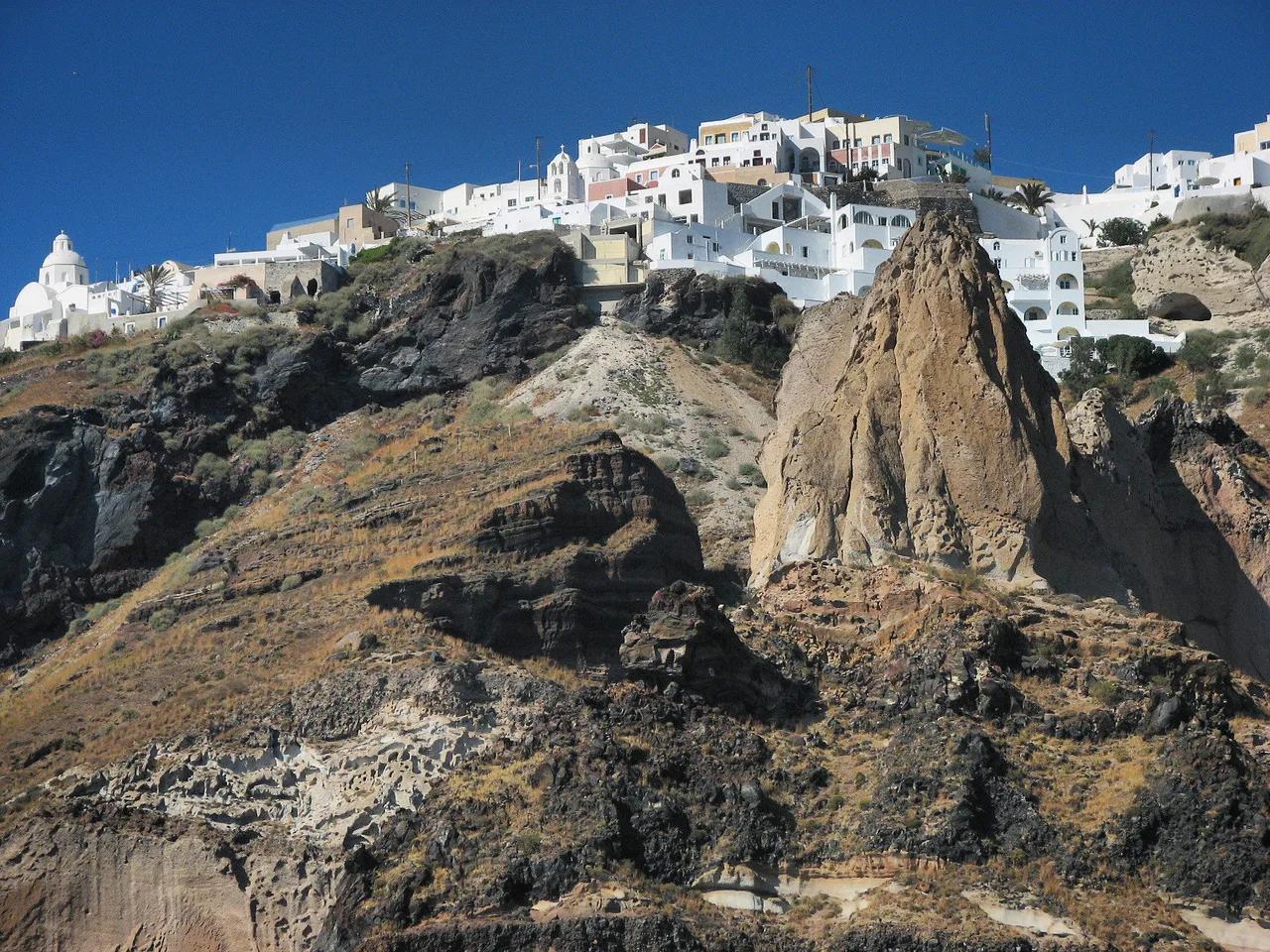
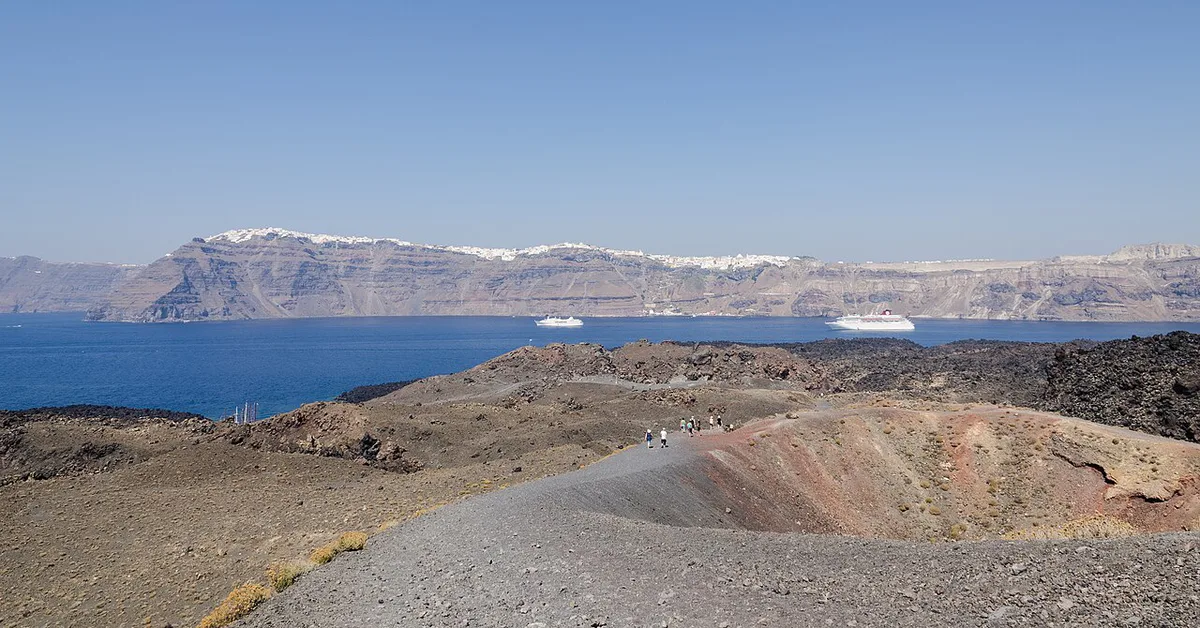
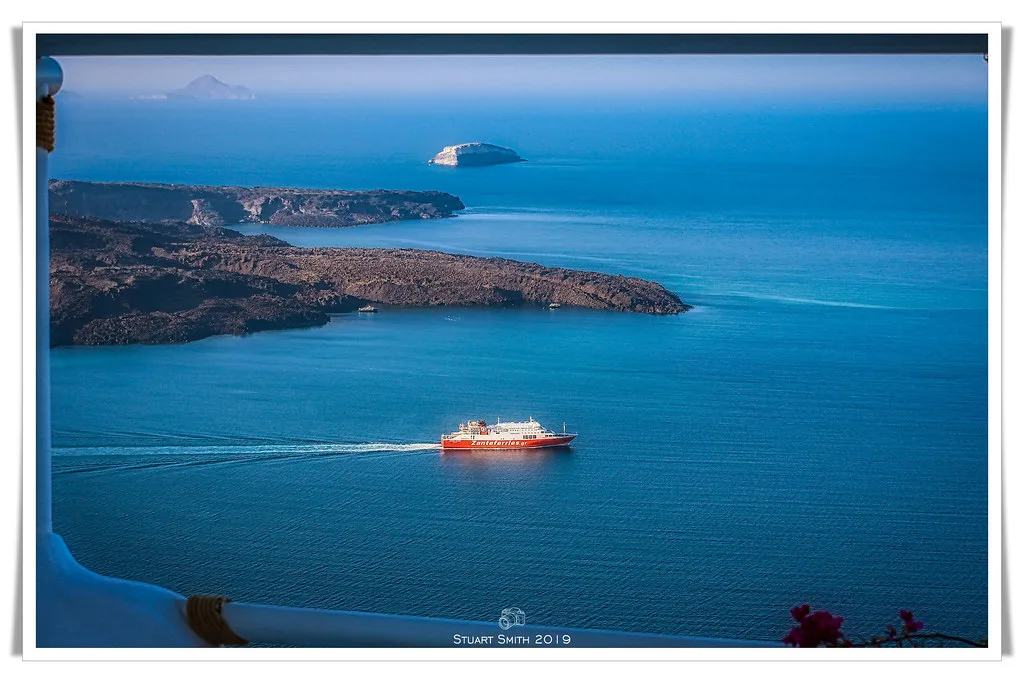
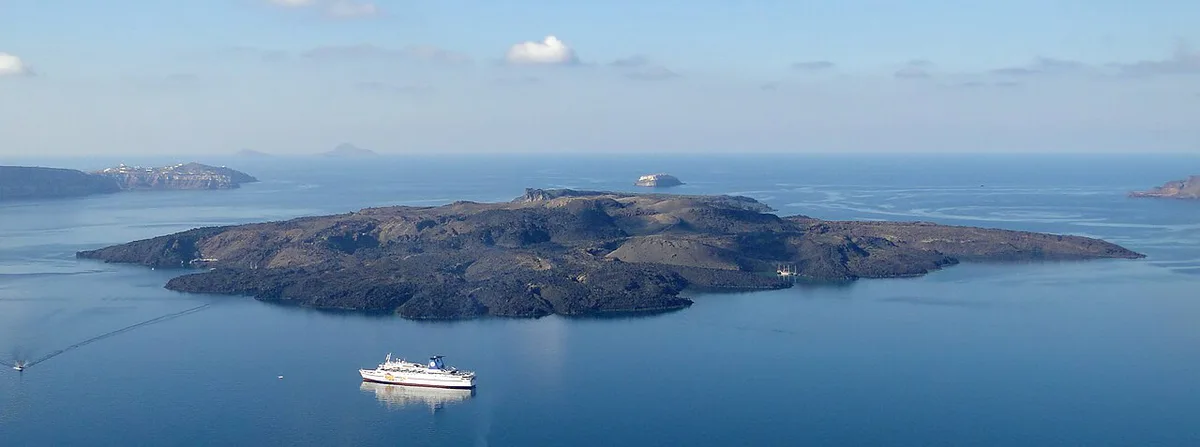
Santorini is a volcanic island group in the Cyclades, and the volcano is the flooded caldera itself. Cliffs up to about 300 m high ring three sides of a basin roughly 12 by 7 km, with a maximum depth near 385 m. Most of that system sits underwater, which is why many visitors cannot tell where the volcano actually is. Thira, Thirasia and Aspronisi form the rim, while Nea Kameni and Palea Kameni rise near the center. According to NASA's Earth Observatory, the center of the volcano lies about 118 km north of Crete. Our guide to the flooded caldera covers the cliffs and basins in more depth. A location map of the islets shows how they sit within the rim. The Minoan eruption that shaped this caldera is one of the best-known volcanic eruptions in Europe.
| What you see | What is underwater or hidden |
|---|---|
| Caldera cliffs up to about 300 m high on three sides | A basin up to about 385 m deep |
| Nea Kameni, a lava island of 3.4 km² | Seafloor where the Kameni eruptions began |
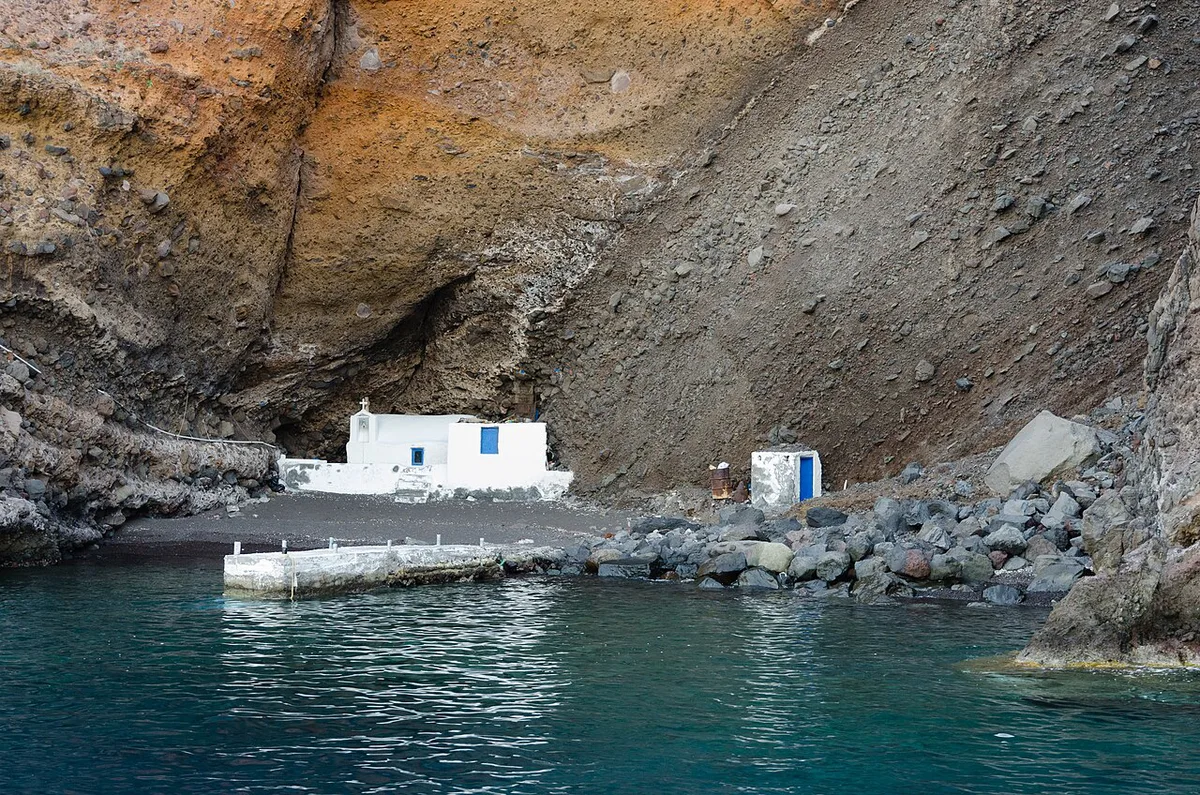
| Palea Kameni, 0.5 km² with warm springs | Part of the caldera that collapsed about 3,600 years ago |
| Thira, Thirasia and Aspronisi on the rim | Kolumbo, a submarine volcano northeast of Santorini |
How the Santorini Volcano Formed
Today's caldera dates to the Minoan eruption of the 17th century BC, which the Smithsonian Global Volcanism Program rates VEI 7. Much of the earlier island was destroyed or submerged. Sources date the event between about 1620 BC and 1610 BC, so a range is safer than a single year. Our account of the eruption of the 17th century BC covers the dating debate. A separate piece explores the Atlantis legend and its link to the island. Per NASA, the Kameni islets began forming about 1,400 years after that event. A 2024 study also identified an eruption about 520,000 years ago that dwarfed the Minoan one.
| Date | Event |
|---|---|
| About 520,000 years ago | Giant eruption identified in a 2024 study |
| 17th century BC | Minoan eruption forms the present caldera |
| 197 BC | New island formation in the caldera |
| 1570–1573 | Eruption with new island formation |
| 1707–1711 | Eruption with lava dome extrusion |
| 1866–1870 | Eruption with evacuation and damage |
| 1925–1928 | Explosive and lava-dome eruption |
| 1939–1941 | Lava flows and damage |
| 10 January–2 February 1950 | Last eruption of the Kameni islands |
| 2024–2025 | Seismic unrest and ground inflation, no eruption |
Is the Santorini Volcano Active? Safety and the 2024–2025 Unrest
Santorini is dormant but classed as an active volcano. Its last eruption ran from 10 January to 2 February 1950, and fumaroles inside the craters are the only activity since. ISMOSAV, the Institute for the Study and Monitoring of the Santorini Volcano, monitors the system. Unrest began in July 2024, with the strongest seismic sequence near the Anydros islet, about 30 km northeast, in late January 2025. From 27 January to 24 February 2025, the ground inflated by up to 7 mm a day, and about 11,000 people left the island. A new swarm began on 15 June 2025 and ended after about three months, with magma staying deeper than 8 km. Status can change, so this page gives no current reading. Check the Institute of Geodynamics and Greek civil protection before booking. Our explainer on current activity status covers how monitoring works. A separate guide covers the 2025 earthquake swarm. For a trip, book flexible fares, carry travel insurance and re-read official advisories in the week before departure.
For a Nea Kameni or hot-springs day, remember that about 11,000 people left the island during the 2025 unrest, so book flexible fares.
| Should you go now? | What to check |
|---|---|
| Unrest status | Latest bulletins from NOA and Greek civil protection |
| Sea conditions | The operator's decision on the day, since wind can change routes |
| Booking flexibility | Cancellation and rebooking terms on tours and hotels |
5 Ways to See the Santorini Volcano
Prices and hours checked November 2026: operators set fares, departure ports and times, so compare live schedules before you commit. The five options below range from a crater walk to a view from the rim.
1. Walk the Nea Kameni crater trail
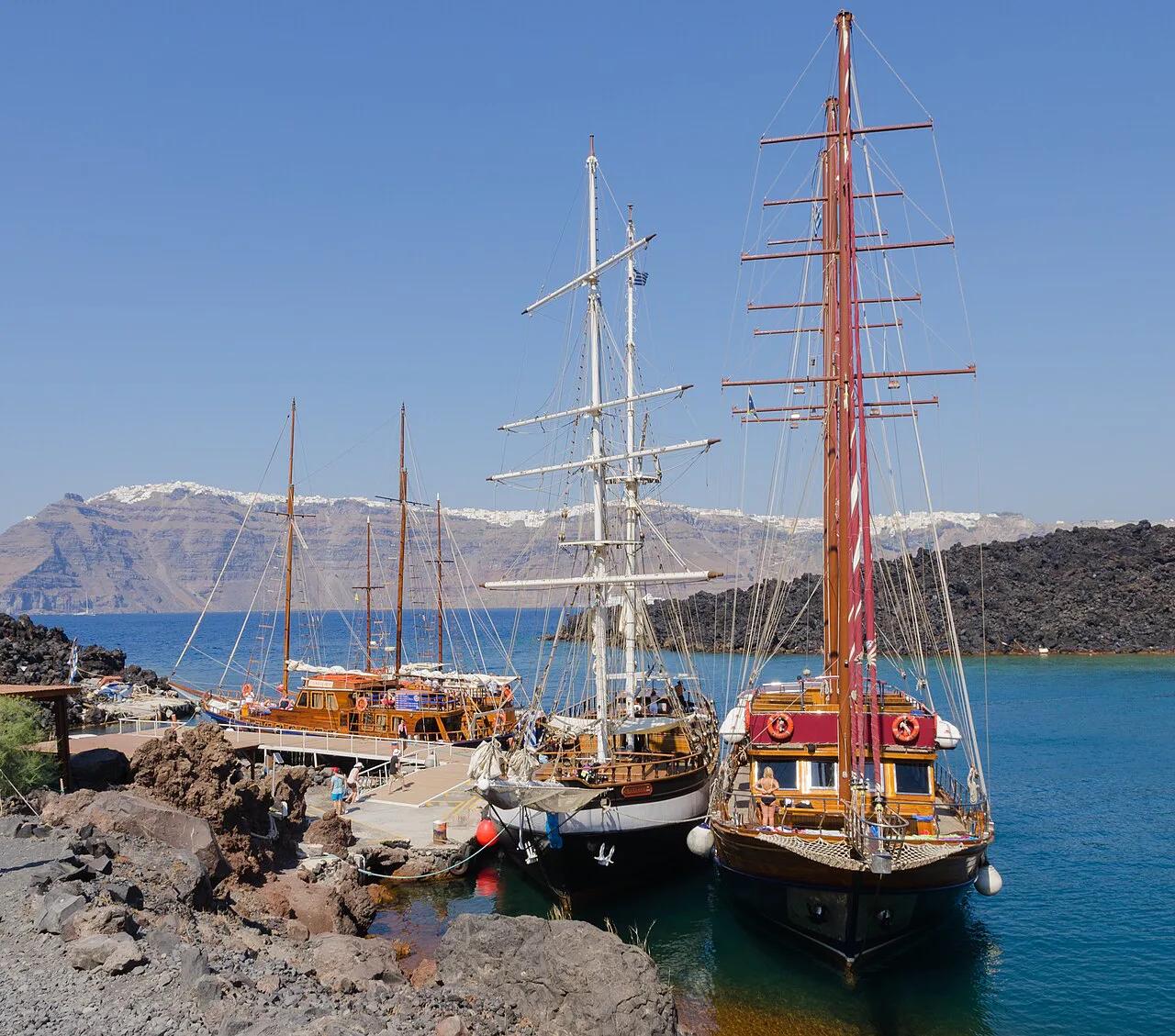
Nea Kameni is the main place where visitors can walk on the Santorini volcano. It covers 3.4 km² of dark lava flows and domes that began forming about 1,400 years after the Minoan eruption, according to NASA. Its last activity came in 1950, and today only fumaroles remain, so you may smell sulphur near the craters.
Expect loose volcanic rock underfoot, little shade and strong sun, so wear closed shoes with grip, a hat and water. Our guide to the crater trail on Nea Kameni covers the route in detail. Skip it if steep, uneven ground is a problem for you, or if you only want a view from the water.
2. Soak at the Palea Kameni hot springs
Palea Kameni is the smaller islet, at 0.5 km², and visitors know it for warm thermal springs along its shore. You usually enter the sea from the boat, so you reach the warm water by swimming rather than stepping onto a beach. Swimwear can stain in the mineral-rich water, so wear something you do not mind discoloring.
Water condition and temperature vary, and stops differ by operator, so ask what your boat includes. Details on the Palea Kameni hot springs are in our dedicated guide. Avoid the stop if you dislike swimming from a boat in open water, or if you travel with very young children.
3. Join a caldera boat and volcano tour
A volcano tour is the standard way to combine a Nea Kameni landing with the springs on Palea Kameni. Boats cross the flooded caldera, so you see the 300 m cliffs and the white rooftops of Thira from below. Itineraries, departure ports and time on shore vary by operator and season, so compare them before booking.
Morning departures usually mean cooler walking, while evening trips trade that for light on the cliffs. Read our breakdown of volcano boat tours before choosing. Pass on it if you want a swim-and-lunch day with no hiking, because the crater walk is part of the plan.
4. Sail the caldera on a catamaran cruise
A catamaran cruise treats the volcano as scenery, sailing past the cliffs, the Kameni islets and Thirasia. Some cruises focus on swimming and onboard food and skip the Nea Kameni landing, so read the itinerary. Cruises suit travelers who want sea time and sunset light more than geology.
Sea state matters, because wind can make open-water stops rougher and operators may change routes. See our guide to catamaran cruise options for what each format includes. Skip it if your main goal is walking on lava or seeing fumaroles up close.
5. Walk the caldera rim for a view-only look
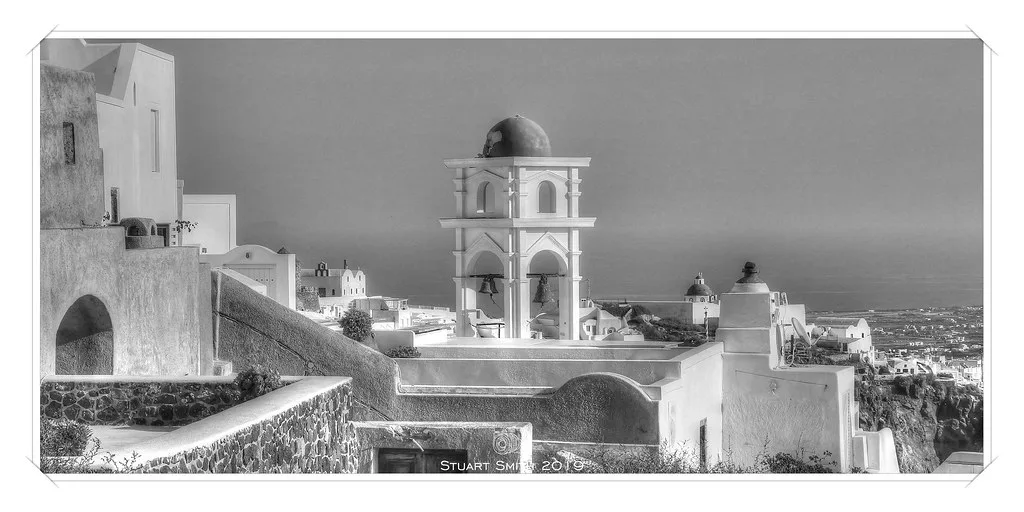
Villages on Thira trace the caldera rim, and from there you look down across the water to Nea Kameni and Palea Kameni. Cliffs up to about 300 m high make the structure of the caldera obvious in a way boats cannot match. This option needs no boat booking, so it suits tight schedules and days when sea conditions cancel departures.
Go early or late for softer light and fewer people on the paths. Visit Greece's Santorini page is a starting point for choosing a rim village. Leave it off your list if you want to touch lava or stand inside a crater, because rim views stay at a distance.
Which Santorini Volcano Tour Fits You
Nea Kameni, at 3.4 km², is the walking island, and Palea Kameni, at 0.5 km², is the small islet with the springs. Morning trips mean cooler air on the crater trail, while sunset trips favor light on the 300 m cliffs. Sea conditions change by season, and wind can alter routes or cancel landings. Families with young children should weigh the uneven trail and the open-water swim stops. Fares, ports and schedules vary by operator and season, so rely on the operator's current listing.
| Option | What you see | Time commitment | Physical effort | Best fit | Key trade-off |
|---|---|---|---|---|---|
| Volcano boat tour | Nea Kameni crater, caldera cliffs, often the springs | Half a day or more, set by operator | Moderate, uneven trail | Curious walkers | Less pure sailing time |
| Catamaran cruise | Cliffs and islets from the water, swim stops | Half to full day, set by operator | Low | Groups and sunset seekers | May skip the landing |
| Caldera-rim walk | Whole caldera from above | Flexible, no booking | Low to moderate | Short stays, rough-sea days | No contact with lava |
| Self-organized boat trip | Stops you choose with an operator | Depends on your plan | Varies | Independent travelers | More logistics to arrange |
Common Santorini Volcano Mistakes to Avoid
Most mistakes come from expecting a visible cone or a guaranteed landing. Nea Kameni's 3.4 km² has little shade, so preparation matters more than the walk itself.
| Mistake | Better move |
|---|---|
| Looking for a single cone | Look for the caldera: cliffs, islets and the submerged basin |
| Repeating old claims that no one needs to worry about eruptions | Read current NOA and civil protection updates |
| Booking a cruise and expecting a Nea Kameni landing | Ask whether the itinerary includes the landing |
| Wearing sandals on the trail or a favorite swimsuit at the springs | Wear closed shoes on Nea Kameni and old swimwear at the springs |
| Skipping sun protection | Bring a hat and water, since shade is scarce on the crater trail |
Frequently Asked Questions
Is Santorini volcano still erupting?
No eruption has been recorded since 1950, when the Kameni islands last erupted. Only fumarolic activity continues inside the craters. The 2024–2025 unrest involved earthquakes and ground inflation rather than an eruption.
Is it safe to visit Santorini now?
This page cannot confirm today's status. Greek civil protection and the Institute of Geodynamics publish current advisories. After the June 2025 swarm ended about three months in, magma stayed deeper than 8 km. Flexible bookings and travel insurance are sensible.
When did Santorini last erupt?
The Kameni islands last erupted from 10 January to 2 February 1950. Earlier episodes ran 1939–1941 and 1925–1928. Before them came 1866–1870 and 1707–1711.
Explore More Guides
Keep planning your trip with these guides.
Guides
- Minoan Eruption: What Happened, When, and What to See
- Santorini Caldera: How It Formed, Safety & Best Ways to See It
- Santorini Catamaran Cruise: Types, Prices & How to Choose
- Santorini Hot Springs: Boat Trip, Costs and Tips
- Is Santorini's Volcano Active? Status and Safety
- Santorini Volcano Tour: Which Boat Trip to Pick (2026 Guide)
- Nea Kameni, Santorini
- Santorini Atlantis: Myth, Evidence and Where to Visit
- Santorini Earthquakes 2025
- Santorini Volcano Map: Where It Is & How to Visit