Last updated November 2026: Mount Etna lava is visible only while an eruption is under way, and almost always from a distance. Cold lava is different, because old flows, cones and lava tubes can be visited all year. Before you plan anything, read the latest notice from INGV's Etna observatory. Then look at the live cameras on the Mount Etna Webcam: Which Live Camera to Watch guide.
Featured image: Vicky Brock, CC BY-SA 2.0, via Wikimedia Commons.
When there is Mount Etna lava to see, and when there isn't
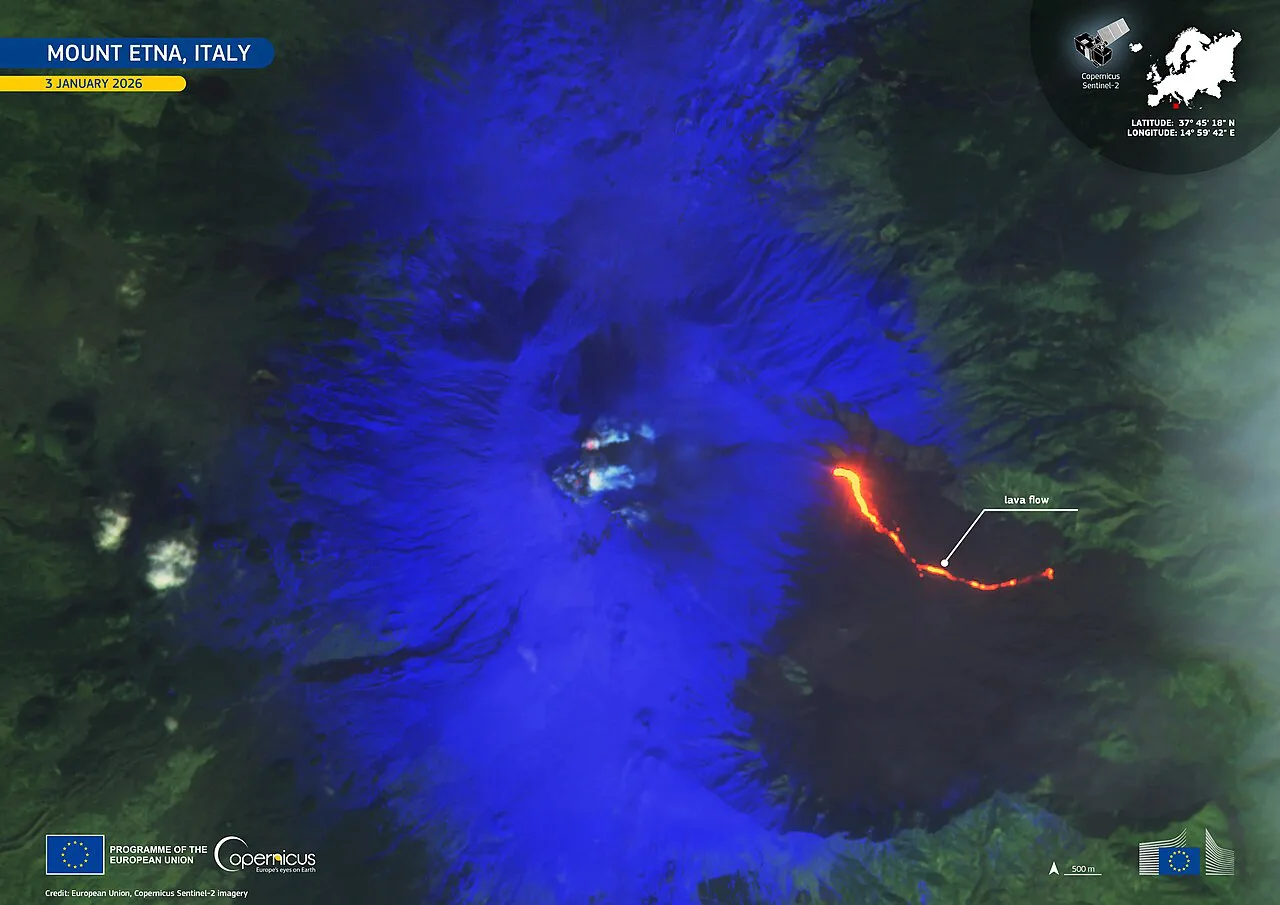
Etna produces lava in two ways. Explosive activity at the summit craters gives Strombolian bursts and lava fountains. Vents on the flanks or at the base of the craters feed lava flows. Between eruptions the craters release only gas, so you see a plume by day and nothing glowing at night.
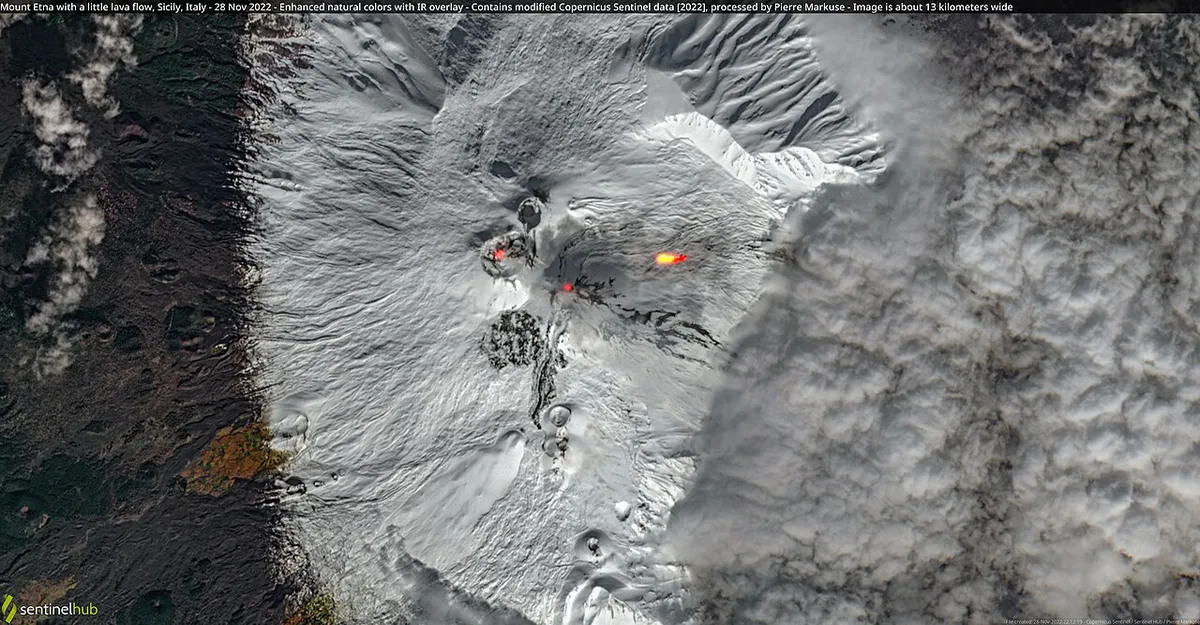
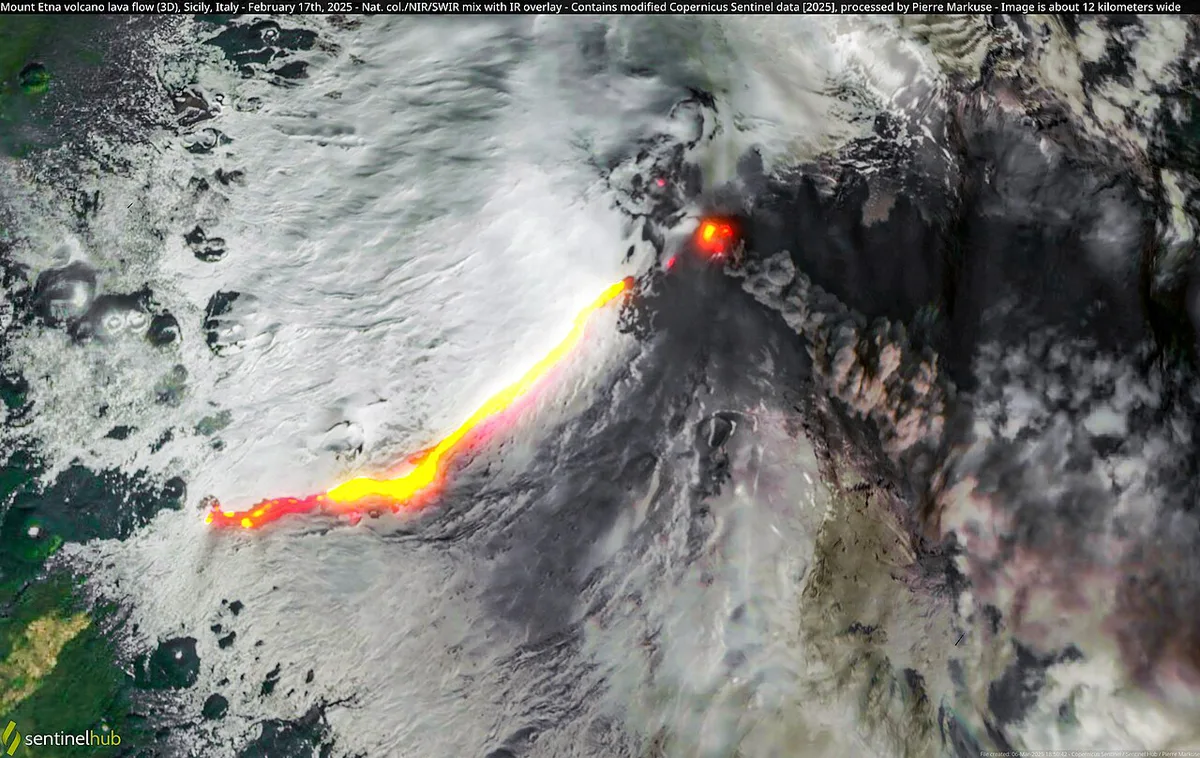
Timing is unpredictable. INGV notices reported three lava episodes in 2026, all heading east into the Valle del Bove. They ran 1–13 January, 26 June–8 July and 6–26 August. In August the lowest front stopped at about 1,315 m (4,310 ft).
Those episodes lasted from roughly two weeks to twenty days, so nobody can sell you lava weeks in advance. Our guide to whether Etna is active explains how to read the signs. The longer record is on the Etna eruptions page.
Where to watch lava safely
Near an active flow the dangers are glowing blocks breaking off the front, explosions where lava meets snow or water, and gas. Town ordinances set distances that apply to everyone, guides included. Belpasso's 2026 ordinance requires at least 50 m (165 ft) from the edges of an active flow. Nicolosi's 2025 ordinance requires at least 300 m (980 ft) from the front when lava moves over snow. Ordinances can change, so read the current text for the side of the volcano you visit.
Guides follow the same ordinance as everyone else, and near Nicolosi, lava moving over snow means staying at least 300 m (980 ft) from the front.
Zones matter as much as distances. The Sicilian Region's summit zone covers the upper Valle del Bove, Etna: How to See It and Stay Safe down to 1,700 m (5,580 ft), plus a safety strip around active vents. Rules for each side are covered in the summit craters guide.
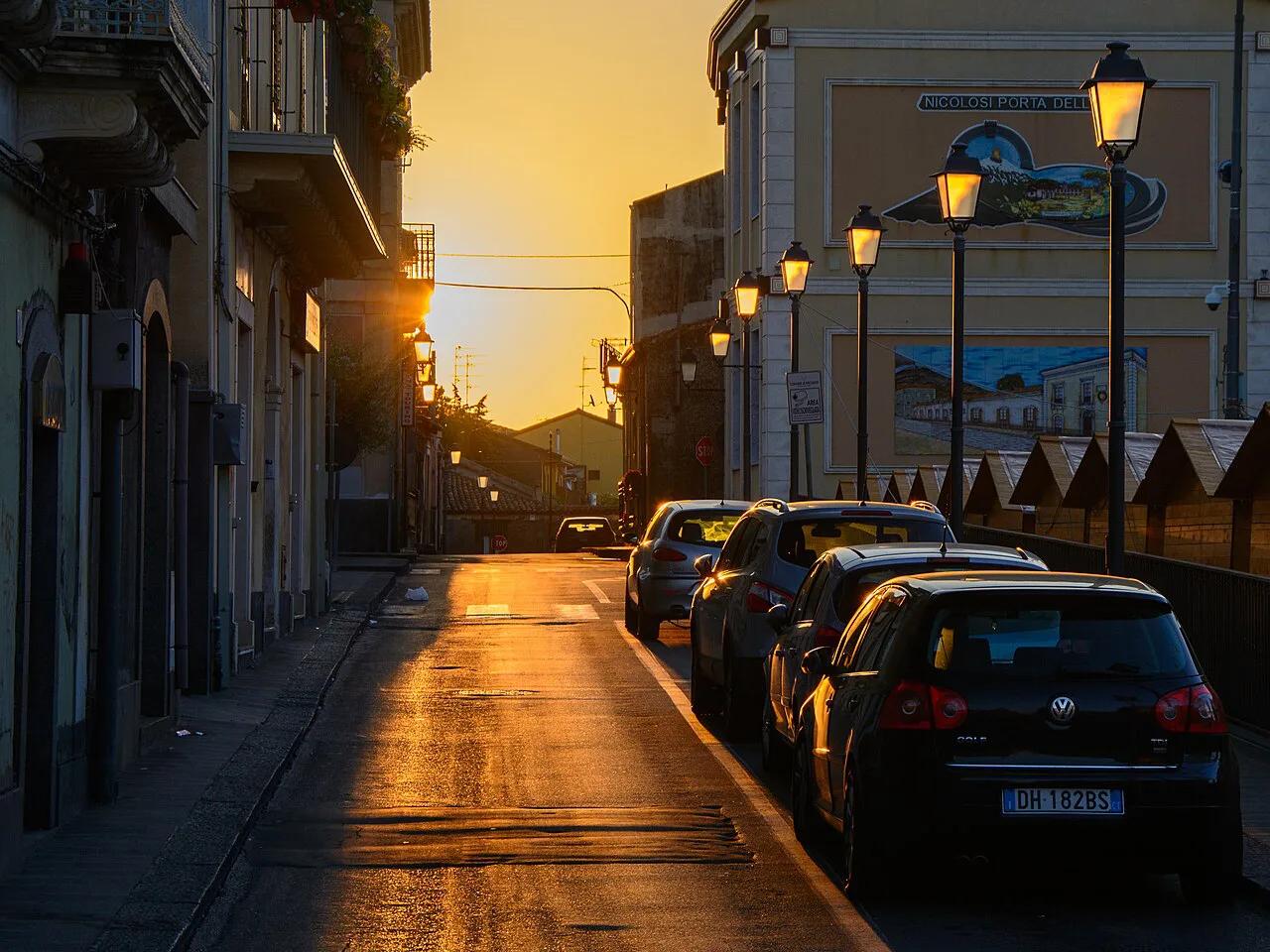
The simplest option is distance after sunset. An active flow glows clearly from towns and roads on the volcano, and recent flows have mostly gone toward the Valle del Bove on the east side. Pick a spot with an open view east. On overcast nights, thermal cameras still show heat through cloud.
| Option | Best for | Cost level | Main limit |
|---|---|---|---|
| Town or road viewpoint after dark | Seeing an active flow glow | Free | Cloud cover and distance |
| Webcams, thermal included | Checking status in any weather | Free | No sense of scale |
| Mid-altitude sunset tour | Guided viewing with transport | Mid | Depends on the alert phase |
| Guided summit hike | Craters at close range | Premium | Open only in the attention phase |
Tours to see lava, by alert phase
No operator can guarantee lava, and none sells it as a separate product. During an eruption, guides take groups only as far as the phase and ordinances allow, usually at sunset. Sicily's regional Civil Protection sets the phase, and its notices are at Protezione Civile Sicilia.
The pre-alarm phase was reported in force from 7 July 2026, with the crater area closed. Phases change, so read the latest notice before booking. Browse current options in our Etna tours overview.
For evening viewing, a sunset tour at about 2,000 m (6,560 ft) is the usual choice. A jeep tour covers similar ground with off-road transport. Choose flexible cancellation terms and keep a cold-lava backup plan.
The summit hike only works in the attention phase, with a licensed guide. Helicopter and flight options are covered in the helicopter tour guide.
| Alert phase | Summit area | What to book |
|---|---|---|
| Attention | Open with a licensed guide, at ordinance distances | Guided crater hikes by day, sunset tours |
| Pre-alarm | Crater area closed to everyone, guides included | Sunset tours near 2,000 m, cold lava and caves |
| Alarm | Everything above about 2,500 m (8,200 ft) closed | Lower altitudes only: cold lava, caves, distant views |
Cold lava you can see all year
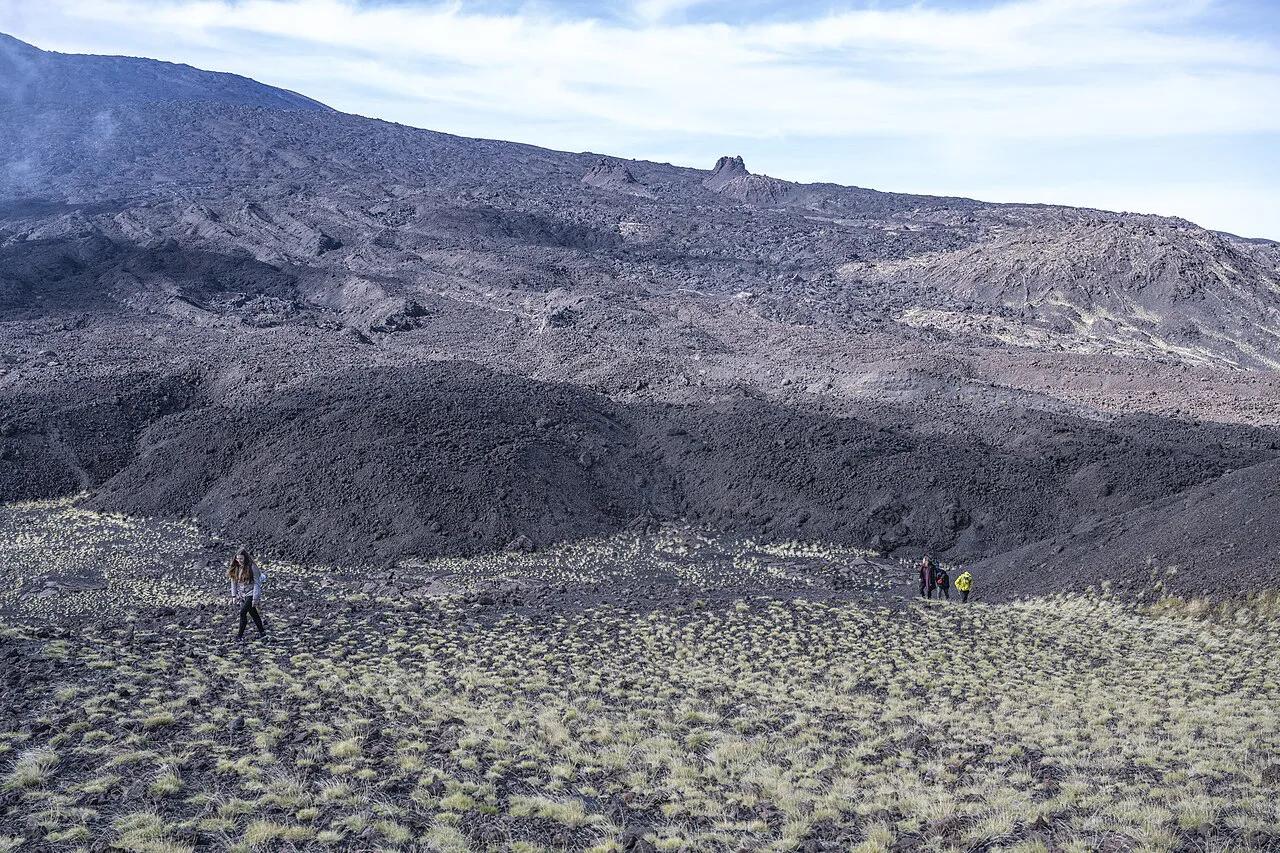
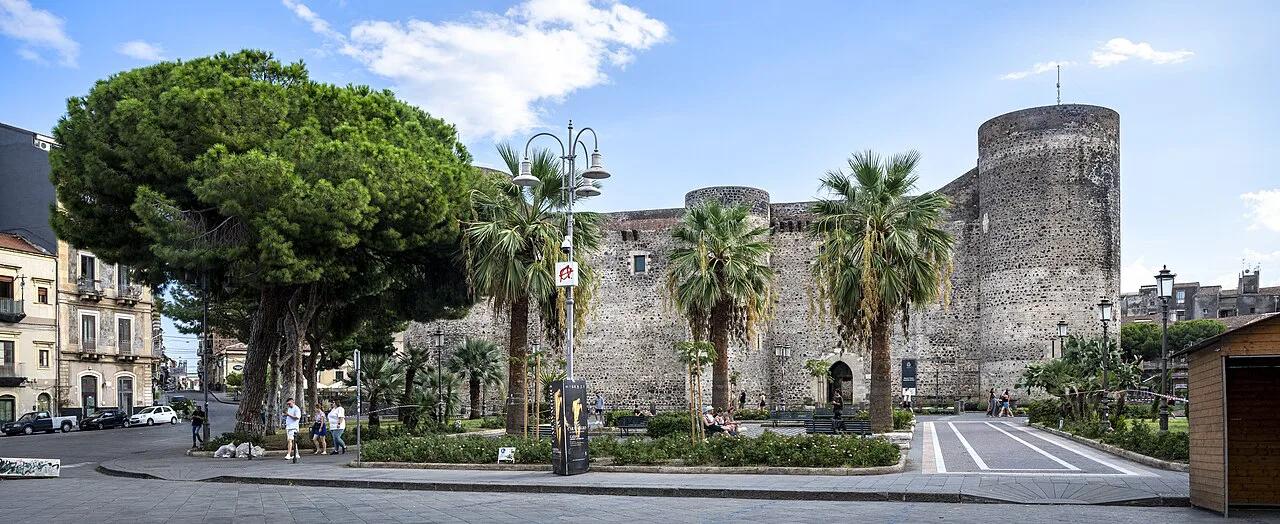
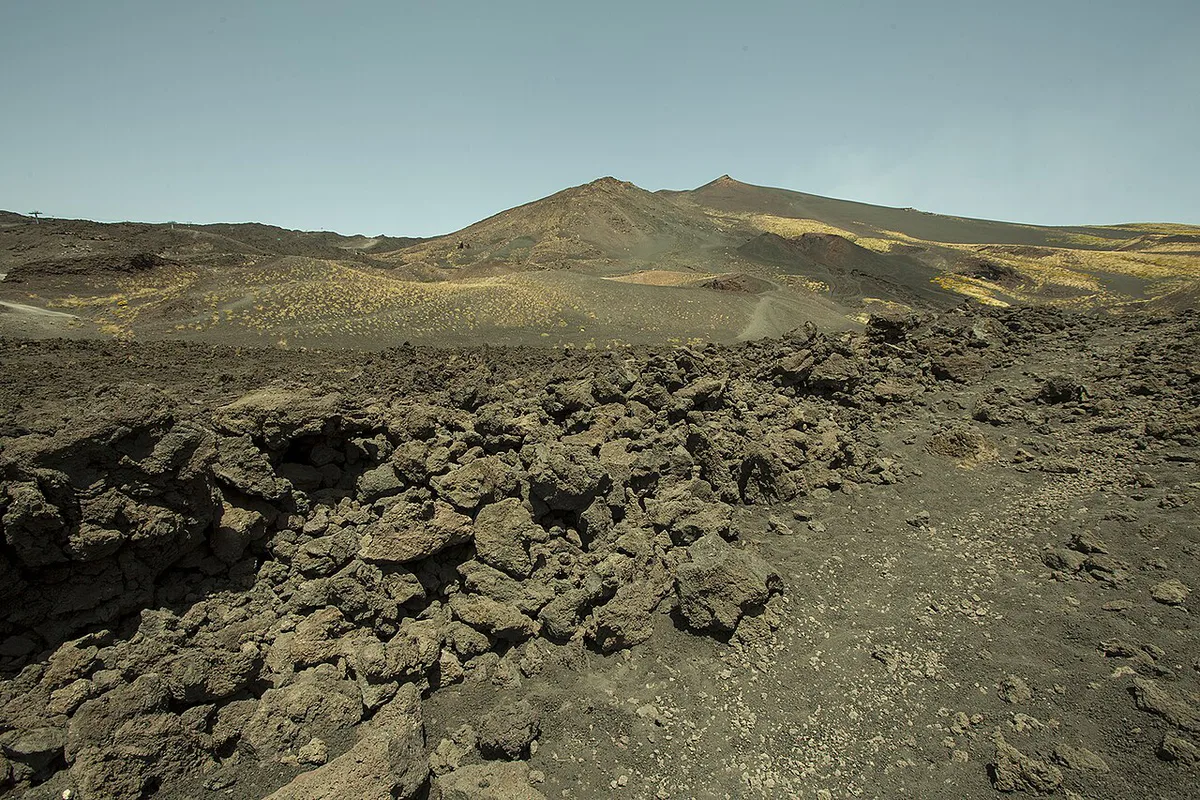
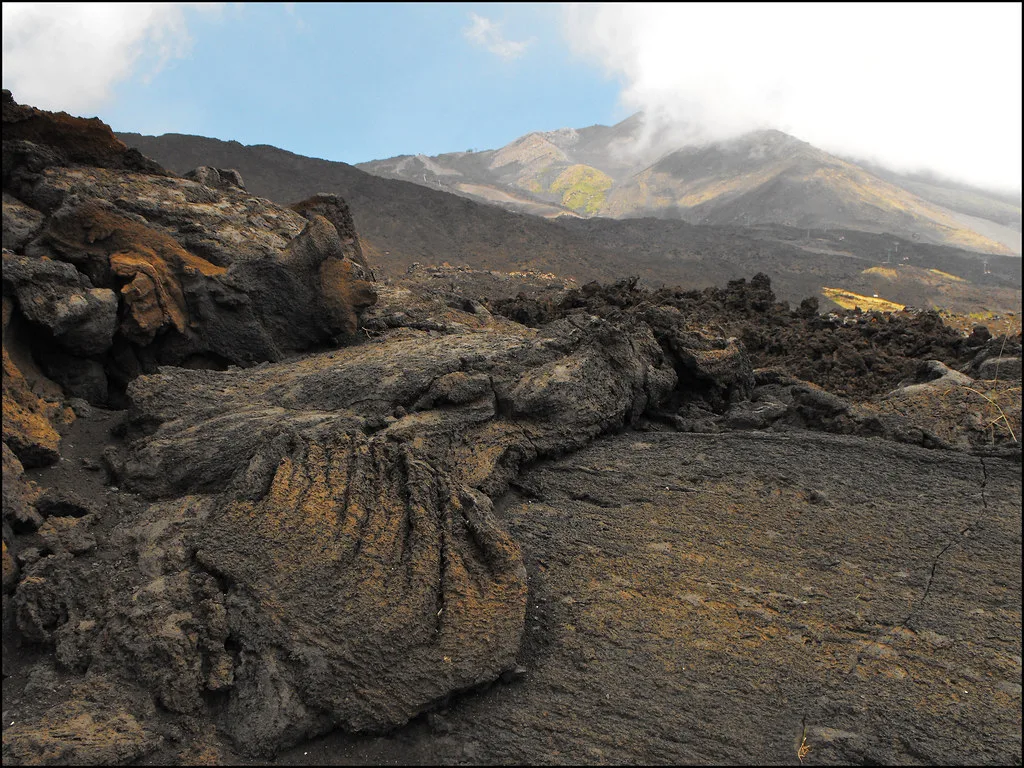
You can walk on lava on Etna without an eruption. Driving up from Nicolosi, you pass the Monti Rossi, Etna: Walk, Craters and Adventure Park Guide, cones from the 1669 eruption. That flow reached Catania, and the story is told in our 1669 eruption guide.
Grotta del Gelo sits at about 2,030 m (6,660 ft), below the roughly 2,500 m (8,200 ft) line that closes everything higher during the alarm phase.
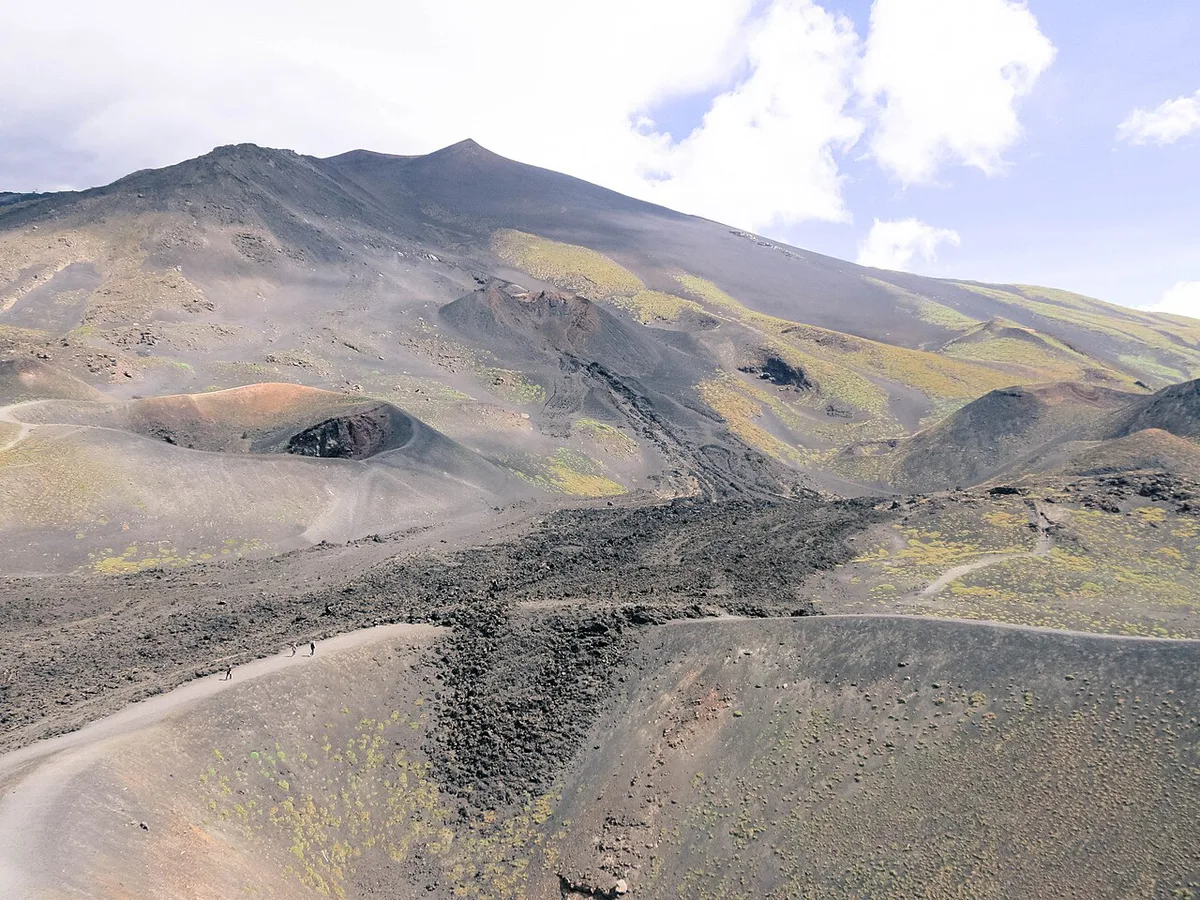
At Rifugio Sapienza, Etna: Cable Car, Jeep & Silvestri Craters Guide, you park beside the 1983 lava flows, which reached the hut itself. The Silvestri Craters, Etna: Walk, Access & Tips sit right there too. A 1992 flow threatened Zafferana Etnea Guide: What to Do, Honey & Etna Views on the east side.
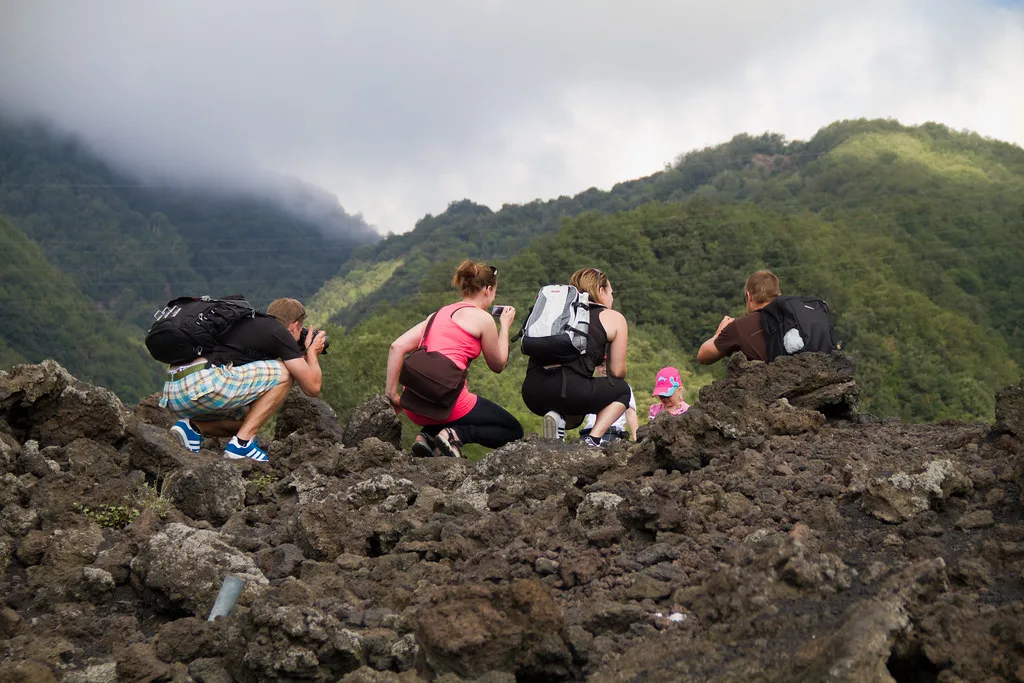
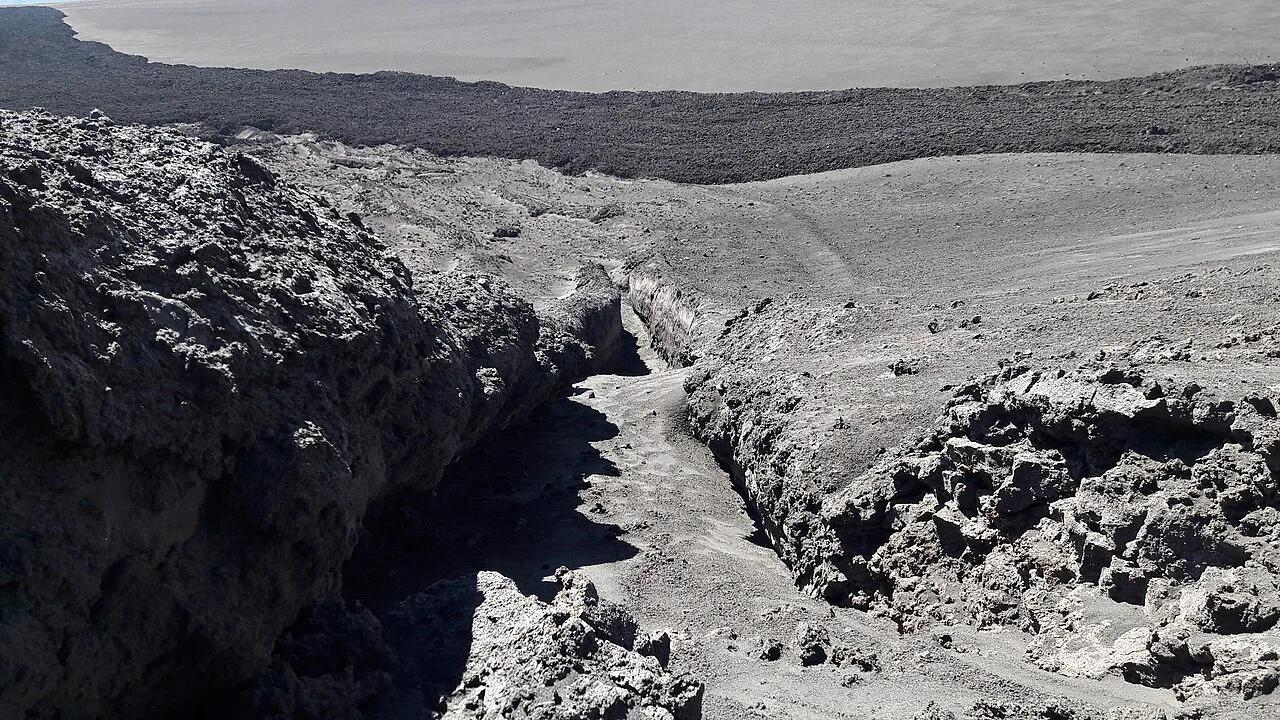
Lava tubes form when a flow crusts over and the molten lava inside drains away. Grotta dei Lamponi, Etna: Lava Tube Access & Hike Guide sits at 1,750 m (5,740 ft) and runs about 400 m (1,310 ft). Grotta del Gelo, at about 2,030 m (6,660 ft), keeps ice year-round.
A half-day works well. Leave Catania in the morning, stop at the Monti Rossi, then spend the middle of the day at Rifugio Sapienza and a cave. Transfer options are in the Catania to Etna guide.
Mount Etna lava flows: types and what they leave behind
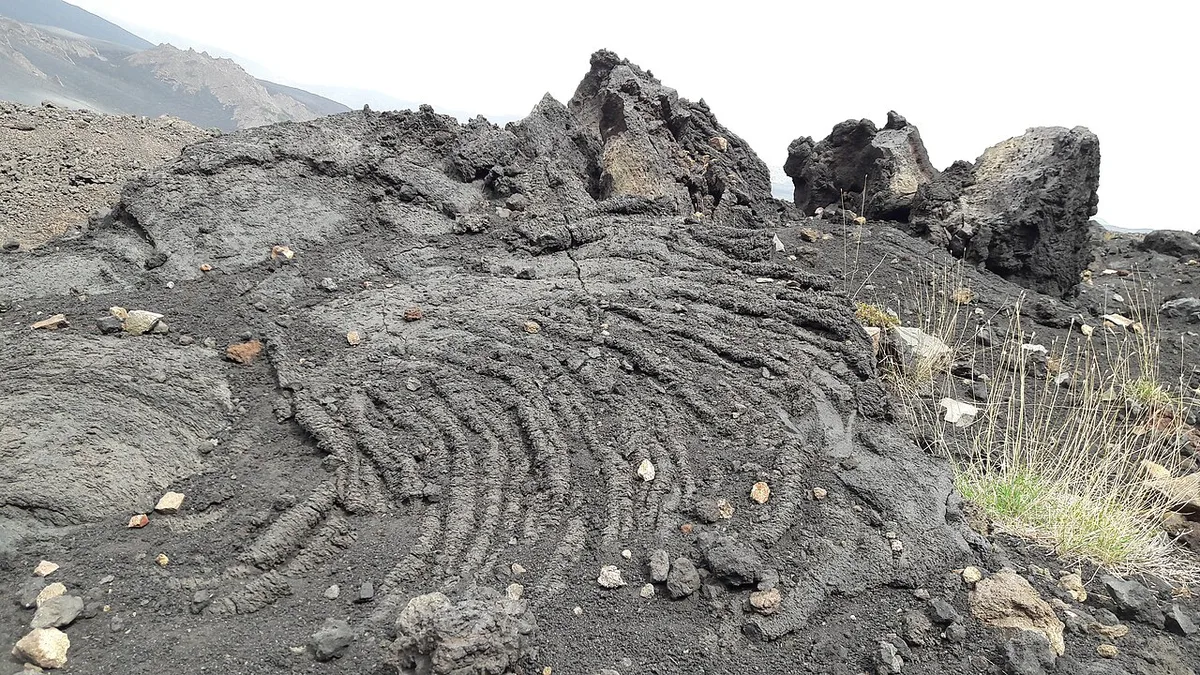
Etna erupts basaltic magma, which is low in silica and flows readily. Most flows are aa, with a surface of sharp-edged blocks up to about 1 m (3 ft) across. Rarer pahoehoe flows come from very fluid lava and leave a smooth or ropy surface. Both can form lava tubes.
Explosions leave different debris. Volcanic bombs are fragments larger than 64 mm (2.5 in). Lapilli measure 2–64 mm, and ash is under 2 mm. At altitude, the dark sand underfoot is mostly this black cinder.
For residents, a lava flow threatens buildings more than lives, because it moves slowly enough to allow evacuation. Pyroclastic flows are far faster and far rarer. Read more on what type of volcano Etna is. Quick numbers are in Mount Etna Facts: Height, Age, Eruptions & Safety.
Common mistakes and a quick decision guide
Most disappointments come from planning around lava instead of around conditions. These are the errors that cost visitors the most.
- Booking a "lava tour" weeks ahead. Book flexible tours and check status the day before and that morning.
- Assuming the summit is open. In the pre-alarm phase the crater area is closed to everyone.
- Ignoring cloud. Overcast skies hide the glow, so keep the thermal webcams open as a backup.
- Wearing the wrong footwear. Cold lava is sharp and uneven, so wear sturdy closed shoes.
- Treating viral videos as current conditions. Use INGV notices, not social media clips.
- If lava is active: watch after sunset from a town or road with an east view, or take a sunset tour.
- If only ash or gas: choose cold lava, caves and Rifugio Sapienza.
- If the volcano is quiet: spend a half-day on the Monti Rossi, Silvestri Craters and a lava tube.
Pair this with our broader tourism attractions guide for the full city overview.
Frequently Asked Questions
Is Mount Etna an active volcano?
Yes. Etna erupts often, and its documented record reaches back to 425 BC. Our Etna activity guide explains what current signs mean.
What level of alert is Etna today?
Alert levels change, so read the latest notice from Sicily's regional Civil Protection. Our latest reading showed the pre-alarm phase in force since 7 July 2026, with the crater area closed.
What are the types of volcano eruptions?
Etna shows explosive activity, such as Strombolian bursts and lava fountains. It also shows effusive activity, meaning lava flows. Pyroclastic flows are rare there.