What Type of Volcano Is Campi Flegrei? Caldera Explained
Last updated November 2026. If you are asking what type of volcano Campi Flegrei is, the short answer is a caldera: a broad collapsed basin holding many small vents, not a single cone like Vesuvius. Our full Campi Flegrei guide covers the sights, while this page sorts out the terms, the history and the current activity.
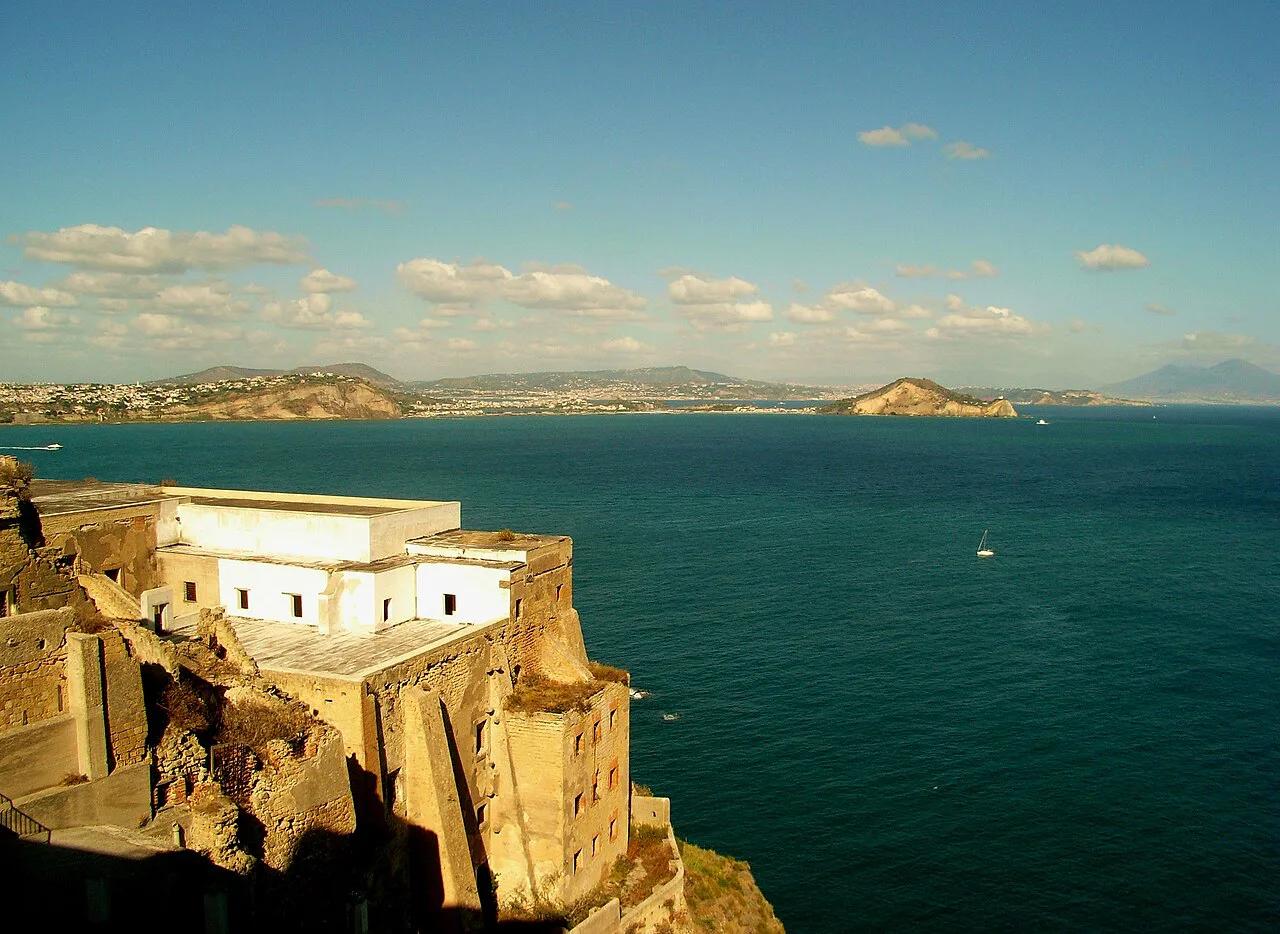
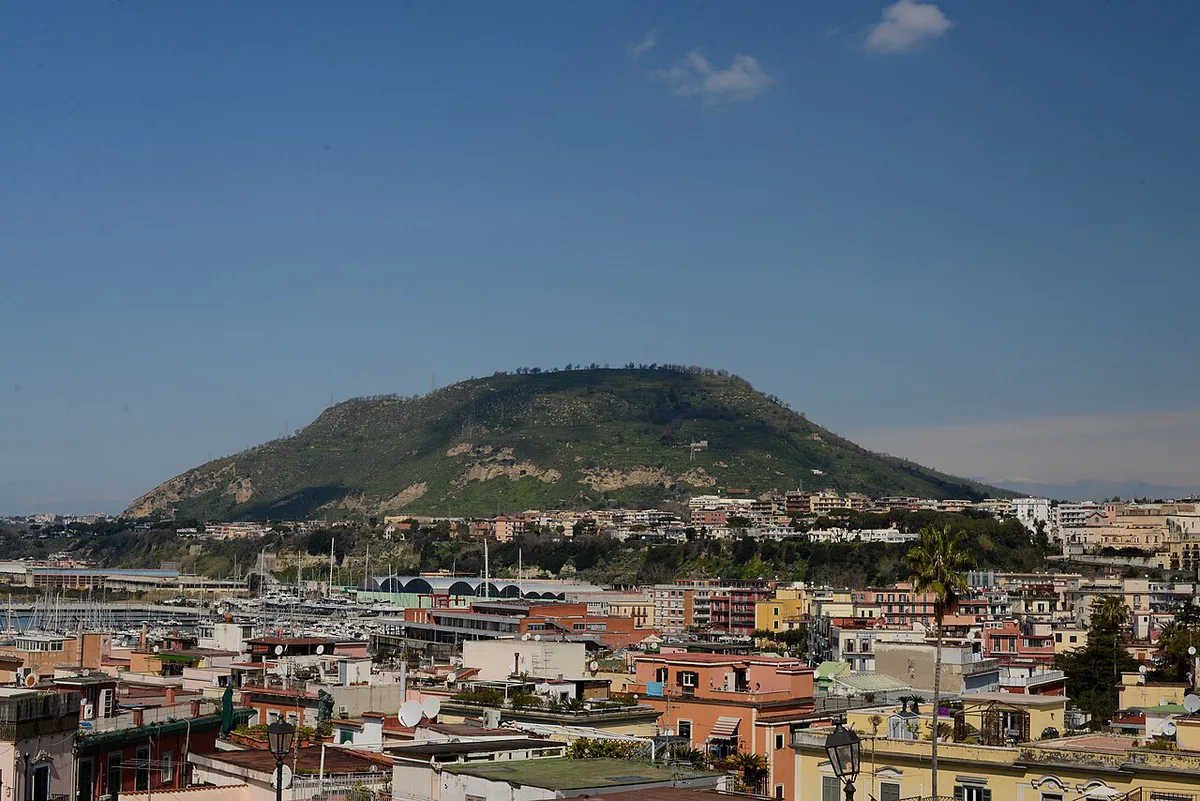
Featured image: hillman54, CC BY 2.0, via Flickr.
What type of volcano is Campi Flegrei?
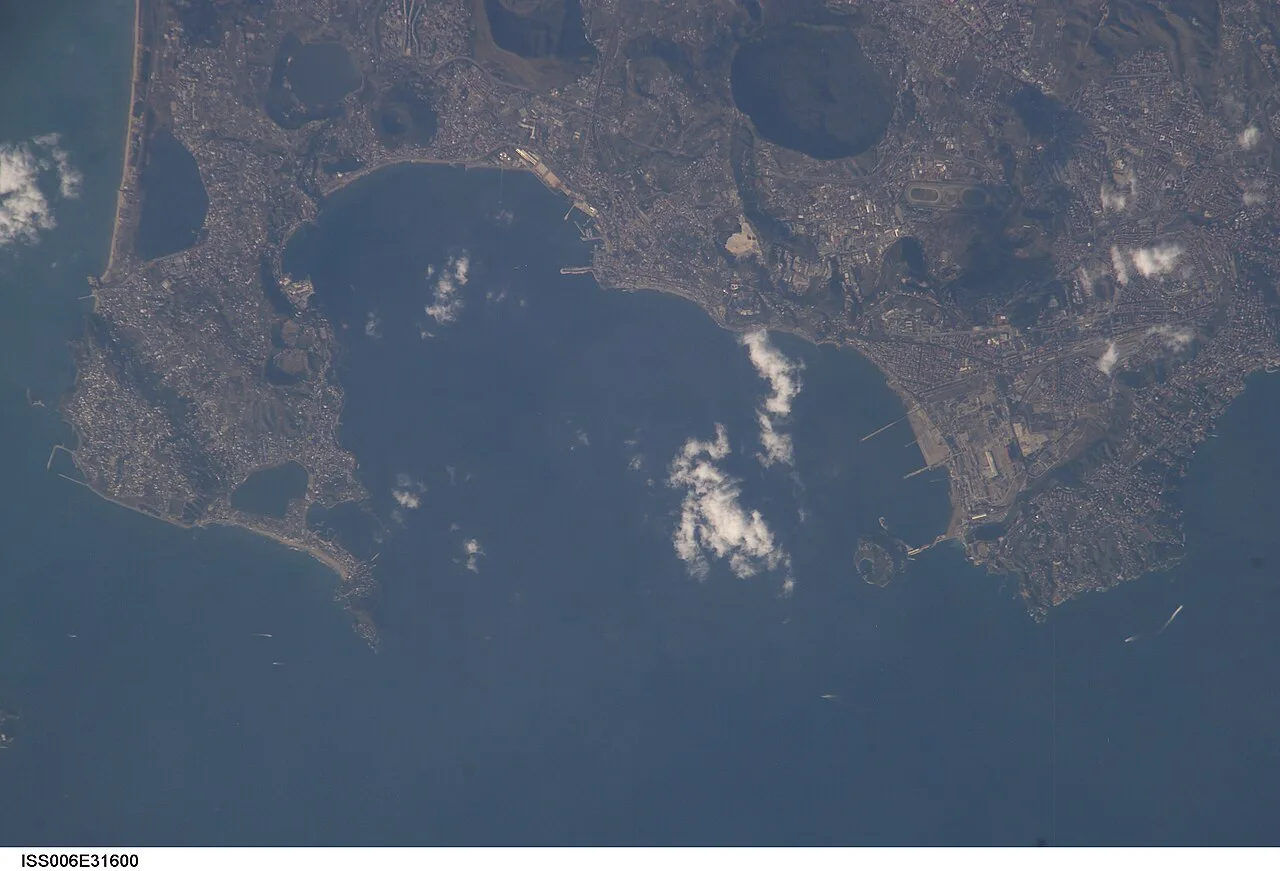
Campi Flegrei is a caldera complex, also called a volcanic field. A caldera is a wide basin left when the ground collapses after very large eruptions. Inside this basin sit dozens of smaller vents, craters and cones rather than one summit. Reports count about 24 craters, though totals shift with how scientists define a crater. Phlegraean Fields is the same place under its English name, and the Greek root behind it means burning. Volcanologists at INGV's Osservatorio Vesuviano monitor it as an active volcanic system. Pozzuoli sits inside the basin, about 14.5 km (9 miles) west of Naples.
Why people call it a supervolcano, and what that does not mean
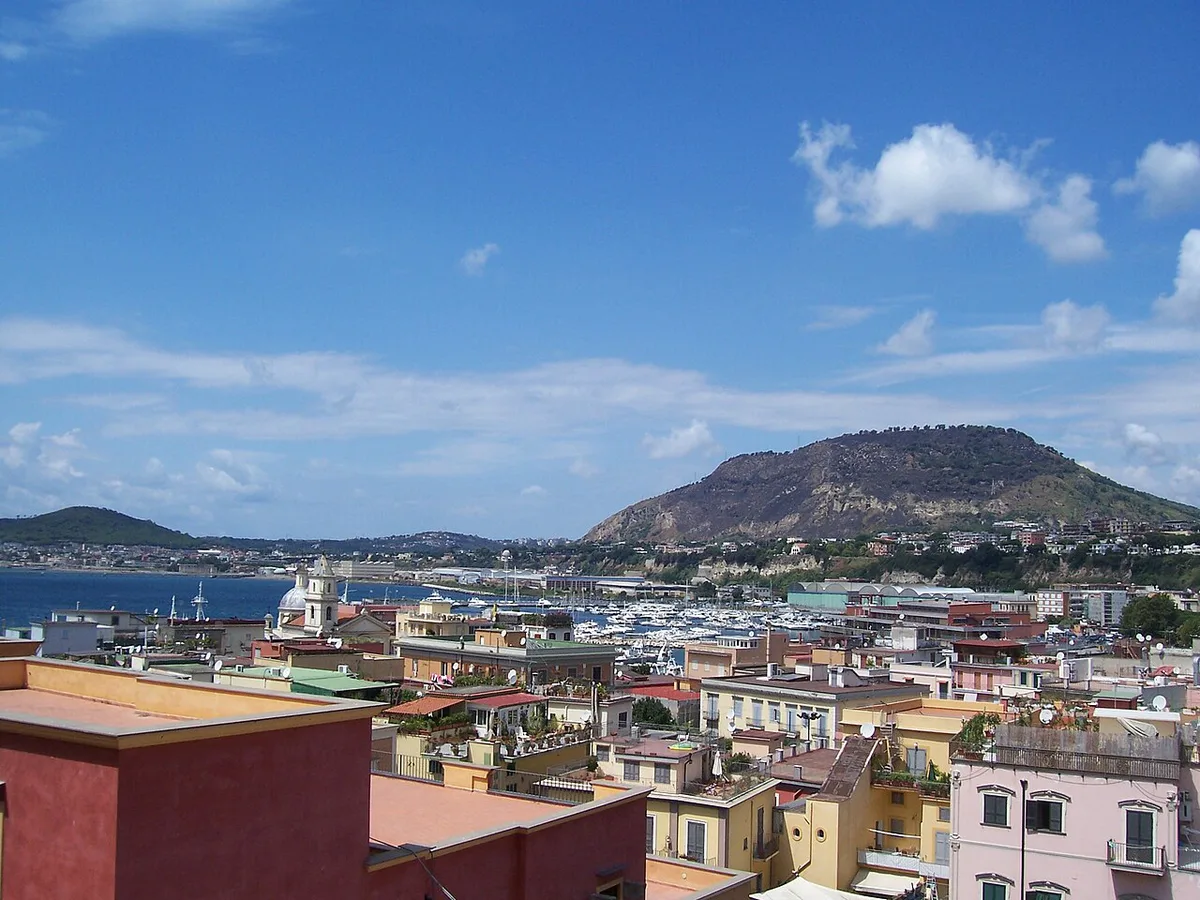
Supervolcano is a popular label, not a formal volcano type. It points to eruptions of the largest size, magnitude 8 on the Volcanic Explosivity Index. Campi Flegrei is often described as capable of events on that scale. Its caldera-forming eruption, however, lies about 39,000 to 40,000 years in the past. Using the label says nothing about timing, and an eruption is not certain soon. Our supervolcano explainer goes deeper into the term. Treat headlines that pair the word with an imminent blast with caution.
How the caldera formed and how big it is
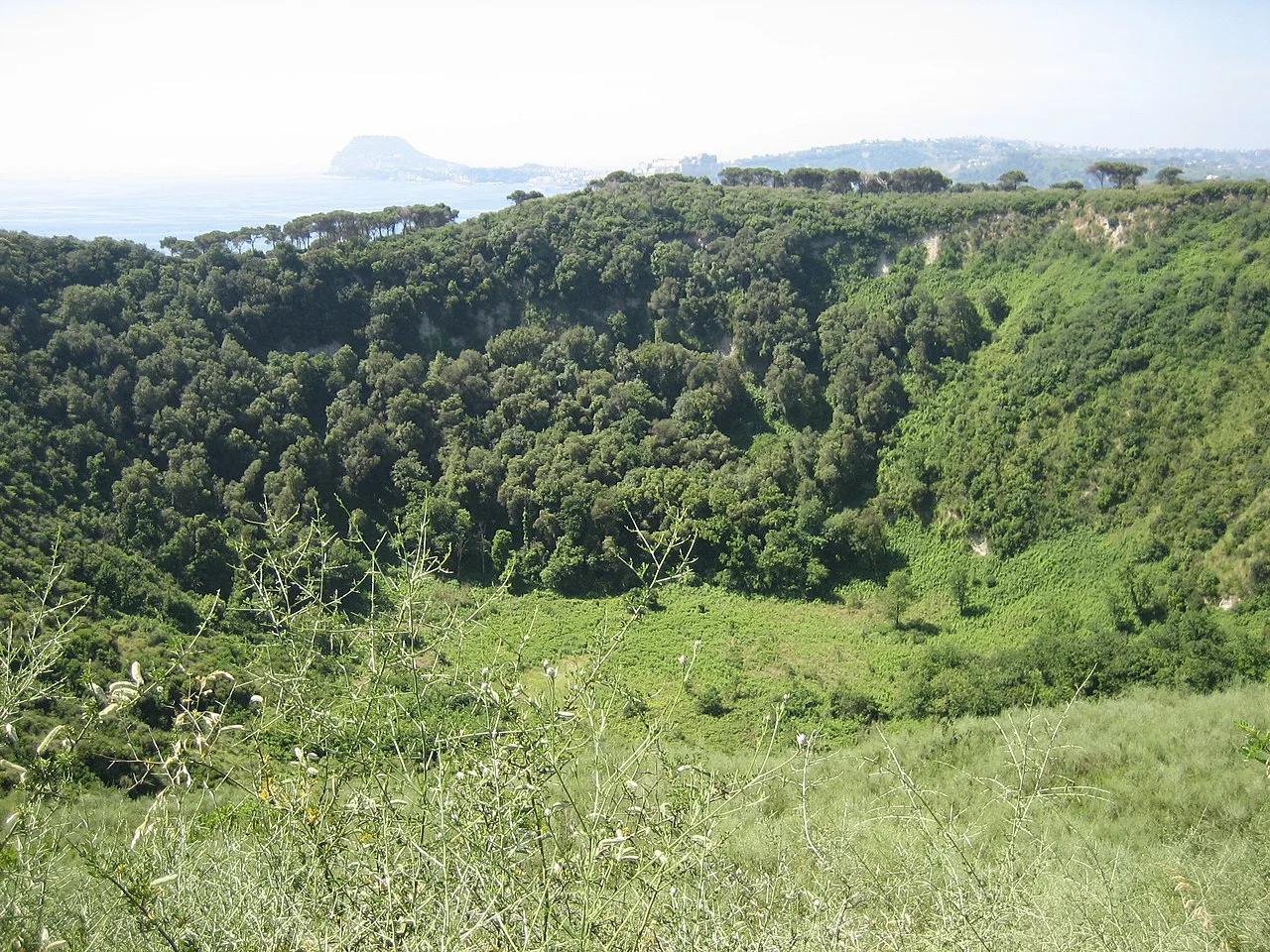
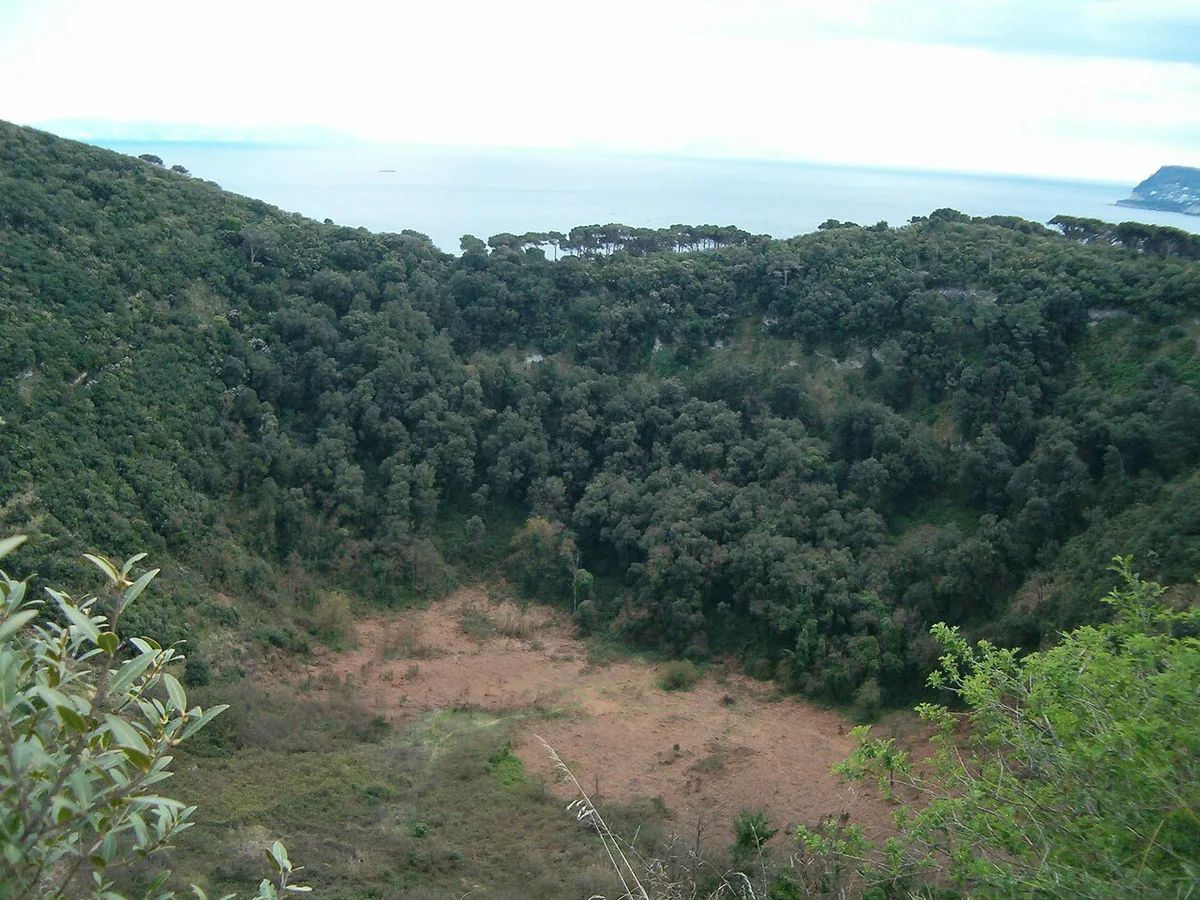
A caldera forms when a large magma chamber empties and its roof collapses. The main collapse at Campi Flegrei is dated to roughly 39,000 to 40,000 years ago, and that figure is approximate. Published estimates of the basin's width run from about 12 to 15 km (7.5 to 9 miles). Roughly 13 km (8 miles) is a common figure. Do not confuse that width with the 14.5 km distance from Naples to Pozzuoli. About one-third of the caldera is commonly described as lying beneath the Bay of Pozzuoli. Later eruptions built craters and cones inside the basin. Lake Avernus: Myth, Volcano and How to Visit fills one of those craters.
Campi Flegrei vs Vesuvius: the quick comparison
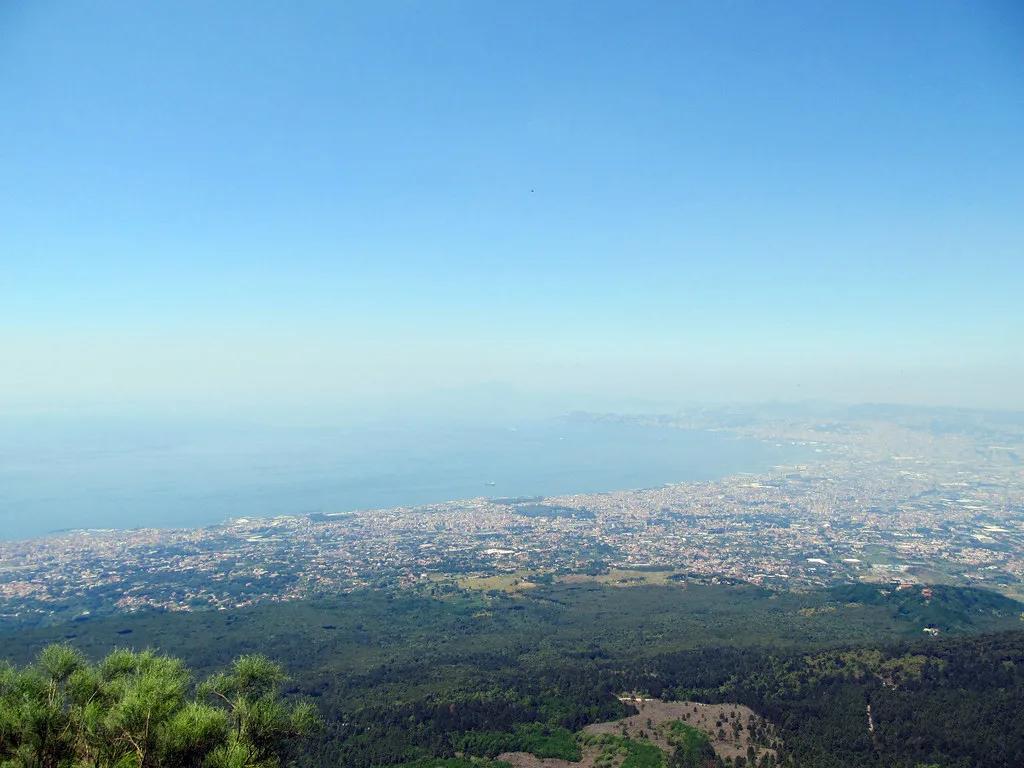
Many visitors expect a mountain and find a landscape of low rims, craters and a coastal town. Vesuvius is the opposite: one cone with a single summit crater. Our side-by-side comparison adds more detail. The table below gives the essentials.
| Feature | Campi Flegrei | Vesuvius |
|---|---|---|
| Volcano type | Caldera complex with many vents | Single cone volcano |
| Shape | Broad basin, about 13 km across | One mountain with a summit crater |
| Eruption style | Last event built a small cinder cone in about a week | 79 AD eruption buried Pompeii and Herculaneum |
| Last eruption | Monte Nuovo, 1538 | 1944 |
| Ground behavior | Rises and falls over months and years | Not known for this pattern |
| What a visitor sees | Fumaroles, crater lakes, Roman ruins | A crater rim and the cone itself |
Where you can see the volcano on the ground
You cannot climb Campi Flegrei as you would a peak. You read it through features scattered around the bay. Each item below shows a different part of the system.
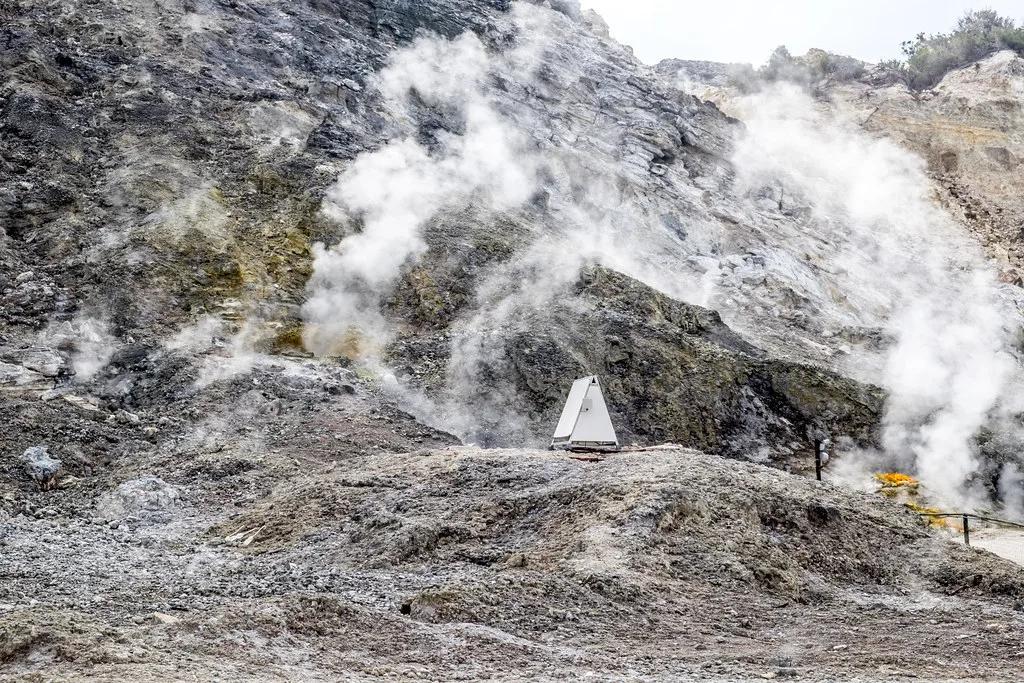
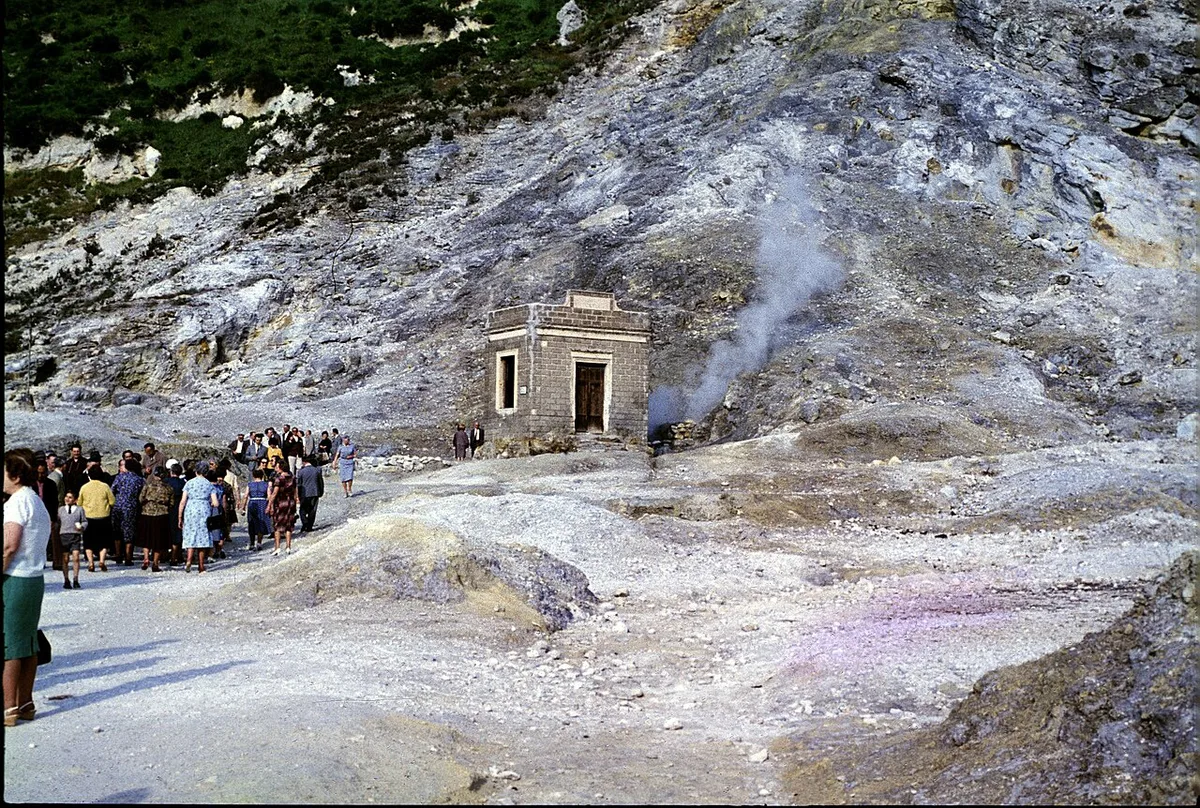
- Fumaroles and sulphur vents: Solfatara crater still releases gas through the ground.
- A young cinder cone: Monte Nuovo: Europe's Newest Mountain and How to Visit rose in 1538 over about a week.
- A crater lake: Lake Avernus: Myth, Volcano and How to Visit sits in an old volcanic crater, linked to Hades in ancient myth.
- Hot, steamy Roman baths: Stufe di Nerone Spa, Bacoli: Visitor Guide & Tips reflects the heat below.
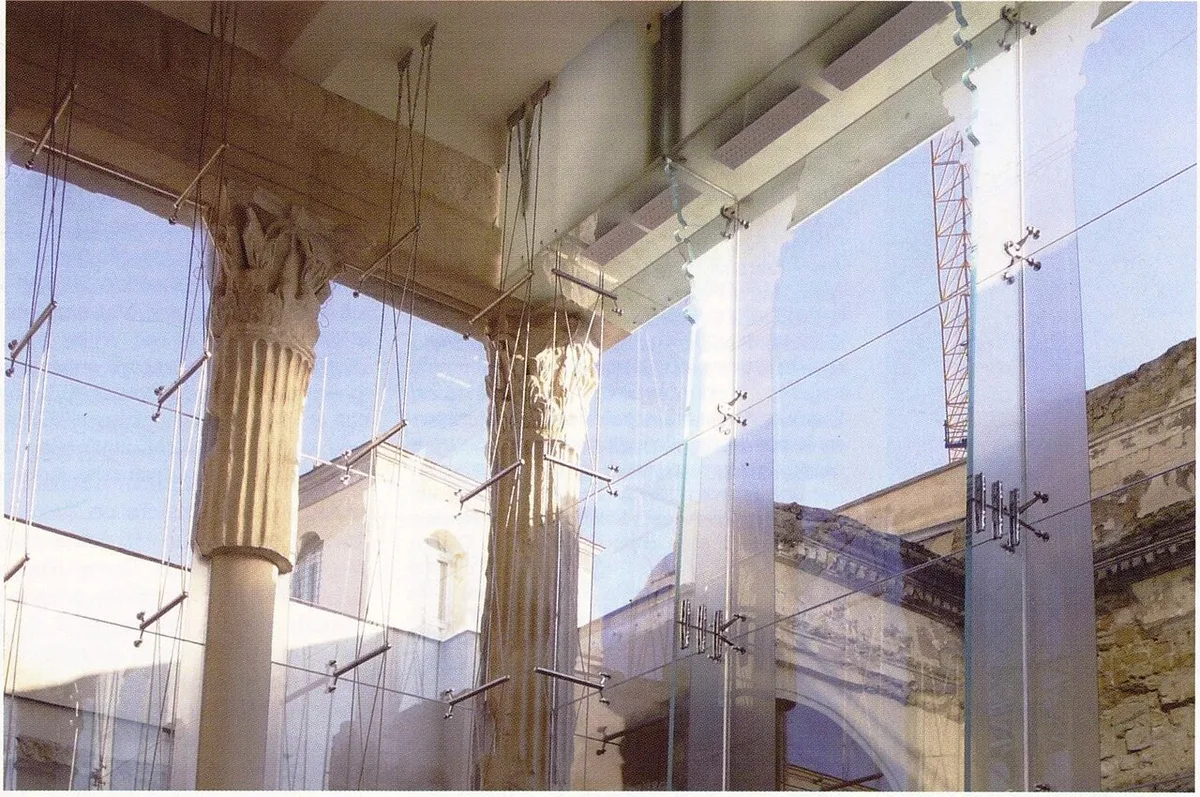
- The point of maximum uplift: Rione Terra, Pozzuoli: Visiting the Buried Roman Quarter is the old quarter above Pozzuoli's harbor.
- A sunken Roman coast: Baia's underwater park shows land that sank into the sea.
- Ground-movement evidence: the marble columns of Pozzuoli's ancient market, the Macellum, show it too.
Bradyseism: why the ground rises and falls
Bradyseism means slow vertical ground movement, measured over months and years rather than seconds. It is the visible, local sign of an active caldera. Read more in our guide to slow ground rise and fall. Pozzuoli holds the classic evidence. Three marble columns of the Macellum carry a band of holes bored by marine molluscs, several metres up their shafts. Those columns stood on dry land, sank under the sea for centuries, then rose again. Charles Lyell used them in his 1830 Principles of Geology to argue that land around Naples moves over time. The building was long called the Temple of Serapis, but that name is a misnomer.
How active is Campi Flegrei now?
Activity figures checked November 2026. Since the 1950s the caldera has gone through three major unrest episodes: the 1950s, 1969 to 1972 and 1982 to 1984. Each brought uplift and local earthquakes. Reports from mid-2026 put the maximum uplift at Rione Terra at about 167 cm since the current phase began. That includes roughly 30 cm between January 2025 and the end of July 2026. In the last week of February 2026, instruments recorded around 70 earthquakes. The strongest came close to magnitude 3.5. The current alert level and the latest bulletins appear on the Osservatorio Vesuviano site. For the 1538 event, see our eruption history page.
Warning signs scientists watch
Researchers track several signals together rather than relying on one. Italy's Civil Protection Department publishes risk and emergency planning for the area. Scientists do not forecast an eruption date. UCL volcanologist Christopher Kilburn has said an eruption, if it came, could range from the size of Monte Nuovo in 1538 to something like Vesuvius in 79 AD. These scenarios guide emergency planning. Researchers say the most direct signs would be cracking ground and darker gas releases, which had not appeared as of the 2023 reports.
- Ground uplift measured at stations around Pozzuoli
- Shallow earthquakes directly under the town
- Changes in gas output and composition
- Ground cracking, an immediate warning sign
Myths and facts about the caldera
Search results mix solid science with alarm. These corrections cover the most common mix-ups.
- Myth: it is one mountain. Fact: it is a basin with many vents and craters.
- Myth: supervolcano means imminent eruption. Fact: the label describes potential size, and the caldera-forming event was about 39,000 to 40,000 years ago.
- Myth: an eruption is certain soon. Fact: researchers say there is no guarantee, and they do not forecast dates.
- Myth: it is the same as Vesuvius. Fact: both sit near Naples but are separate systems on opposite sides of the city.
Visiting Campi Flegrei: practical orientation
Most visitors base themselves in Naples. Our guide to getting to Campi Flegrei from Naples covers the routes. Pick sights with the Campi Flegrei Map: Where Sites Are & How to Visit so you can group nearby stops. Town walks start in Pozzuoli, where the Macellum and Rione Terra sit. Ancient ruins and a Greek acropolis wait at Cumae. Unrest can close or restrict sites, and Solfatara in particular needs a status check. The Parco Archeologico dei Campi Flegrei lists current access for its sites. Do the check on the day, before you set out.
Frequently Asked Questions
What will happen if Campi Flegrei explodes?
Nobody can forecast it, but scientists describe a range of scenarios. The smallest would be similar to the 1538 Monte Nuovo eruption. The largest would resemble the 79 AD Vesuvius eruption. Emergency plans from Italy's civil protection authorities are built around these cases.