Solfatara Pozzuoli: Is It Open? Access & Alternatives
Last updated November 2026: the solfatara of Pozzuoli, a shallow volcanic crater near Naples, has been closed to visitors since September 2017. This guide explains what the crater is, why it closed and how to see it from outside. It also lists Campi Flegrei sites you can visit instead.
Featured image: Norbert Nagel, CC BY-SA 3.0, via Wikimedia Commons.
Is the Solfatara open? Current status
Solfatara di Pozzuoli has been closed to the public since the accident of September 2017. No reopening date is known. Treat any listing that sells crater-floor tickets as out of date. Check the Comune di Pozzuoli for a current notice before you plan a trip around it. You can still look at the crater from the surrounding streets in the town of Pozzuoli. It is one stop in the wider Campi Flegrei volcanic area.
- Status: closed to visitors since 12 September 2017
- Status reviewed: November 2026
- Where to look for news: Comune di Pozzuoli and the Campania civil protection pages
- Safe option: view the steam from outside and visit the alternatives below
What the Solfatara is
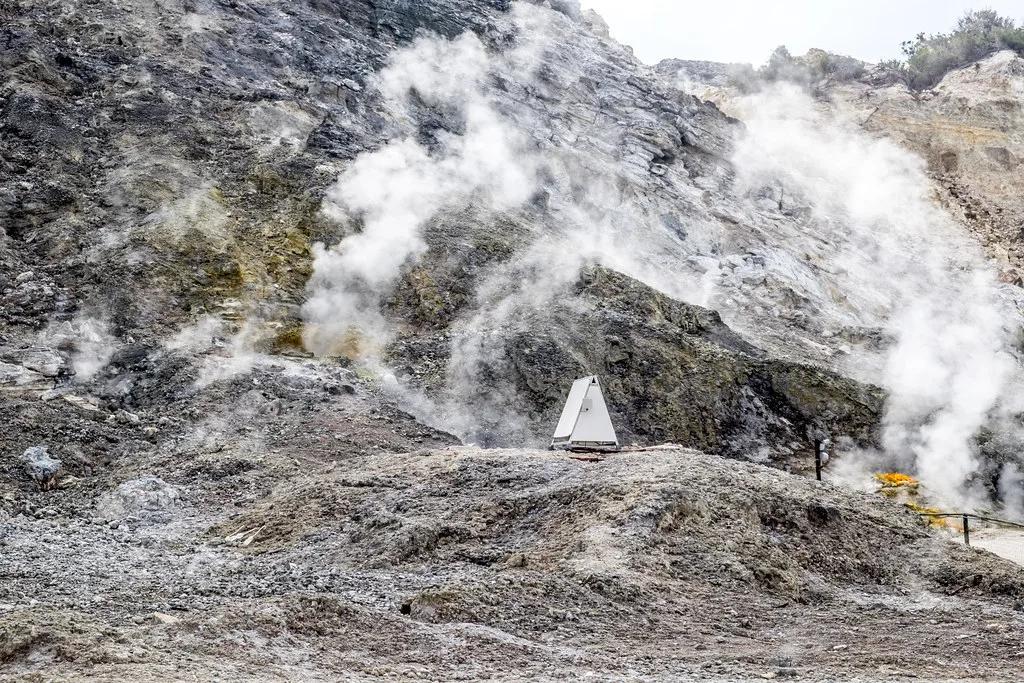
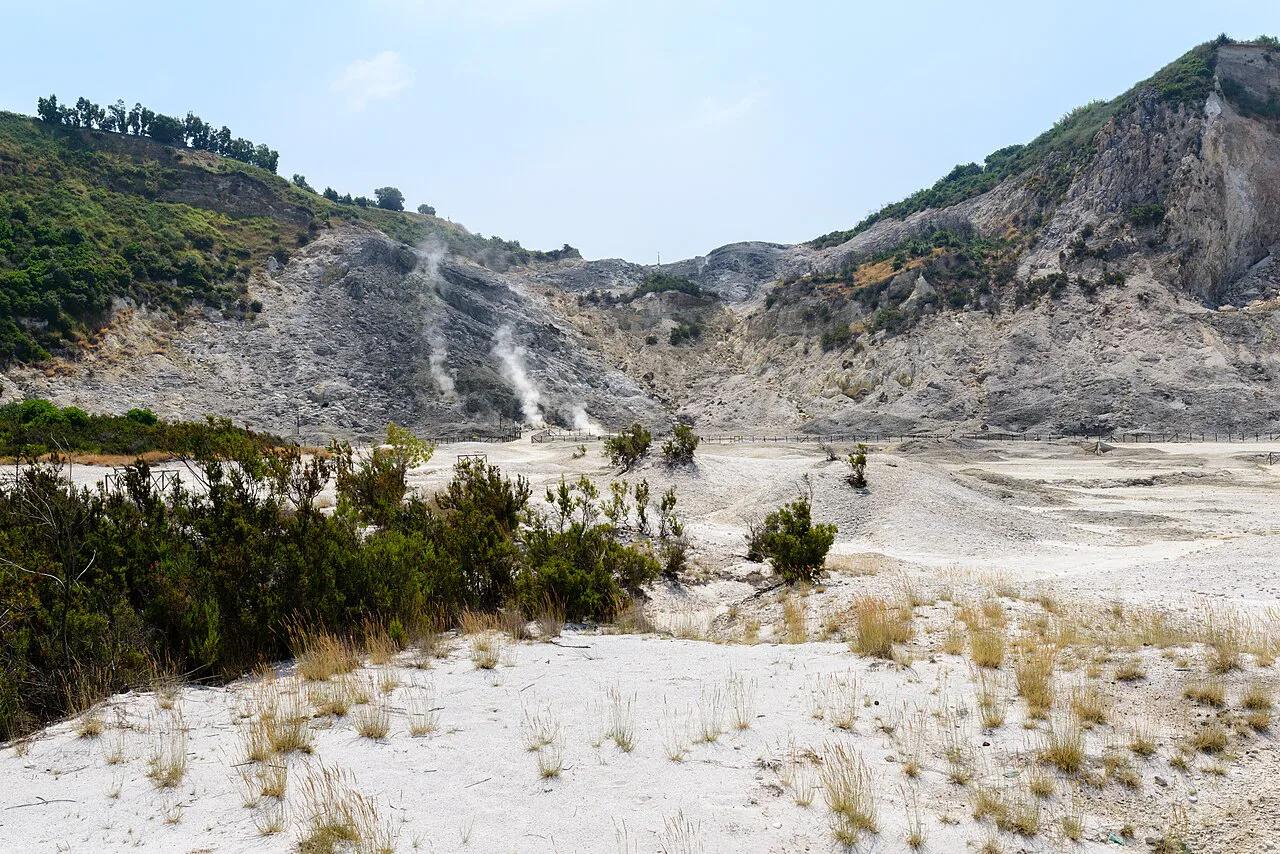
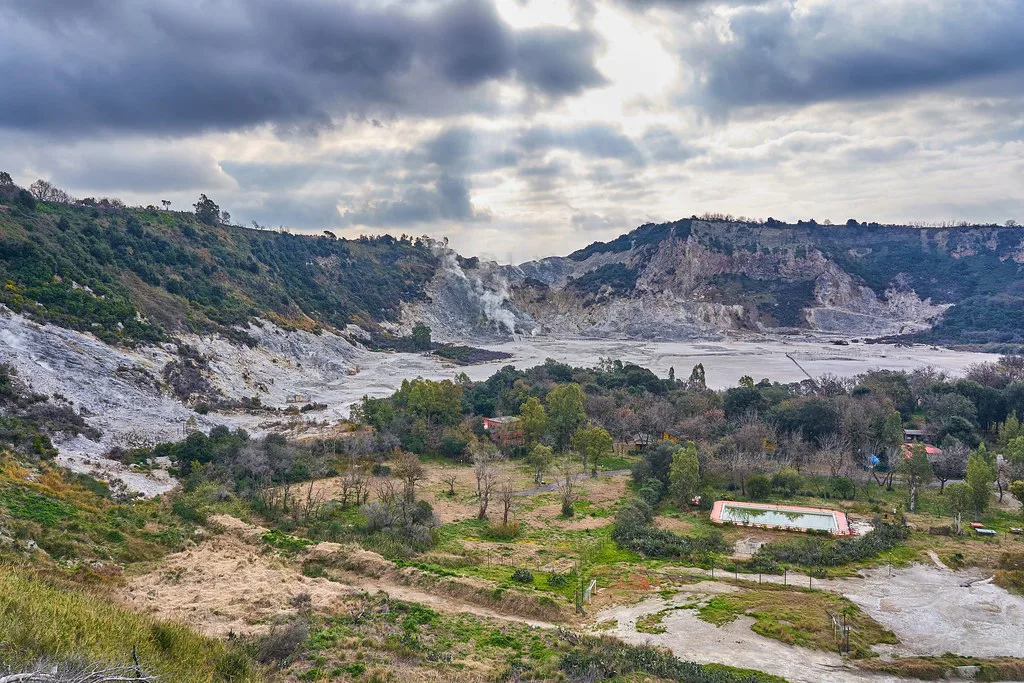
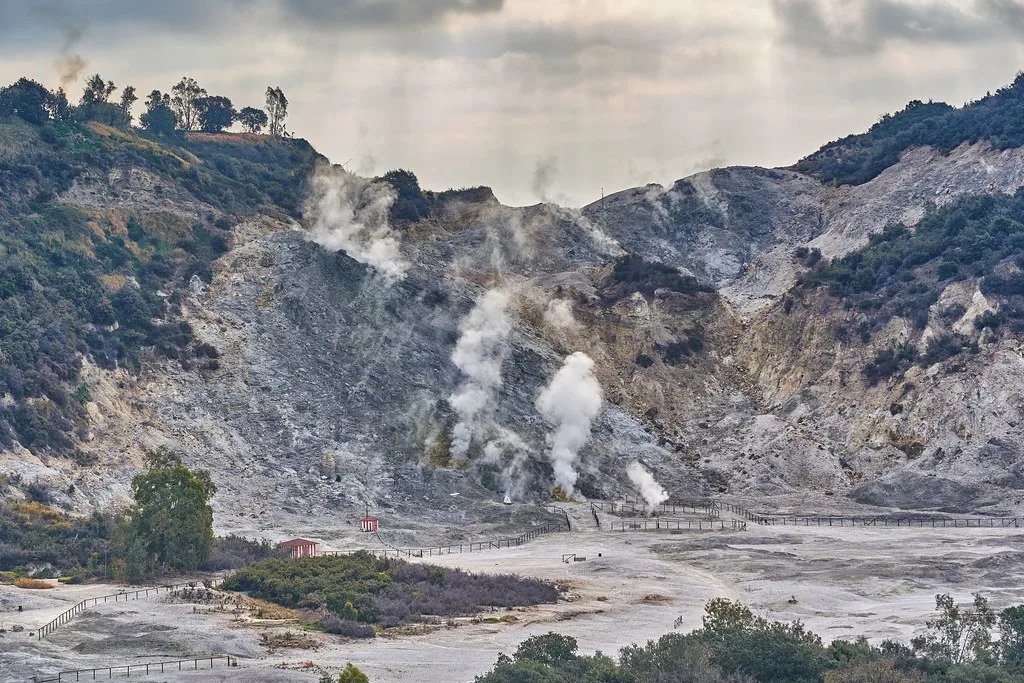
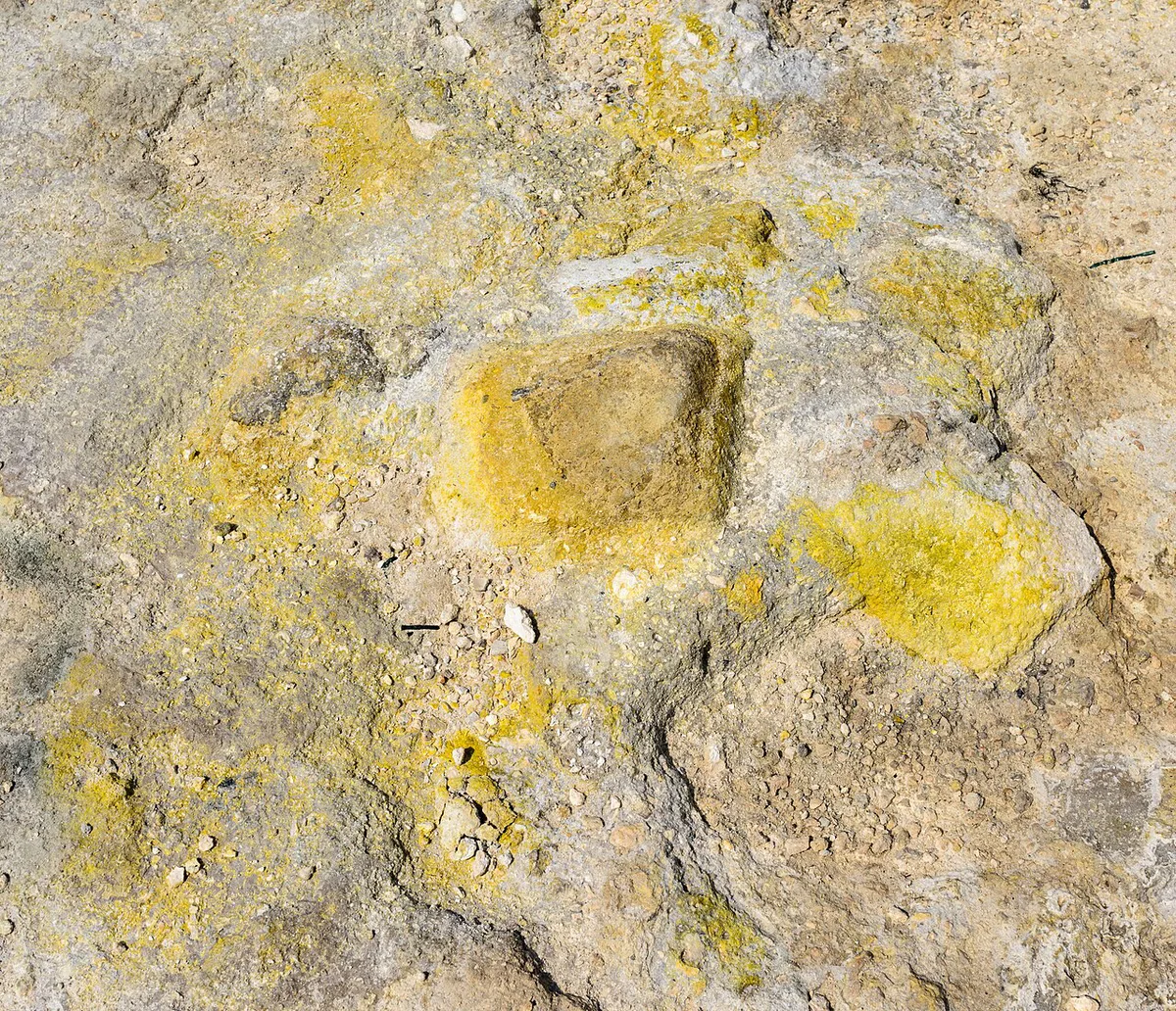
Solfatara di Pozzuoli is a shallow volcanic crater at Pozzuoli, near Naples. It sits inside the Campi Flegrei volcanic area. Its name comes from the Latin sulpha terra, meaning "land of sulfur". In lowercase, solfatara also names a type of fumarole field, so this page capitalizes the Pozzuoli site. Last eruption was in 1198, probably a phreatic, steam-driven blast. Published estimates of the crater's age differ, so no figure is given here. Fumaroles and hot ground show that the system is still active. INGV Osservatorio Vesuviano publishes monitoring bulletins for the area. A 2017 electrical resistivity study mapped a gas reservoir about 50 m below the surface. That reservoir connects to a channel about 10 m thick, which ends at the Bocca Grande fumarole. Slow ground rise and fall, known as bradyseism, is part of the unrest here. For the geology in depth, read what type of volcano Campi Flegrei is.
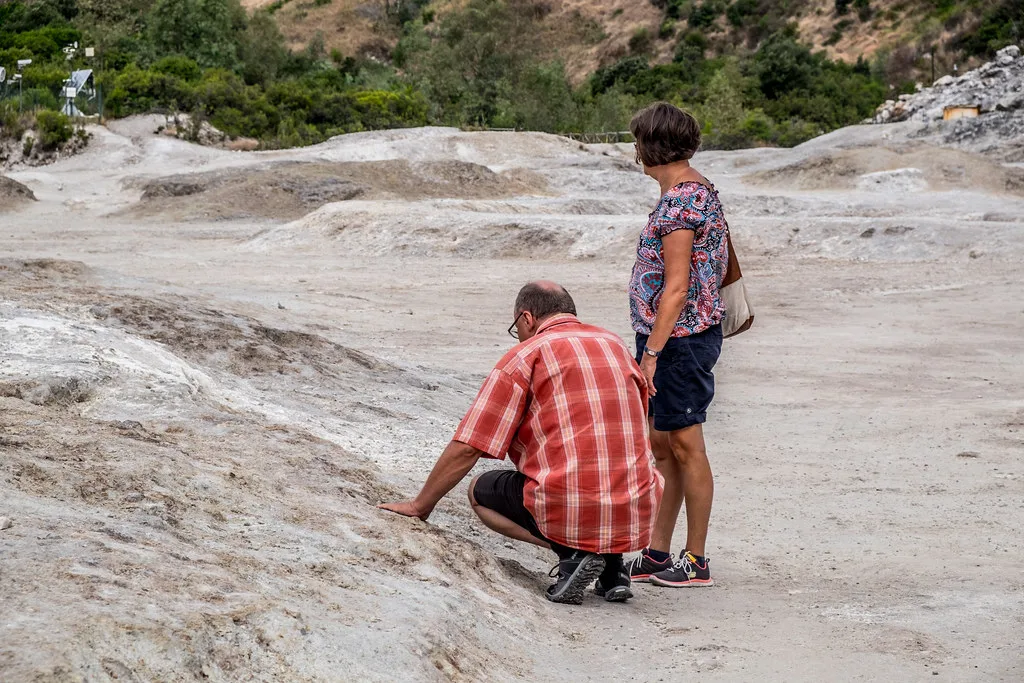
What visitors used to see
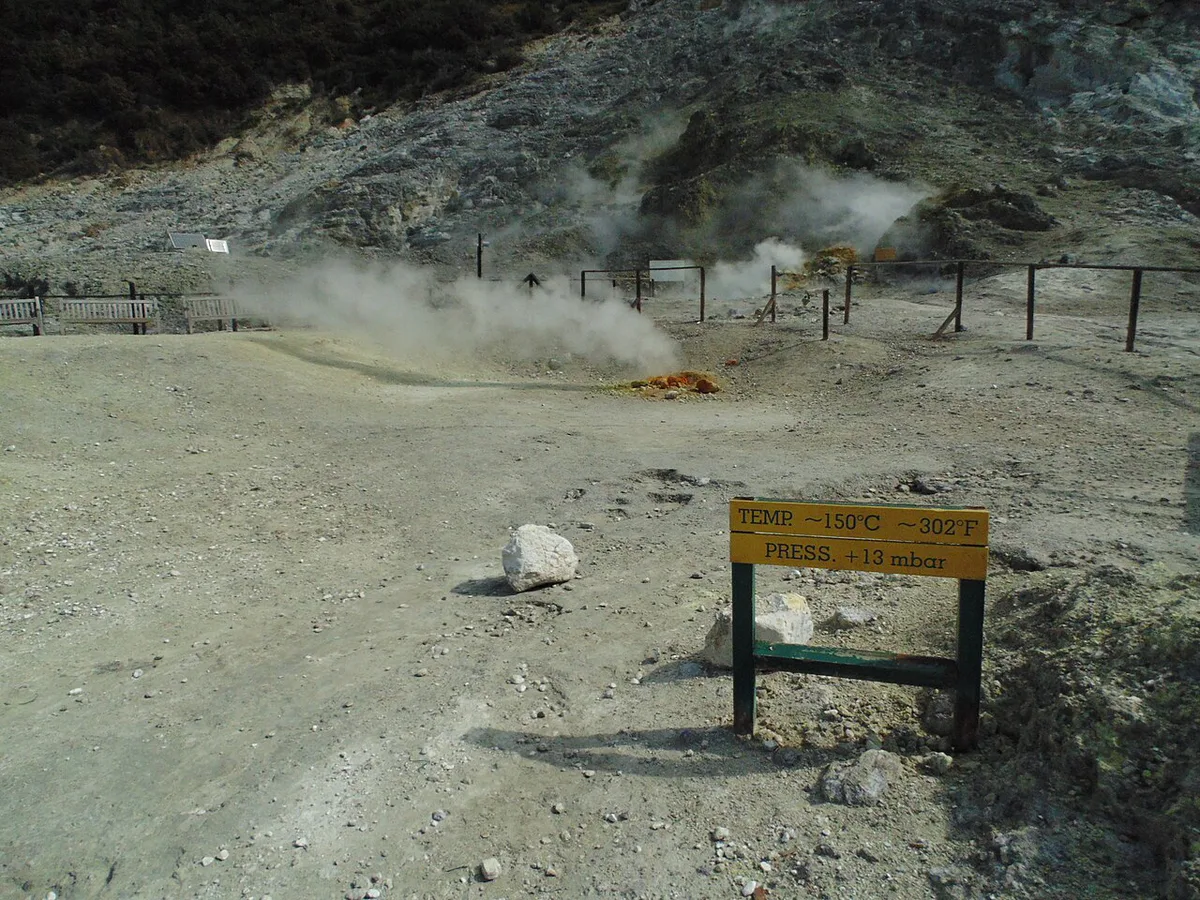
Before 2017 the crater floor was a regular stop. Visitors paid a full ticket of €7, and the site opened at 8:30 AM. Prices and hours checked November 2026 show no current ticket, so those figures are history only. Whether any feature below can be seen from outside is unconfirmed. Pre-closure accounts gave fumarole temperatures of up to 150°C.
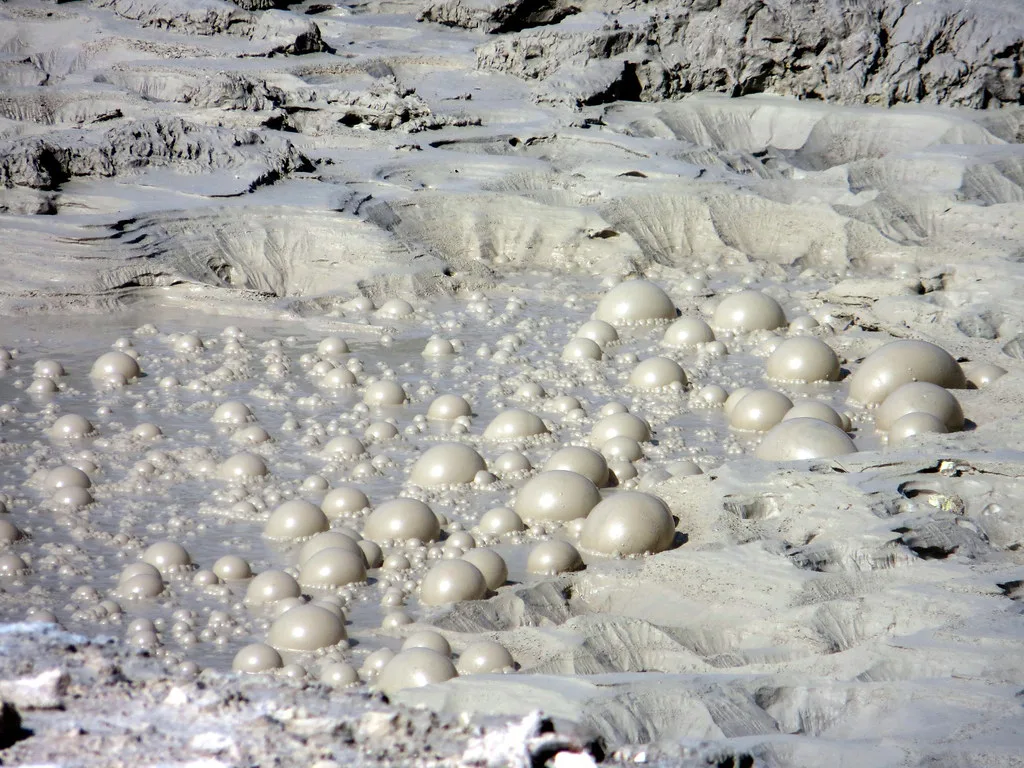
- Bocca Grande: the main fumarole, a permanent plume of steam and sulfurous gas
- Mud pool: boiling grey mud in a pit on the crater floor
- Stufe: old natural saunas where sulfur vapor was once used for health
- Mineral water well: a historic spring said to have been used for its supposed healing properties
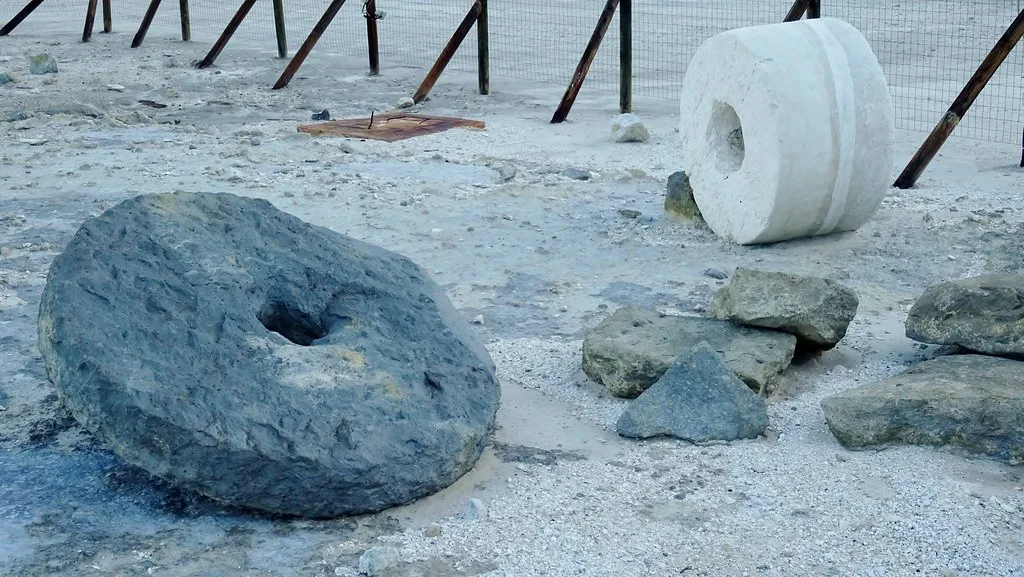
- Bianchetto millstones: large round stones once used to grind a white powder taken from volcanic rock
Why the Solfatara closed
On 12 September 2017, three people died after falling into a chasm in the crater. They were an 11-year-old boy and his parents. His 7-year-old brother survived. BBC News covered the event the same day. Early rumours said the boy had entered an off-limits area. An eyewitness who watched from her balcony disputed this, according to Tgcom24. She said the family was on the walking path and the chasm was unsecured. The site has been closed since. Ground uplift and gas emissions continue to be monitored across the area. Nobody can predict timing from a single crater, so avoid speculation. For depth, read about a possible Campi Flegrei eruption. Another guide covers the supervolcano debate.
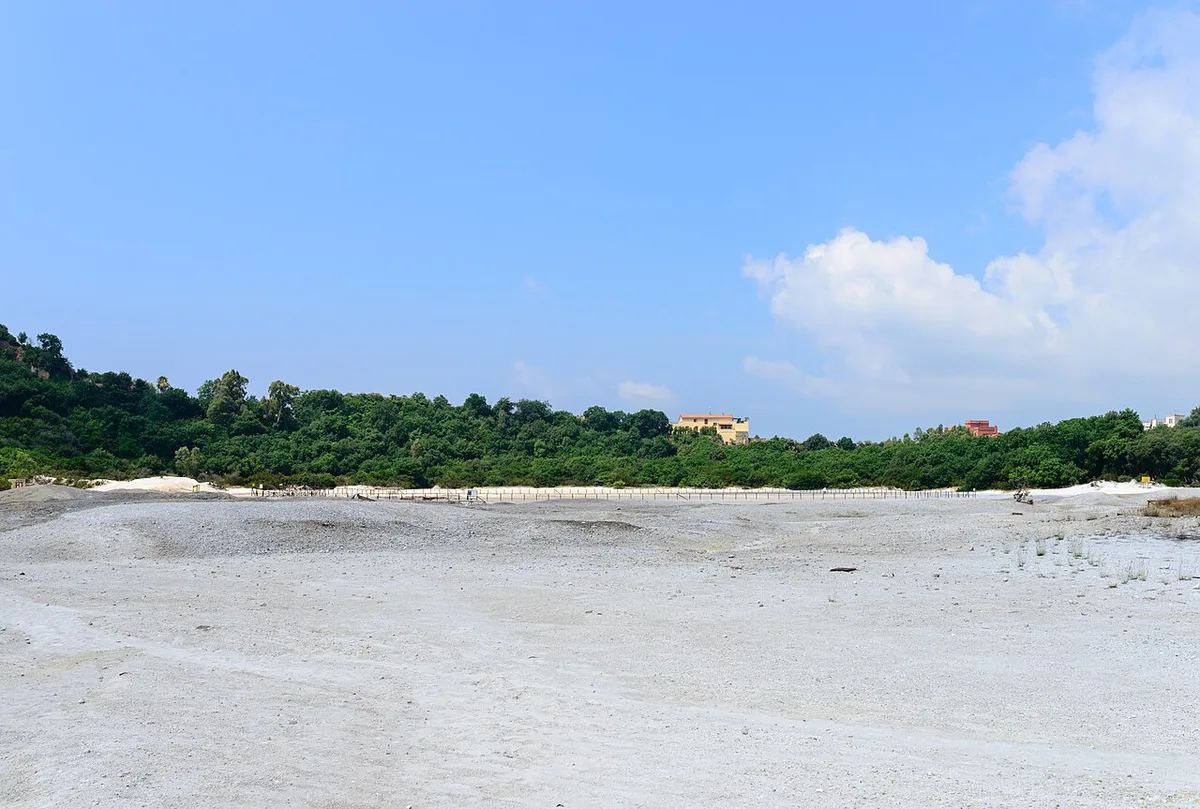
How to see Solfatara from outside and getting to Pozzuoli
Solfatara lies about 10 km from Naples. Pre-closure directions put the Pozzuoli-Solfatara station about 800 m from the crater entrance. From Naples to the Campi Flegrei, rail and bus are the usual choices. Local operators change lines and stops; EAV Ente Autonomo Volturno and the other operators publish current routes. Our Campi Flegrei Map: Where Sites Are & How to Visit shows where the crater sits relative to Pozzuoli.
| Option | Route | Distance or detail |
|---|---|---|
| Metro or train | Pozzuoli-Solfatara station | About 800 m from the entrance |
| City bus | Line P9 | Short ride from the station |
| Bus from Naples | Line 152 and Sepsa buses from Piazza Garibaldi | Cross the city to Solfatara |
| Car | Tangenziale exit 11 (Agnano) | About 4 km from the crater |
Solfatara vs Vesuvius
Visitors often confuse the two. Solfatara is a shallow crater inside the Campi Flegrei caldera. Vesuvius is the volcano that buried Pompeii in 79 CE. Solfatara's last eruption was in 1198. Our Campi Flegrei and Vesuvius comparison goes further. Vesuvius is managed by the Parco Nazionale del Vesuvio.
| Feature | Solfatara | Vesuvius |
|---|---|---|
| Type | Shallow crater with fumaroles in the Campi Flegrei | Large volcano east of Naples, linked to the 79 CE eruption |
| Visit format | Closed since 2017 | Managed national park |
| Best for | Steam views from outside and Campi Flegrei context | Crater walk and Pompeii context |
Best alternatives in the Campi Flegrei
Each site below offers a different volcanic or Roman angle. Monte Nuovo formed in 1538. Access and opening times change, so check each one with the Parco Archeologico dei Campi Flegrei before you go.
| Place | Time needed | Best fit |
|---|---|---|
| Nero's Stufe site | Short stop | Steam and sauna history |
| The 1538 Monte Nuovo cone | 1-2 hours | Easy volcano climb with a crater view |
| Avernus crater lake | 1 hour | A lakeside walk |
| Rione Terra district | Half a day with Pozzuoli | Underground Roman streets |
| Pozzuoli's Flavian amphitheater | 1-2 hours | Roman arena and tunnels |
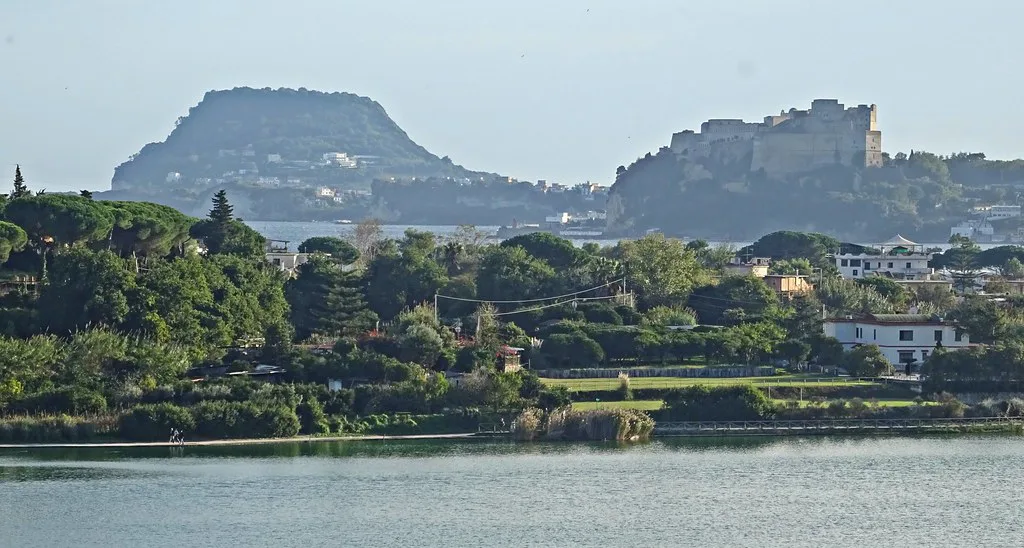
| Baia castle | 1-2 hours | Castle and Roman baths coast |
| Baia's underwater ruins | Half a day | Submerged Roman ruins |
| Roman cistern at Piscina Mirabilis | 1 hour | Ancient engineering |
| Ancient Cumae site | Half a day | Greek and Roman history |
Planning a half-day or full day
A Pozzuoli day works well on foot. Combine a view of the crater with the amphitheater and Rione Terra. A Baia and Cumae day suits visitors who want a longer day on the coast, with more transit time between stops. Spring (April-May) and autumn (September-October) are usually described as the comfortable months. Avoid summer afternoons. Start in the Baia area and move west, or begin at Pozzuoli and finish at the station. Pre-closure private tours ran 1.5 hours, so allow similar time for a short viewing stop.
- Mistake: assuming the crater is open because an old guidebook lists it
- Mistake: trusting a tour listing that quotes pre-2017 prices
- Mistake: visiting in midday summer heat without checking conditions
- Mistake: planning a Monday visit without checking which sites are shut
Where to base yourself
Pozzuoli puts you closest to the amphitheater, Rione Terra and the crater viewpoints. Naples centre has the widest choice of hotels and restaurants. Agnano and Bagnoli are quieter residential areas between the city and the Campi Flegrei.
| Base | Convenience | Atmosphere |
|---|---|---|
| Pozzuoli | Closest to most Campi Flegrei sites | Local town with restaurants |
| Naples centre | Easy transit, longer transfers to the sites | Livelier, wide choice |
| Agnano or Bagnoli | Between city and fields | Quiet, residential |
Frequently Asked Questions
What is Solfatara?
Solfatara di Pozzuoli is a shallow volcanic crater at Pozzuoli, part of the Campi Flegrei near Naples. Its fumaroles, hot ground and sulfur smell gave it the name, from Latin for "land of sulfur".
Is there a supervolcano in Italy?
The Campi Flegrei caldera near Naples is often described that way. It is one of the largest volcanic systems on Earth. Read our Campi Flegrei supervolcano guide for the evidence.