Campi Flegrei vs Vesuvius: Differences, Risk and Which to Visit
Last updated November 2026: Campi Flegrei vs Vesuvius is a choice between two different volcanoes about 25 km apart. Vesuvius is a single cone that you climb to a crater rim. Campi Flegrei is a caldera field of 24 craters and edifices, visited town by town. For most trips they complement each other rather than compete.
Featured image: Enrico Viceconte, CC BY 2.0, via Wikimedia Commons.
Quick Verdict: Campi Flegrei vs Vesuvius for Your Trip
Pick Vesuvius if you want one classic crater-rim hike and a pairing with Pompeii and Herculaneum. Pick Campi Flegrei if you want Roman ruins, fumaroles, lakes and an underwater archaeological park. Campi Flegrei lies west of Naples and partly under the city, while Vesuvius sits to the east. Cost and time figures in the table are editorial estimates for 2026, not published fares.
| Criterion | Vesuvius | Campi Flegrei |
|---|---|---|
| Volcano type | Stratovolcano, a single cone | Caldera field of 24 craters and edifices |
| Location | East of Naples | West of Naples, partly under the city |
| What you see | Crater rim and views over the bay | Fumaroles, Roman ruins, lakes, bays, underwater park |
| Effort | A hike to the rim | Mostly town and site walking; highest point of the field is 458 m |
| Alert level (ESA) | Green | Yellow since 2012 |
| Time (editorial estimate) | About half a day | A full day or more |
| Cost (editorial estimate) | €25–€45 with transport and entry | €20–€40 for several site entries and local transport |
| Best for | Hikers, Pompeii pairing | History and geology fans |
How the Two Volcanoes Differ
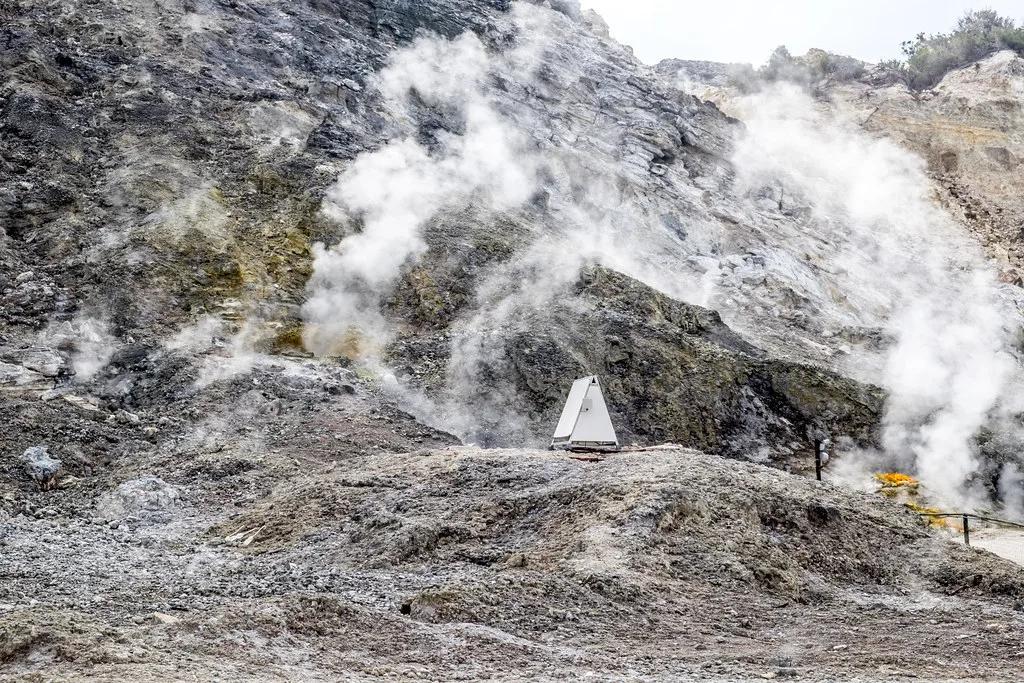
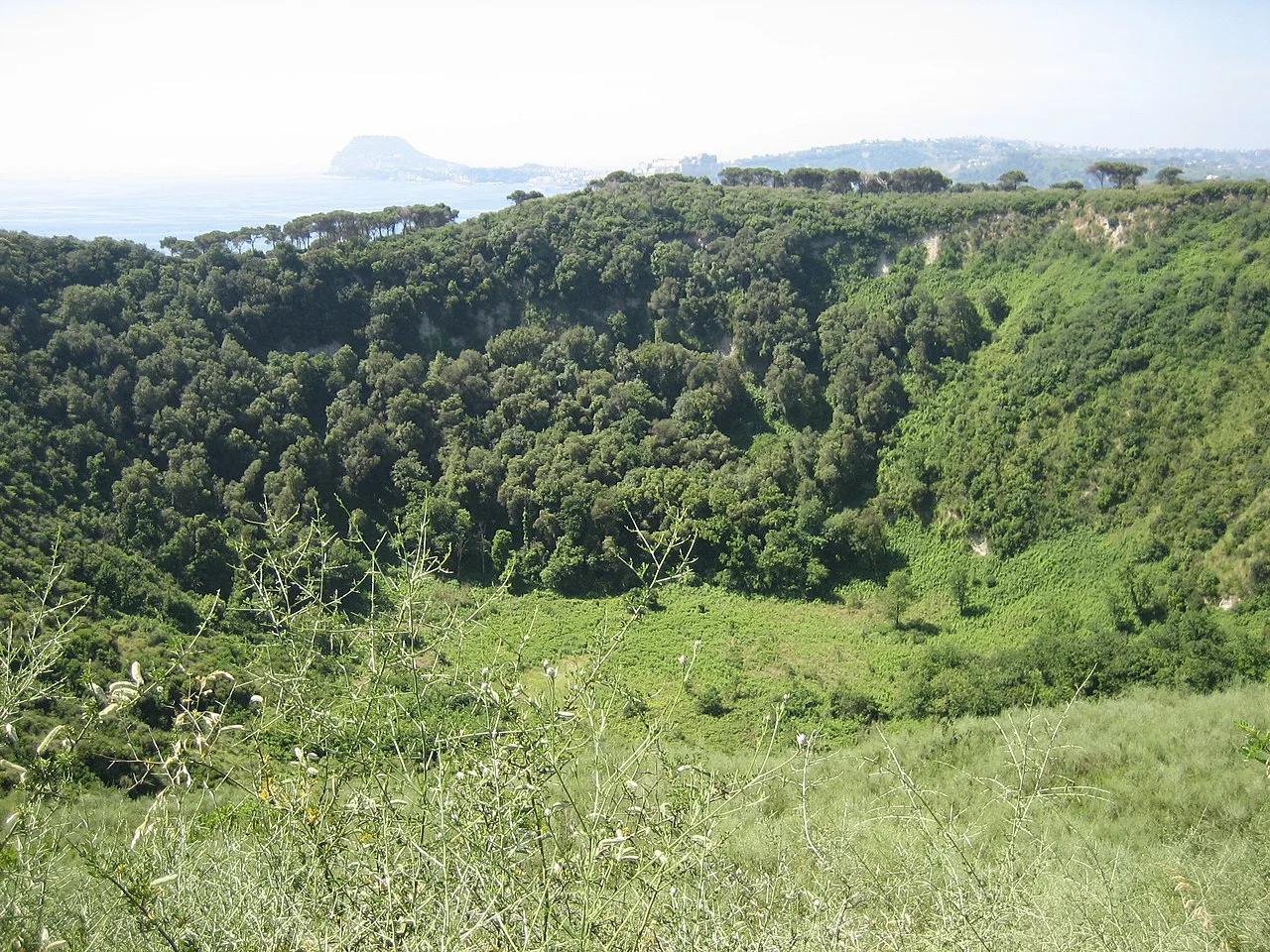
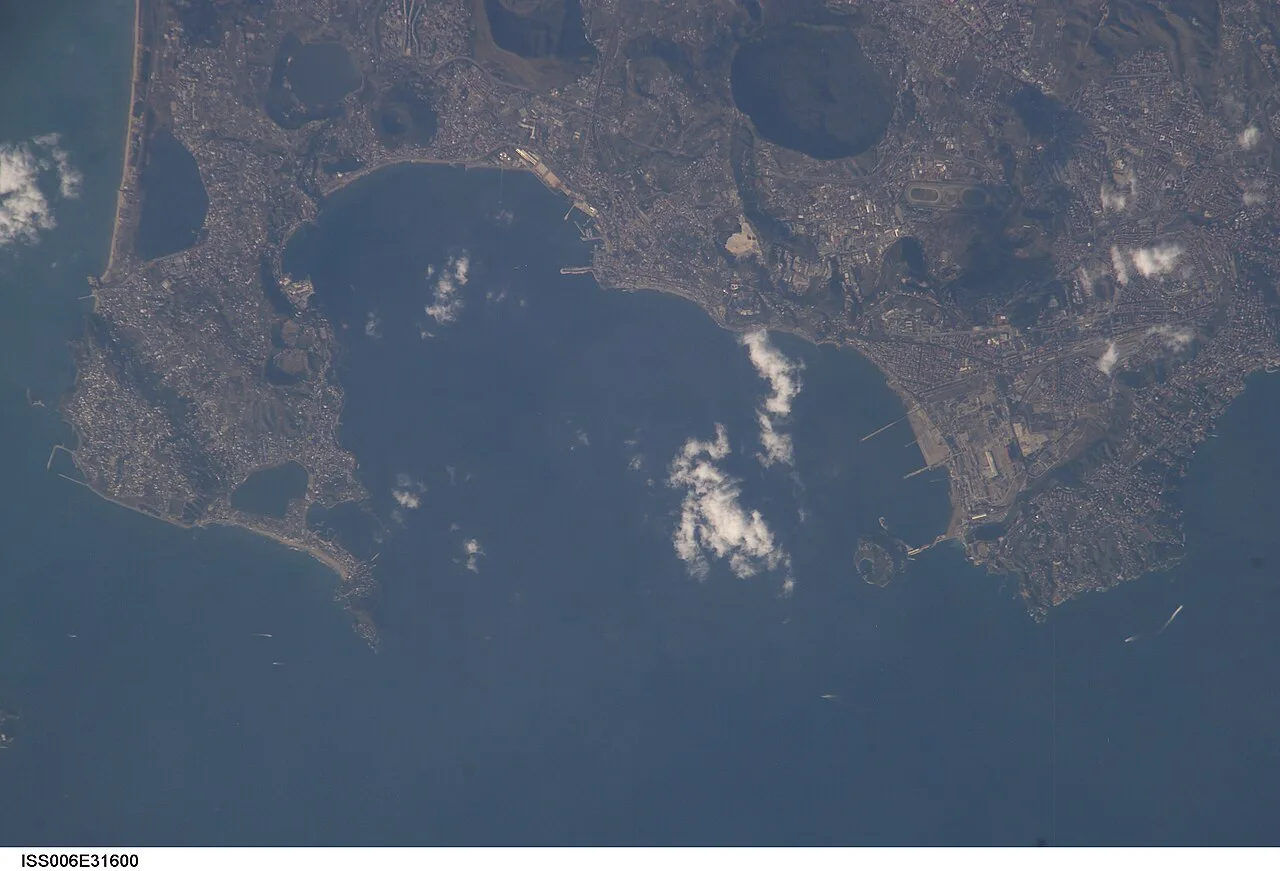
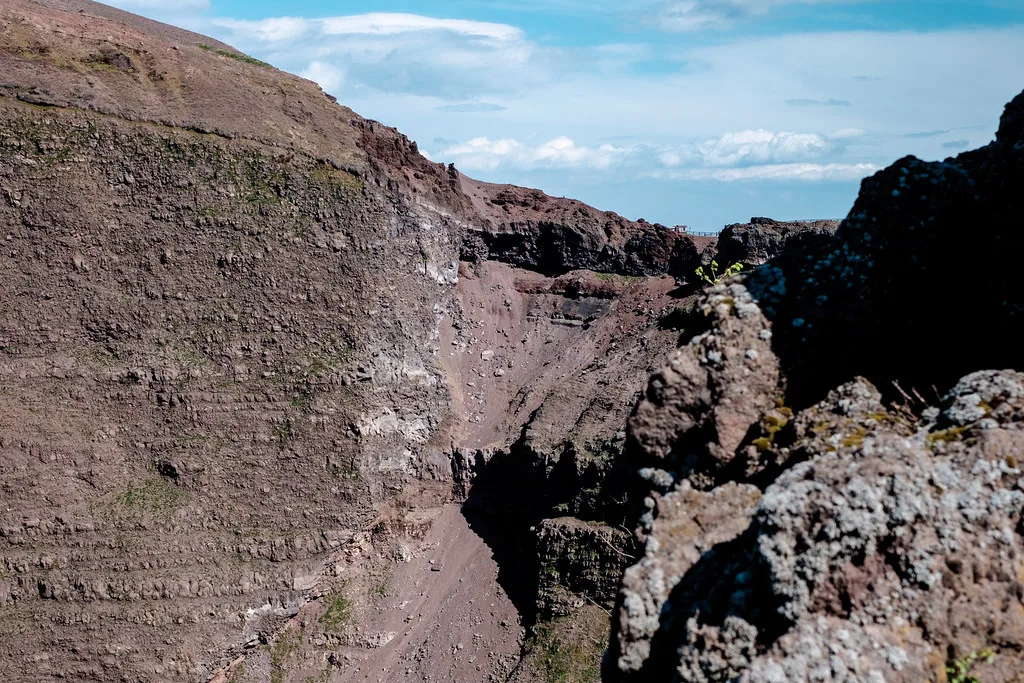
Vesuvius is a classic cone. Its most recent Plinian eruption was in 79 AD, followed by sub-Plinian eruptions in 472 and 1631. ESA's heritage-data summary notes semi-persistent activity until 1944, and Vesuvius has been considered dormant since. Campi Flegrei works differently. It is a depression rather than a mountain, roughly 10–12 km across, with craters scattered across land and the Gulf of Naples. Its last eruption ran from 29 September to 6 October 1538 and built Monte Nuovo: Europe's Newest Mountain and How to Visit. Unrest since the 1950s has come in four main episodes: 1950–1952, 1969–1972, 1982–1984, and 2005 to the present. Our guide to what type of volcano Campi Flegrei is covers the geology in more depth. On scale, its largest known eruptions are estimated at VEI 7. The strict definition of a supervolcano requires VEI 8, so read the supervolcano label explained before taking headlines literally.
Current Status and Alert Levels
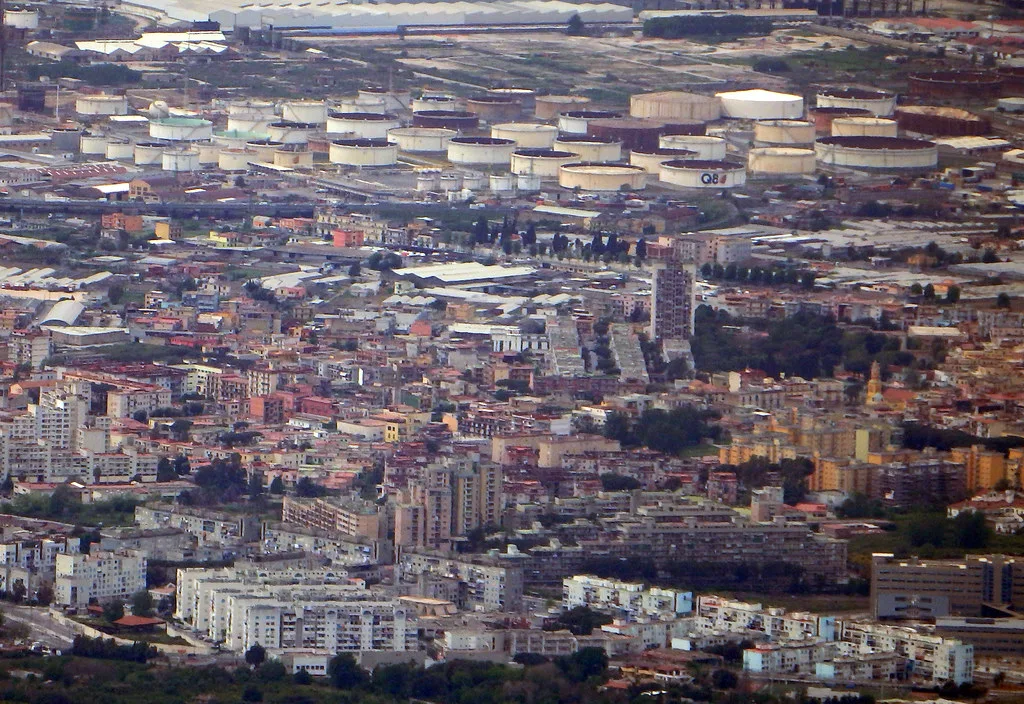
ESA reports a yellow alert level for Campi Flegrei since 2012 and green for Vesuvius. Levels can change, so check the Protezione Civile alert pages before you travel. Seismic bulletins are published by INGV Osservatorio Vesuviano. Recorded earthquakes at Campi Flegrei include a magnitude 4.4 on 13 March 2025 and a magnitude 4.7 on 31 July 2026, at about 3 km depth. Ground uplift linked to bradyseism is the cause of this unrest. Visitors should expect occasional site closures rather than a closed region. Solfatara crater was open on foot until 2017, and its own page covers the current access status. For what an eruption would involve, see our page on a Campi Flegrei Eruption: Risk, Alerts and Visiting.
Are Campi Flegrei and Vesuvius Connected?
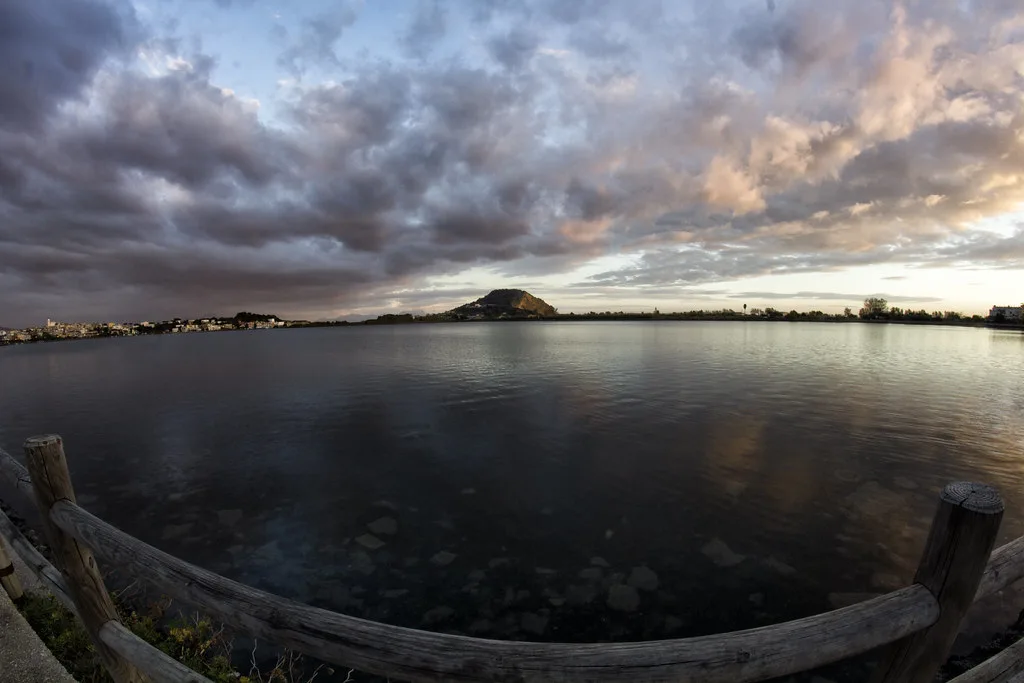
Nobody has proved that they share a magma source. The two are only about 25 km apart, yet their eruptive histories and erupted materials differ. Researchers using ERS and Envisat satellite data found that the switch from subsidence to uplift at Campi Flegrei coincided with a contraction of a deep volume below Vesuvius. That suggests possible transfer of magma or fluids at 8–9 km depth, and ESA calls the interaction question open. Nothing in the evidence says the two erupt together.
What You Can Actually Visit at Each
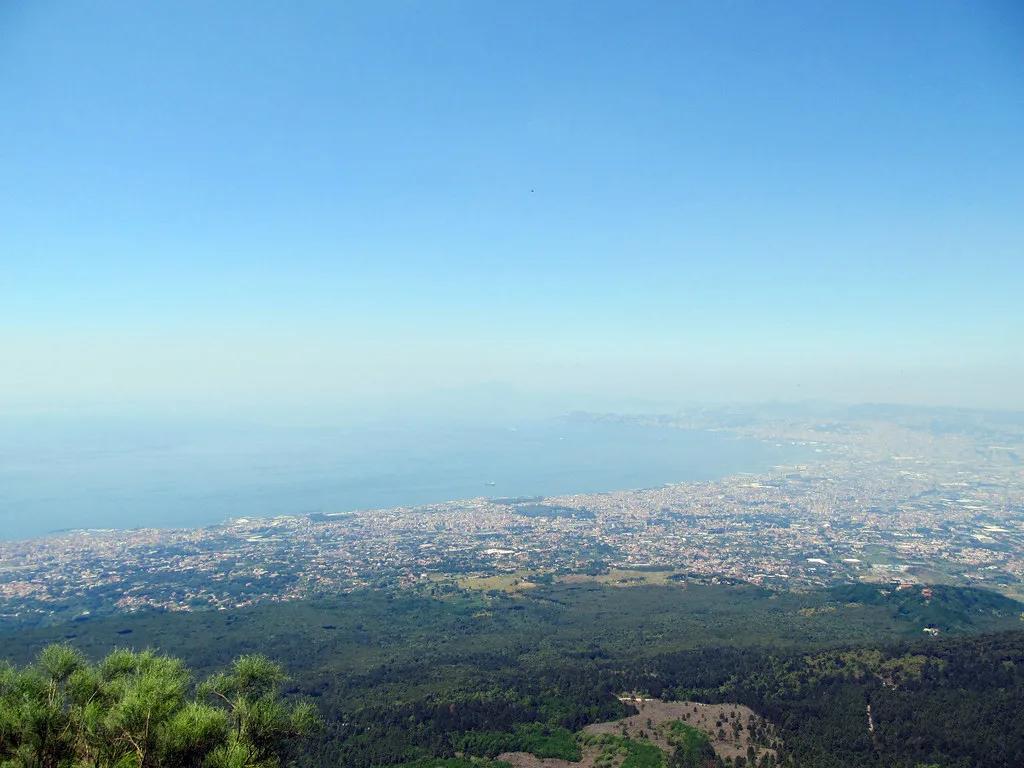
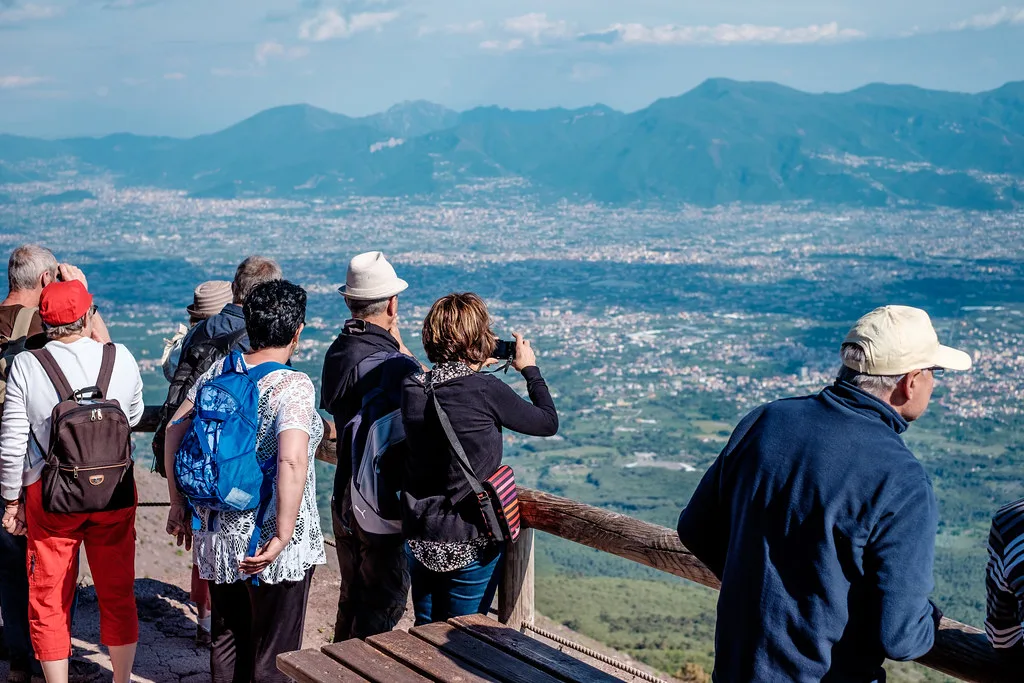
Vesuvius is one objective: the crater rim and the view of the bay. Check trail conditions, ticketing and time-slot rules on the Parco Nazionale del Vesuvio site. Pompeii and Herculaneum, the 79 AD sites, are the natural add-ons. Campi Flegrei is a circuit of separate stops. Hours and tickets for state-run sites are listed by the Parco Archeologico dei Campi Flegrei.
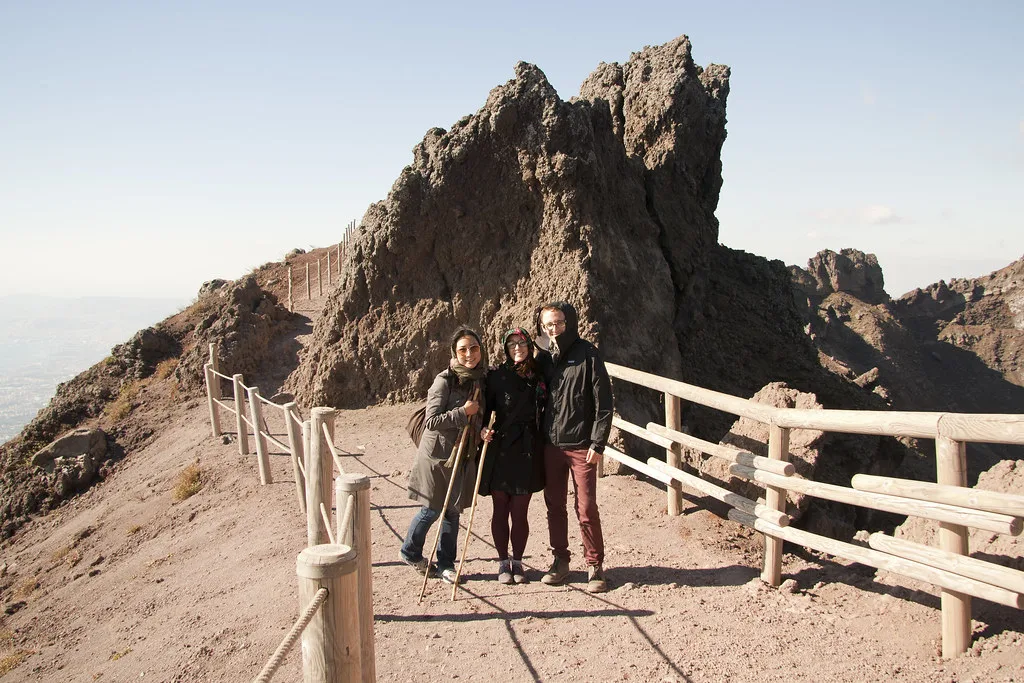
- Pozzuoli: the Flavian Amphitheatre, the third-largest Roman amphitheatre in Italy, and the Macellum, whose columns record changing sea level.
- Baia: the archaeological museum and the underwater archaeological park, seen from a glass-bottom boat.
- Cumae: the Greek colony and seat of the Cumaean Sibyl.
- Lake Avernus: Myth, Volcano and How to Visit: a crater lake that Virgil's Aeneid treated as an entrance to the underworld.
- Piscina Mirabilis Bacoli: Tickets, Hours & How to Visit and Stufe di Nerone Spa, Bacoli: Visitor Guide & Tips: Roman engineering and thermal sites.
Time, Cost and Access Trade-Offs
Vesuvius takes roughly half a day, and Campi Flegrei suits a full day or more. Those are editorial estimates. Prices and hours were last checked November 2026 only at the level of official sources; each site's own page has current entry fees. As a rough guide, budget €25–€45 for a Vesuvius morning with transport and entry. A Campi Flegrei day with several site entries and local transport might run €20–€40. Transport differs too. Check EAV for regional rail and Trenitalia and the Naples metro for the western side. The Campi Flegrei Map: Where Sites Are & How to Visit helps you cluster stops, and our guide to Campi Flegrei from Naples covers the routes.
At Campi Flegrei the highest point of the field is 458 m, so effort comes from walking between towns, not from a rim climb.
Who Should Choose Which, and How to Combine Both
Match the volcano to your time and interest. If you have two days, split them rather than rushing both into one. Base yourself in Naples, then do Campi Flegrei on one day and Vesuvius with Pompeii or Herculaneum on the other.
Vesuvius and Campi Flegrei lie about 25 km apart, so combining them is a question of travel logistics rather than shared volcanic activity.
- First-timer with one day: Vesuvius for the crater rim, accepting about half a day of effort.
- History lover: Campi Flegrei for Pozzuoli, Baia and Cumae, which needs a full day.
- Hiker or geology fan: Vesuvius for the climb, then the Campi Flegrei overview for fumaroles and craters.
Mistakes to Avoid and Common Misconceptions
Most errors come from treating the two volcanoes as one thing. Avoid the traps below.
- Treating Campi Flegrei as a mountain. It is a depression with 24 craters and edifices.
- Assuming supervolcano means a VEI 8 eruption is imminent. Its largest known eruptions are estimated at VEI 7.
- Packing both volcanoes into one day. Campi Flegrei alone needs a full day.
- Planning around Solfatara without checking access. It was open on foot until 2017.
- Quoting prices from old guides. Check the park and comune pages.
Frequently Asked Questions
Is Campi Flegrei likely to erupt?
Nobody can give a date. Campi Flegrei has been in a yellow alert level since 2012, with ground uplift and earthquakes recorded through 2025 and 2026. Monitoring by INGV Osservatorio Vesuviano continues, and its bulletins give the latest status.
How bad would it be if Campi Flegrei erupted?
The outcome depends on the type of eruption. The last one, in 1538, built Monte Nuovo over eight days. Larger events are possible in principle, which is why Italy keeps evacuation plans. Follow Protezione Civile guidance rather than headlines.