Campi Flegrei Supervolcano: Is It Safe to Visit?
Last updated November 2026: the Campi Flegrei supervolcano is a large, mostly submerged caldera west of Naples, across the bay from Vesuvius. It is monitored and open to visitors, and this guide covers the science in brief plus the sites you can see. Activity levels and access rules change, so check official sources before you travel.
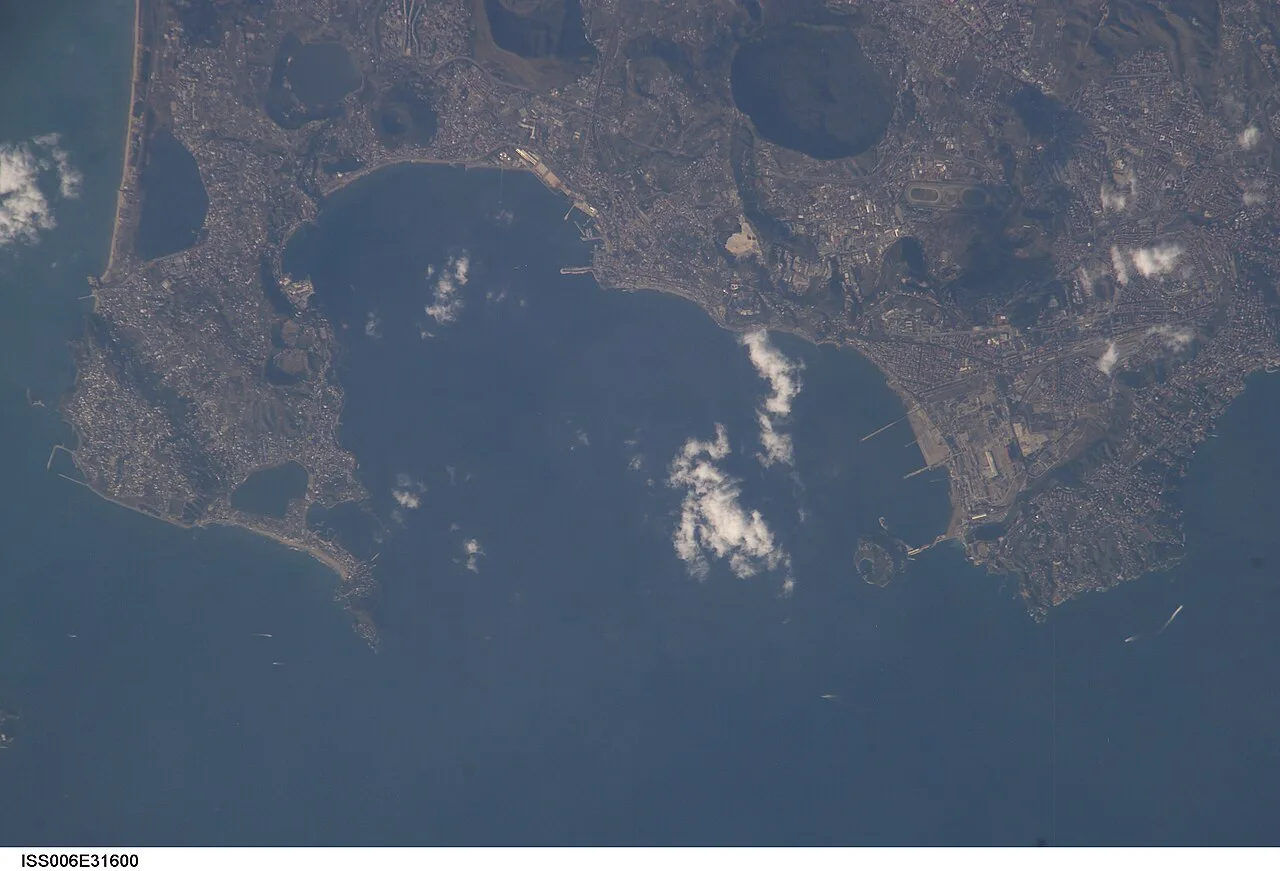
Featured image: Earth Science and Remote Sensing Unit, Lyndon B. Johnson Space Center, Public domain, via Wikimedia Commons.
Is the Campi Flegrei supervolcano label accurate?
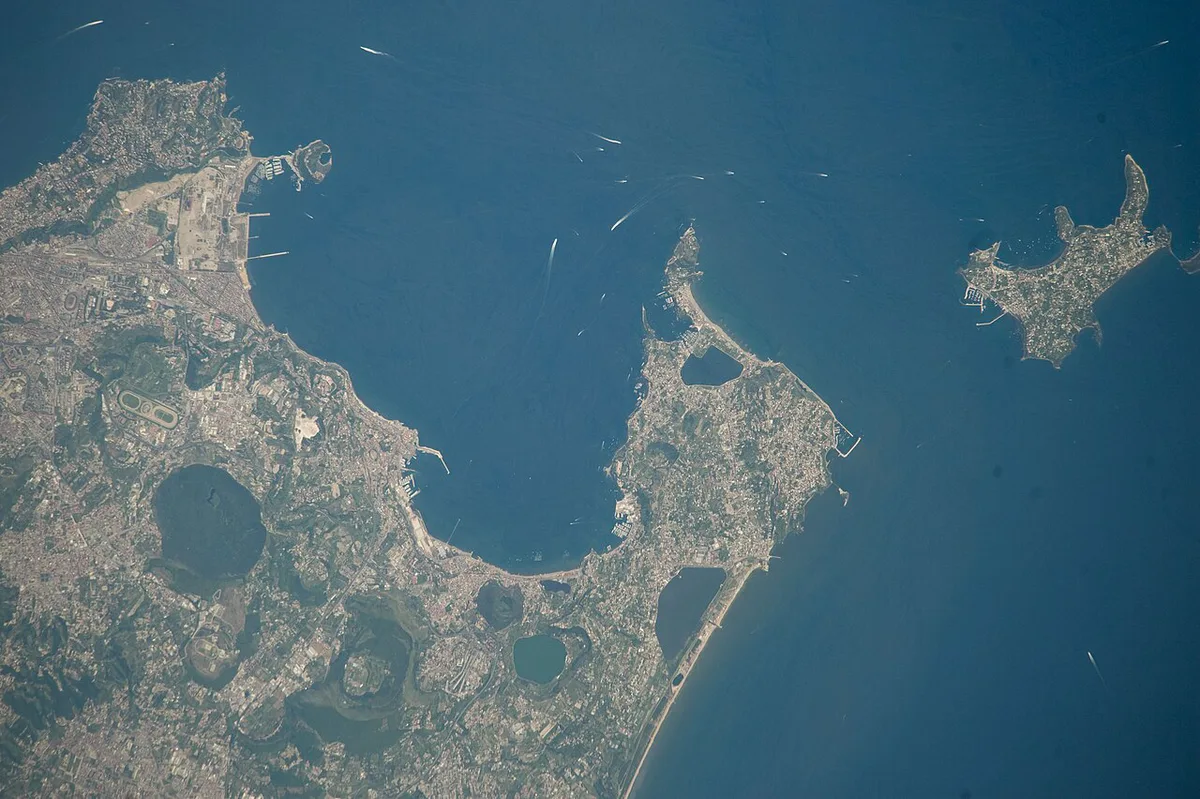
"Supervolcano" is a popular label, not a formal category. It describes a caldera system that has produced very large eruptions in the past. Campi Flegrei fits that description because of its eruption about 39,000 years ago. The label says nothing about what the volcano will do next week or next year. For a closer look at the volcano's structure, read our guide on what type of volcano Campi Flegrei is.
What the caldera is and where it sits
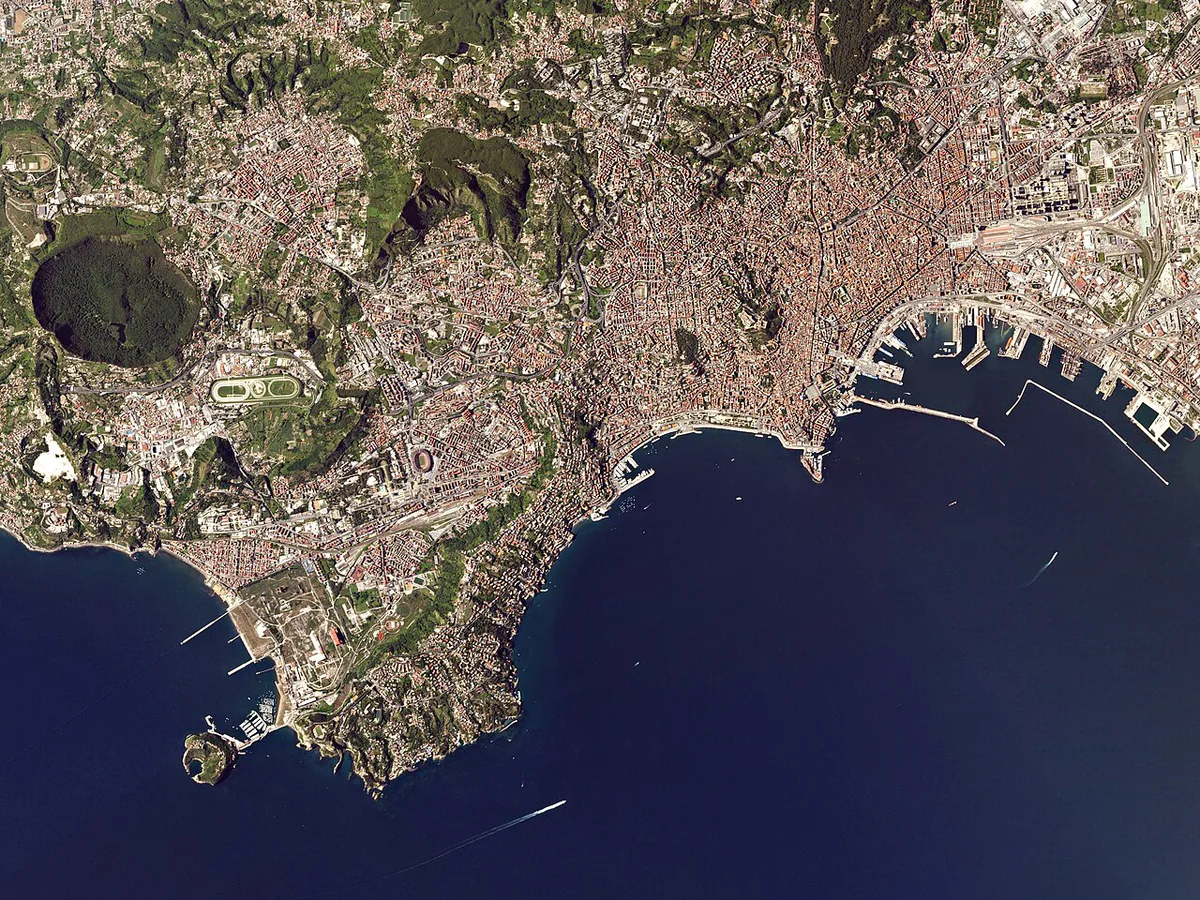
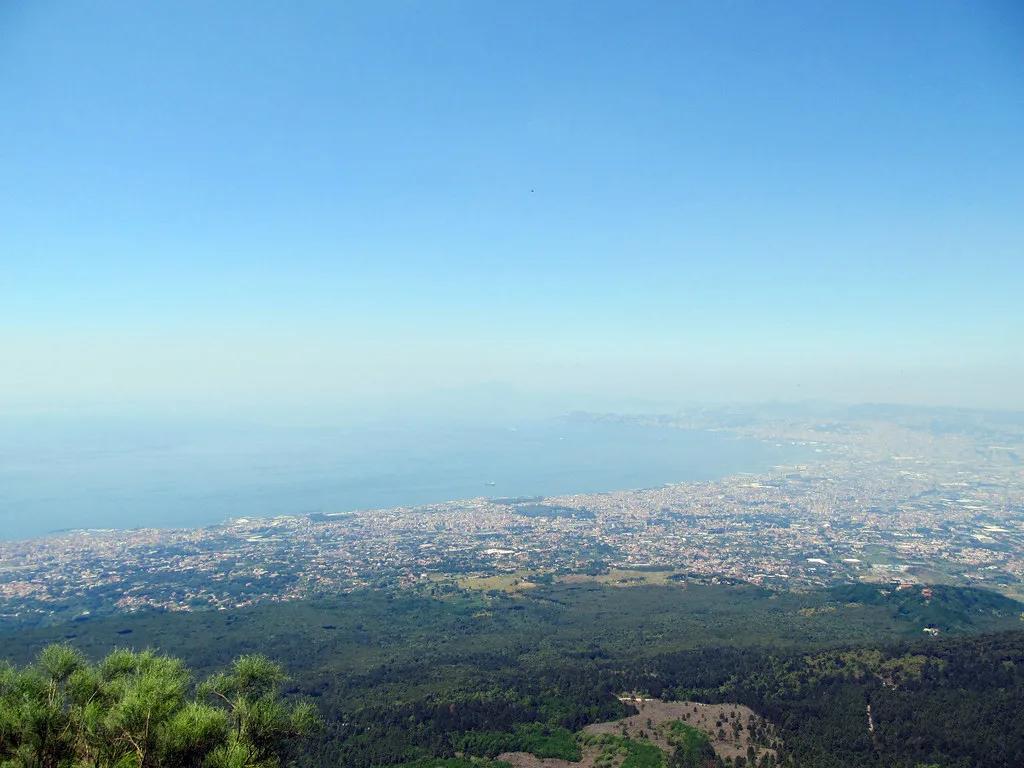
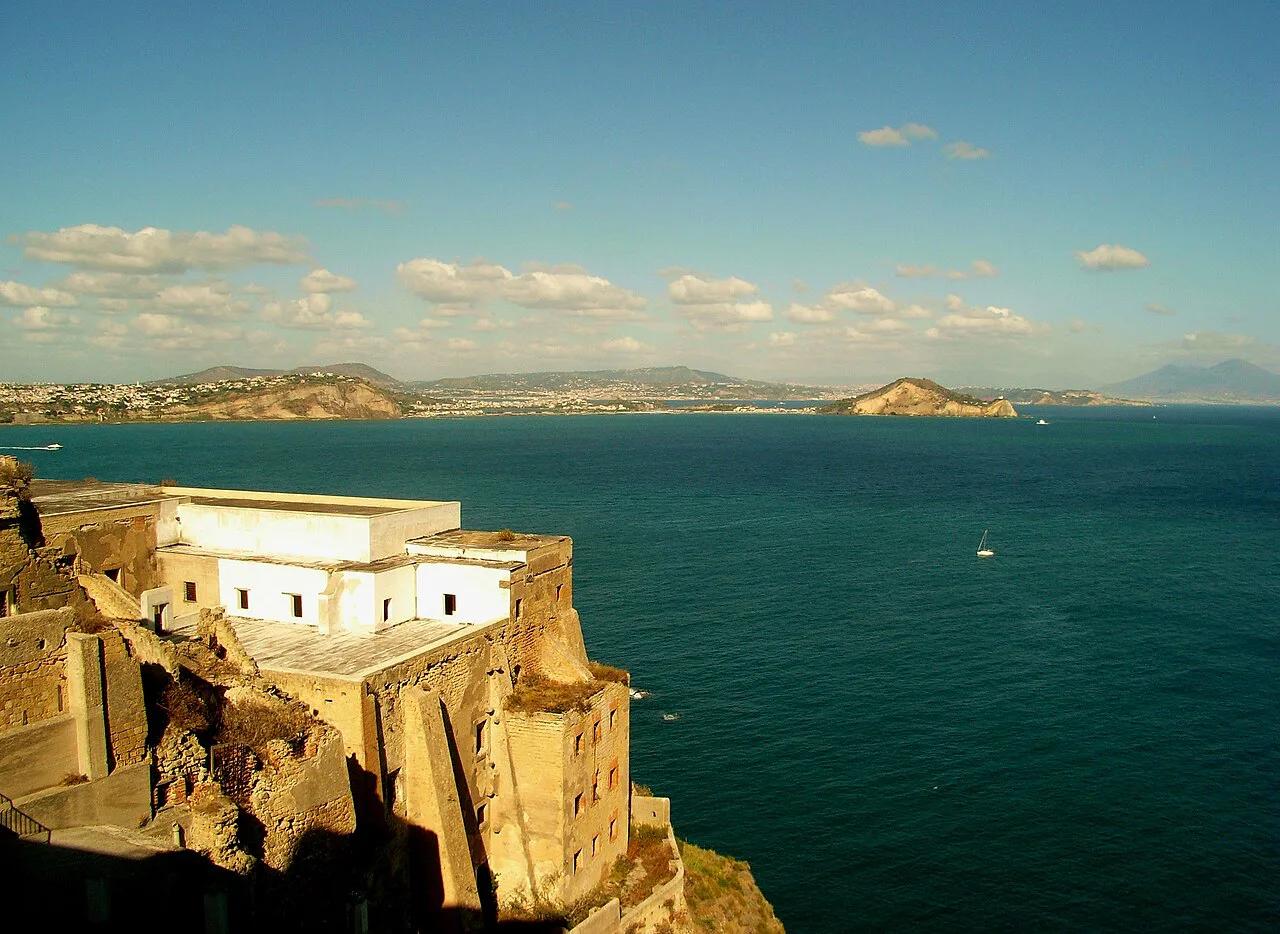
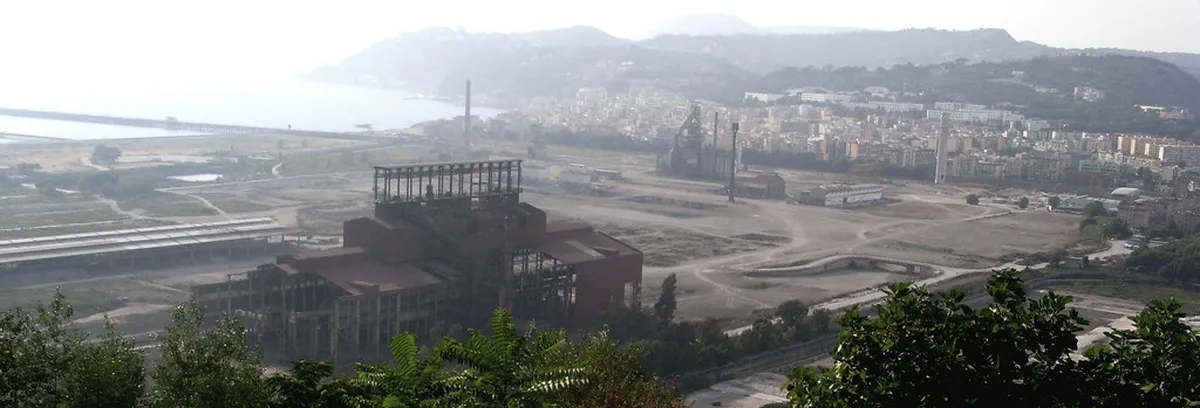
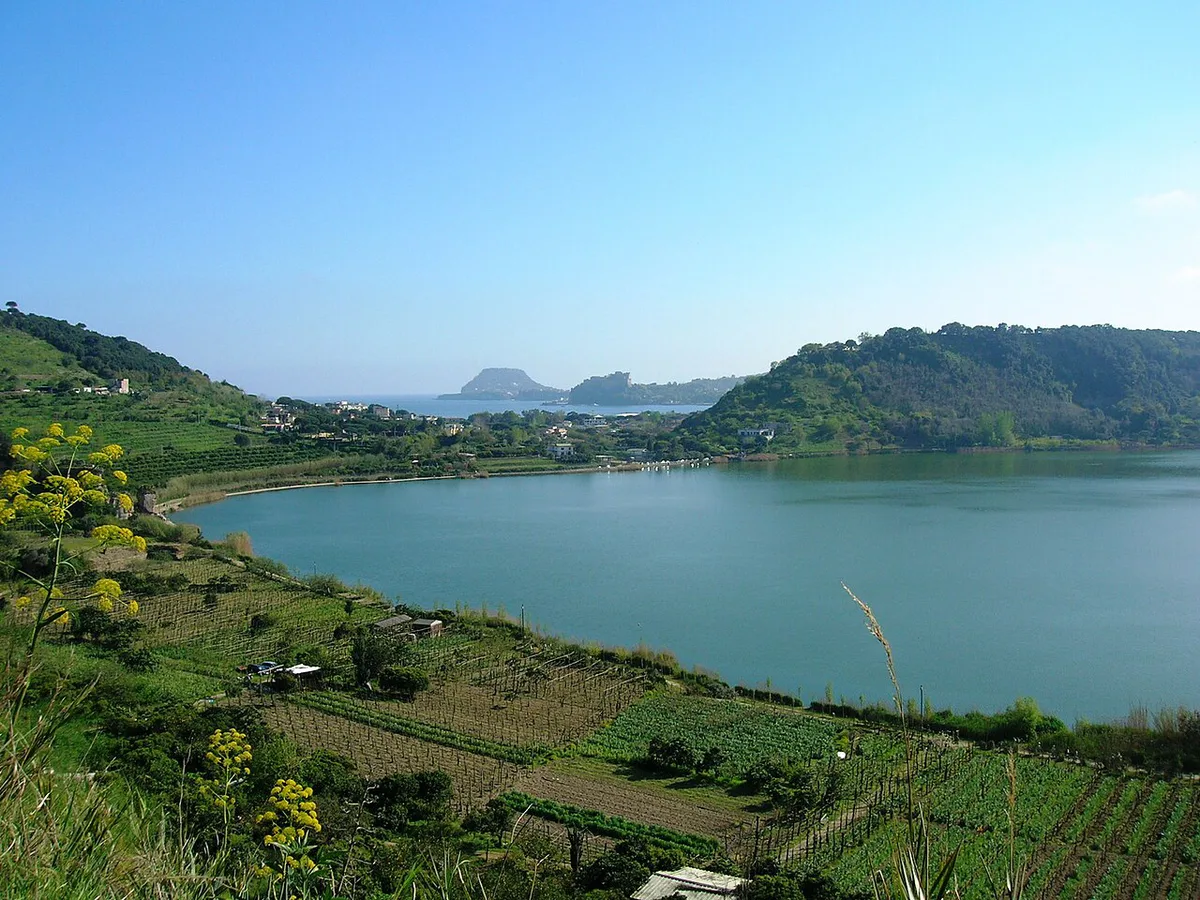
Campi Flegrei, also called the Phlegraean Fields, lies on the Bay of Naples. Most of the caldera sits underwater. It includes about 24 craters and volcanic features, a count that varies by source. Vesuvius is a separate cone on the opposite side of the bay. Our comparison of Campi Flegrei and Vesuvius explains how the two differ. To place each stop on land, use the Campi Flegrei Map: Where Sites Are & How to Visit.
Past eruptions: scale versus recent history
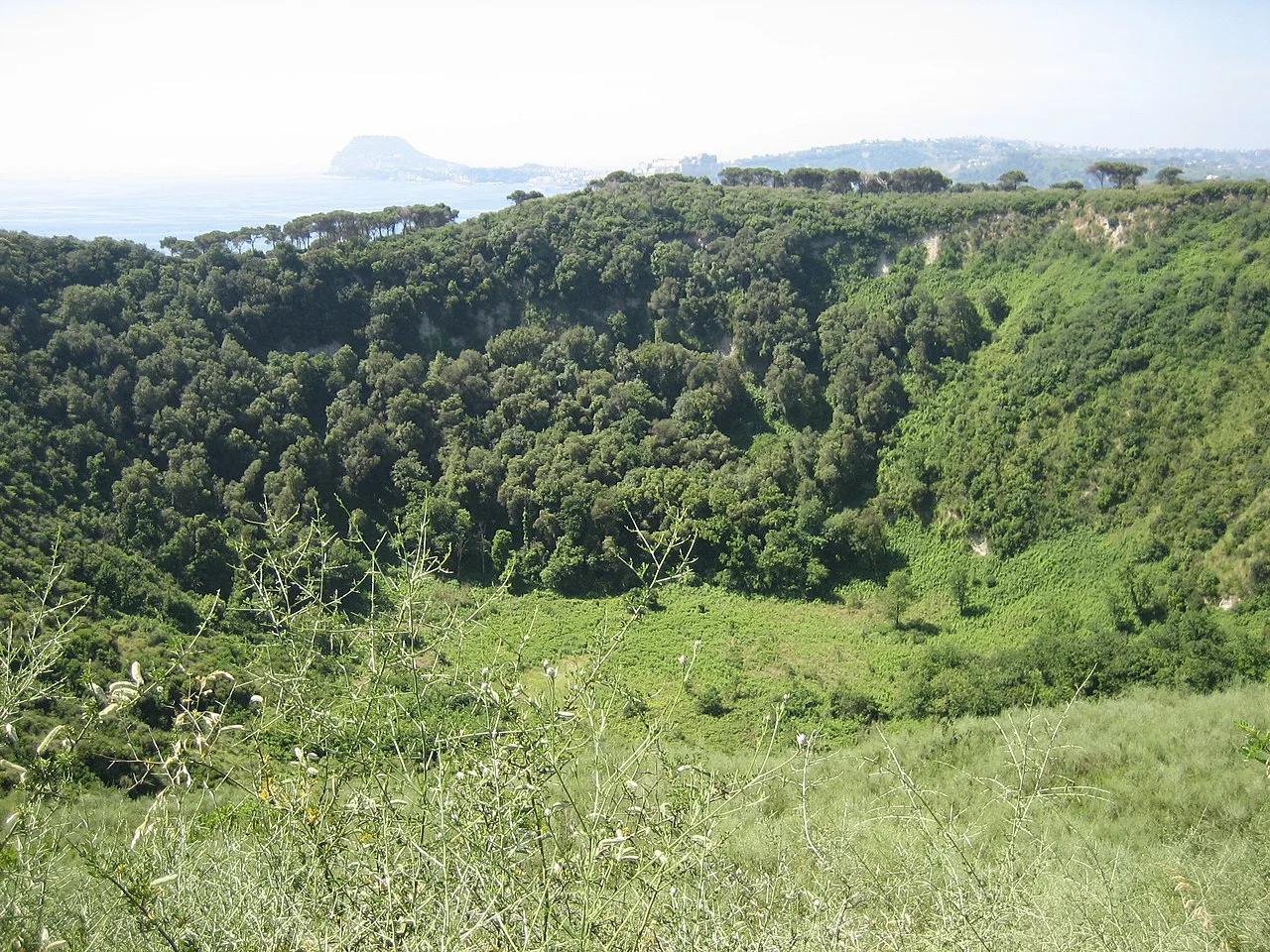
The Campanian Ignimbrite eruption, about 39,000 to 40,000 years ago, was a super-colossal event and the one that shaped the caldera. An earlier eruption roughly 200,000 years ago is also discussed in volcanology literature. The most recent eruption was in 1538 and was small by comparison. It built Monte Nuovo: Europe's Newest Mountain and How to Visit, a young cone you can still climb. The full timeline is in our Campi Flegrei eruption history. Claims that ancient eruptions wiped out Neanderthals remain contested, so treat them as debate rather than fact.
Ground uplift and what bradyseism means today
Bradyseism is the slow rise and fall of the ground around Pozzuoli. The ground rose about 1.8 m during the 1982–84 crisis, and uplift has returned since. Scientists debate whether hot gas and hydrothermal pressure or magma movement drives the current episode. Current measurements are published by INGV Osservatorio Vesuviano, so use that source rather than older news figures. Our bradyseism guide explains the mechanism in plain language.
Alert levels and monitoring
Italy uses a colour-coded alert system for its volcanoes, and INGV monitors the area. The national Civil Protection Department publishes alert levels and emergency planning. Levels can change, so read the current level on the official sites on the day you plan to go. Treat news headlines as commentary, not as a travel advisory.
Can you visit? Safety and access
Visiting is possible, and most stops are Roman or archaeological rather than volcanic. Most travelers with ordinary mobility and health can do a day here comfortably. Some may prefer to skip the sulfur-vent sites. Those include people with breathing sensitivity to gas, travelers with limited mobility on uneven ground, and anyone unsettled by an active volcanic area. Before you go, check three things: closures at each site, any ground-movement or gas-related restrictions, and the local emergency instructions. The Campi Flegrei Archaeological Park publishes access notices for its sites.
- Mistake: treating headlines as a travel advisory.
- Mistake: assuming every site is open on the day.
- Mistake: packing too many sites into one day.
- Mistake: confusing Campi Flegrei with Vesuvius.
Visitor sites tied to the volcano
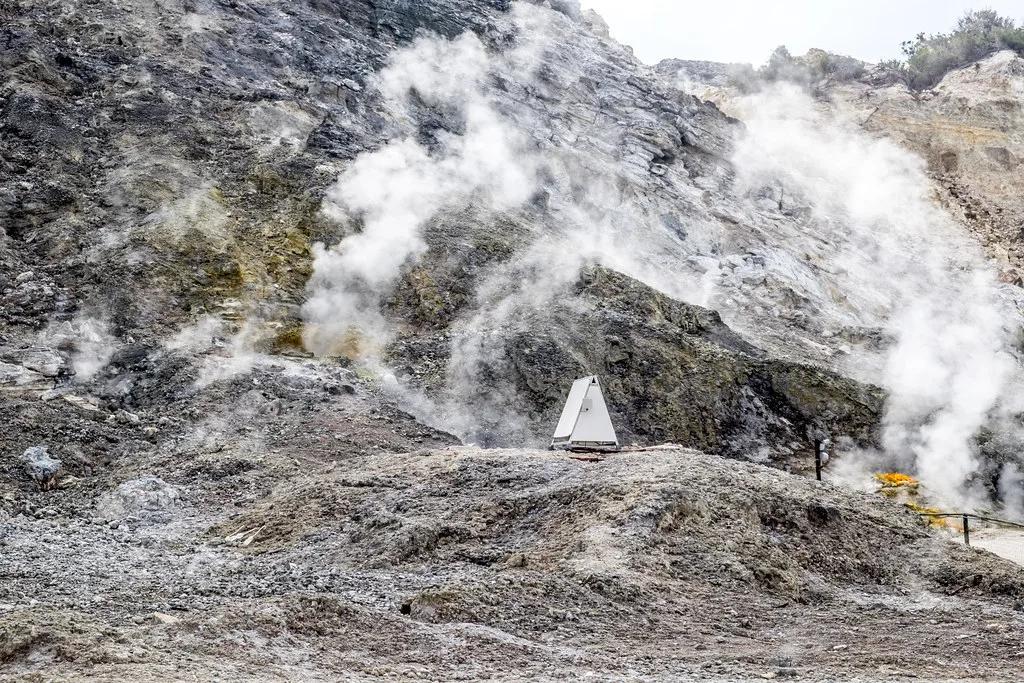
Some stops show volcanic features and others show Roman life in the same zone. Solfatara is the classic fumarole crater, so check its current access status first. Pozzuoli is the practical base and the town where uplift is most visible.
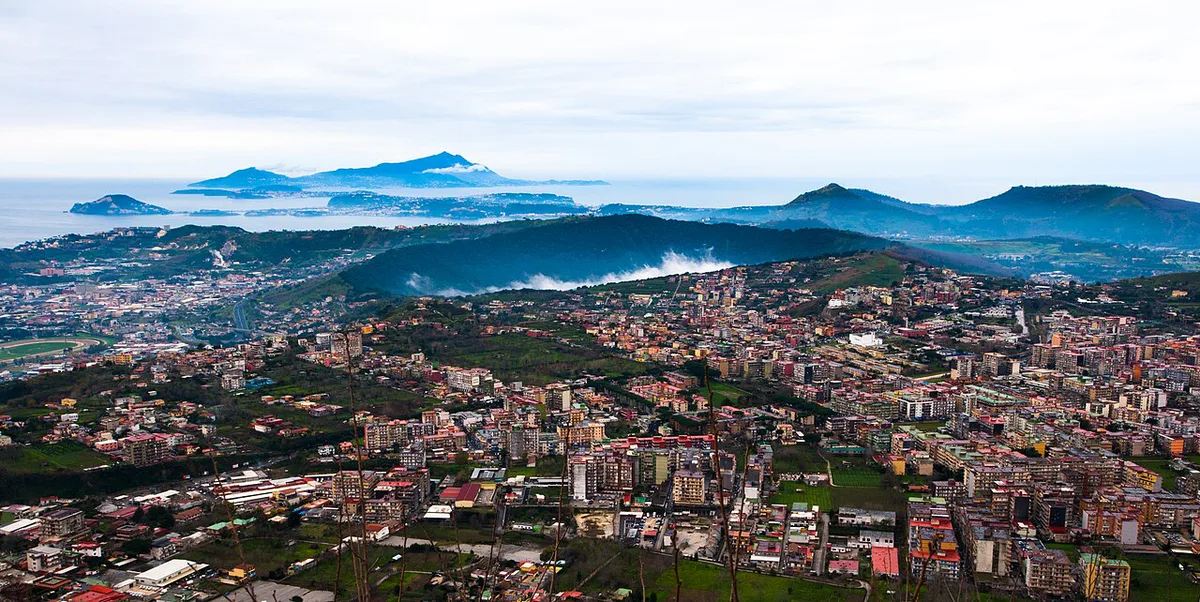
Pozzuoli shows the uplift most, with the ground there rising about 1.8 m in 1982–84, so pair Rione Terra with the Flavian Amphitheater.
| Site | What you see | Volcano or archaeology | Suits | Check first |
|---|---|---|---|---|
| Solfatara | Fumaroles and crater floor | Volcano | Travelers comfortable with gas vents | Current access status |
| Monte Nuovo | Cone formed in 1538 | Volcano | Walkers | Trail conditions |
| Lake Avernus | Crater lake | Volcano | Easy, short stop | Nearby site hours |
| Stufe di Nerone | Ancient steam baths | Both | History-minded visitors | Opening hours |
| Rione Terra | Underground Roman streets | Archaeology | Anyone | Guided-visit rules |
| Flavian Amphitheater | Roman arena in Pozzuoli | Archaeology | Anyone | Opening hours |
| Baia and Cumae | Roman baths, castle, ancient acropolis | Archaeology | Full-day visitors | Park notices |
- Lake Avernus: Myth, Volcano and How to Visit is a crater lake with a quick, low-effort visit.
- Stufe di Nerone Spa, Bacoli: Visitor Guide & Tips preserves ancient steam rooms fed by volcanic heat.
- Rione Terra, Pozzuoli: Visiting the Buried Roman Quarter shows Roman streets beneath the old town.
- Flavian Amphitheater is a large Roman arena in Pozzuoli.
- Piscina Mirabilis Bacoli: Tickets, Hours & How to Visit is a vast Roman cistern near Bacoli.
- Cumae is an ancient acropolis site.
- Baia holds Roman baths, with the Castello di Baia (Castello Aragonese): Visiting Guide for Bacoli above and the underwater archaeological park offshore.
Getting there and planning your time
Transport choices are public transit, a car, or a guided tour. Transit is cheaper but slower between sites. A car adds flexibility but also parking friction. A tour removes the logistics. EAV publishes current rail and bus information, so use it for timetables. Our guide to reaching Campi Flegrei from Naples covers the routes. Sites are spread out, so choose a theme instead of trying to see everything.
About 3 hours suits Pozzuoli alone, so add Solfatara only after checking its current access status, since closures can change the plan.
- About 3 hours: Pozzuoli, with the amphitheater and Rione Terra.
- Half day: Pozzuoli plus Solfatara or Lake Avernus.
- Full day: add Baia, the castle and Cumae, with a car or tour.
Where to go next
Campi Flegrei is a monitored volcanic area with much to see, and a little planning keeps a visit relaxed. Our Campi Flegrei guide is the hub for every site mentioned here.
Frequently Asked Questions
Is there a supervolcano under Italy?
Yes, Campi Flegrei near Naples is often called Italy's supervolcano. The label refers to the very large eruption about 39,000 years ago that formed the caldera. It is monitored by INGV Osservatorio Vesuviano.
Has there ever been a supervolcano eruption?
Yes, the Campanian Ignimbrite eruption at Campi Flegrei, about 39,000 to 40,000 years ago, is regarded as one of the largest in Europe. Its scale is why the area carries the supervolcano label. The most recent eruption, in 1538, was far smaller.
What volcano is due to erupt in 2026?
No volcano has a reliable eruption date. Campi Flegrei is restless but monitored, and alert levels can change. Read the current status on the INGV and Civil Protection sites.