Öræfajökull: Iceland's Highest Volcano, Views & Planning
Last updated November 2026: Öræfajökull (spelled oraefajokull in many URLs) is the ice-capped volcano above Skaftafell in southeast Iceland. Its rim holds Hvannadalshnúkur, Iceland's highest summit according to the Land Survey and the national park. Most visitors see the massif from below, so this guide covers where to look, what to pair it with and when to skip it.
Featured image: Debivort at en.wikipedia, CC BY-SA 3.0, via Wikimedia Commons.
What Öræfajökull is, and whether it is worth a stop
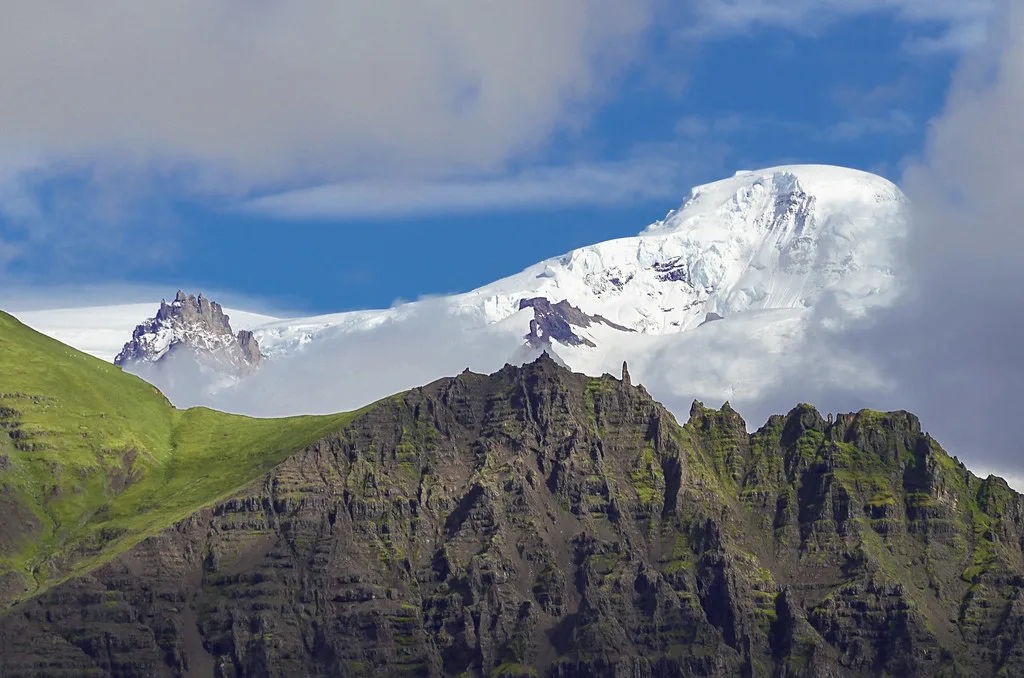
Öræfajökull is a large stratovolcano buried under the Vatnajökull ice cap. Hvannadalshnúkur is the highest point on its rim. Skaftafell is the visitor area at its foot, run as part of Vatnajökull National Park. Add the stop when your day is built around Skaftafell or the glacier lagoons. Skip it as a separate named stop if you are already trying to fit Skógafoss, Reynisfjara, Jökulsárlón and Diamond Beach into one day. For wider context, start with our overview of Iceland's volcanoes.
Which Öræfajökull visit fits your day?
Choose the version of the visit before you choose the drive. Öræfajökull works as scenery, as a glacier-area day or as a serious guided objective. Time budgets below are planning ranges, so confirm them with the park or an operator before you commit.
About 20 minutes at a pull-off suits a Ring Road drive-by. Cloud often decides the view, so a cloudy pull-off may show nothing worth the detour.
| Visit type | Best for | Time budget | Cost tier | Main check |
|---|---|---|---|---|
| Roadside view | Ring Road drivers who want the ice cap as a backdrop | About 20 minutes at a pull-off | Free | Visibility and cloud |
| Skaftafell area walks | Marked trails and viewpoints at the foot of the massif | Half day | Free to modest | Park information, trail status, weather |
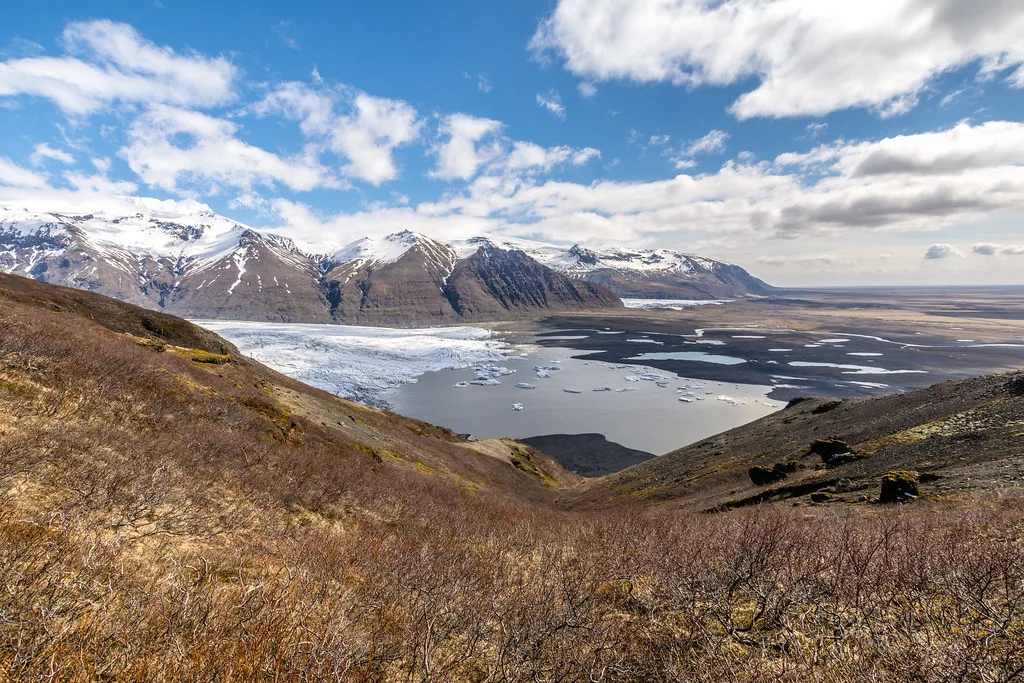
| Outlet-glacier stops | Falljökull, Virkisjökull or Fjallsjökull texture | Half day | Free to modest | Access and conditions |
| Guided glacier walk | Walking on ice with equipment and a guide | Several hours to a half day | Premium | Operator details, weather |
| Guided summit | Prepared, fit travelers targeting Hvannadalshnúkur | Full guided day | Premium | Guide judgement, equipment, weather |
Where to see Öræfajökull and what it looks like
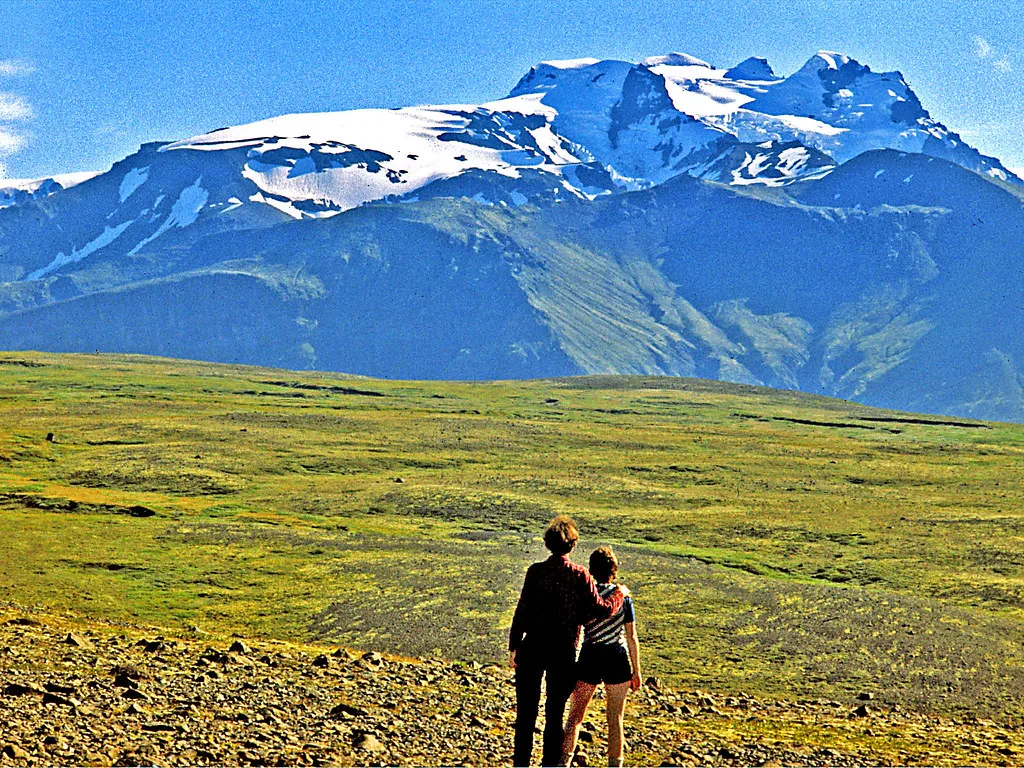
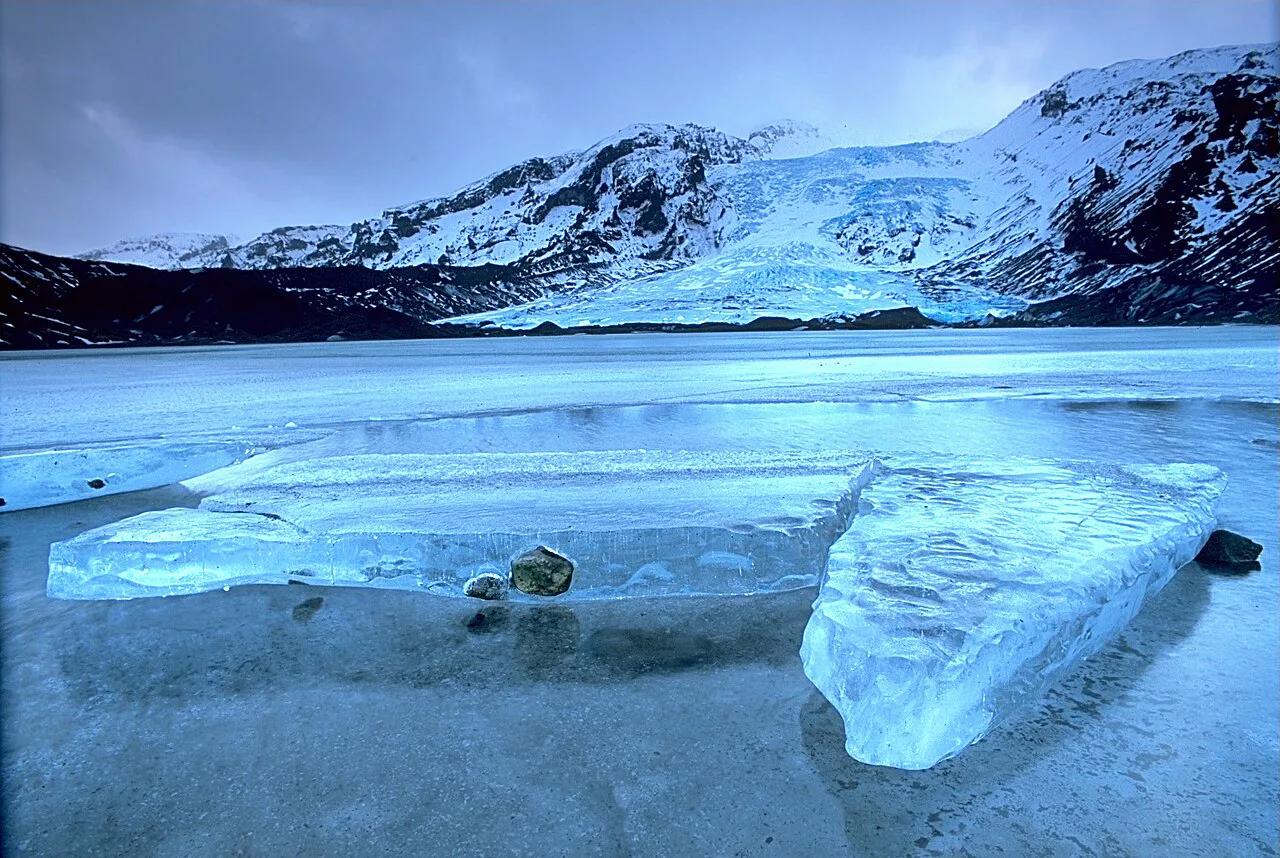
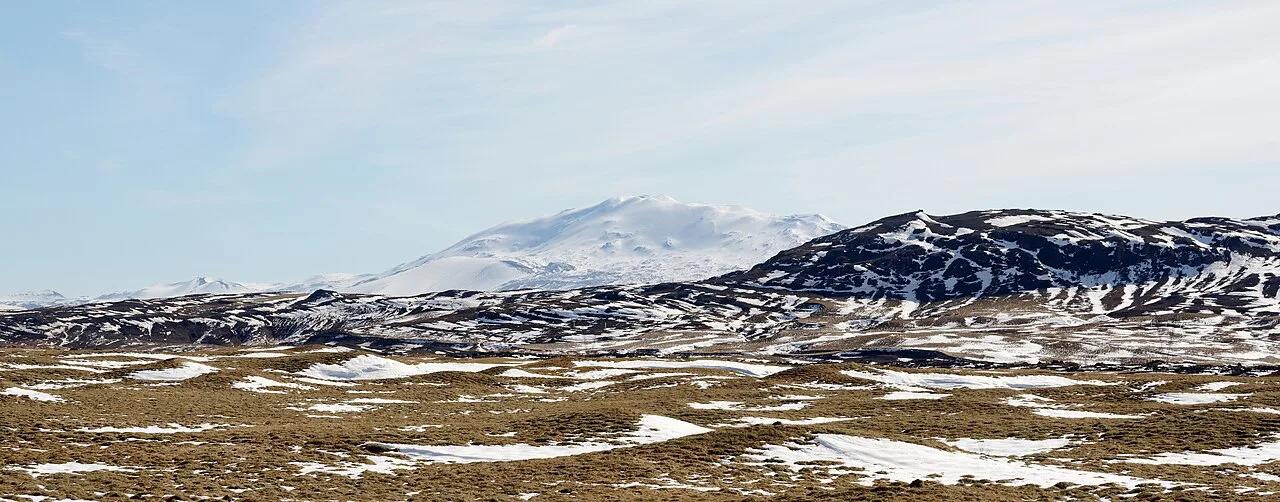
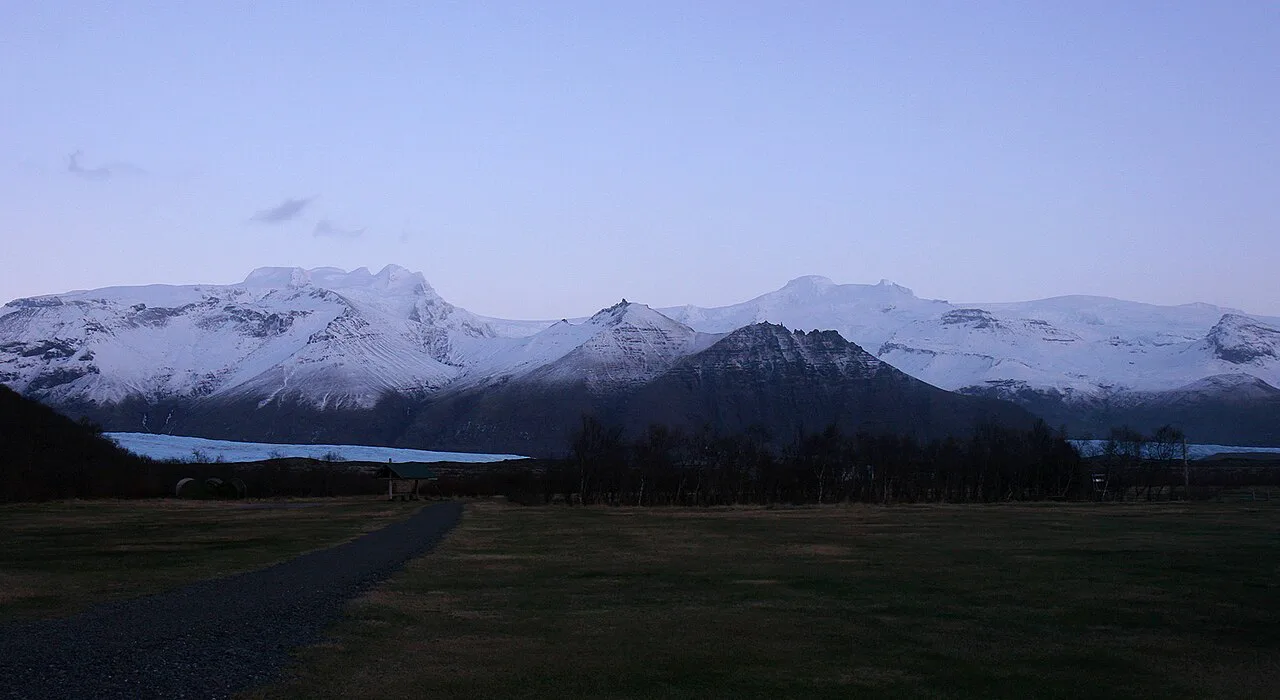
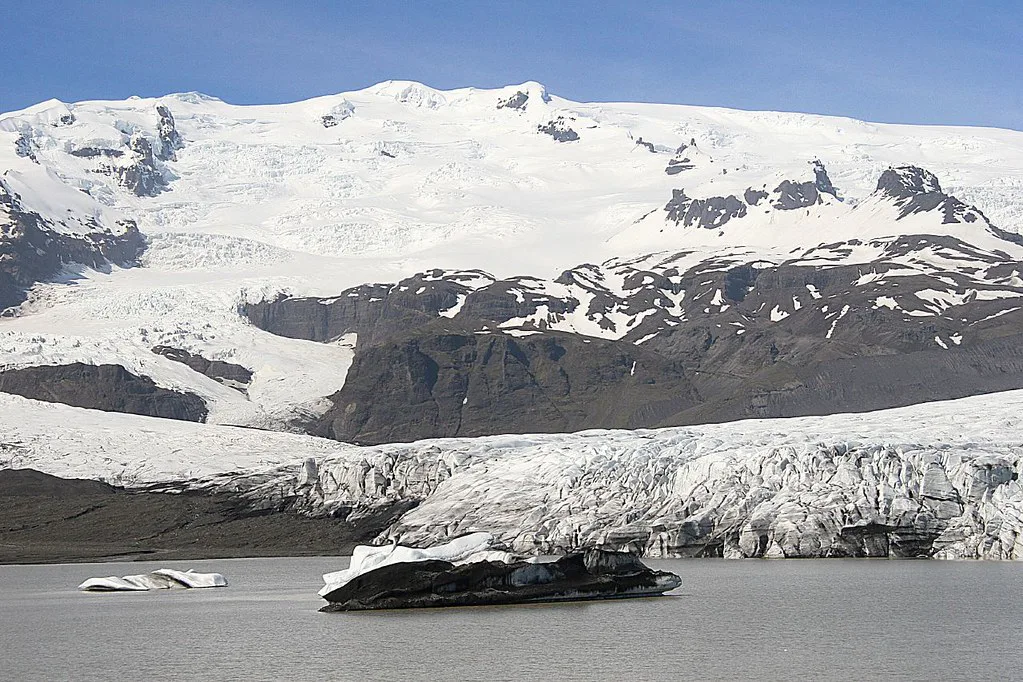
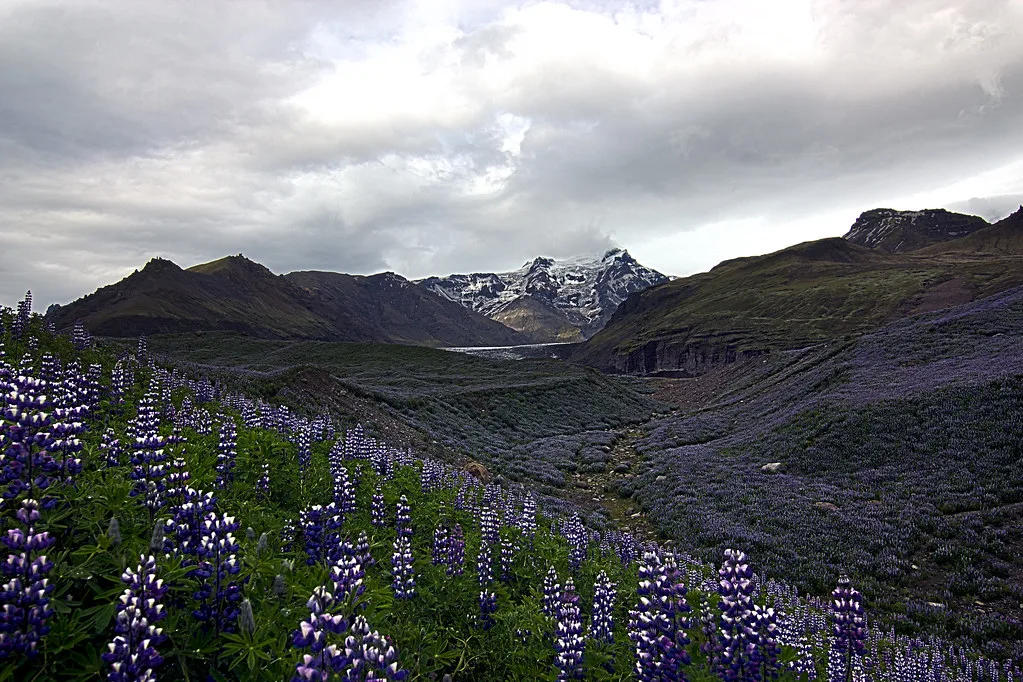
From below, Öræfajökull reads as a white dome with dark ridges and outlet glaciers spilling toward the farms and sand plains of Öræfi. The strongest impression often comes before any formal stop. As the Ring Road approaches Skaftafell, the ice cap begins to dominate the horizon. Skaftafell's trails give a closer look at the same system. Our map of Iceland's volcanoes shows where the massif sits in relation to its neighbors. Cloud is the main risk. Öræfajökull often sits in its own weather, so a clear sky in town says little about the summit.
- Roadside pull-offs: quick, free and weather-dependent.
- Skaftafell trails: more time, more perspective, and park facilities nearby.
- Outlet-glacier viewpoints: closer ice, with conditions that matter more than at a simple viewpoint.
How Öræfajökull fits a South Coast or Ring Road itinerary
Öræfajökull is strongest after the classic waterfall and black-sand beach sequence, when the day shifts toward glacier landscapes. Höfn works as a base for the stretch east of Skaftafell. Vík is the usual overnight stop on the western side. Check drive times for your exact route before you lock the day, because Iceland's weather can change them. If you are crossing lava country on the way, Eldhraun's moss-covered lava is one possible stop. Our guide to Iceland's lava fields covers other options.
- Skip it if your trip cannot comfortably reach Skaftafell and the glacier lagoons.
- Skip it as a named stop if the day already holds four or five major attractions.
- Mistake to avoid: overloading the day with every South Coast checklist item.
- Mistake to avoid: treating a clear forecast in town as proof of summit conditions.
Pairings: Skaftafell, outlet glaciers and lagoons
Pairings depend on whether you want walking, close glacier texture or lagoon scenery. If you have only one southeast pause, Skaftafell is the cleanest way to make Öræfajökull useful. With more time, add one lagoon rather than every stop.
| Stop | Use it when | Trade-off |
|---|---|---|
| Skaftafell | You want walks, views and glacier-area context | Can absorb more time than a photo pause |
| Falljökull | You want outlet-glacier texture near the massif | Conditions and access matter more |
| Virkisjökull | You want a quieter glacier foreland | Needs a clear plan for the walk |
| Fjallsjökull | You want a closer outlet-glacier decision | Guide and access choices matter |
| Fjallsárlón | You want lagoon ice with less pull on your time | Fewer headline names than Jökulsárlón |
| Jökulsárlón | You want the best-known glacier lagoon | Obvious stop that can steal time from Skaftafell |
| Diamond Beach | You want a short coastal finish | Surf and ice movement make it variable |
Is Öræfajökull an active volcano?
Yes. Öræfajökull has erupted in 1362 and 1727, and Icelandic Met Office specialists describe both as larger than a best-case small flank eruption. The 1362 event is the one that had major impacts on settlement. The Icelandic Met Office is the monitoring authority and watches the region with seismic instruments around the clock. Check its current status rather than relying on old news. Our list of Active Volcanoes in Iceland: Where to See Them Safely shows how Öræfajökull compares. Neighboring Vatnajökull-area systems include Grímsvötn. Another is Bárðarbunga. For eruption planning, read travel safety during an eruption. Our eruption guide explains what visitors can expect.
Öræfajökull's eruptions in 1362 and 1727 are a reason to check current alerts before any glacier day.
Safety checks before any glacier or summit plan
Weather, road conditions and guidance decide whether a glacier plan makes sense. Safetravel Iceland carries alerts and travel-condition guidance. Glacier and summit plans need experienced guides, proper equipment and a flexible schedule. You do not need a guide to admire the massif from below. If you want a guided experience, our page on volcano tours in Iceland is a place to start. Summit-route instructions are beyond this guide, so leave that planning to Hvannadalshnúkur-specific operators.
Seasonal planning: summer versus winter
Summer gives longer daylight and makes walking plans easier. Glacier-walk season and operator schedules vary, so check the operator or park page. Winter makes the landscape dramatic but more condition-sensitive, with shorter daylight and higher road and weather risk. In either season, build slack into the day. A short, flexible plan around Skaftafell beats a rigid checklist that depends on a clear summit.