What Type of Volcano Is Fagradalsfjall? Fissure Eruptions Explained
Last updated November 2026. What type of volcano is Fagradalsfjall? It is a fissure-type volcanic area on the Reykjanes Peninsula, where basaltic, mostly effusive eruptions send lava out of cracks in the ground instead of building one tall cone. Below you get the classification in plain terms, the reason it erupts here, and a short guide to what that means if you visit the Fagradalsfjall area.
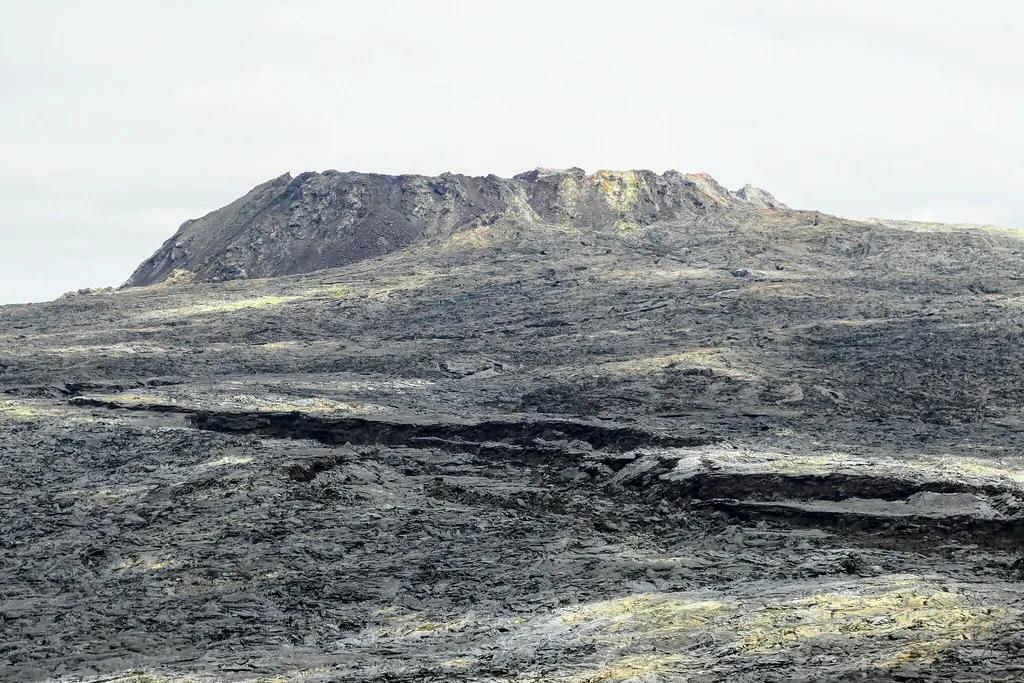
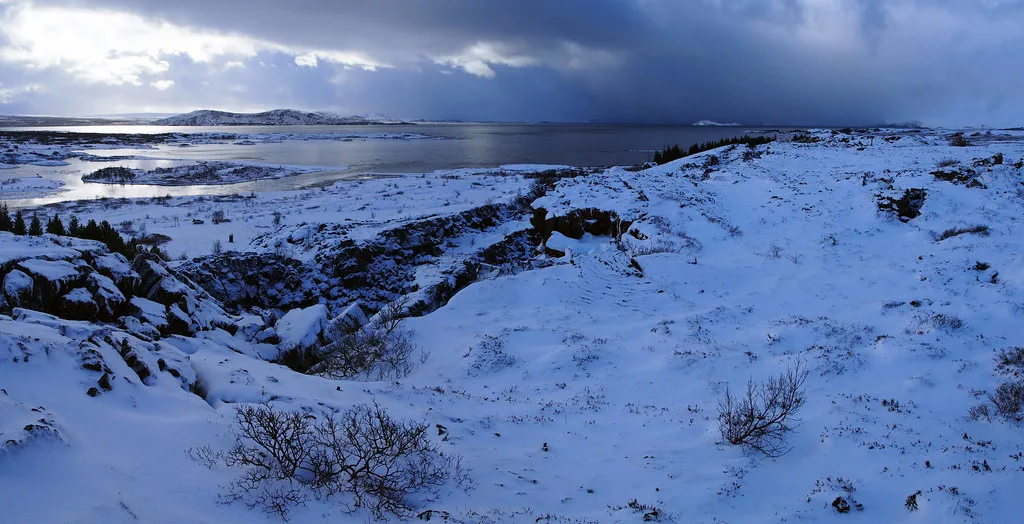
Featured image: radovan.kazda, CC BY 2.0, via Flickr.
What type of volcano is Fagradalsfjall? The short answer
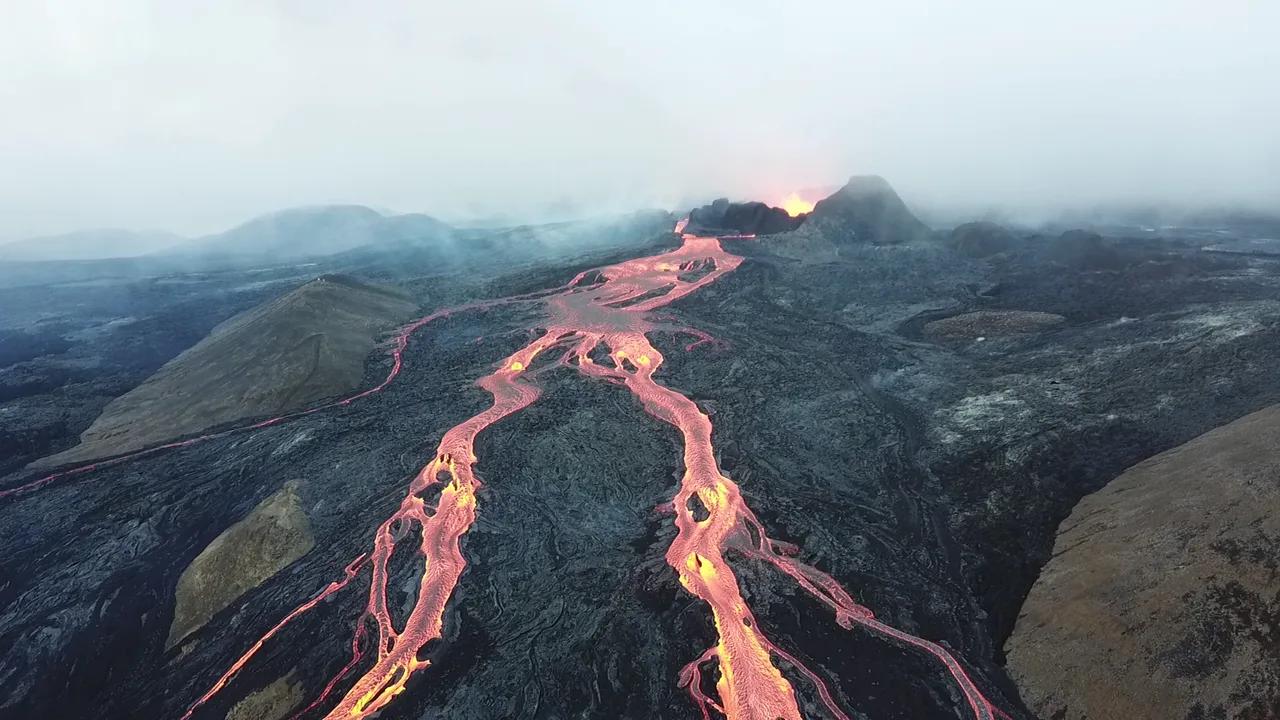
Fagradalsfjall is a fissure vent with small cinder cones, not a classic stratovolcano. VolcanoDiscovery's catalogue lists it as a fissure vent about 250 m (820 ft) high, with fissure eruptions and lava flows as its typical style. Its magma is basaltic, which means fluid and low in explosive gas pressure. Its eruptions are effusive, which means lava flows out instead of blasting apart. The name covers both a mountain and the surrounding eruption area, which is why the label confuses people.
- Edifice: fissure vent with cinder cones and lava fields
- Magma: basaltic
- Style: effusive, with lava fountains that faded to purely effusive activity in 2021
- Setting: the plate boundary on the Reykjanes Peninsula
- Eruption years reported: 2021, 2022 and 2023
Fissure vent vs. cone volcano
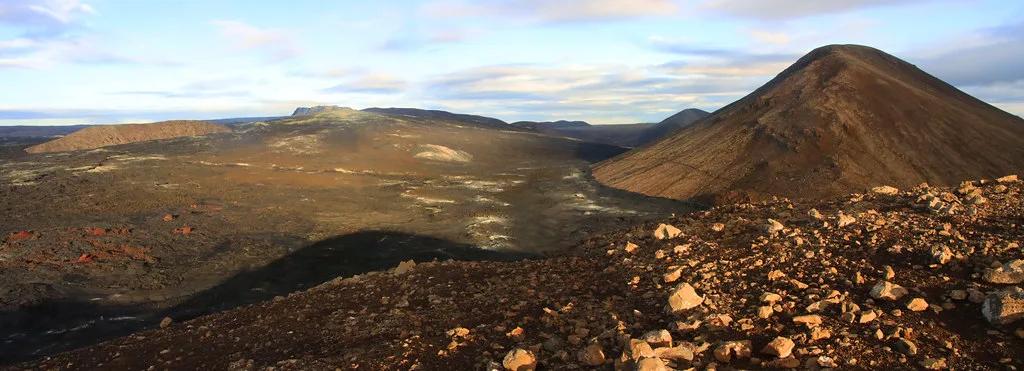
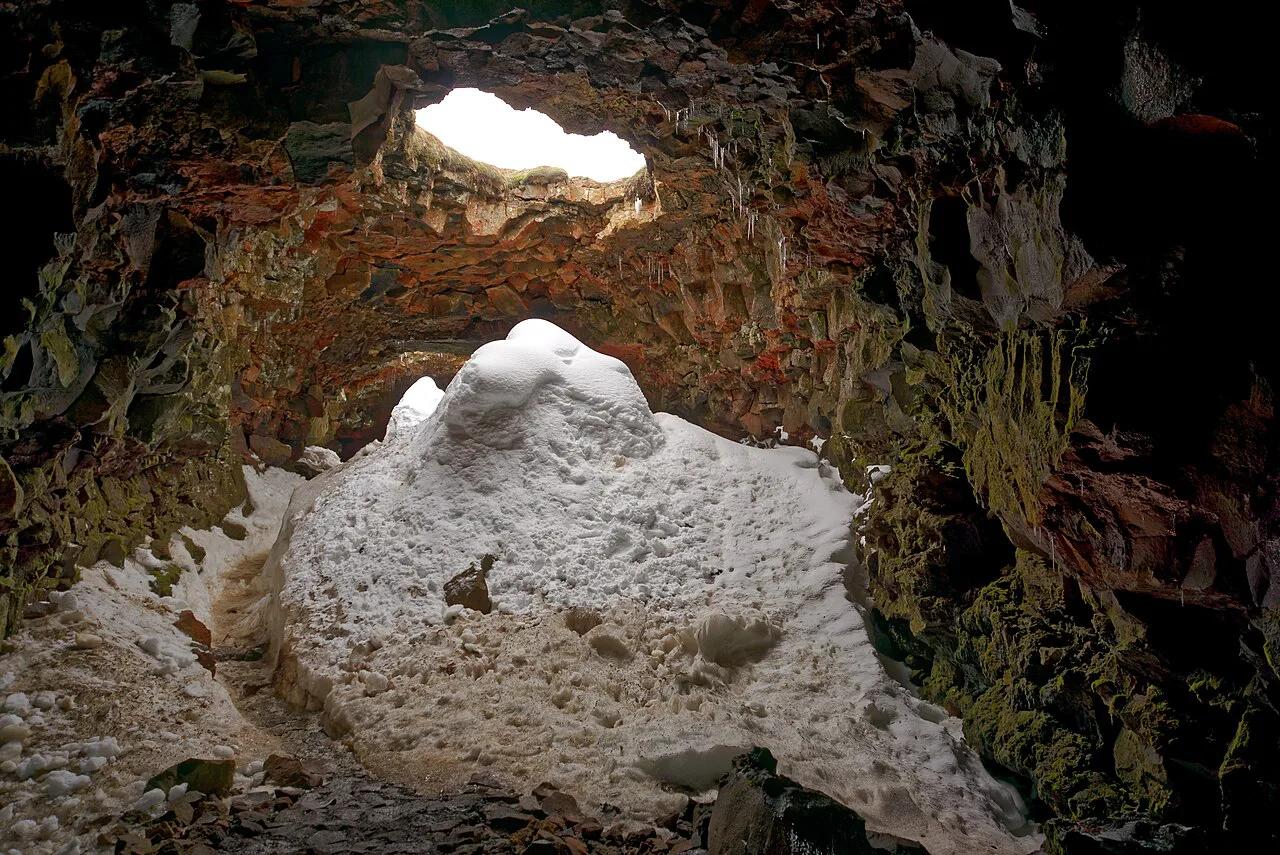
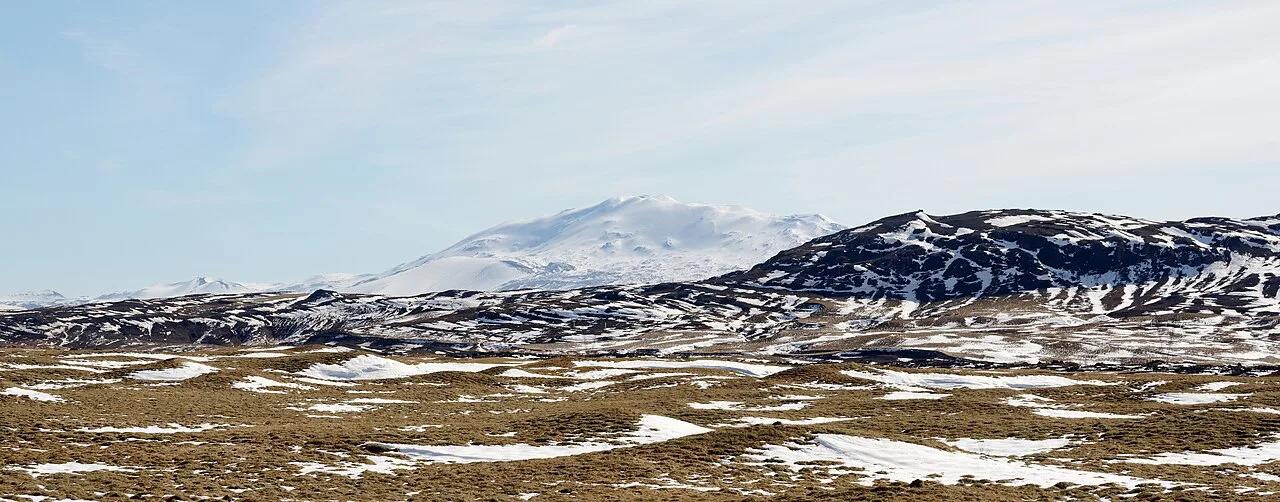
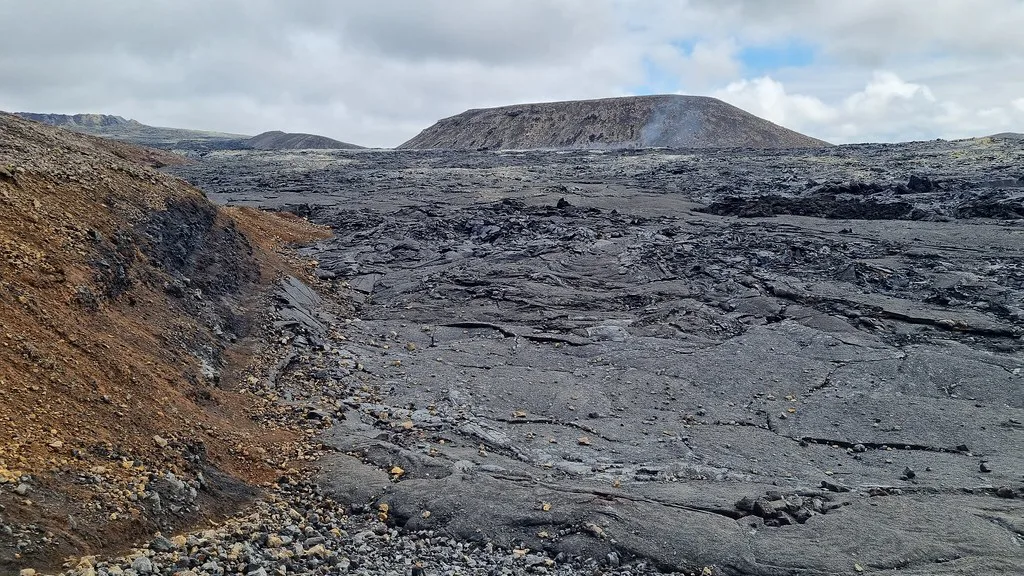
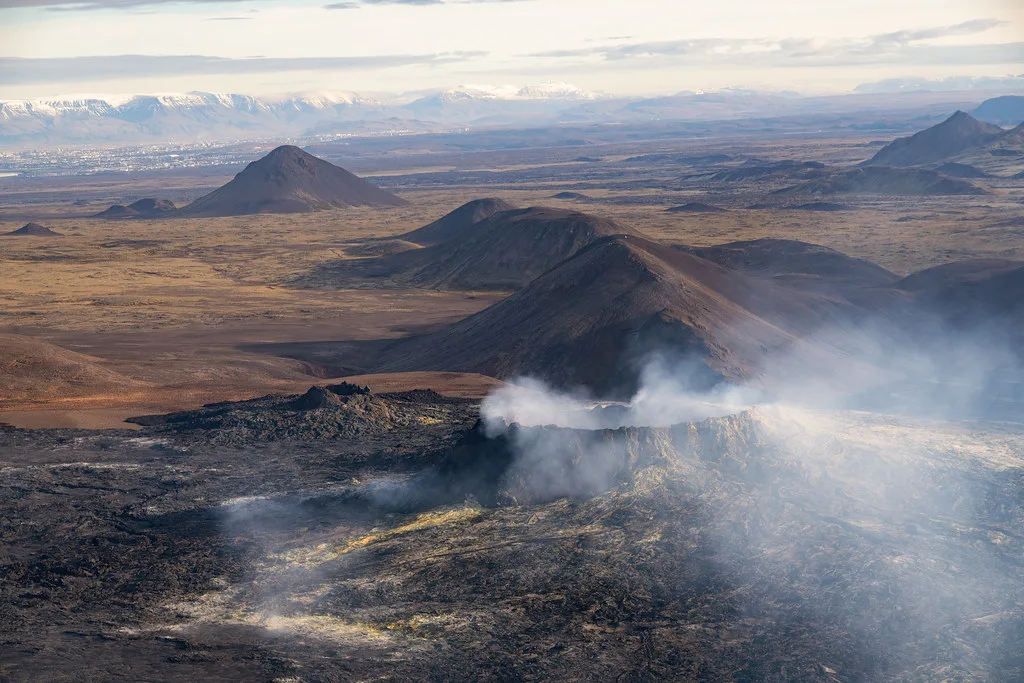
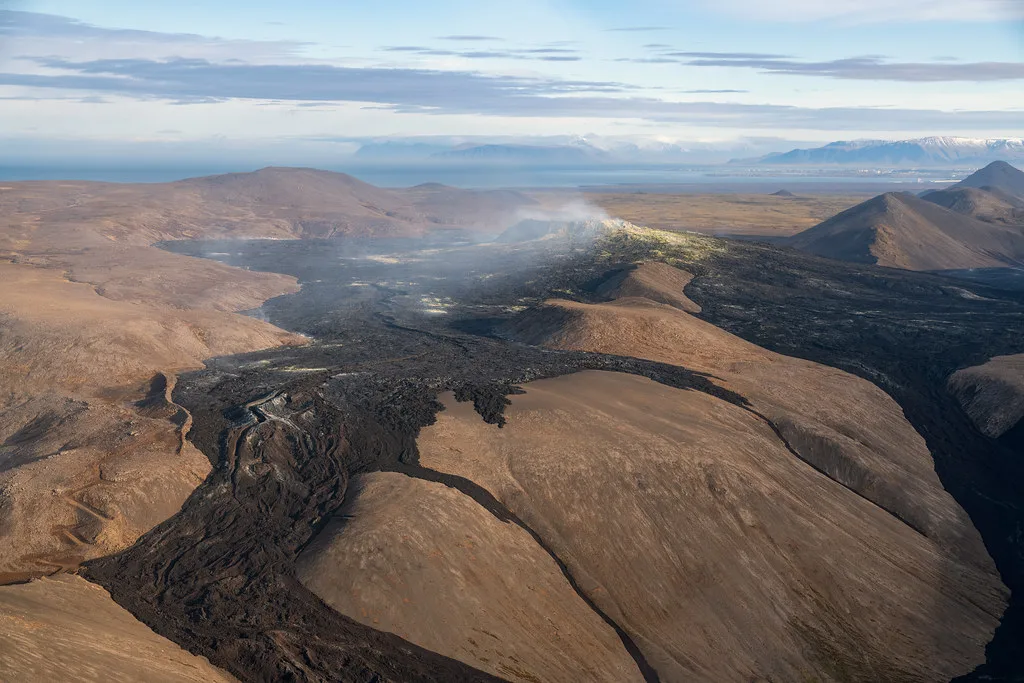
A stratovolcano such as Hekla is a steep cone built from many layers of lava and ash. A fissure eruption works differently. The ground splits along a crack, lava pours from a line of vents, and small cinder cones pile up along that line. That is why the Fagradalsfjall landscape looks like low hills, broad lava fields and shallow channels instead of one summit crater. Lava often runs through lava tubes before it reaches the flow margins, which thickens the flow field from the inside.
| Feature | Fissure vent (Fagradalsfjall) | Stratovolcano |
|---|---|---|
| Shape | Crack with low cinder cones and lava fields | Tall, steep cone with a summit crater |
| Typical style | Effusive lava flows, some fountaining | Often explosive, with ash and gas columns |
| Main hazard | Lava flows, volcanic gas, unstable ground | Ash fall, explosions, pyroclastic flows |
| What you see | Black basalt fields, cinder cones, lava channels | One large mountain |
Basaltic and effusive: what it means
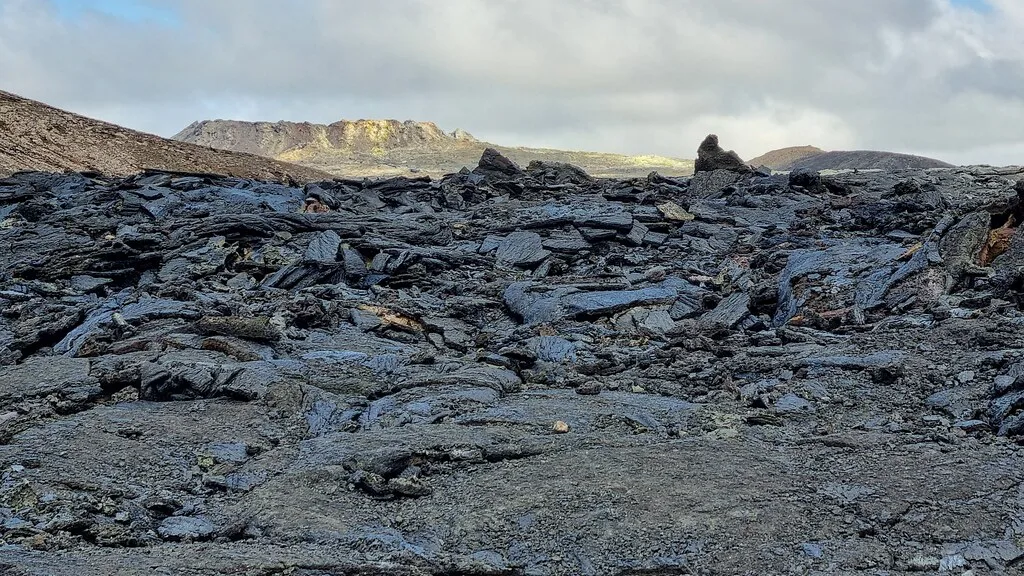
Basaltic describes the magma. It is hot and runny, so gas escapes without blowing the vent apart. Effusive describes the eruption. Lava flows out, as opposed to the explosive style of ash-heavy volcanoes. In 2021, lava fountaining grew rarer and weaker, and the eruption became purely effusive, with most lava running through tubes to the flow margins. Two surface types matter underfoot. Pahoehoe is smooth and ropy, and it folds over itself as it cools. Aa is rough, clinker-like rubble that shifts and breaks under your boots. Effusive does not mean harmless. Fresh lava fields hide voids under thin crust, and sulfurous gas can collect in depressions even when no lava is moving.
Why it erupts here: the plate boundary
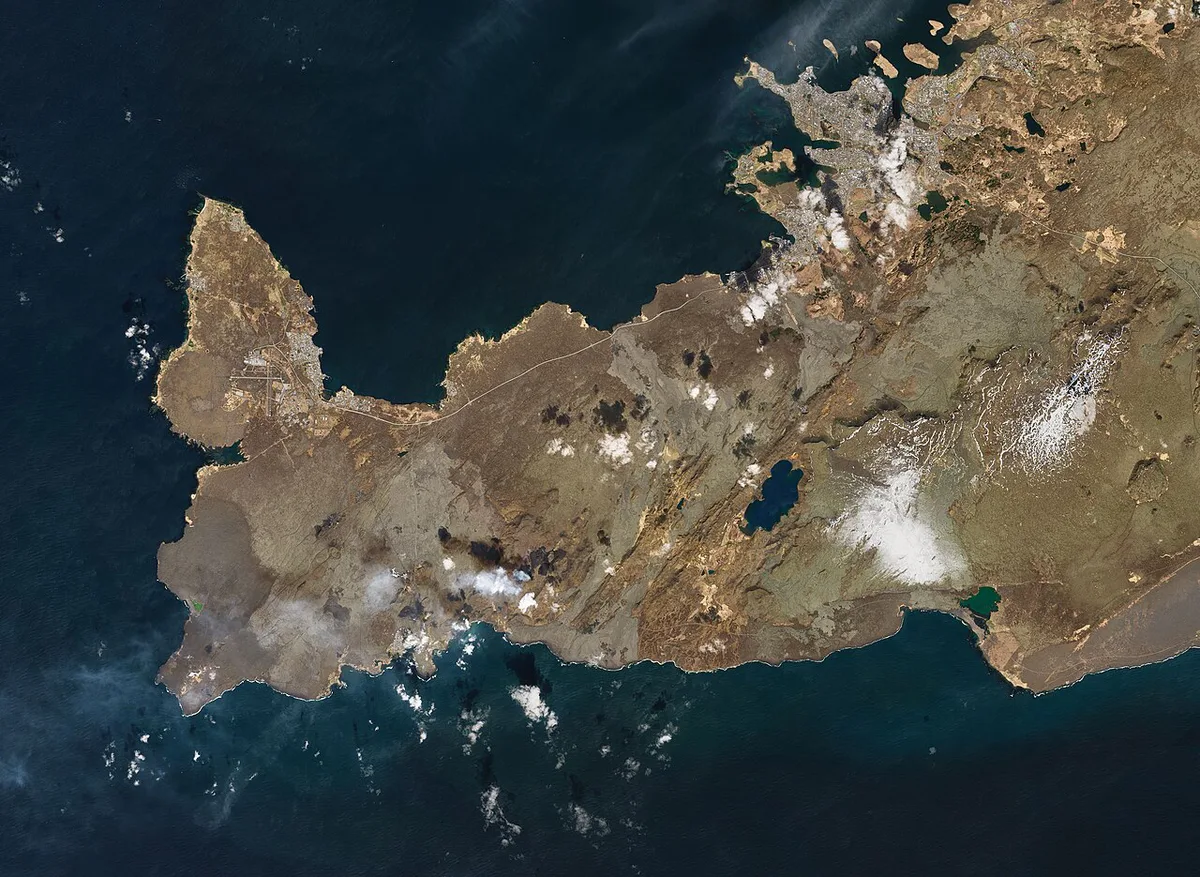
The Reykjanes Peninsula sits where the North American and Eurasian plates pull apart. This sea-floor spreading brings hot mantle material up, and it produces the basaltic magma that feeds the fissures. You can see the rift for yourself at the Bridge Between Continents, Iceland: Visitor Guide, a footbridge that spans the gap between the two plates. The Reykjanes Geopark describes this volcanic and tectonic setting for visitors. Our guide to the geopark itself covers the stops and the rock types. For wider context, see the Reykjanes Peninsula overview.
Eruption timeline and which name means what
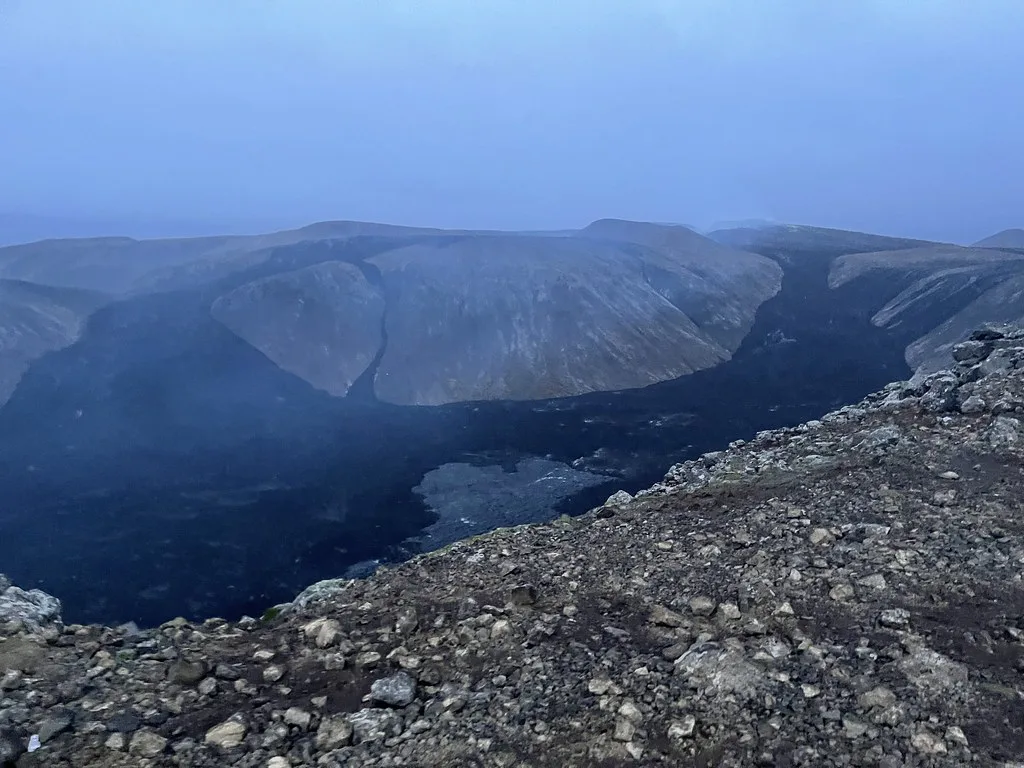
Reykjanes had been volcanically quiet for roughly 800 years before March 2021. Then a fissure opened near Fagradalsfjall mountain. Eruption dates reported for the area are 19 March to 18 September 2021, 3 to 21 August 2022 and 10 July to 5 August 2023. Check these against the Icelandic Meteorological Office and the Smithsonian Global Volcanism Program before you quote them. Readers often mix up the place names, so the table separates them. Do not assume that every name below belongs to the same volcanic system. Later activity in the Sundhnúkur area is a separate search topic.
| Name | What it refers to | Read more |
|---|---|---|
| Fagradalsfjall | The mountain, and the wider eruption area | Fagradalsfjall hub |
| Geldingadalir | Valley where the 2021 eruption began | Geldingadalir guide |
| Meradalir | Valley where much of the 2021 lava accumulated | Covered in the hub guide |
| Litli-Hrútur | Name tied to the 2023 eruption | Litli-Hrútur guide |
| Sundhnúkur | Area linked to later eruptions near Grindavík | Sundhnúkur guide |
| Svartsengi | Power-plant area near the Blue Lagoon | Svartsengi guide |
What this means for visitors
Volcano type tells you what the ground is like. Aa lava has sharp edges and loose scoria on cinder-cone slopes, so hard-soled boots and a windproof extra layer matter. Wind on the lava fields is constant, and there is no water source out there. Access and trail status have changed repeatedly since 2023. Check the Icelandic Meteorological Office, Safetravel Iceland and the Civil Protection pages on the day you go. Our notes on Grindavík cover town access, which also needs a live check. Prices and hours checked November 2026 do not apply here, because status changes without warning.
- Leaving marked trails: crusted lava can hide voids, and fresh surfaces can be unstable.
- Trusting old blog trail times: routes and closures have changed since 2021.
- Treating a status snapshot as live: pages that say "normal" or "dormant" may be years old.
- Ignoring gas: if you smell sulfur and feel irritation, move upwind and to higher ground.
Visit options: self-drive, tour, or stay away
Pick based on current access, not on a fixed plan. If trails are open and you are confident on Icelandic roads and wind, a self-drive works and our volcano hiking guide covers the walk. If you are unsure about conditions, fitness or navigation, a guided group takes the decision for you. Browse the Fagradalsfjall tour options and ask each operator what is open. If access is closed or the forecast is poor, skip the hike. The Blue Lagoon volcano guide and the Reykjanesviti lighthouse are nearby alternatives for the same trip.
Blog trail times go stale: routes and closures have changed since 2021, the year the area woke after roughly 800 years of quiet.