Geysir Iceland: Does It Still Erupt? Strokkur Tips
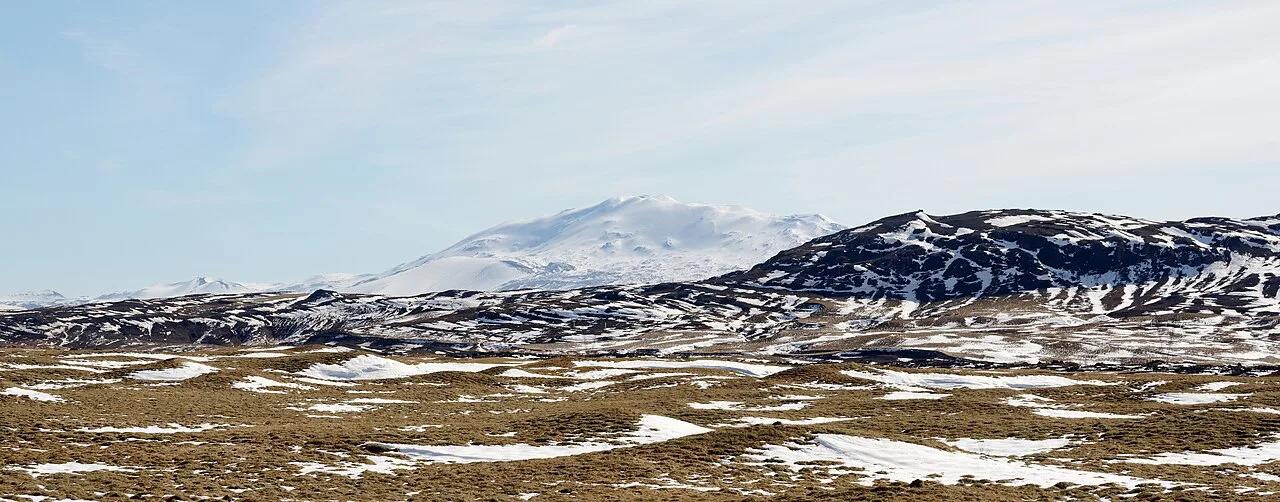
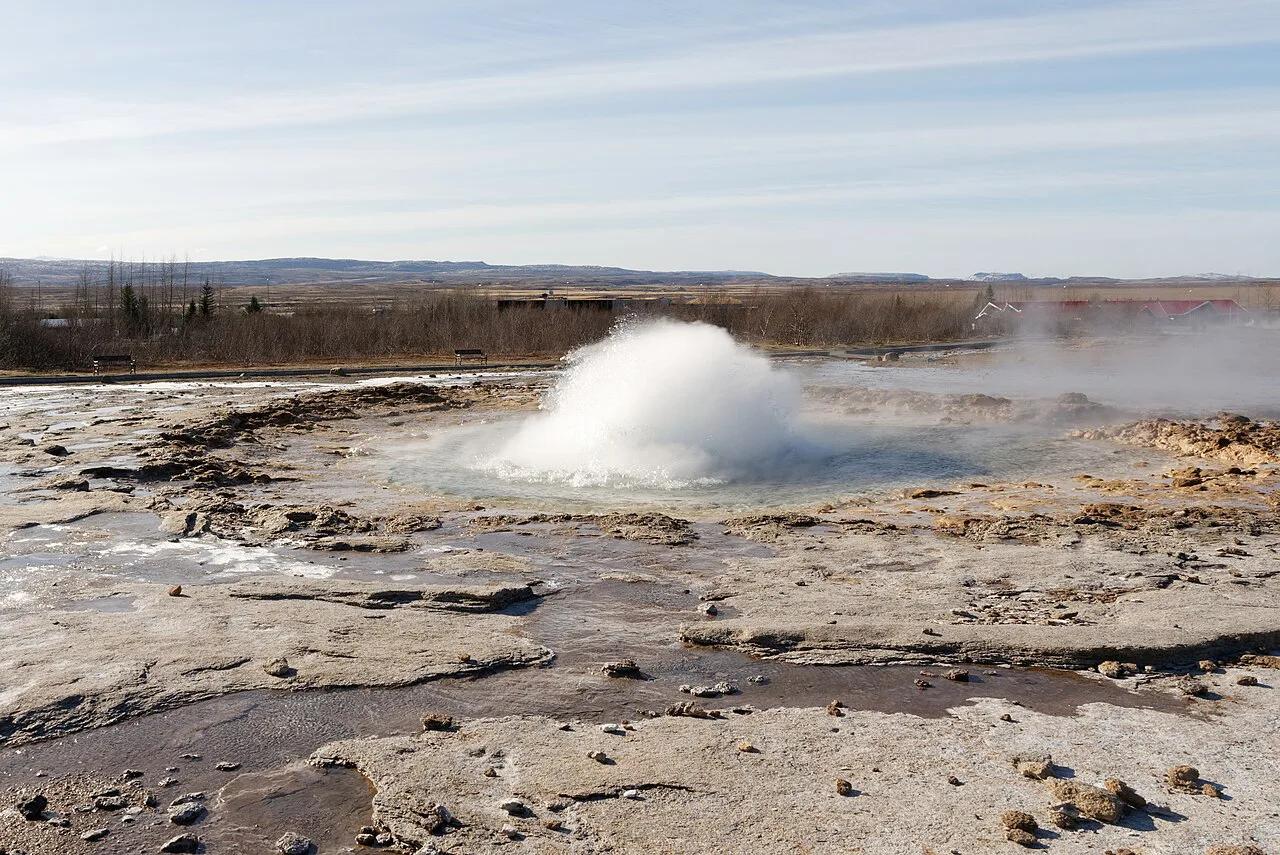
Last updated November 2026: geysir in Iceland covers the dormant Great Geysir, the wider Haukadalur geothermal area and Strokkur, the one that actually performs. Iceland's Great Geysir is largely dormant and rarely erupts, while Strokkur about 330 ft (100 m) away erupts every few minutes. Both sit in Haukadalur on the Golden Circle, part of the wider volcanic landscape of Iceland.
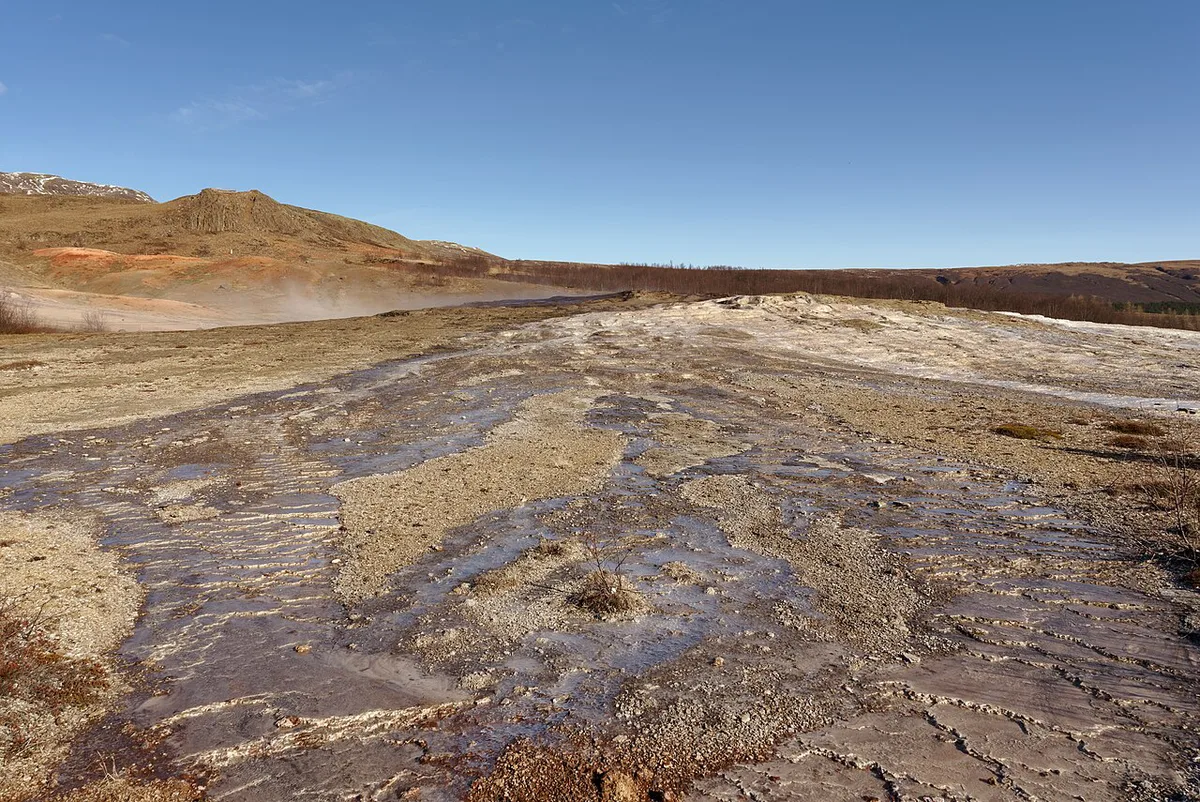
Featured image: Jakub Hałun, CC BY-SA 4.0, via Wikimedia Commons.
Geysir vs Strokkur: what you will actually see
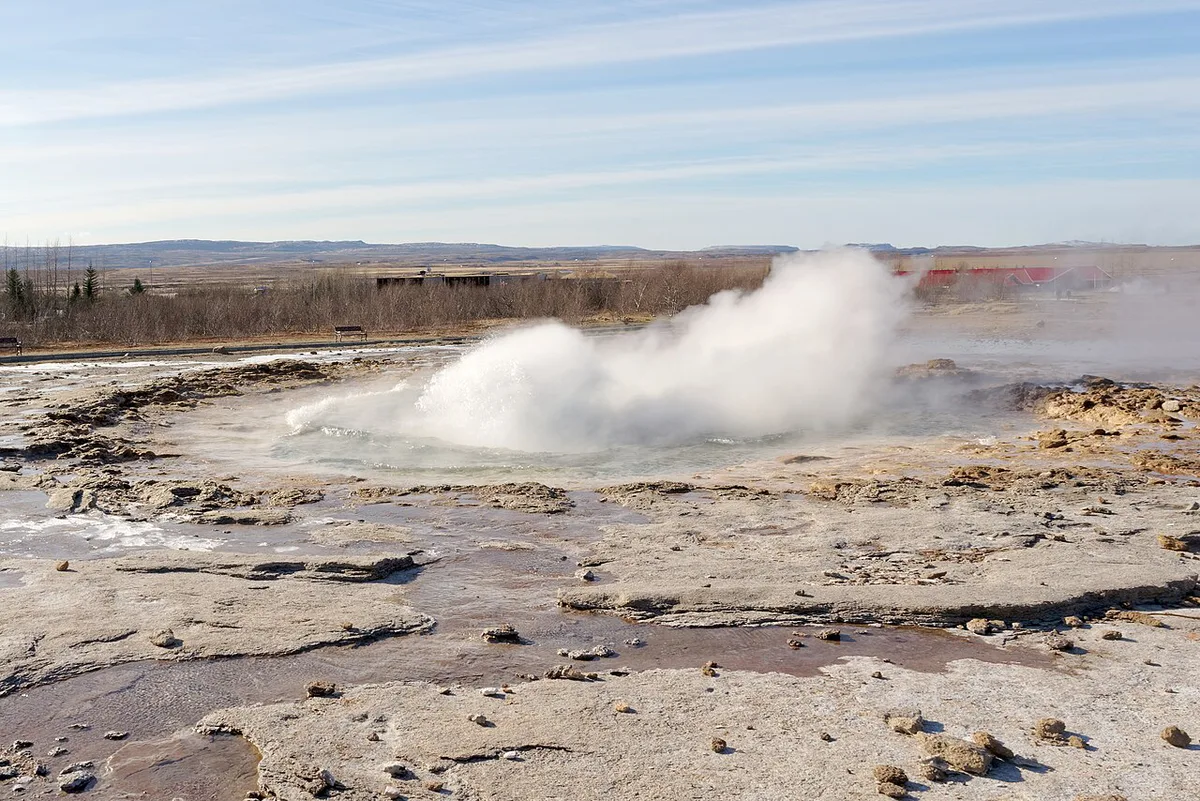
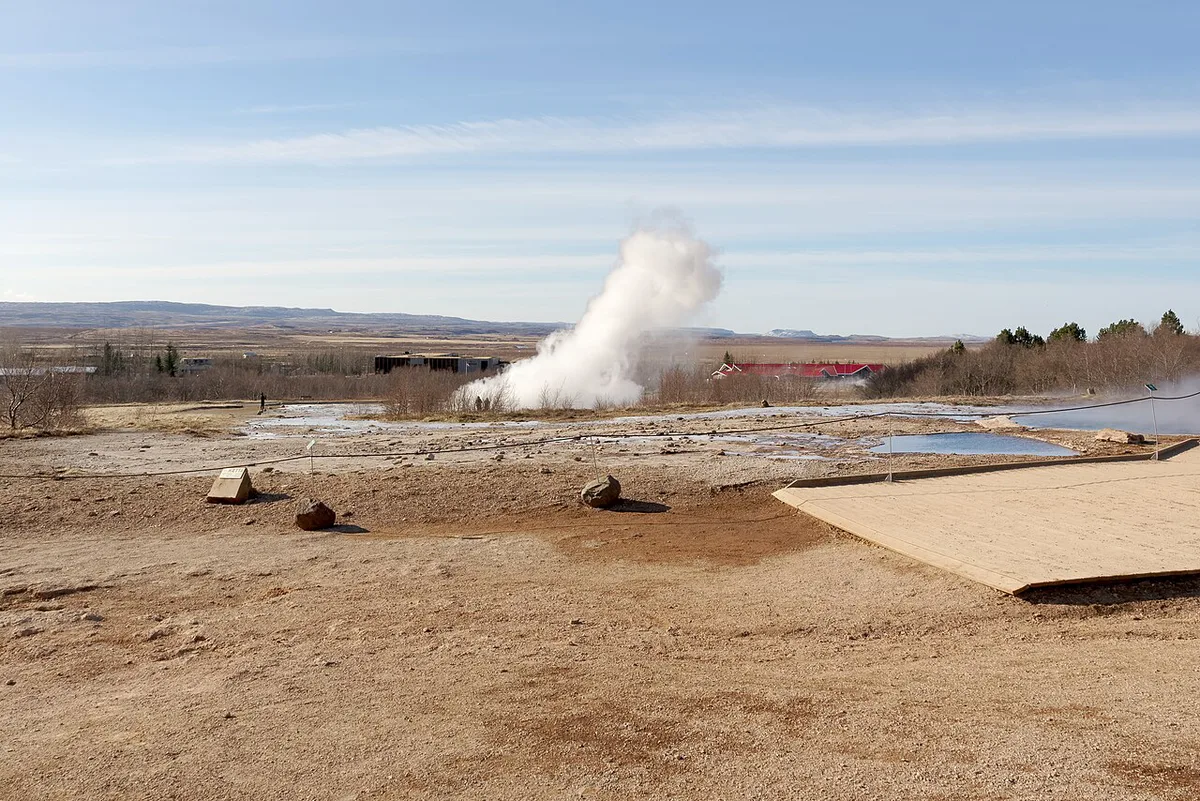
Plan your visit around Strokkur. The Great Geysir is a circular pool about 60 ft (18 m) across and roughly 4 ft (1.2 m) deep, and it usually just steams. Strokkur is the geyser that crowds gather around, because it erupts again and again within a short stop. The two sit about 330 ft (100 m) apart, so you can see both in one walk.
| Great Geysir | Strokkur | |
|---|---|---|
| Activity level | Largely dormant, with rare eruptions | Erupts every 4 to 10 minutes |
| What you see | A steaming pool and a famous name | Repeated blasts of boiling water and steam |
| Best for | History and context | Photos and short stops |
Does Geysir still erupt?
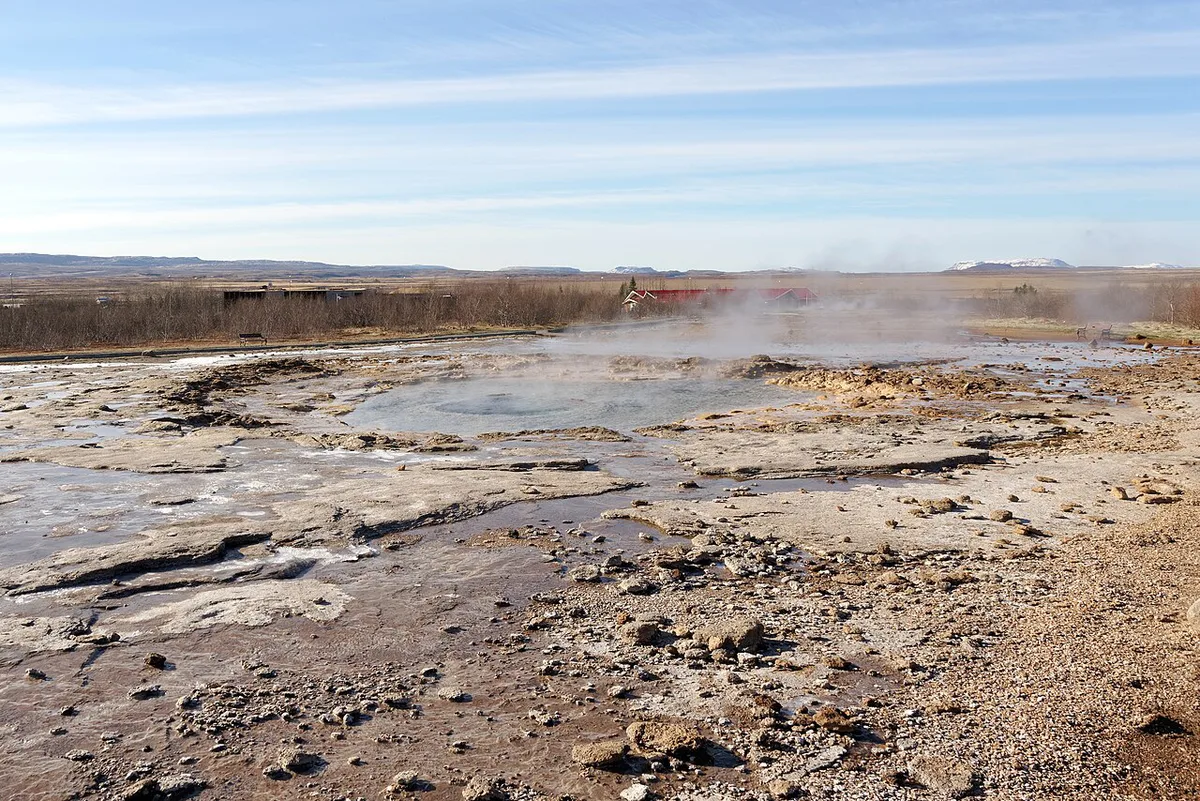
Geysir is technically active but erupts very rarely. Reported eruptions were in 2000 and 2016, and neither lasted. The English word "geyser" comes from Geysir, which was the first geyser described in European literature, in the 13th century. Its activity has swung with earthquakes and human tinkering, as this timeline shows.
- 1845: an eruption reported at about 557 ft (170 m), the highest recorded for Geysir.
- 1896: an earthquake on 10 September revived it, with several eruptions a day.
- 1916: activity paused.
- 1935: a man-made channel revived it briefly, until silica clogged the channel.
- 2000: another earthquake brought up to eight eruptions a day for around three years.
- 2016: it erupted suddenly, then went quiet again.
Strokkur: how often it erupts and where to stand
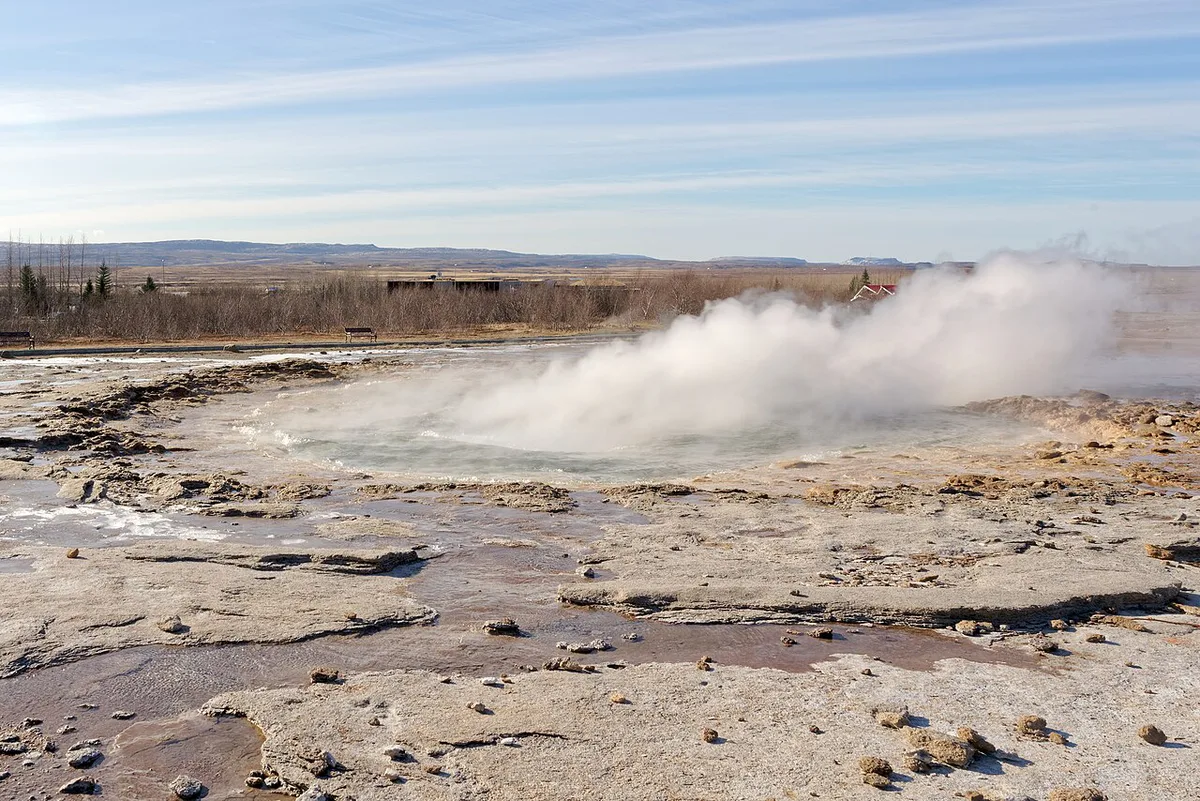
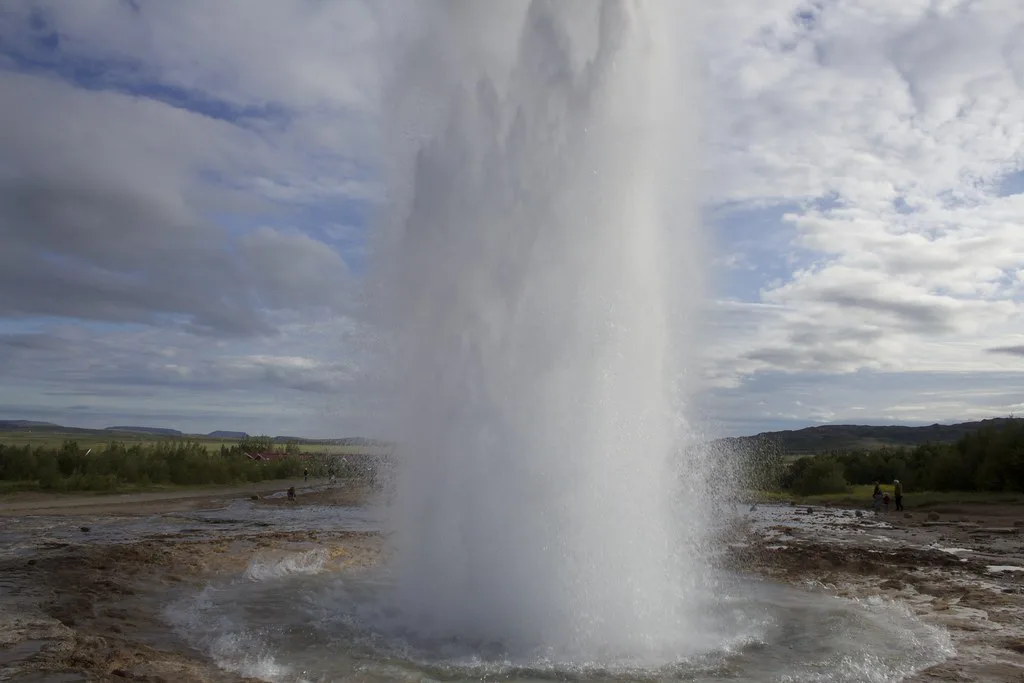
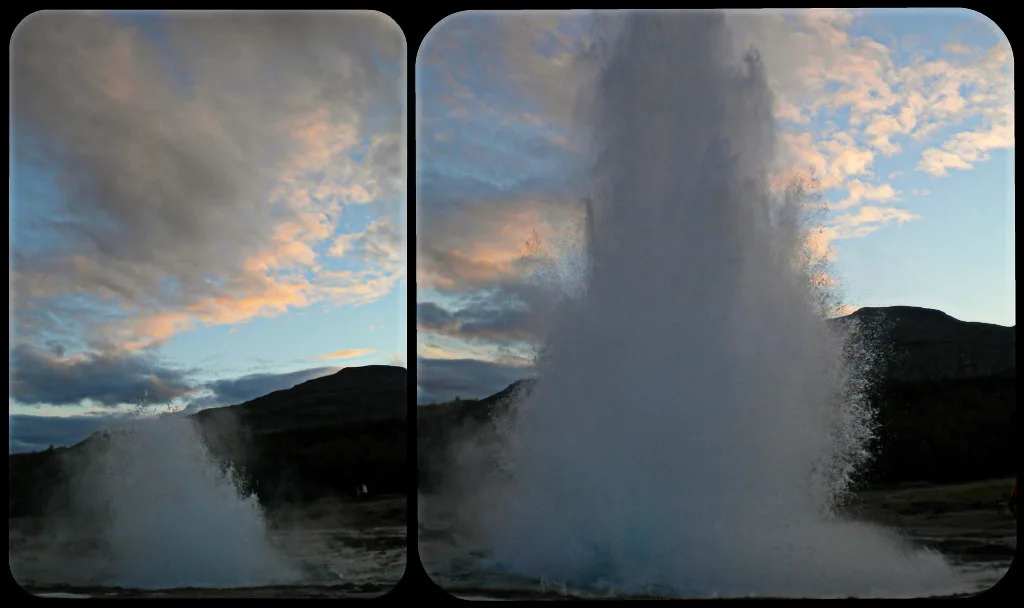
Strokkur typically erupts every 4 to 10 minutes. Some visitors see it go off even more often. Eruptions often reach tens of feet and sometimes about 130 ft (40 m). Stay at the marked viewing edge and stand upwind, because spray drifts with the breeze. For photos, keep your camera ready and watch the pool rather than waiting for the sound. Water near the vents reaches about 212°F (100°C), so never touch it. Swimming in geysers is out of the question. Follow the rope lines and the advice on Safetravel Iceland's safety guidance.
How a geyser works
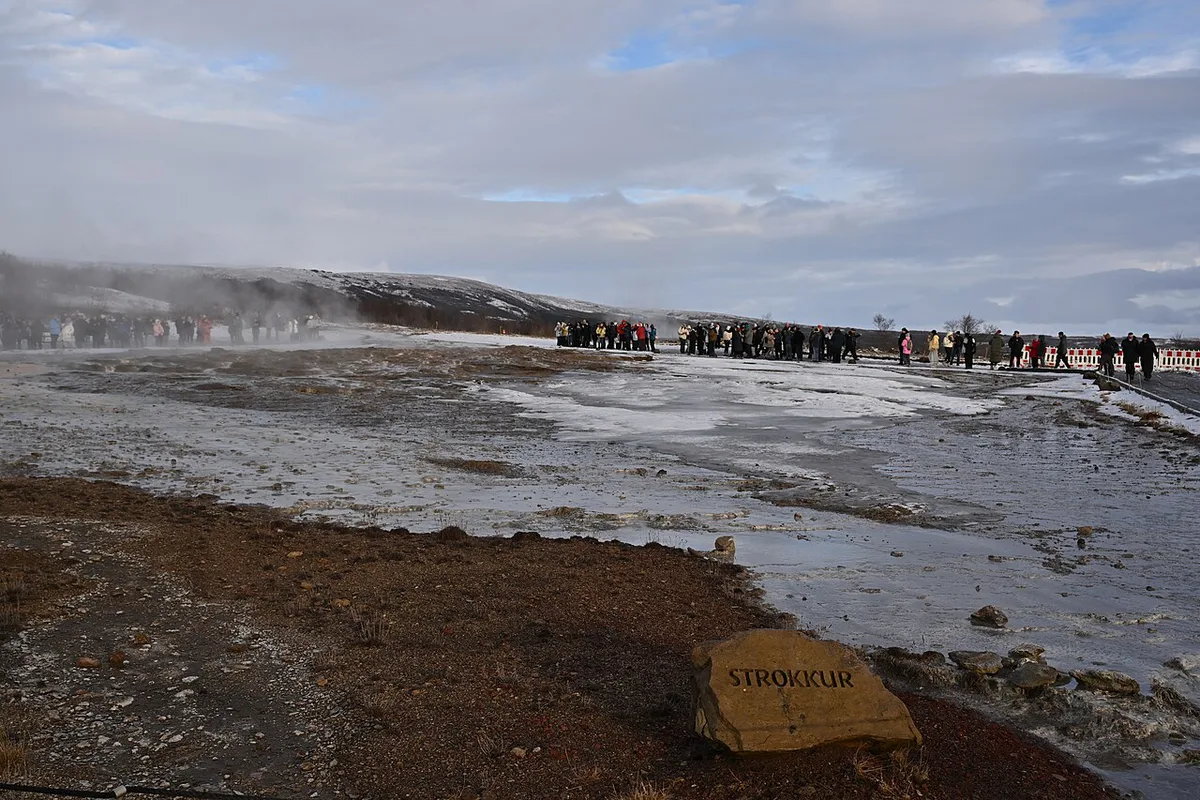
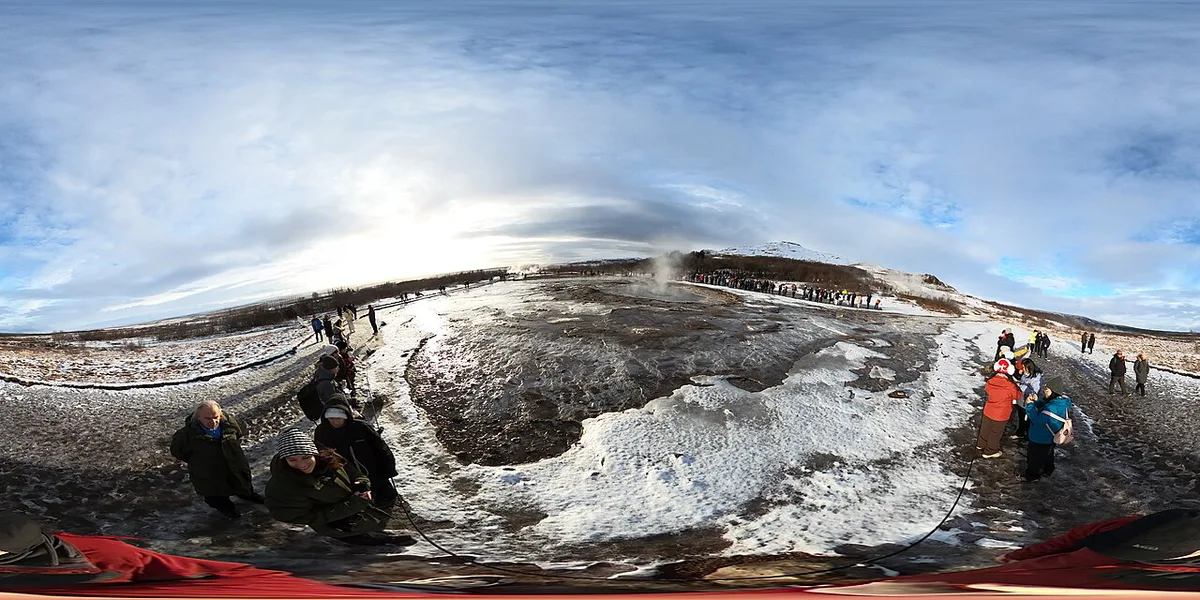
A geyser needs four things working together. Haukadalur has all of them, because Iceland sits on an active volcanic zone. For the bigger picture, read why Iceland has so many volcanoes.
- A heat source: hot rock under the ground superheats the water.
- A water supply: groundwater refills the system after each eruption.
- A reservoir: an underground chamber holds the heated water.
- Narrow plumbing: constricted cracks let pressure build until water bursts out.
Getting to Geysir from Reykjavik
Haukadalur is just over 60 miles (about 100 km) from Reykjavik. Allow around 1.5 hours each way by car. Use Haukadalsvegur as the navigation entry. Every option below shares the same drive, so choose by flexibility.
| Option | Time | Flexibility | Cost level | Best for |
|---|---|---|---|---|
| Self-drive | About 1.5 hours each way | High | Rental plus fuel | Travelers who want their own stops |
| Bus or Golden Circle tour | Full-day outing | Low, fixed stops | Mid, one ticket | Winter or no-car trips |
| Private tour | Full-day outing | High | Highest | Small groups and photographers |
Time on site and the best time to go
In our editorial assessment, 30 to 45 minutes covers both geysers if you only want Strokkur and a look at Geysir. Allow up to two hours if you add a meal at the restaurant or a browse in the shop. June to August is the most popular season, with milder weather and long daylight. Summer air temperatures typically sit around 50°F to 59°F (10°C to 15°C). Mornings and evenings are usually quieter than afternoons. In winter, expect icy paths, snow and short days, and bring grips and layers.
Budget 1.5 hours each way from Reykjavik, which is longer than the 30 to 45 minutes you need at the geysers.
- Quick Golden Circle stop: 30 to 45 minutes at the viewing edge.
- Photographers: 1 hour or more, to catch several eruptions.
- Families: allow time for the restaurant and toilets.
Costs, facilities and food
There is no entrance fee, and the geothermal area is free to walk around. Parking sits about a 2-minute walk from the springs. On site you will find toilets, a restaurant and a shop with Wi-Fi, and the area is wheelchair accessible. Café and shop hours are set by their operators, so check Visit Iceland's planning pages for current times.
What else to combine nearby
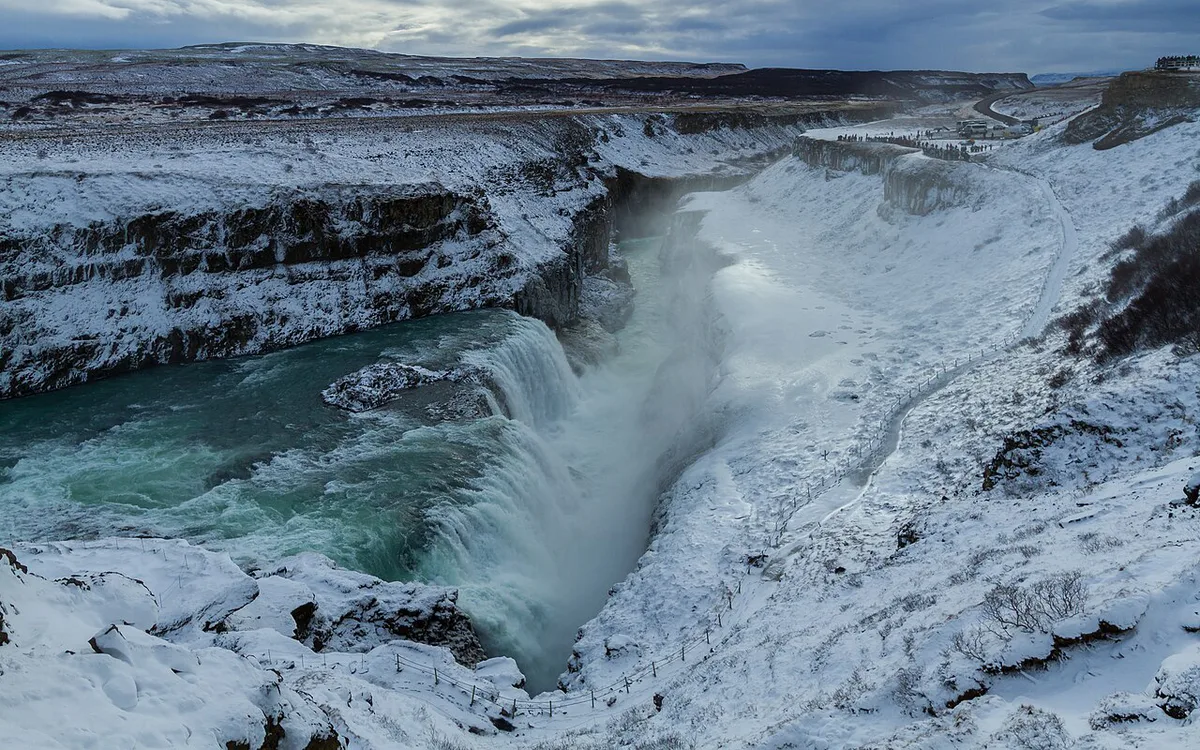
Gullfoss waterfall is about 6 miles (10 km) away, roughly a 10-minute drive. Thingvellir National Park is about 43 miles (70 km) back toward Reykjavik, around an hour away. Laugarvatn Fontana, a geothermal lagoon on Lake Laugarvatn, is another stop on the Golden Circle. Kerið crater is a further option on the same circuit. For more steam closer to Reykjavik, see Krýsuvík's steaming ground. Hengill's hiking trails are another nearby option. For a quieter highland field, read about Hveravellir's hot springs. Reykjanes visitors can also see Gunnuhver's mud pools. If you want the wider picture, see the list of Active Volcanoes in Iceland: Where to See Them Safely.
Gullfoss sits roughly a 10-minute drive from Geysir, so a Golden Circle loop can add a major waterfall for little extra driving.
Mistakes to avoid
Most disappointments come from a few avoidable errors.
- Expecting the Great Geysir to erupt. Plan around Strokkur instead.
- Standing downwind of Strokkur, where spray lands.
- Skipping layers. Wind at the open field makes it feel colder than the forecast.
- Driving in winter without checking road conditions first.
- Stepping off marked paths onto boiling ground.
- Ignoring volcanic news. See safety during an eruption and the Icelandic Met Office for alerts.
Frequently Asked Questions
Which country has geysers?
Iceland is the best-known home of geysers, and the word itself comes from Geysir. Geysers also occur in the United States at Yellowstone, in Chile at El Tatio and in New Zealand.
How do you pronounce Geysir?
Icelandic speakers say it roughly as "GAY-seer". English speakers say "geyser" as "GUY-zer" or "GEE-zer".
Do geysers produce geothermal energy?
Geysers are natural vents of heated groundwater, not power plants. They do show the same underground heat that Iceland taps for geothermal energy.
What does geyser mean?
A geyser is a hot spring that periodically erupts water and steam. The English word comes from Geysir, the Haukadalur geyser first described in European writing in the 13th century.