Santorini Atlantis: Myth, Evidence and Where to Visit
Last updated November 2026: Santorini Atlantis is a leading hypothesis, not a proven find. Scholars link Plato's story to the Bronze Age eruption that shaped the 5 Ways to See the Santorini Volcano (2026 Guide), but no excavation has confirmed the connection. Below you get the evidence on both sides, then a plan for visiting the Lost Atlantis Experience and Akrotiri.
Featured image: Norbert Nagel, CC BY-SA 3.0, via Wikimedia Commons.
Is Santorini Atlantis? The short answer
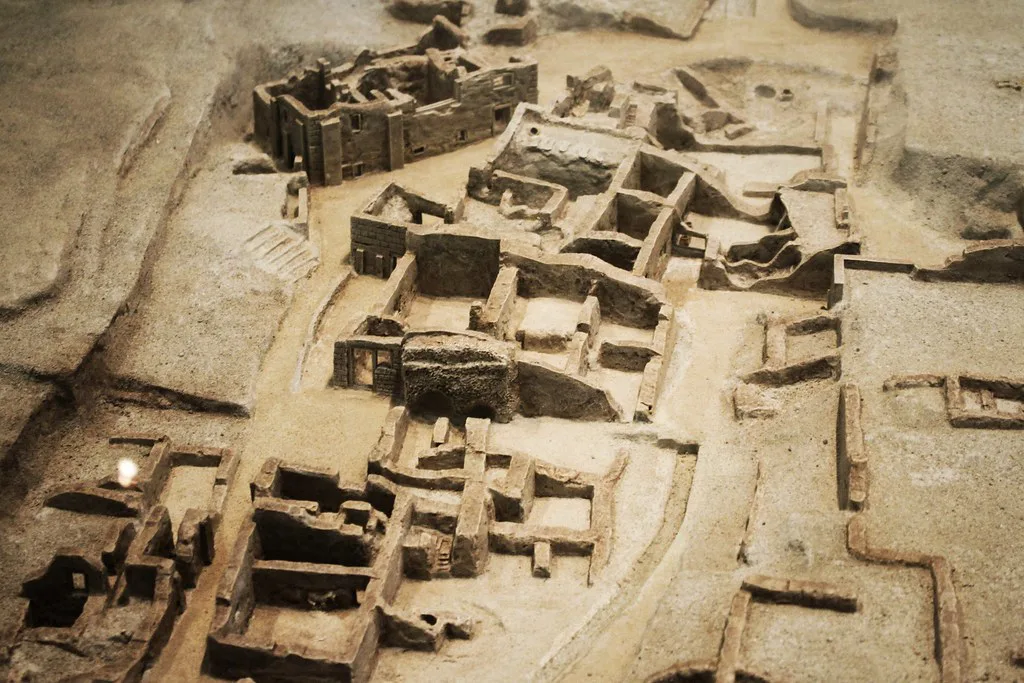
Possibly the inspiration, but not provably the place. Santorini offers a real Bronze Age catastrophe and a buried town, which is why the idea has lasted. Plato's text, however, describes a different scale, a different geography and a story told as philosophy. Treat the link as one leading theory and judge the evidence yourself.
What Plato wrote about Atlantis
Atlantis appears in two of Plato's dialogues, Timaeus (21E-25D) and Critias (108E-121C). In Timaeus, the Athenian statesman Solon visits Egypt around 590 BC. A priest at Sais tells him of a great island power that attacked Athens and lost. Critias describes the kingdom in detail: two islands, the larger and the smaller, and ten cities. Only two cities get names, the Metropolis and the Royal City. Atlantis then suffers an earthquake and a flood and sinks into the sea. Many scholars read the account as a philosophical allegory about an ideal state. That reading is the main reason the story is hard to pin to any real island.
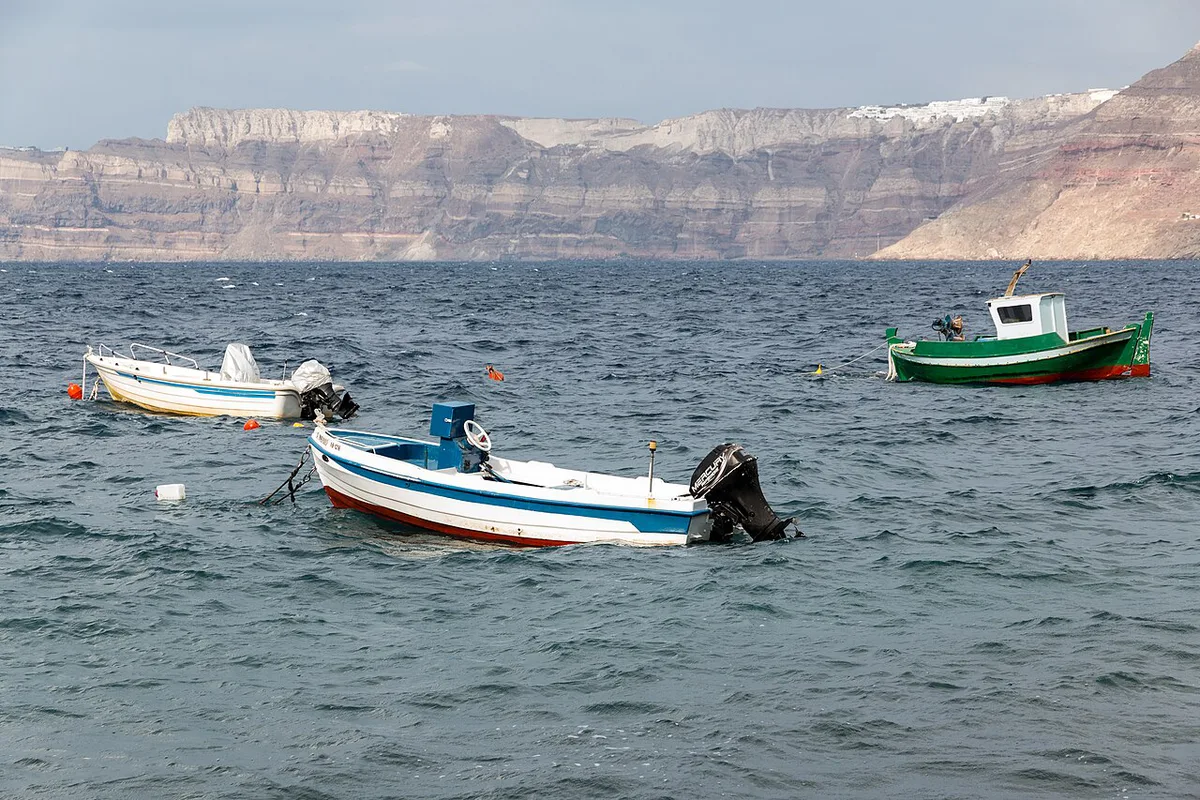
The case for and against Santorini as Atlantis
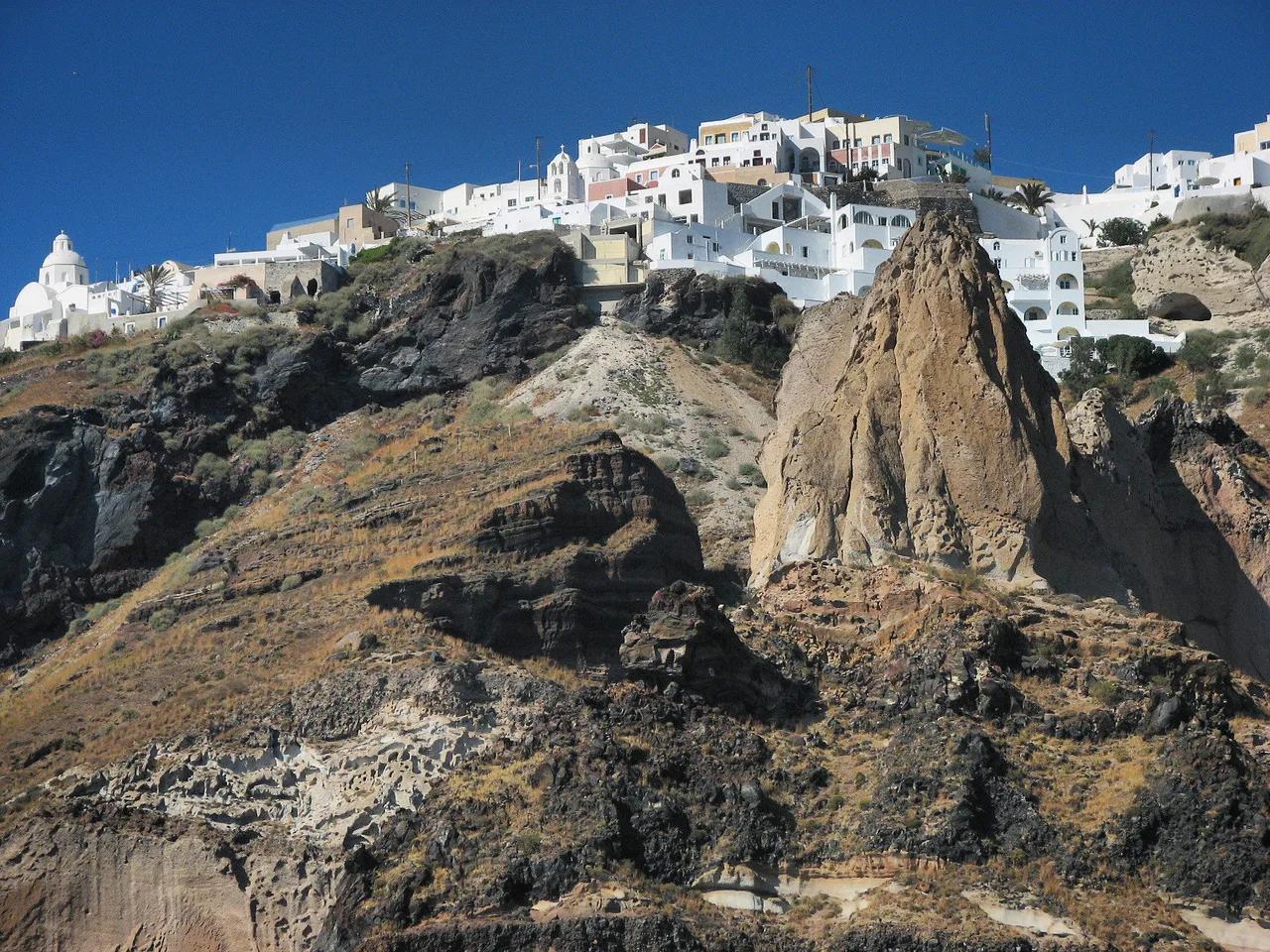
The strongest support is the Minoan Eruption: What Happened, When, and What to See, a Bronze Age event that blanketed the settlement at Akrotiri. Its aftermath is visible in the flooded caldera, where the island's centre collapsed into the sea. Professor Marinatos took a different view. He tied Atlantis to Minoan Crete, with Crete as the larger island and Santorini as the smaller one. The table sets out both sides.
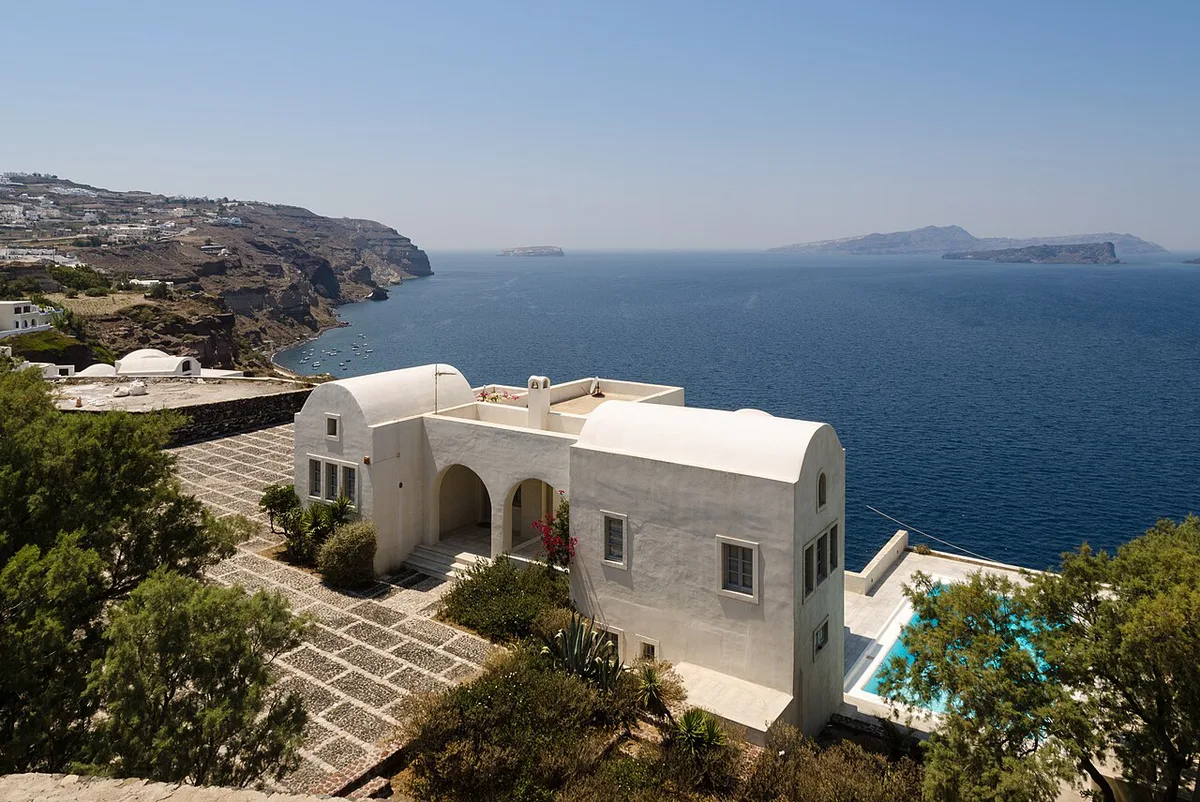
| Supports Santorini | Challenges the link |
|---|---|
| A Bronze Age eruption that reshaped the island | Dating gap between Plato's account and the eruption |
| Akrotiri, a settlement buried and preserved | Plato's description of geography and scale does not match Santorini |
| Earthquake, flood and sinking motif in the story | Plato framed the tale as philosophical allegory |
| Minoan sea power as a model for an island empire | Minoan Crete is a rival candidate, per Marinatos |
Visit the Lost Atlantis Experience in Megalohori
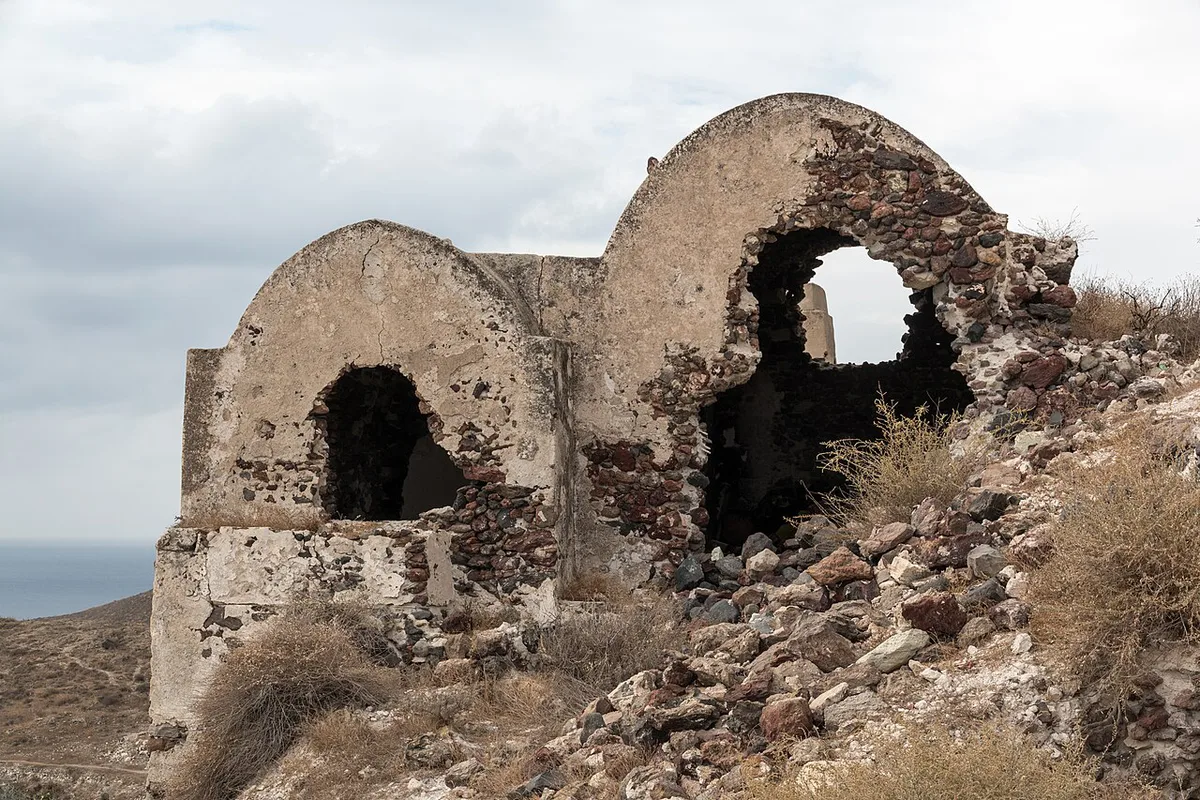
The Lost Atlantis Experience is a private museum in a 700 sqm building near Megalohori. It presents the Santorini theory through technology, not original artefacts. Exhibits are offered in 8 languages: Greek, English, French, German, Italian, Spanish, Turkish and Chinese. Admission as listed on the museum's own site is €14 for adults and €7 for ages 7-12. Children under 6 enter free. The museum closes for the season, and its site's season dates conflict, so the figures may be stale: check its current prices and opening dates before you book.
- 9D experience: re-creates the earthquake, tsunami and eruption with motion and effects.
- Diorama: a large model of Atlantis with augmented-reality windows.
- Plato's Journey: an interactive fresco about the philosopher's life.
- Geology hologram: Santorini's evolution from prehistory to today.
- Plato hologram: a talking figure who answers questions about his philosophy.
Akrotiri versus the museum: which to pick
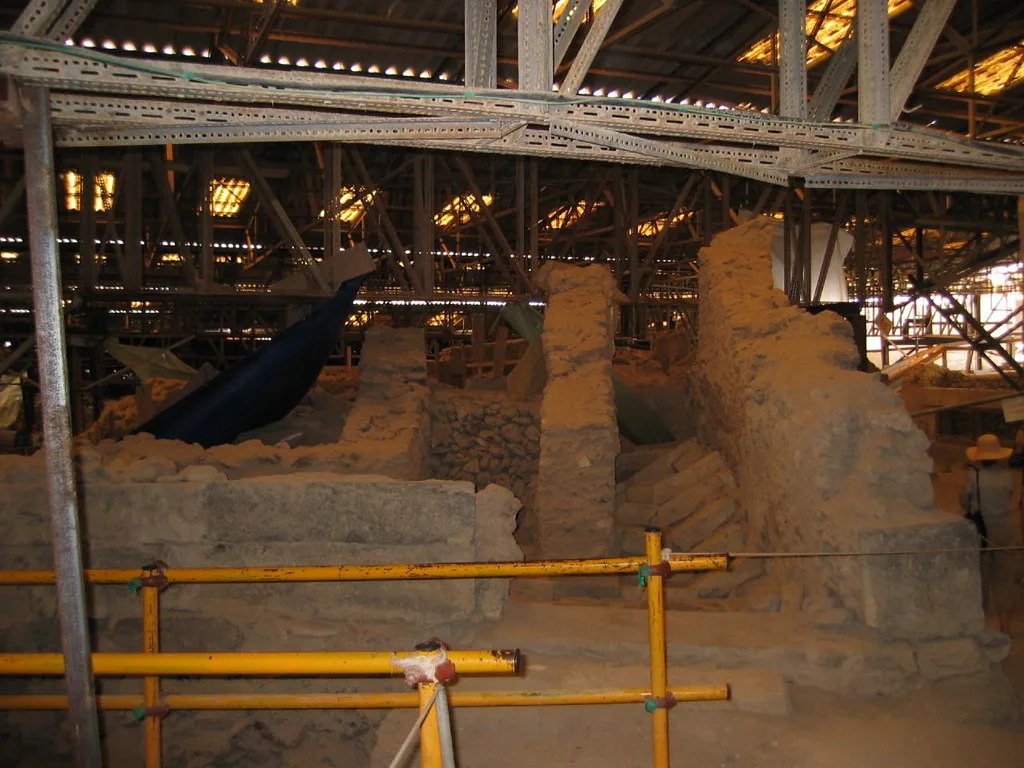
Akrotiri is the archaeological evidence. The museum is a modern interpretation of the myth. Pick Akrotiri if you want real finds and context for the Bronze Age eruption. Pick the museum if you want the Plato story told with media and models. Do both if you have a full day. Skip the museum if you want original artefacts. Skip the 9D show if you are sensitive to motion or intense effects. Families with very young children may also find it a poor fit.
| Question | Lost Atlantis Experience | Akrotiri |
|---|---|---|
| What it is | Interpretation of the myth | Archaeological evidence |
| Best for | Story, Plato, families with older children | Readers who want real finds |
| Cost level | Listed at €14 adult | Listed on the Ministry of Culture site |
| Access | Bus stop Akrotiri Crossroad | Check official transit and site pages |
| Season | Closed for part of the year | Check official hours |
Getting there and building a day plan

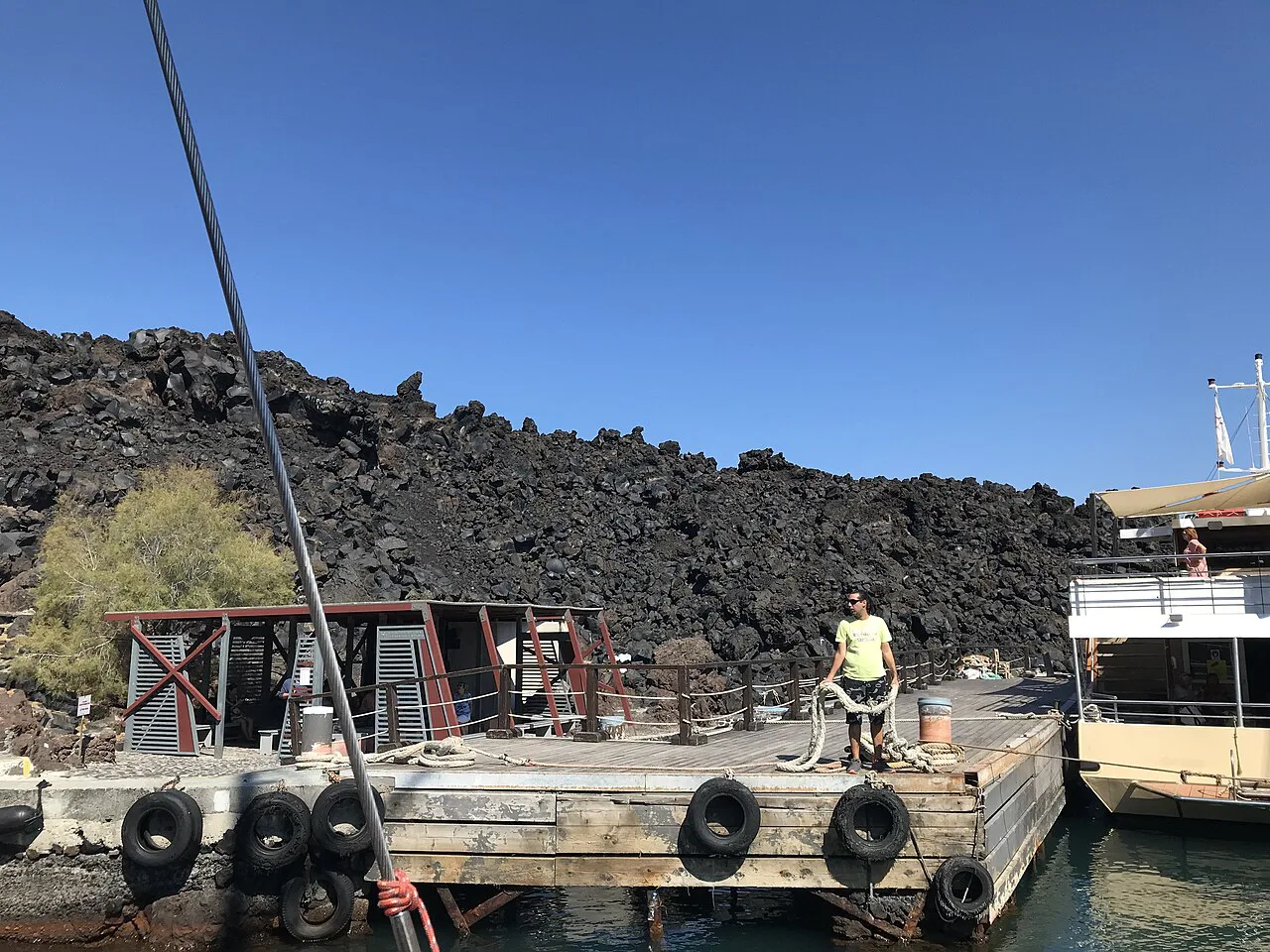
The museum's contact page gives its bus stop as Akrotiri Crossroad, next to Grigoris Bakery. Without a car, reach that stop by bus and check the KTEL Santorini timetable for your date. A taxi is the alternative if the schedule does not fit. Driving puts the museum, Akrotiri and Megalohori on one loop. Visit Akrotiri first, then the museum, so the finds come before the interpretation. Island basics are on the Visit Greece Santorini page. To see the volcano itself, take a guided volcano tour to Nea Kameni, Santorini: Volcano Walk, Boat Trips & What to Expect. The volcano map shows how the sites fit together. The volcano remains active and is monitored by the Institute of Geodynamics, which is relevant background in our guide to whether Santorini's volcano is active.
Common mistakes
A few errors cause most disappointment on this topic.
The museum lists €14 for adults and €7 for ages 7-12, and under-6s enter free.
- Expecting a ruined city at the museum. It is an exhibition, not an excavation.
- Arriving in the closed season. The museum's official site gives its opening dates.
- Treating the myth as proven. Santorini is a leading theory, not a verified site.
- Skipping Akrotiri. It holds the physical evidence behind the theory.
- Relying on one price figure. Listed prices may be out of date.
Frequently Asked Questions
Where is Atlantis rumored to have sunk?
Plato places Atlantis beyond the Pillars of Heracles, and the sinking is part of his story. Santorini and Minoan Crete are the two Aegean candidates scholars most often discuss.
Has any evidence of Atlantis been found?
No excavation has confirmed Atlantis. Akrotiri shows a real Bronze Age settlement buried by an eruption, but it does not prove Plato's account.