Last updated November 2026. The Azores volcanoes are nine islands on a plate junction in the North Atlantic, and many of their craters, caves and fumarole fields can be visited. The best choice depends on the island, on what you want to see (a crater, a cave, a recent eruption or a hot spring) and on how many days you have. Use the quick-pick table first, then read the eight entries and follow the links to each site guide.
Featured image: Gonçalo Torres, CC BY-SA 4.0, via Wikimedia Commons.
Azores Volcanoes at a Glance
The archipelago stretches roughly 600 km across the North Atlantic. It has nine islands in three groups: Corvo and Flores in the west, Faial, Pico, São Jorge, Graciosa and Terceira in the centre, and São Miguel and Santa Maria in the east. Three plates meet here: the American, the Eurasian and the African. That junction explains the crater lakes, lava caves and steaming valleys. "Active" in this guide means a volcano can erupt in the future but gives warning signs first. Those signs are gas release, ground deformation and some earthquakes.
Which Azores Volcano Should You Visit First?
Pick by interest, then by island. Sites on the same island can usually be paired in one day, while moving between islands costs you a flight or ferry leg. Weather decides more than distance, so keep one flexible day on any summit or rim plan.
| Site | Island | Type | Best fit | Effort and access | Weather sensitivity |
|---|---|---|---|---|---|
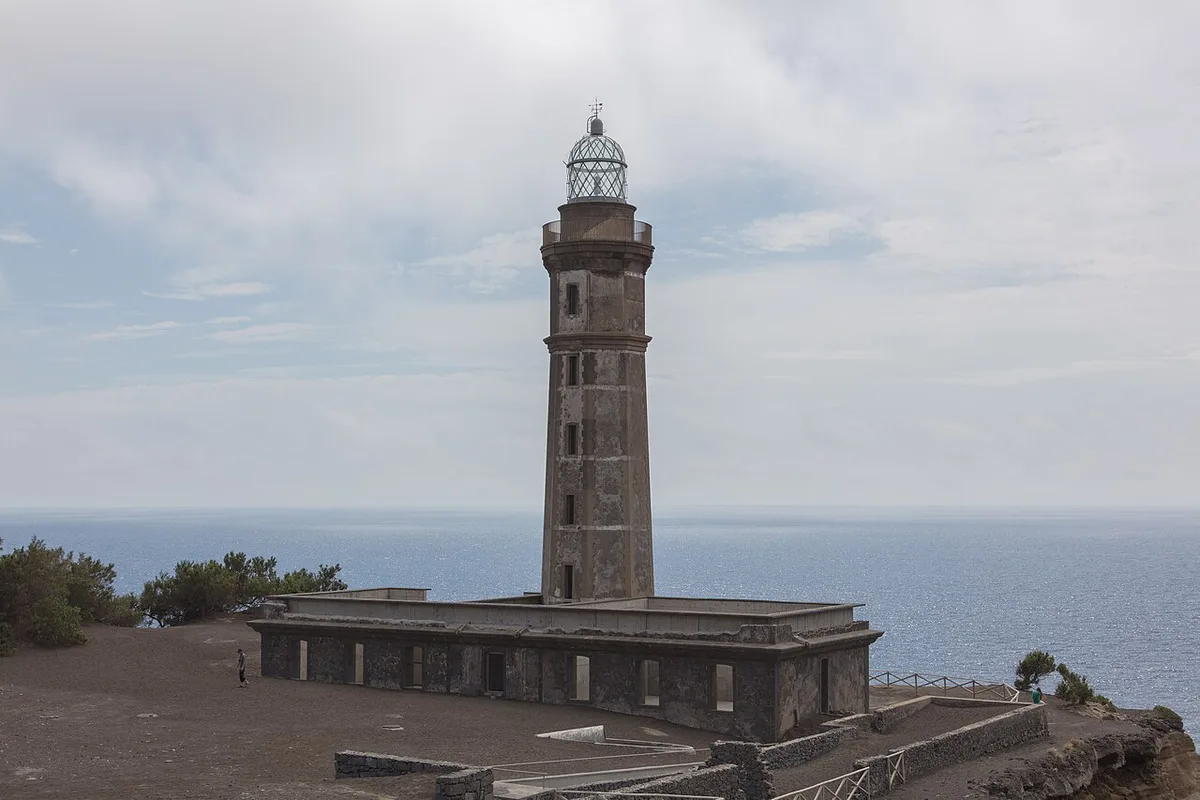
| Capelinhos | Faial | Recent eruption (1957–58) | History and landscape | Easy walk, interpretation centre | Low to medium |
| Caldeira do Faial | Faial | Caldera | Crater views | Rim access varies | High |
| Montanha do Pico | Pico | Stratovolcano summit | Fit hikers | Demanding climb | Very high |
| Furna do Enxofre | Graciosa | Cave with fumaroles | Cave fans | Visitor centre access | Low |
| Algar do Carvão | Terceira | Volcanic chimney | Cave fans | Visitor house, descent | Low |
| Lagoa do Fogo | São Miguel | Crater lake | Photographers, walkers | Viewpoint or trail | High |
| Furnas and Caldeira Velha | São Miguel | Caldera, fumaroles, thermal springs | Families, food lovers | Mostly easy | Low |
8 Best Azores Volcanoes and Volcanic Sites to Visit
Entries run roughly west to east by island group. Hours, tickets and access rules change by season, so check each official page before you travel.
1. Capelinhos, Faial
Capelinhos is the most recent and westernmost volcano of the Capelo peninsula on Faial. Its eruption began at sea on 27 September 1957 and ended on 24 October 1958, and the volcano joined the island in between. Walk the barren ash landscape, look at the fossil cliff of Costado da Nau and climb to the old lighthouse.
Buried in the 1957–58 ash, the Capelinhos Volcano Interpretation Centre explains the eruption and the displacement of islanders. Our Capelinhos eruption guide covers the walk in detail. Skip it if you want a summit or a cave, because this is an open ash landscape.
2. Caldeira do Faial, Faial
Faial's caldera belongs to the nine polygenetic volcanoes that Geopark material classes as active. Active here means it could erupt again, with warning signs such as gas release and ground deformation first. Pair it with Capelinhos, because both sit on Faial and make a natural single-island day.
Rim access depends on weather and local rules, so check conditions on the morning you go. Read our Faial caldera guide for the route. Skip it on a cloudy day if the crater view is your only reason to go.
3. Montanha do Pico and Gruta das Torres, Pico
Montanha do Pico rises to about 2,350 m and is the highest point in Portugal. It is also the youngest and largest polygenetic volcano in the archipelago, standing 3,500 m above the seabed. At 2,250 m a collapse crater about 550 m across holds the small Piquinho cone, with fumaroles on top and on the eastern flank.
Casa da Montanha has information that helps you read the mountain before a climb. For a lava-cave stop on the same island, see Gruta das Torres on Pico. Skip the summit if you cannot spare a weather-flexible day or lack hiking fitness.
4. Furna do Enxofre, Graciosa
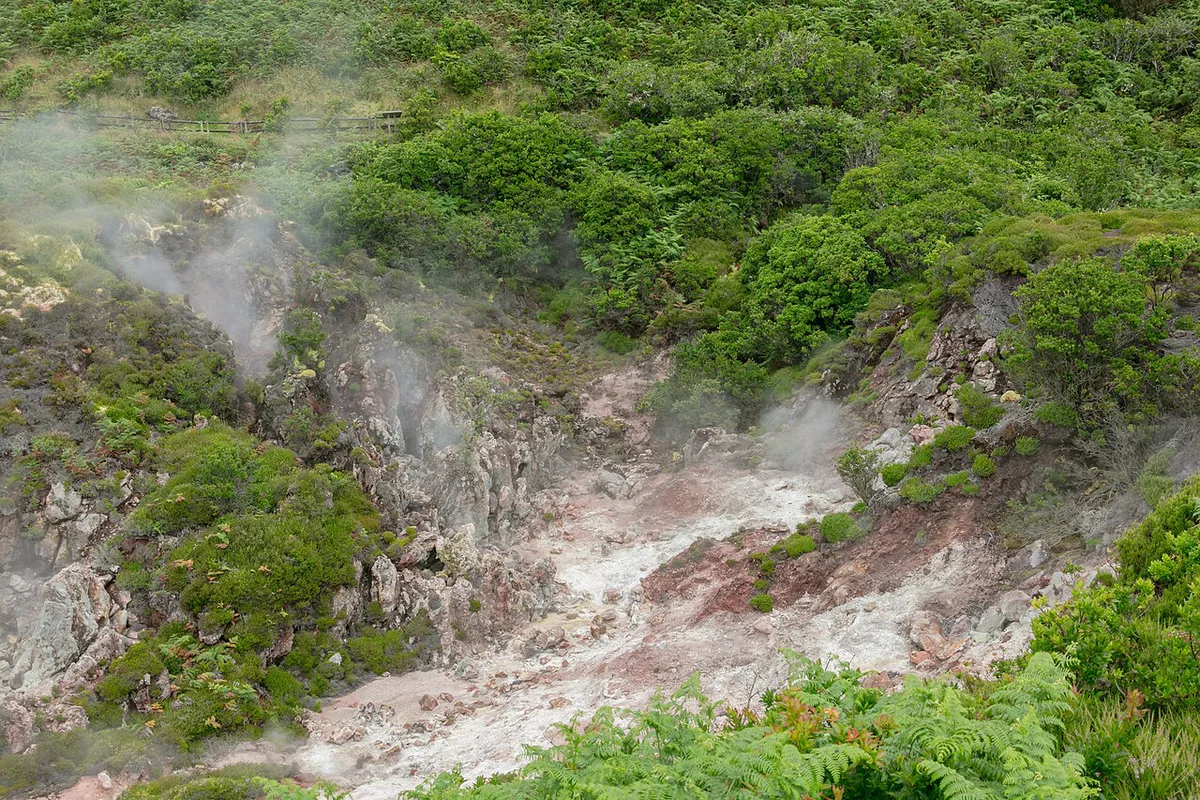
Beneath Graciosa's Caldeira lies the Furna do Enxofre, a volcanic cavity with a vaulted roof. It measures 194 m long and 40 m high at the centre. Inside you find a cold-water lagoon and a fumarole field with carbon dioxide emissions and a mud fumarole.
The Caldeira above, on the smallest stratovolcano in the Azores, is up to 1.6 km across. Our Furna do Enxofre guide explains how to enter through the visitor centre. Skip it if you only have a short trip, since Graciosa needs its own inter-island leg.
5. Algar do Carvão, Terceira
Algar do Carvão lies in the centre of Terceira and is a volcanic chimney about 80 m deep. In places the walls are lined with volcanic glass (obsidian), and elsewhere the roof has collapsed. Rainwater feeds a clear lake and builds opal stalactites and stalagmites up to about 1 m long.
According to the Geopark, it ranks in the world top 10 of volcanic cavities for mineral deposits. Our Algar do Carvão guide covers the visitor house and the descent. Skip it if enclosed spaces and stairs are a problem for your group.
6. Gruta do Natal, Terceira
Gruta do Natal gives Terceira a second cave stop beside Algar do Carvão. Visit both on one day, since they share the island and need no flight between them. Cave access depends on rules that can change, so confirm the current status with local tourism before you plan around it.
Our Gruta do Natal guide has the visit details. To compare cave styles, read about Gruta do Carvão too. Skip the caves if you prefer open summits and crater views to underground walks.
7. Lagoa do Fogo, São Miguel
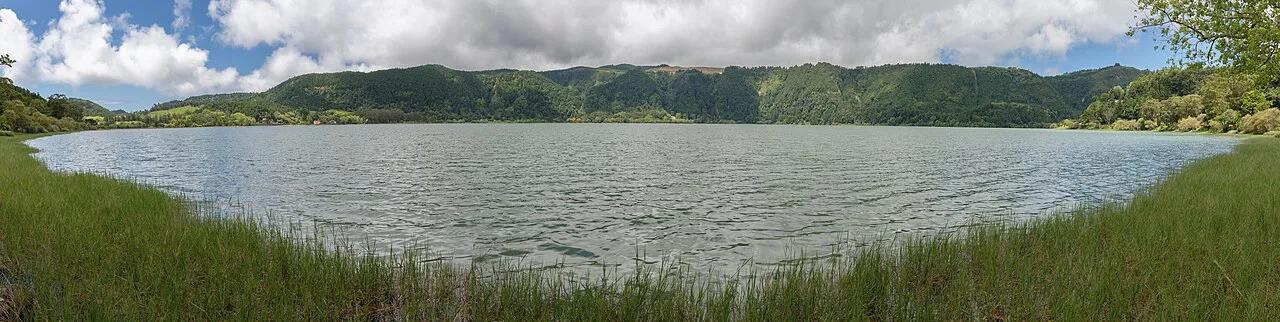
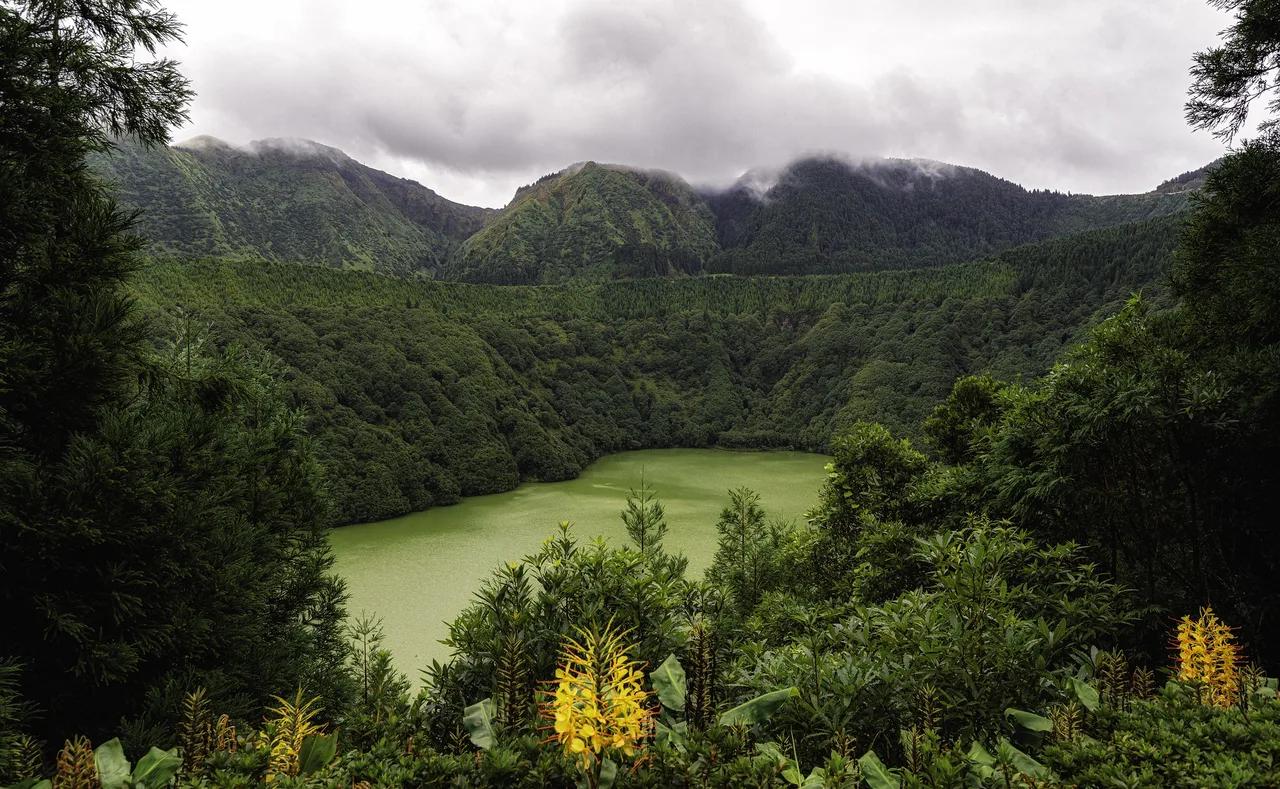
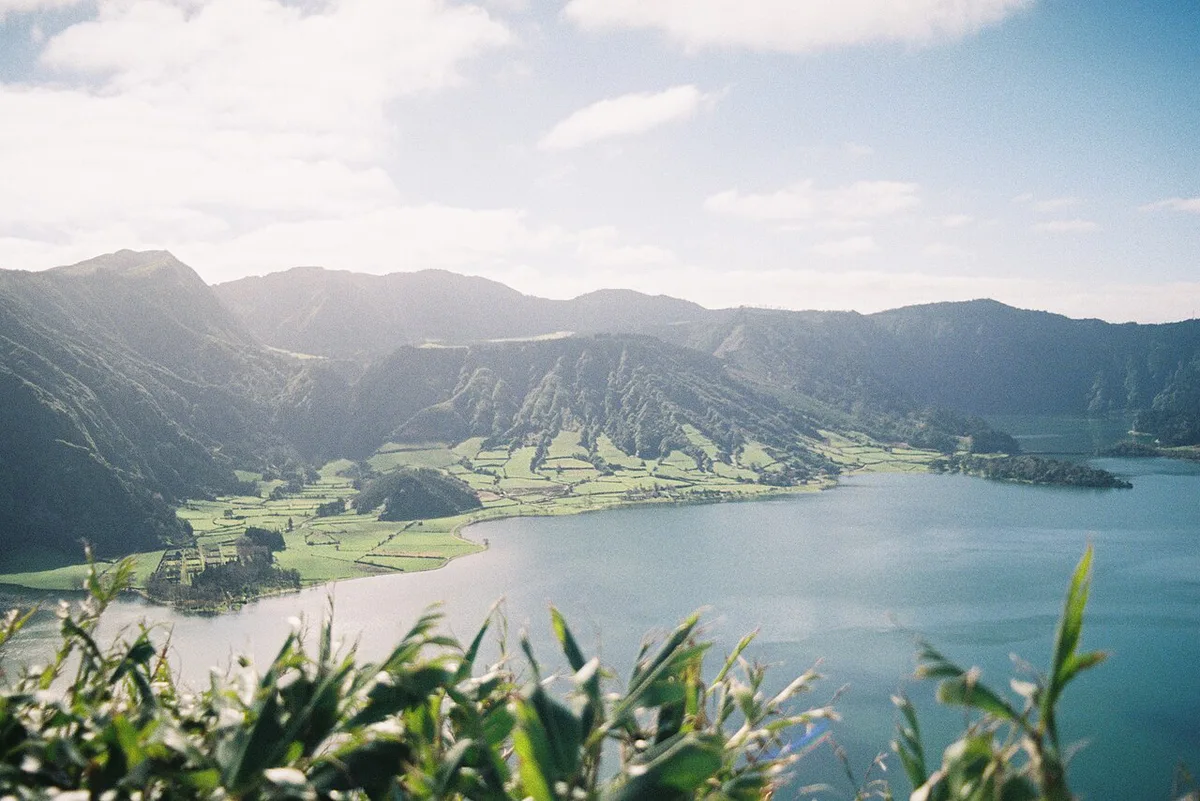
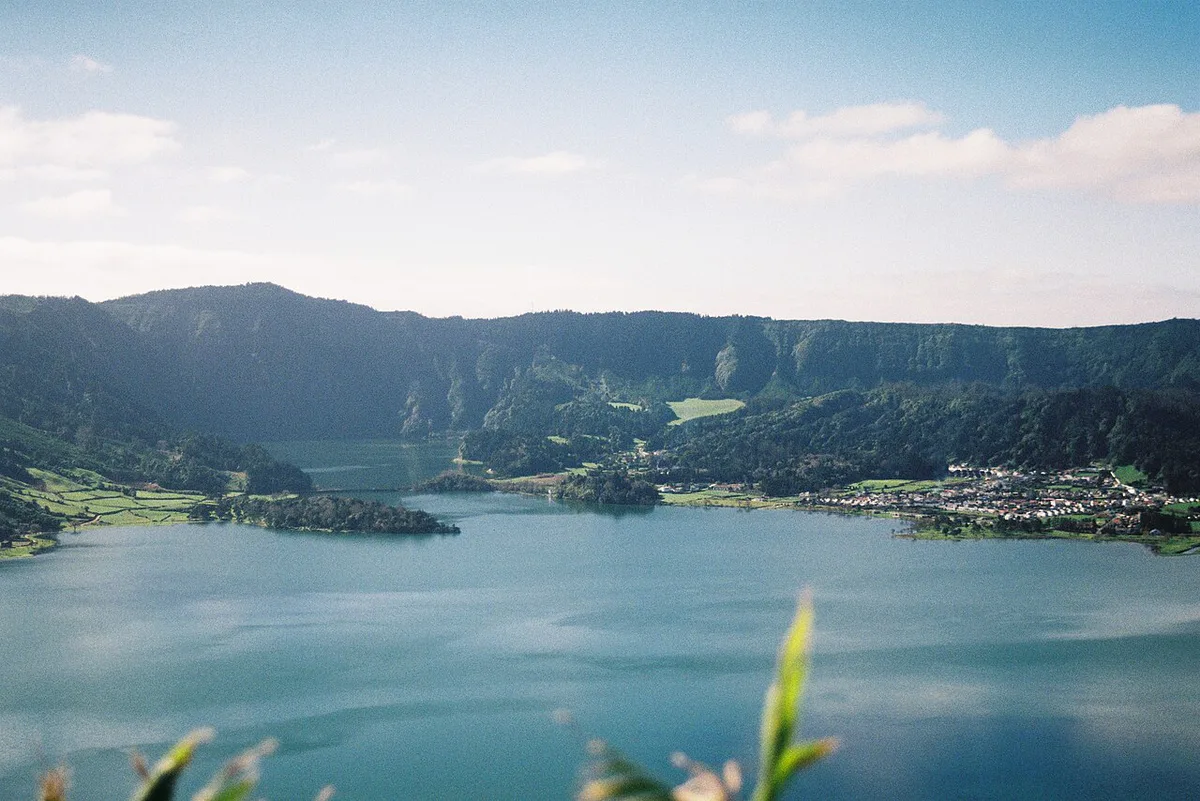
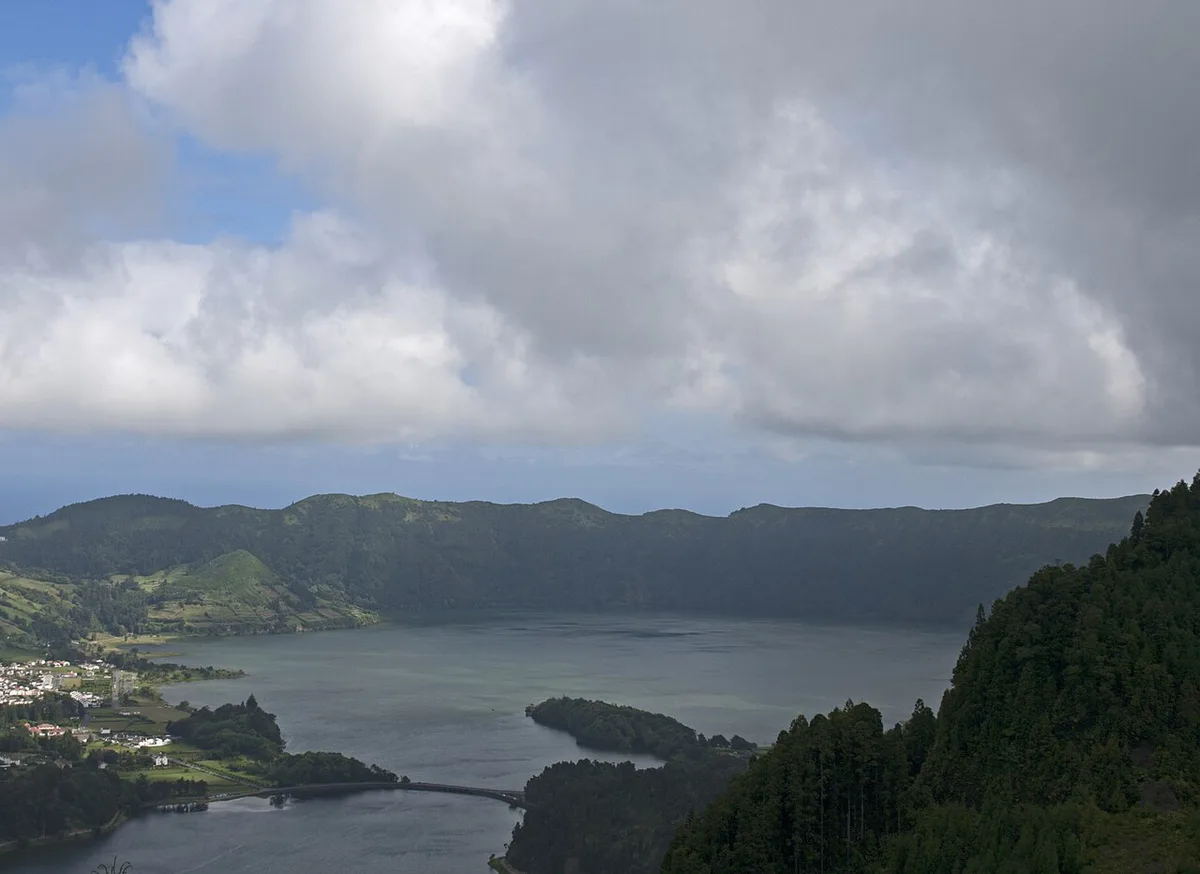
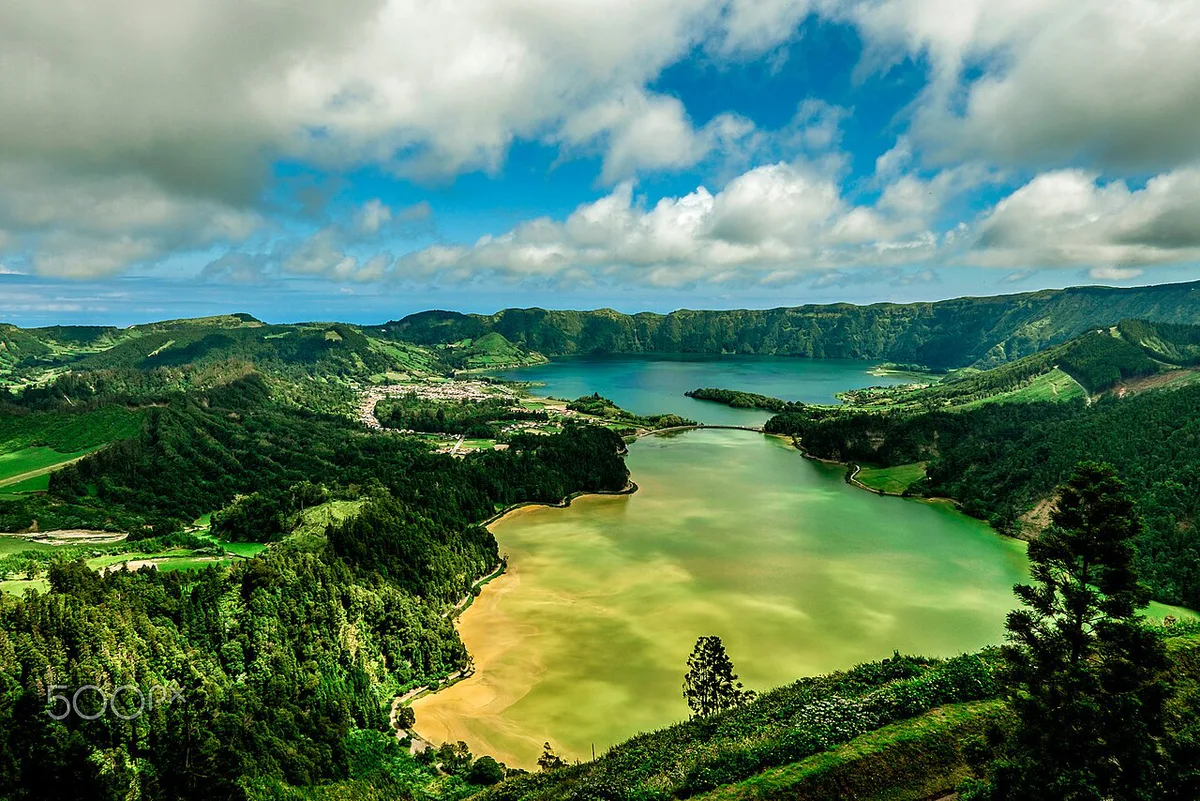
Lagoa do Fogo is a crater lake on São Miguel, inside the Fogo volcano. Fogo is one of the island's three active polygenetic volcanoes, alongside Sete Cidades and Furnas. A walking trail leads to the lake, and viewpoints give a wider look at the crater.
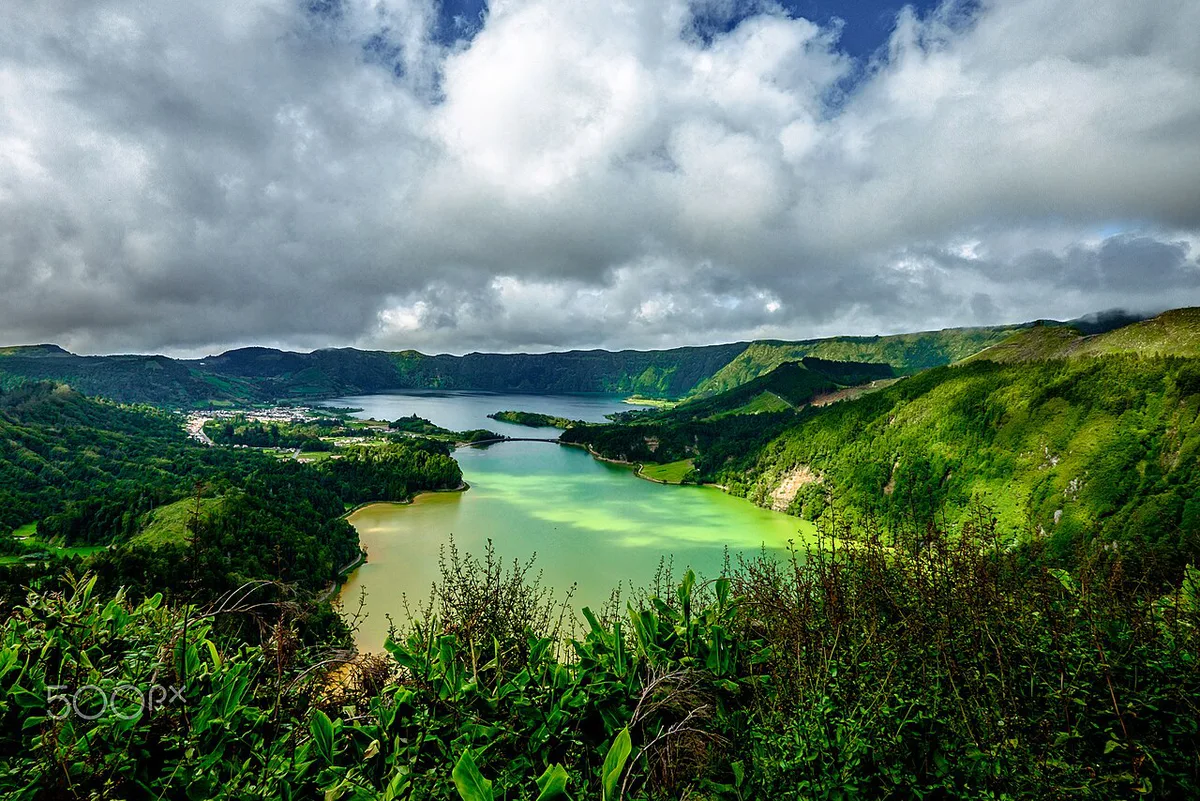
Cloud can hide the water completely, so never treat a clear lake view as guaranteed. Our Lagoa do Fogo guide explains the trail and viewpoints. Skip it on low-cloud days and choose Furnas instead.
8. Furnas and Caldeira Velha, São Miguel
Furnas is a polygenetic volcano with a collapse caldera up to 8 km across. Eruptions inside it are tied to the mid-15th century and to 1630. From the Pico do Ferro viewpoint you see the caldera, the lake and the fumarole fields.
Cozido das Furnas, the local stew, is cooked using volcanic heat. Caldeira Velha Guide: Hot Springs, Tickets & Tips is São Miguel's other thermal stop and suits a soak after the viewpoints. Skip Furnas if you want a rugged climb, because most stops are easy.
Santa Maria, São Jorge, Flores and Corvo
Santa Maria is the oldest island, with scoria cones such as Pico do Facho. São Jorge has fissural volcanic complexes at Topo, Manadas and Rosais. Corvo has the Caldeirão volcano, and Flores has the Pico da Sé dome. Both lie west of the Mid-Atlantic Ridge. These four islands suit a second trip once you have seen the main central and eastern sites.
Are the Azores Volcanoes Still Active?
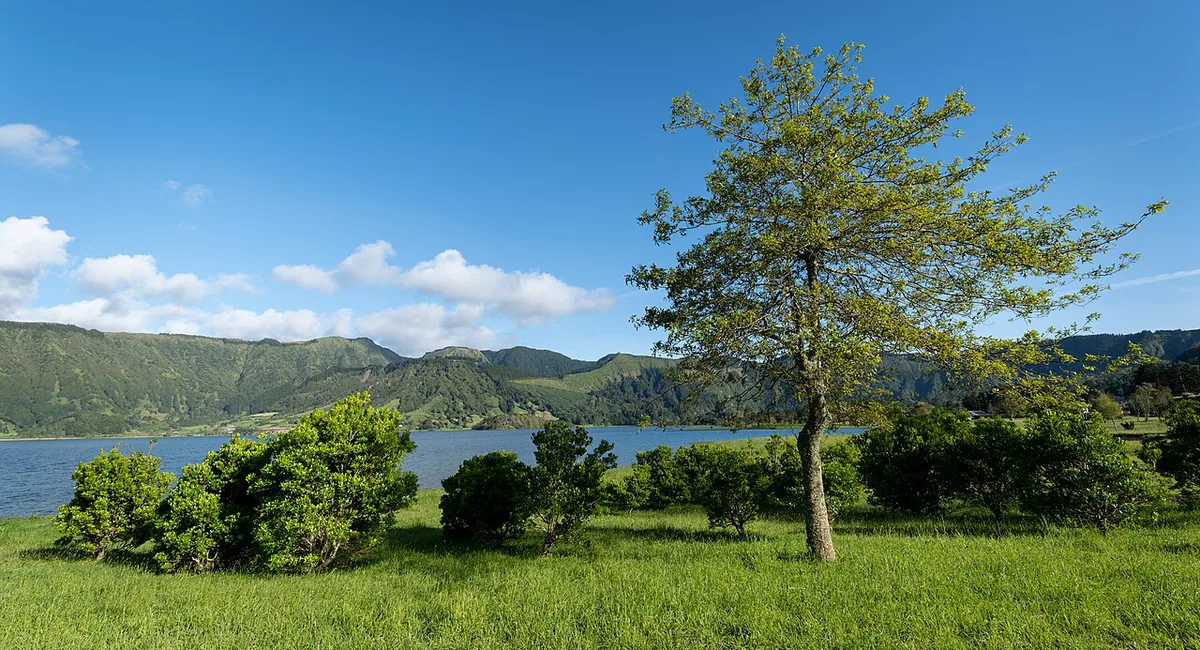
Yes. Nine of the 14 polygenetic volcanoes are classed as active, according to the Azores Geopark. Since settlement, 26 historical eruptions have been described. The most recent were Capelinhos in 1957–58 and the Serreta volcano in 1998–2001, a submarine eruption off Ponta da Serreta on Terceira. Capelinhos displaced Faial's population and drove migration to the United States. For visitors, warning signs come first, and the IVAR/CIVISA volcano observatory is the place to check monitoring notices.
How the Islands Formed and What You Will See
Volcanism began about 35 million years ago. Santa Maria emerged about 8 million years ago and is the oldest island, while Pico is the youngest at about 270,000 years. Geopark material counts 14 polygenetic volcanoes, 8 fissural zones and about 1,750 monogenetic cones. On the ground, that means calderas and crater lakes at the big central volcanoes. It also means scoria cones and domes from single eruptions, plus lava caves and fumarole fields. Older islands look more eroded, and younger ones look raw.
Planning: Time, Costs, Tickets and Access
The Geopark covers 121 geosites, so shortlist two or three per island rather than ticking off everything. Some sites have visitor centres or houses, including Capelinhos, Furna do Enxofre, Algar do Carvão and Casa da Montanha. Entry fees and hours are not fixed in this guide, so check Visit Azores for current details. Crater rims, summits and caves can be restricted at short notice.
Across 121 geosites, pairing two sites on one island in a single day keeps the trip simple, but any second island needs its own flight or ferry leg.
| Mistake | Better move |
|---|---|
| Assuming caves and crater rims are always open | Check the official site and local tourism office before booking |
| Skipping the weather check on summits | Look at same-day conditions and keep a spare day |
| Treating a lake viewpoint as guaranteed clear | Plan a second viewpoint or thermal stop nearby |
| Booking inter-island legs with no buffer | Leave slack before flights and ferries |
Getting Around and Where to Stay
A single base keeps logistics simple. Faial, Terceira and São Miguel each hold two or more sites you can pair in a day. With two or three days, stay on one island. With a week, add a second island and leave buffer for weather. Island hopping suits a longer trip, because ferry and flight links limit flexibility. A car helps reach rims and trailheads, though a guided option removes the driving. Our Azores volcano tour guide covers guided choices.
The Azores UNESCO Global Geopark
The Azores Geopark is presented as a UNESCO Global Geopark, and its website lists geosites, geotourism suggestions and educational activities. Since 2010, protecting and explaining this heritage has involved local people. Use its geosite list as your main source for the science. Use IVAR/CIVISA and local tourism offices for current status.
Explore More Guides
Keep planning your trip with these guides.
Guides
- Lagoa do Fogo, Azores
- Caldeira Velha Guide
- Furna do Enxofre, Graciosa
- Gruta do Natal, Terceira
- Capelinhos Volcano, Faial
- Gruta das Torres, Pico
- Algar do Carvão, Terceira
- Caldeira do Faial: Rim Trail, Viewpoint and Plan B Guide
- Gruta do Carvão, São Miguel
- Azores Volcano Tour: Which One to Book (and When to Skip)