Kolumbo Volcano: Santorini's Submarine Volcano Explained
Last updated November 2026: Kolumbo is a submarine volcano about 7 km northeast of Santorini, and no land visit is possible. Its 1650 eruption is documented, and research cruises have studied it. Searches for the name also return a musician and the TV detective Columbo, but this guide covers only the volcano and links into our overview of all Greek volcanoes.
Featured image: Dietmar Rabich, CC BY-SA 4.0, via Wikimedia Commons.
What Kolumbo is and where it sits
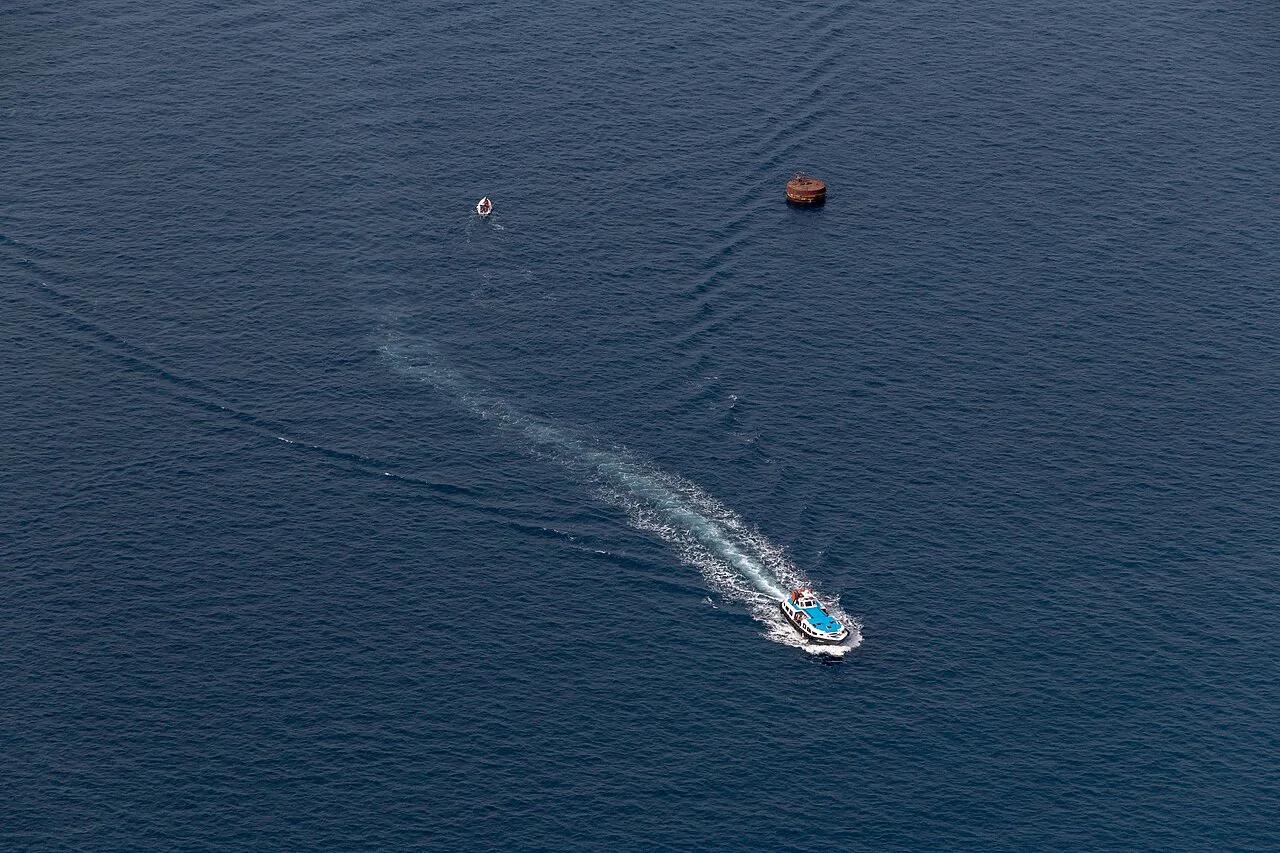
Kolumbo lies under the Aegean Sea, about 7 km northeast of Santorini. It is a volcano whose body is underwater, so there is no crater rim to hike and no beach to land on. Scientists treat it as part of the wider volcanic area around Santorini. For a traveler, that means Kolumbo is something to understand rather than something to tick off on an itinerary. Santorini's own caldera is the part you can see.
Kolumbo eruption history: what is documented
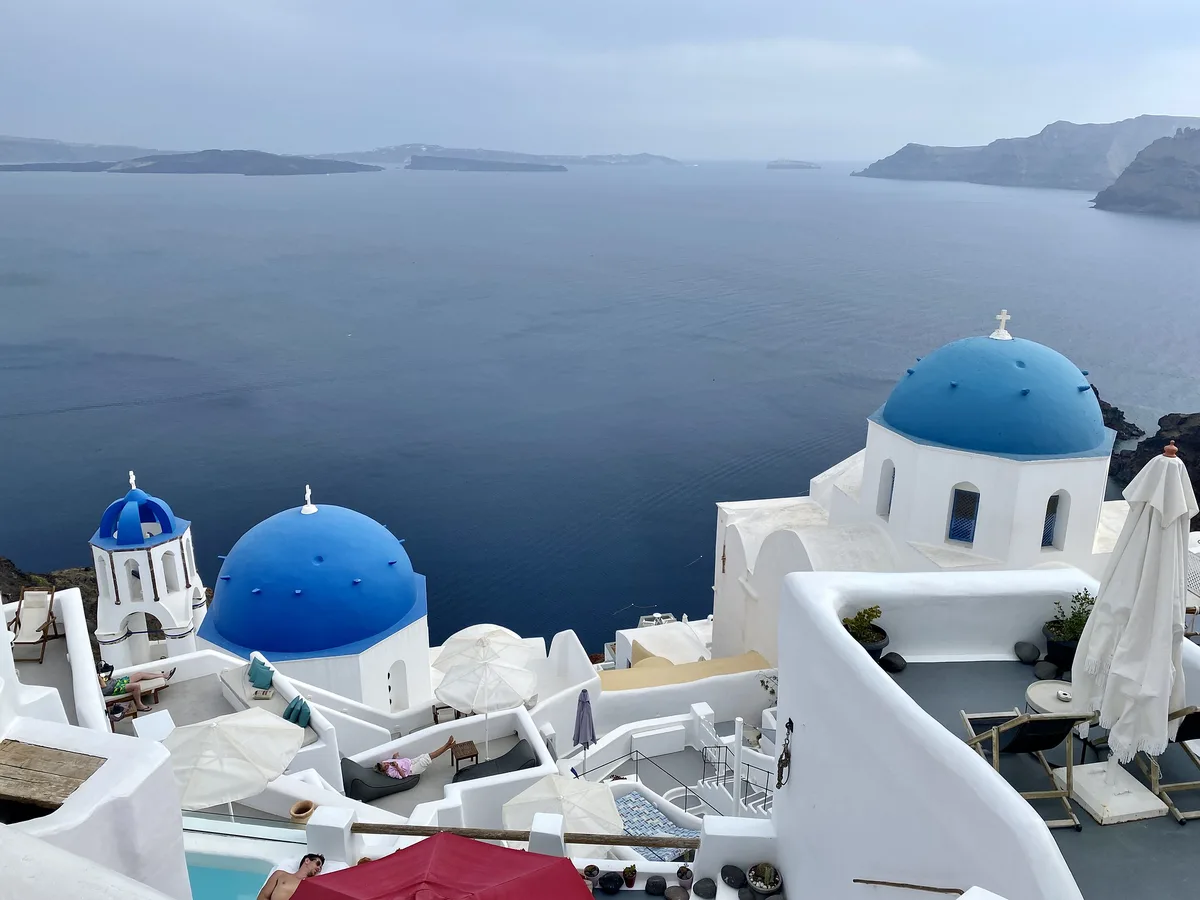
The best-known event is the eruption of 1650. Accounts of it are part of the documented record of the Santorini area. Research cruises have since surveyed the seabed and the volcano's structure. If you want details of the findings, read the published work from Greek scientific institutes rather than relying on travel summaries. Exact figures on depth and impacts vary between publications, so this page leaves them out.
Is Kolumbo active or dangerous?
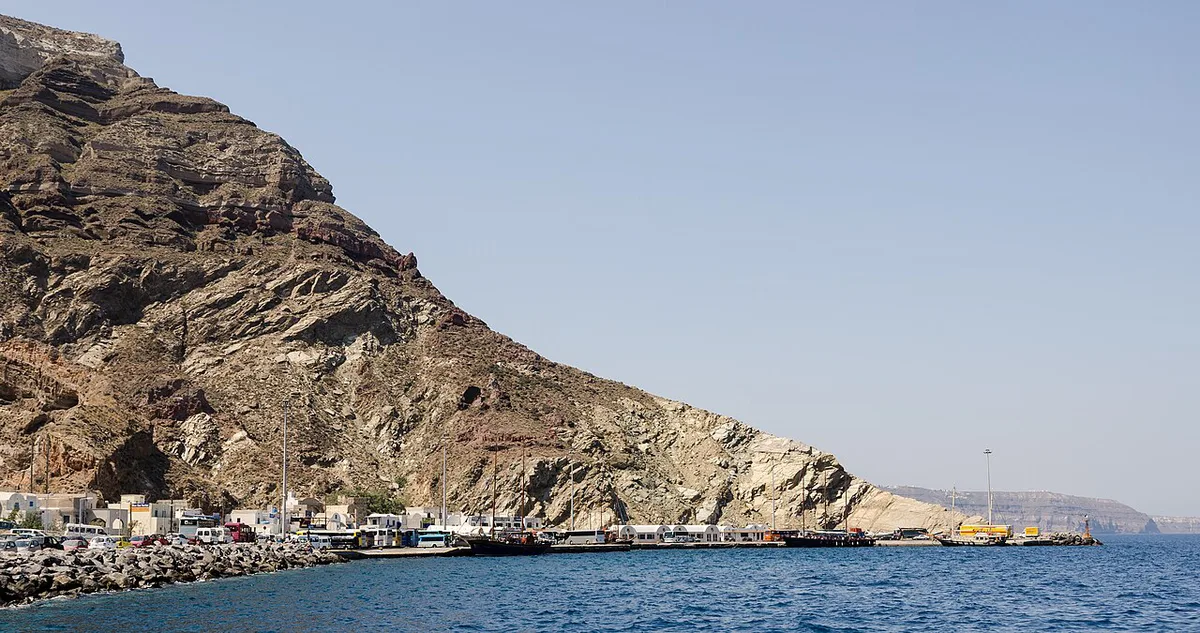
Greek volcanoes in this region are watched by scientists. The Institute of Geodynamics at the National Observatory of Athens is the Greek body to check for current seismic and volcanic information. Visitors should read its notices instead of social media posts. A documented eruption in 1650 does not mean one is expected during your trip. Treat Kolumbo as a monitored feature of the Santorini area, not a reason to cancel a holiday.
Can you visit or see Kolumbo?
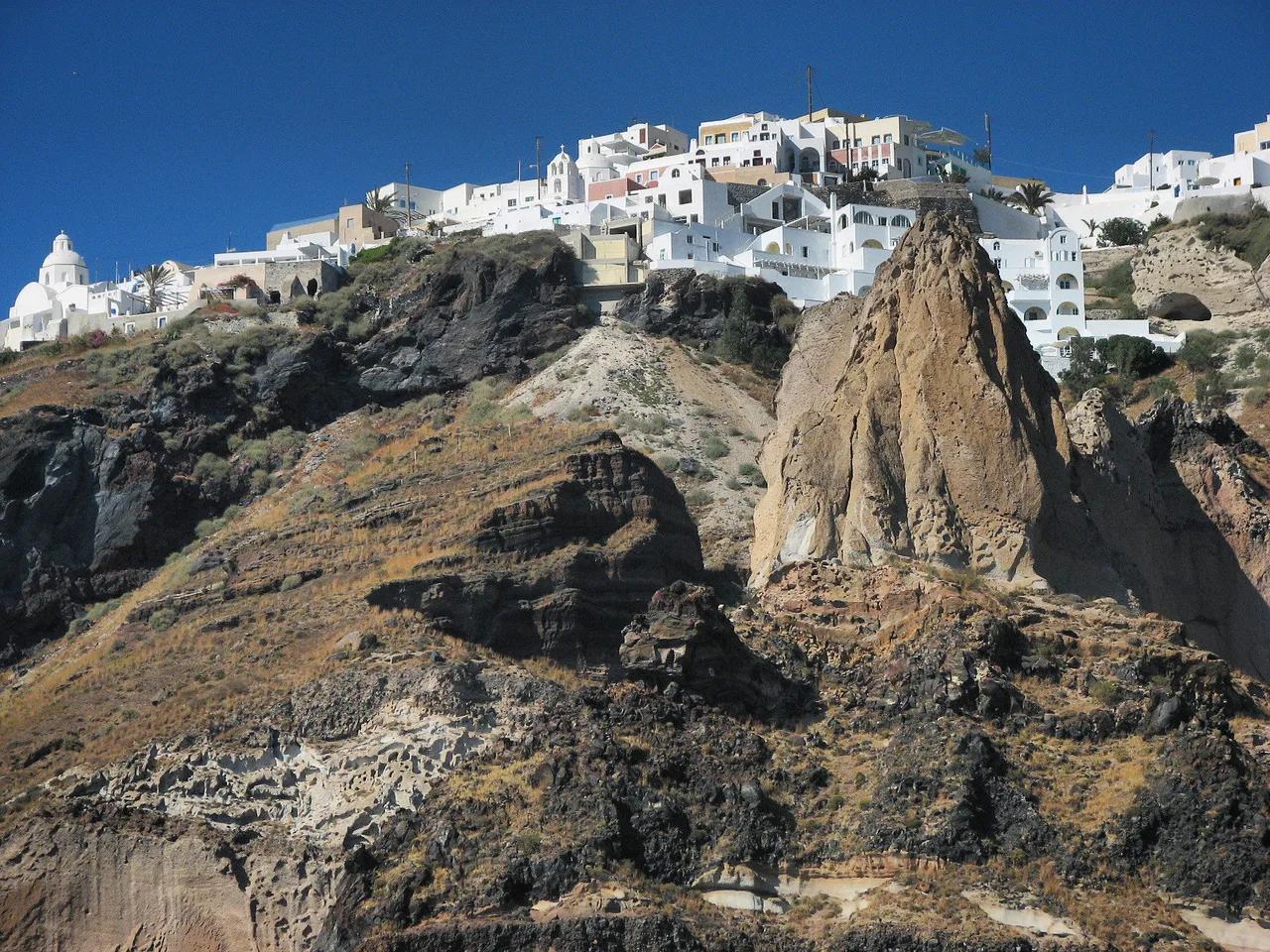
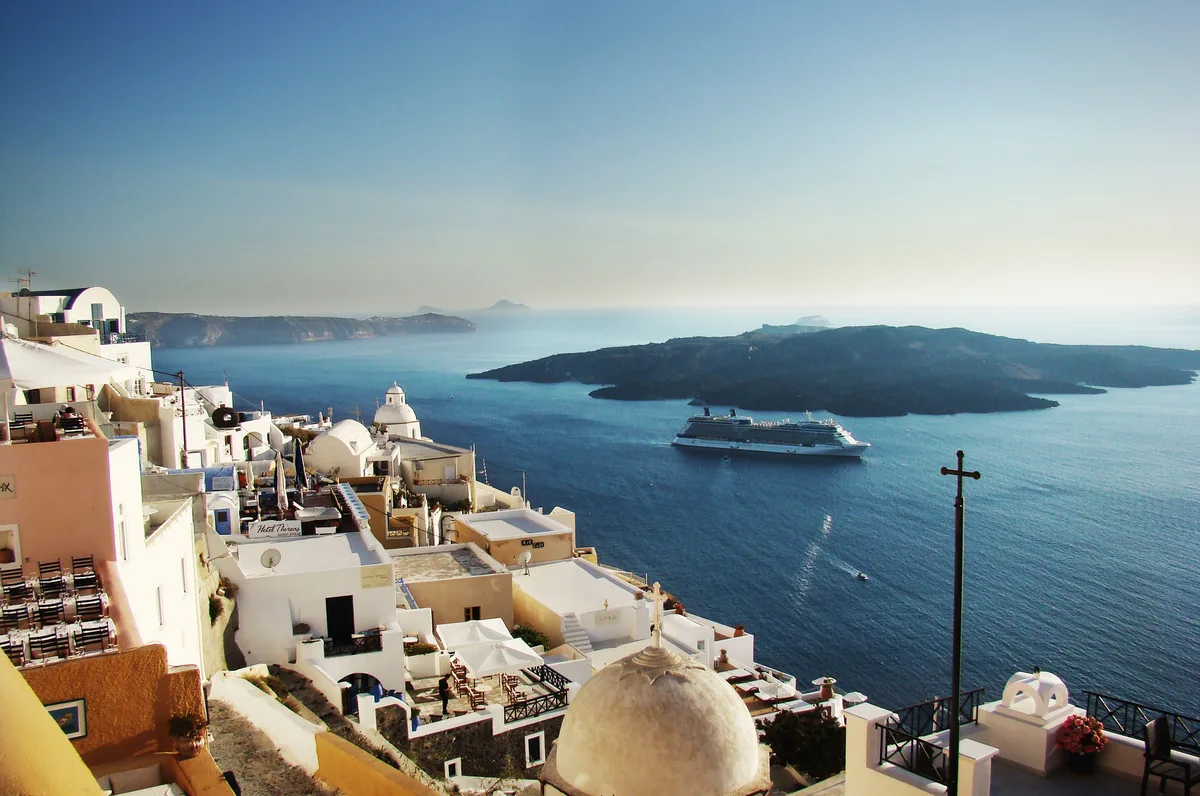
You cannot stand on Kolumbo, and you cannot hike it. What you can do is visit the Santorini caldera, which gives the volcanic context for the whole area. The island's official tourism page, Visit Greece's Santorini guide, is a sound starting point for the caldera itself.
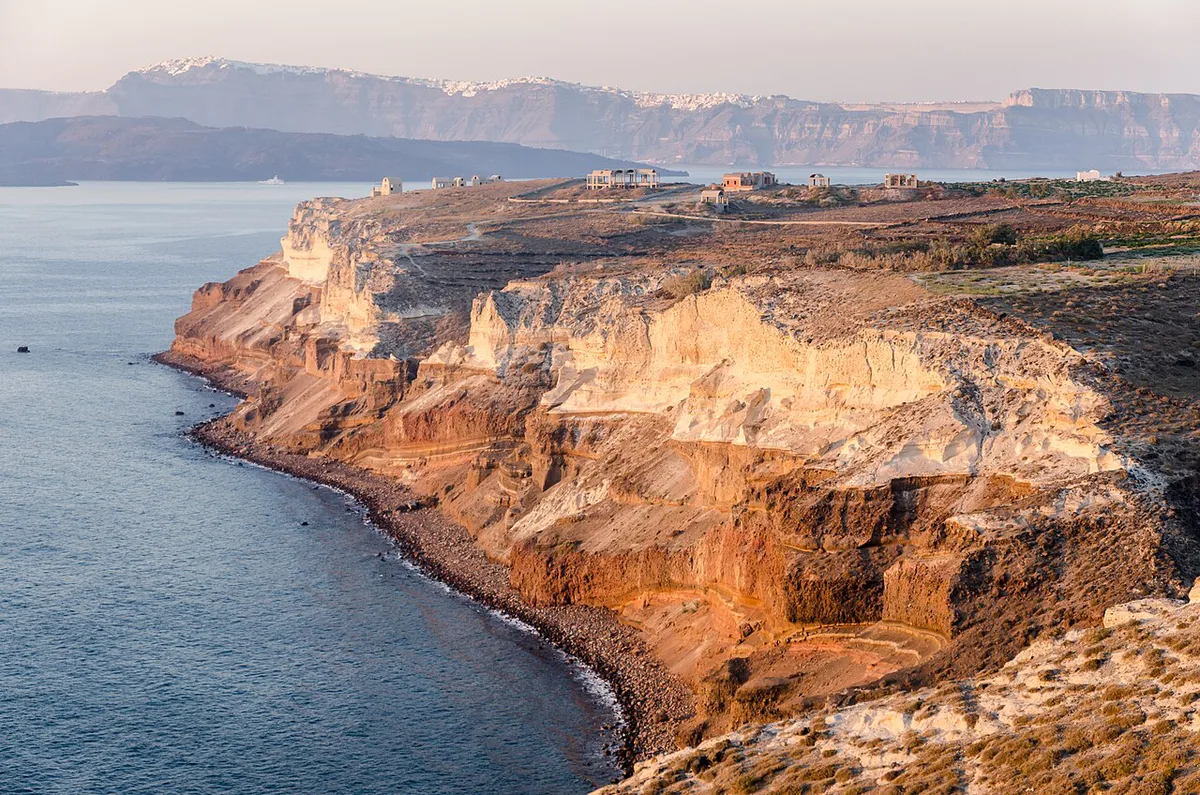
- What you can do: look over the Santorini caldera from the island's viewpoints.
- What you can do: read published research cruise results before you travel.
- What you cannot do: hike, land on or walk across Kolumbo.
- Mistake to avoid: booking a trip expecting a hikeable crater.
How Kolumbo fits with the Santorini caldera
Kolumbo and the caldera belong to the same volcanic area, but they offer different experiences. The caldera is what you see from the island. Kolumbo is the hidden neighbor under the sea. If you only have a short stay, spend your time on the caldera and treat Kolumbo as background knowledge.
Kolumbo vs other Greek volcanoes: which to visit
If you want a volcano you can actually walk or explore, other Greek sites suit you better. Each page below describes what is on land.
| Site | Access type | Best for |
|---|---|---|
| Kolumbo | Undersea; no land access | Readers curious about science |
| Milos Volcano: Is It Active? What to See and How to Visit | On land | Visitors who want a volcanic landscape |
| Methana | On land; hikeable peninsula | Walkers |
| Sousaki | On land; fumarole and sulfur site | Geology fans |
| Petrified Forest of Lesvos | On land; volcanic-origin geology | Fossil and geology visitors |
Planning tips for Kolumbo curiosity
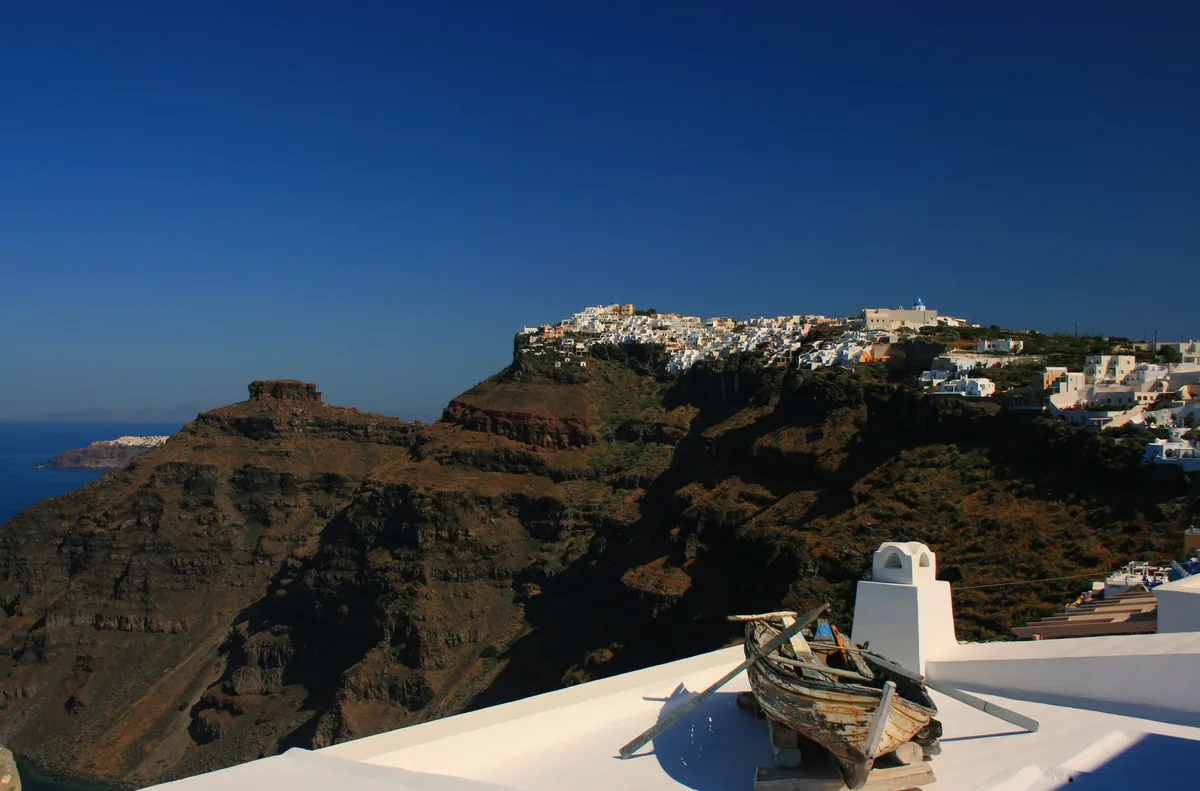
Allow no special time for Kolumbo itself, since there is nothing to visit there. Read about it before you go, then enjoy the Santorini caldera with better context. The Lesvos UNESCO Global Geopark is an official option if you want a geology trip that you can walk through. Choose Methana or Milos if you want to put boots on volcanic ground.
Kolumbo and Nea Kameni: do not confuse the two
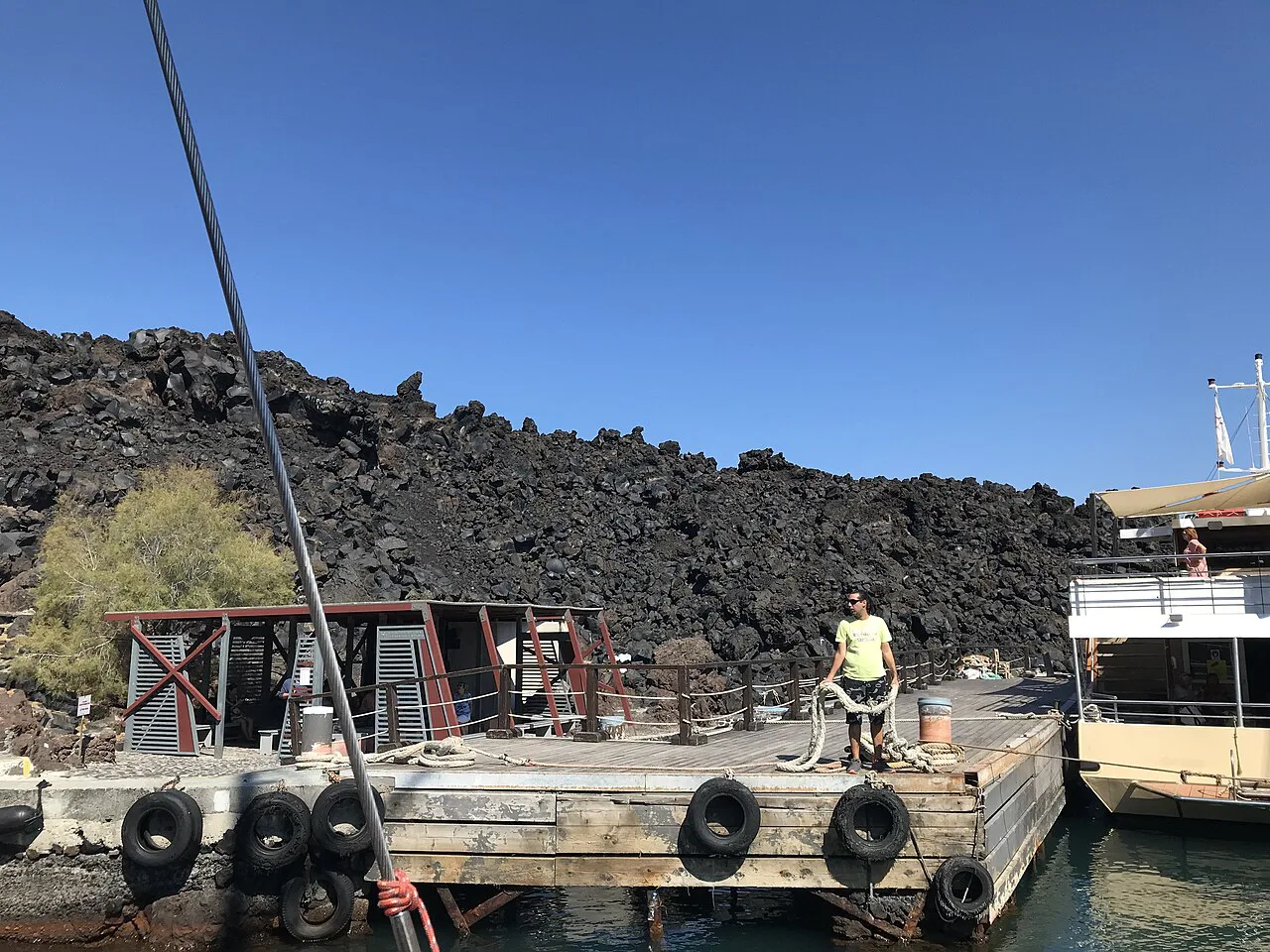
Kolumbo is not the volcano visitors usually mean when they book a Santorini caldera excursion. It lies about 7 km northeast of Santorini, beneath the Aegean Sea. Nea Kameni is the volcanic island within Santorini’s caldera, while Kolumbo remains entirely underwater.
This distinction matters when choosing a boat trip. A caldera itinerary may give you views of Santorini’s volcanic landscape, but it does not create a land visit to Kolumbo. There is no Kolumbo crater path, landing point or viewpoint on the volcano itself.
Kolumbo’s documented 1650 eruption explains why it is important to the region’s geology. For most visitors, though, it works best as context for the caldera rather than as a separate excursion. Choose Nea Kameni and the caldera if you want an accessible volcanic setting. Keep Kolumbo in mind if you are interested in submarine volcanology and Santorini’s wider volcanic system.