Is Santorini's Volcano Active? Status and Safety
Last updated November 2026. Is Santorini volcano active? Yes, it is classed as active, because it has erupted in historical times. Active is not the same as erupting, and this guide explains the difference, how the caldera is watched, and what it means for your trip. For the full visitor picture, start with our Santorini volcano guide.
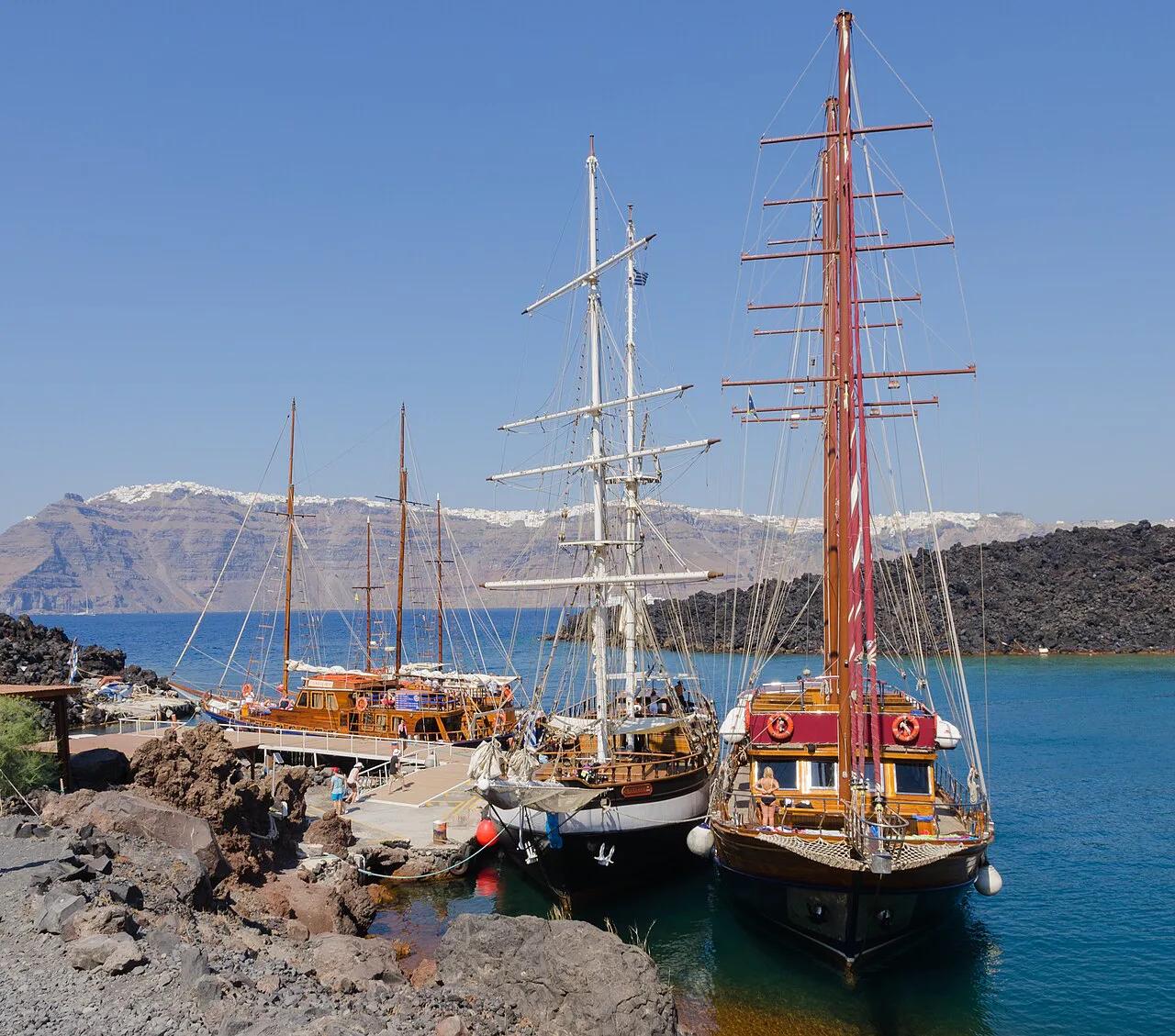
Featured image: Norbert Nagel, CC BY-SA 3.0, via Wikimedia Commons.
Is Santorini Volcano Active? The Short Answer
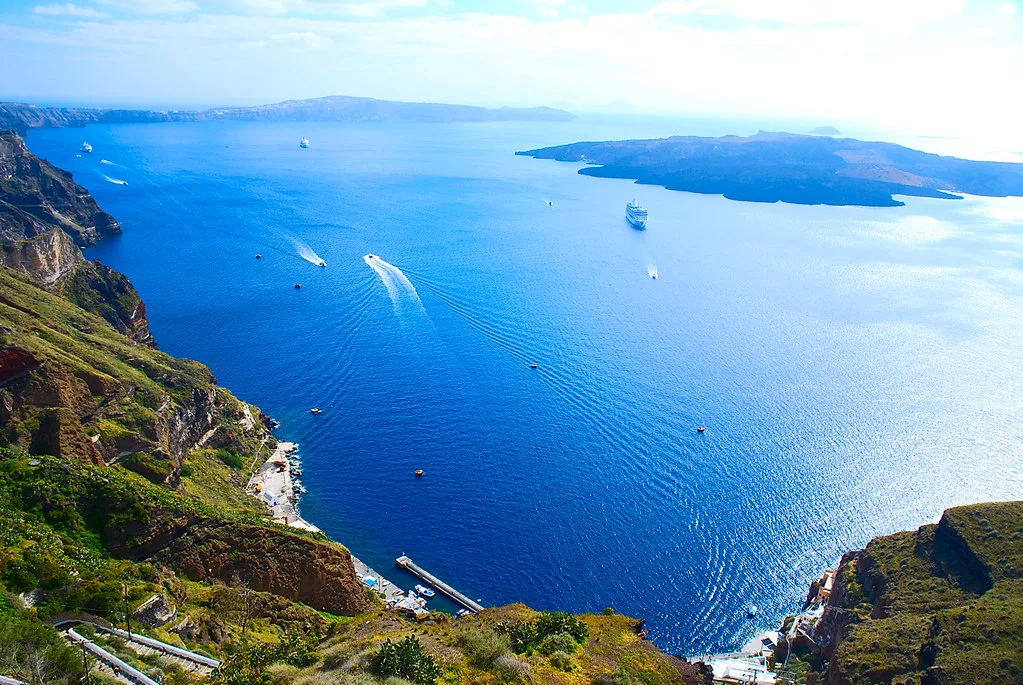
Santorini's volcano is classed as active. Its most recent eruption built up the island of Nea Kameni in the 20th century. This page does not report live conditions, because volcano status can change. Read current notices from the National Observatory of Athens before you travel.
| Question | Answer |
|---|---|
| Classed as active? | Yes, it has erupted in historical times |
| Last eruption | Nea Kameni, 20th century |
| Who monitors it? | National Observatory of Athens, Institute of Geodynamics |
| Where to check status | Official observatory notices, not travel blogs |
What Active Means, and What It Does Not
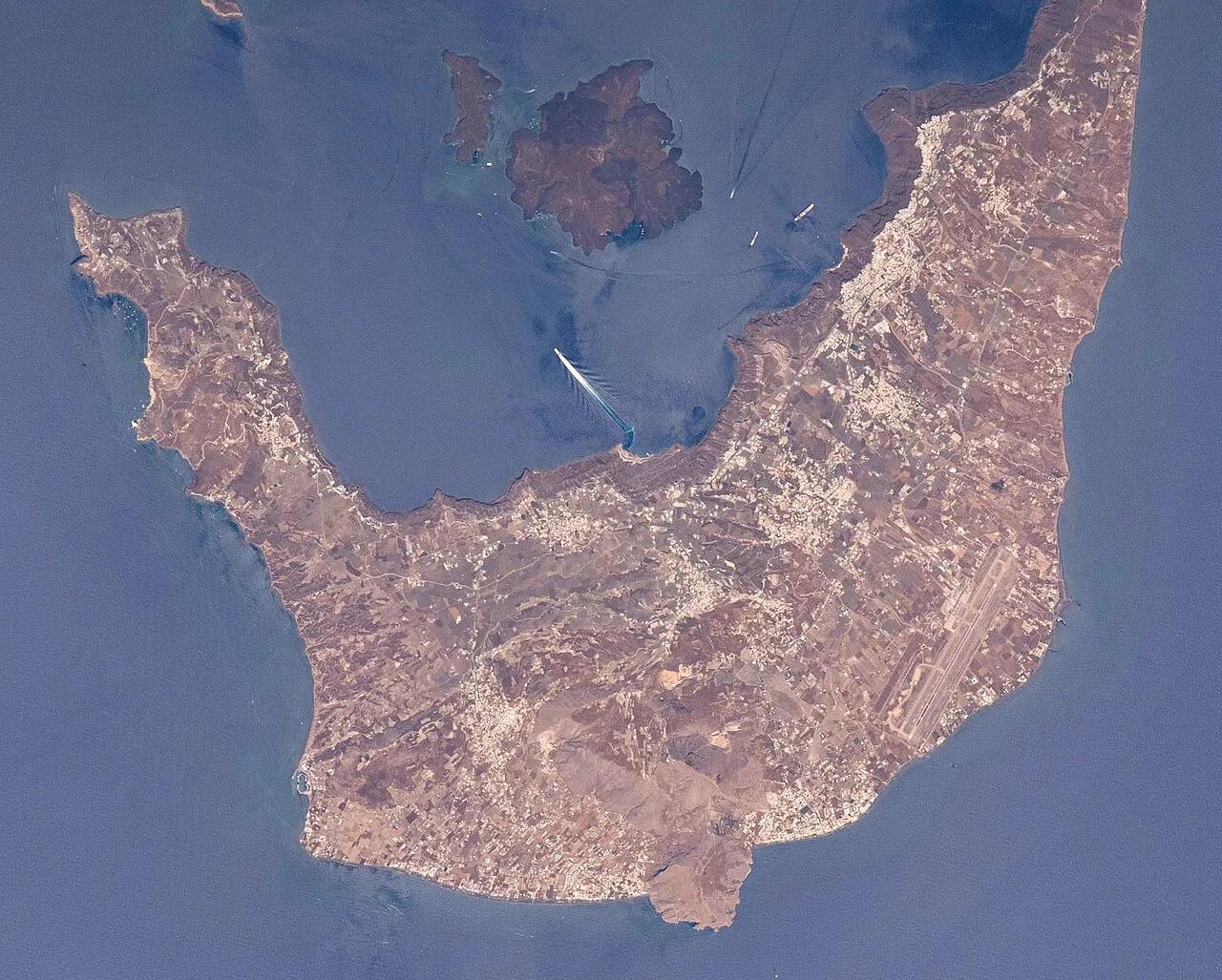
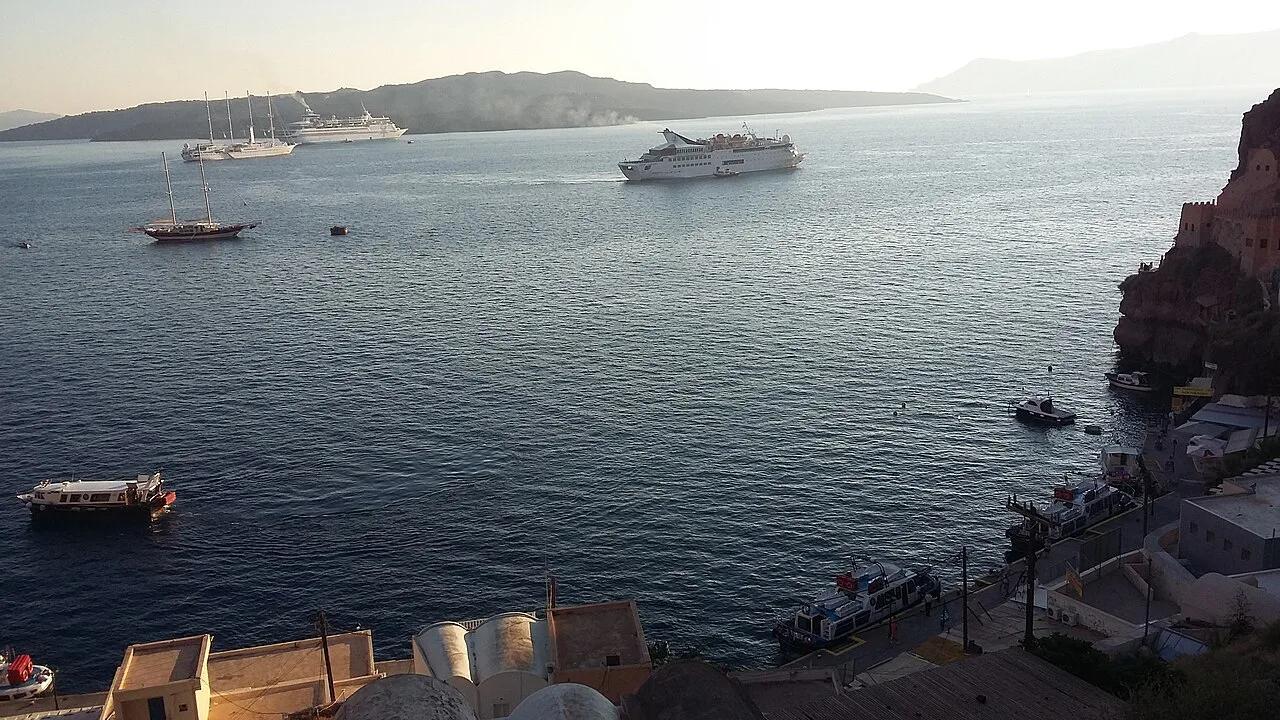
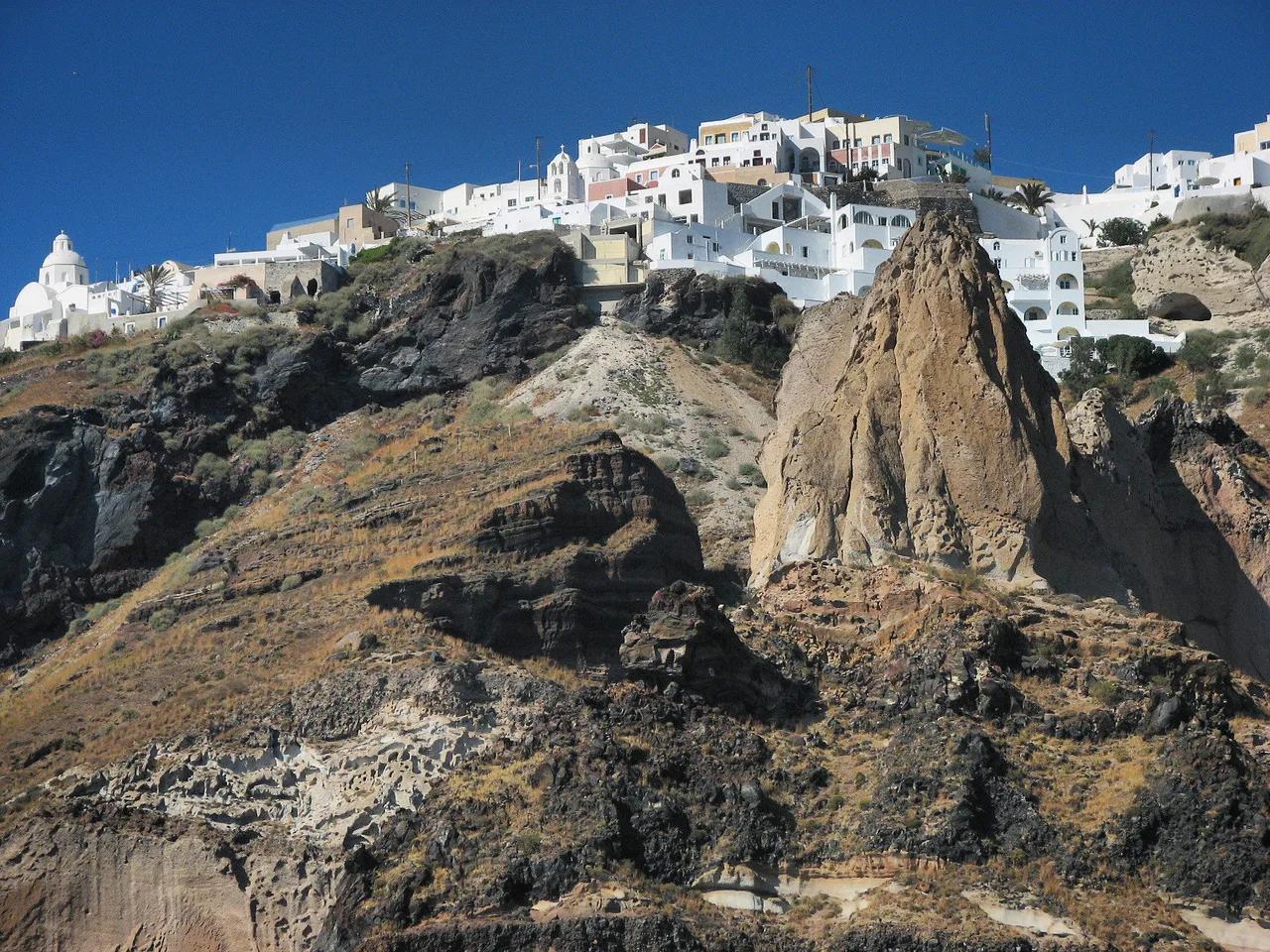
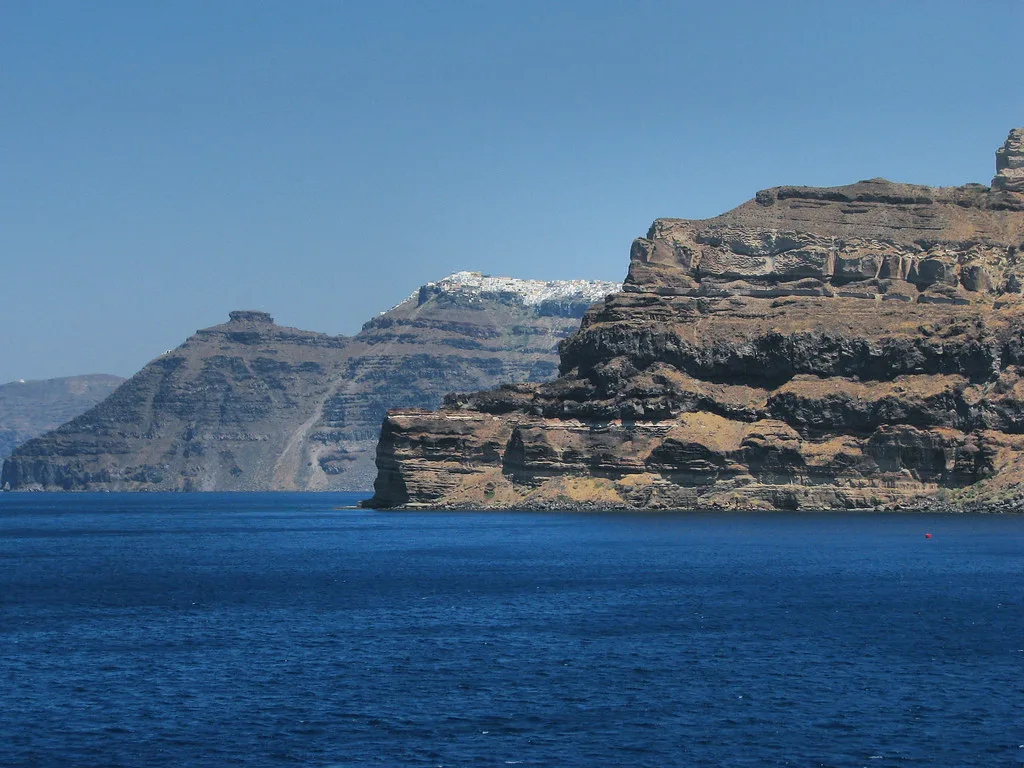
Volcanologists use three broad labels. Active volcanoes have erupted in recorded history and could erupt again. Dormant volcanoes are quiet but not considered finished. Extinct volcanoes are not expected to erupt again. Santorini sits in the first group. Its ring of cliffs is a caldera, formed when a past eruption emptied the magma chamber and the ground collapsed. Today's island shape is the result. You can see that rim from the clifftop villages, and our caldera guide covers the viewpoints. A volcano can be active for centuries without erupting. Treat the word as a classification, not a warning.
Eruption Timeline in Brief
Santorini's eruptions fall into three stages. Each one matters for a different reason.
- Minoan-era eruption: radiocarbon estimates place it between about 1627 and 1600 BC. It collapsed the centre of the island. Our Minoan eruption guide covers the detail.
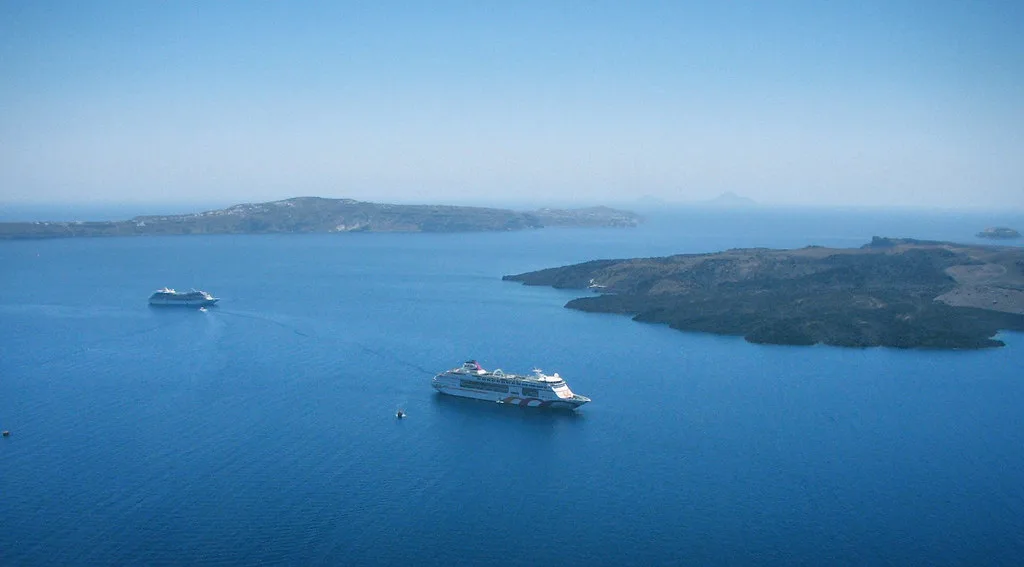
- Later eruptions: these built the Kameni islands inside the caldera, including Palaia Kameni and Nea Kameni.
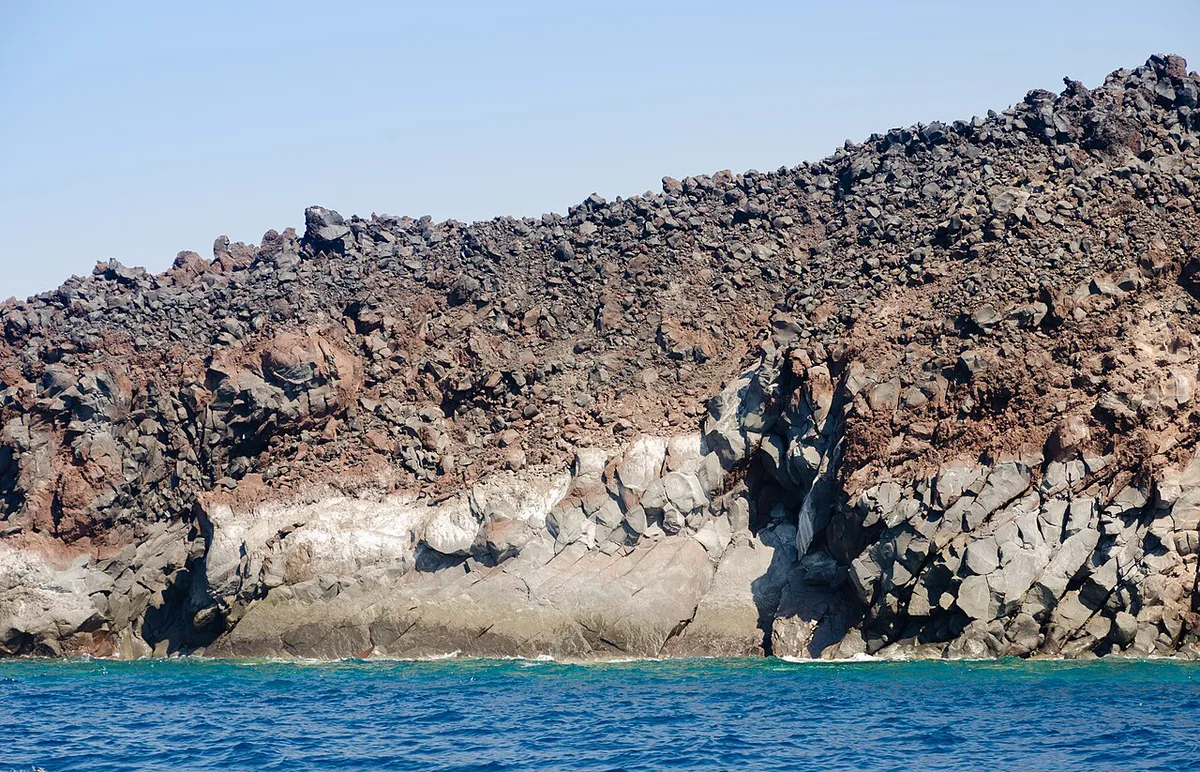
- Most recent eruption: it took place on Nea Kameni in the 20th century.
How the Volcano Is Monitored
Greece's national geophysics institutes track the caldera. The Institute of Geodynamics at the National Observatory of Athens publishes seismic and geodynamic information through its public site. Look for official notices, not social media posts or video headlines. Earthquakes and volcanic hazard are related but separate topics. A tremor does not mean an eruption is near. Our Santorini earthquakes guide explains the seismic side. Read the official wording yourself, because summaries on travel pages go out of date quickly.
Is It Safe to Visit? Decision Criteria
Most visitors never notice the volcano beyond the view. Your plans only need to change if official notices change. Use this table to decide.
| Situation | What to do |
|---|---|
| Normal quiet period | Go as planned and follow local guidance |
| Elevated alert or unrest notice | Read the observatory's notice, then check your operator and insurance terms |
| Ferry or flight disruption | Build flexibility into your onward connections |
- Travelers with tight ferry or flight connections should add a buffer day.
- Anyone whose travel insurance is sensitive to natural hazards should read the policy wording first.
- Visitors with limited mobility should note that the caldera steps are steep.
Seeing the Volcano: Options Compared
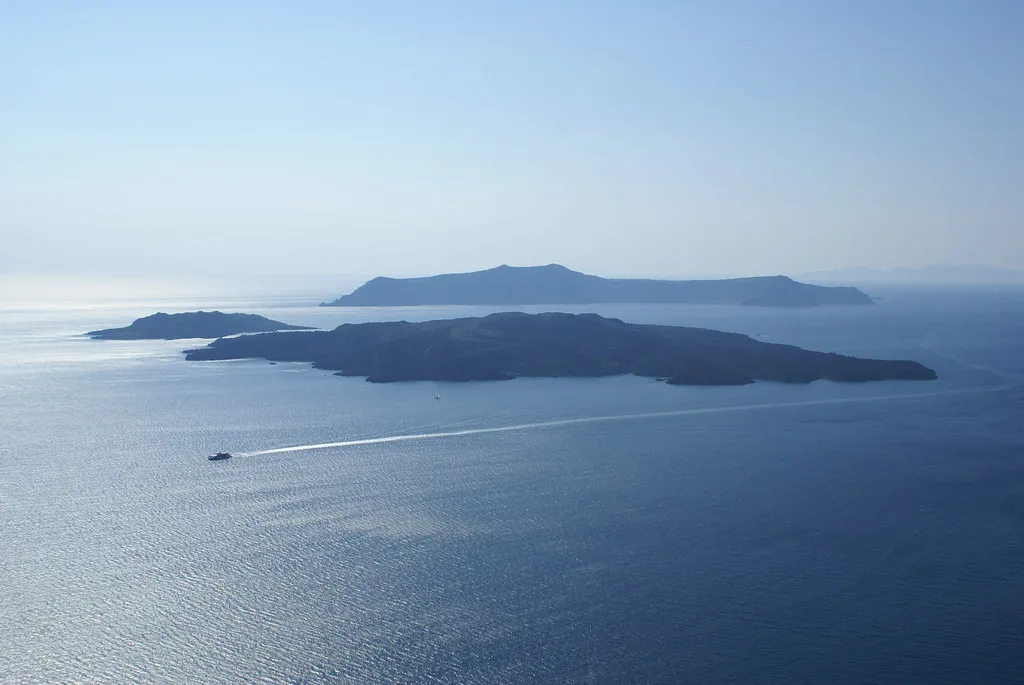
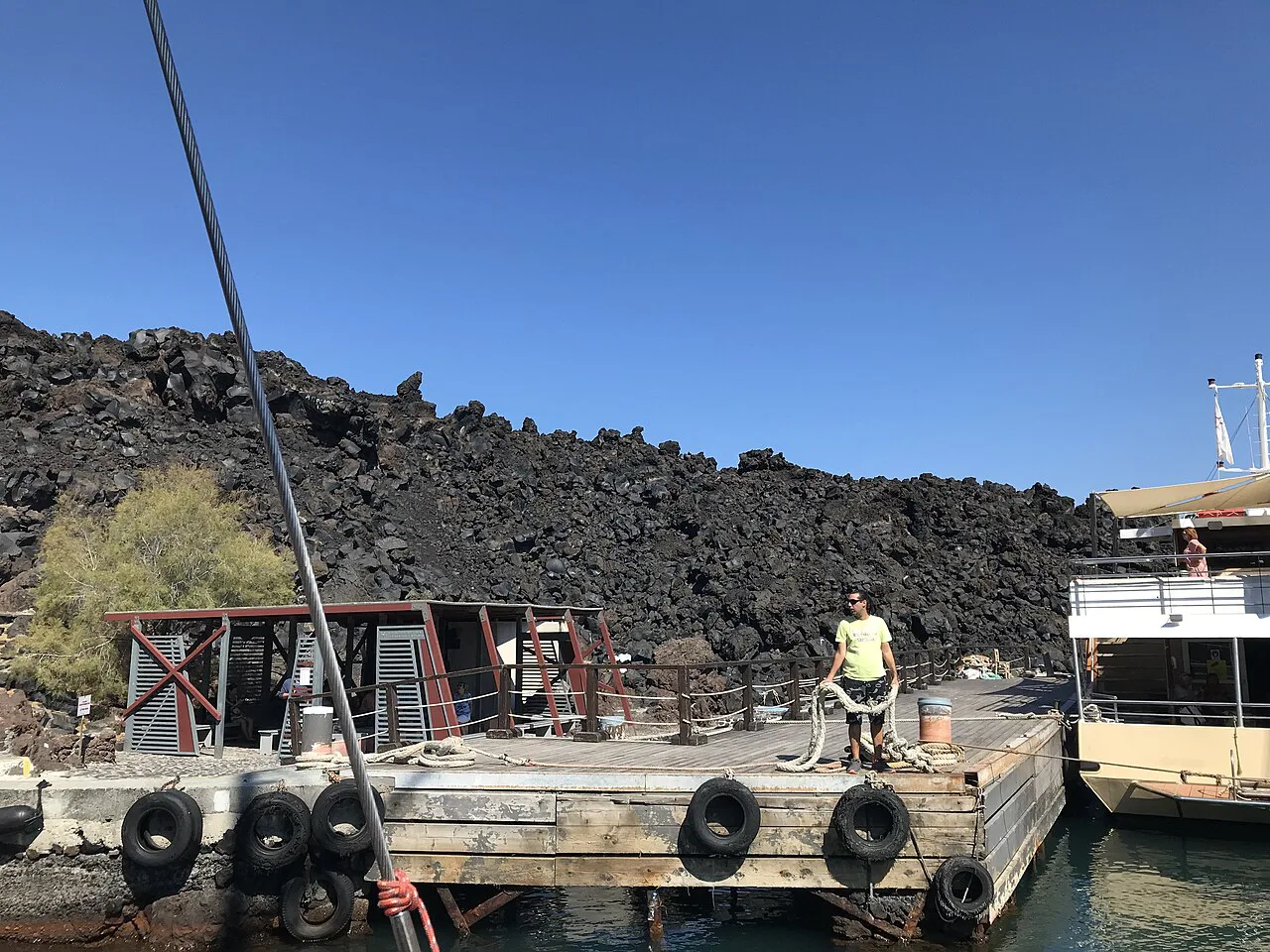
Nea Kameni is an island in the caldera, reached by boat from the island's ports. Our volcano map shows where each option sits. Landing depends on weather and sea state, so check what your booking includes. Wear sturdy shoes and sun protection, because the crater path is barren and exposed. Warm ground and a sulphur smell near vents are normal features of an active volcanic island.
A 20th century eruption on Nea Kameni is the most recent one, but landing there depends on weather and sea state, so check your booking.
| Option | Access | Best for |
|---|---|---|
| Volcano tour with a walk on Nea Kameni, Santorini: Volcano Walk, Boat Trips & What to Expect | Boat landing, then a crater walk | Seeing the crater up close |
| Catamaran cruise | Sailing in the caldera, landing varies by trip | Views from the water |
| Hot springs stop | Short swim stop from a boat | Feeling the volcanic warmth |
| Caldera rim | On foot from the clifftop villages | Free views, no boat needed |
Common Mistakes and Myths
Four assumptions cause most of the confusion.
- Confusing the ancient Minoan eruption with today's risk. They are separate events.
- Assuming a cruise guarantees a landing on Nea Kameni. Weather and sea state decide.
- Treating the hot springs as a spa. They are a swim stop beside a volcanic island.
- Booking tight departures on a day of unrest news. Leave a buffer.
- Treating Atlantis as fact. It is a hypothesis, and our Atlantis guide frames it as one.
Before Booking a Nea Kameni Volcano Tour
Confirm whether your trip includes a landing on Nea Kameni or only a caldera cruise. The most recent Santorini eruption occurred there in the 20th century, but that historical fact does not describe present conditions. It is also separate from the Minoan-era eruption, dated to roughly 1627–1600 BC.
Check the operator’s booking details on the day before departure. Sea state and weather can prevent a landing, even when boats still sail in the caldera. Ask what happens if the landing is cancelled and whether the itinerary offers another stop instead.
Bring sturdy footwear, water, and sun protection if you expect to walk on the island. The crater route is barren and exposed. Warm ground and a sulphur smell near vents are normal features, but official notices should guide any safety decision. Check the National Observatory of Athens before travelling if unrest is in the news.
Frequently Asked Questions
Is it safe to visit Santorini now?
Most visitors travel without any volcano-related disruption. Check the National Observatory of Athens for current notices and read your government's travel advice before you go. See Visit Greece's Santorini page for general visitor information.