Santorini Earthquakes 2025: What Happened and Is It Safe Now?
Last updated November 2026. The santorini earthquakes 2025 story began in late January 2025, when a swarm of tremors started between Santorini, Amorgos, Ios and Anafi. A state of emergency followed on Santorini in early February. There was no major damage, and this guide treats the episode as history with practical lessons for planning a trip today.
Featured image: Norbert Nagel, CC BY-SA 3.0, via Wikimedia Commons.
What happened: the 2025 Santorini earthquake swarm at a glance
Reports disagree on the first day, giving either Jan 26 or Jan 31, 2025, so late January is the safe description. Greece declared a state of emergency on Santorini on Feb 6–7 after a magnitude 5.2 tremor. Epicenters clustered between Santorini, Anafi, Amorgos and Ios. One report said the Santorini emergency ran until March 3. A second emergency covered Amorgos about a week after the first.
| Date (2025) | Event |
|---|---|
| Late January (Jan 26 or Jan 31, depending on the report) | Swarm begins between Santorini, Amorgos, Ios and Anafi |
| Jan 30 | Civil Protection Ministry says it is monitoring sensors that picked up mild seismic-volcanic activity |
| Feb 6–7 | State of emergency declared on Santorini after a magnitude 5.2 tremor |
| Mid-February | Second state of emergency declared for Amorgos as activity appears to move toward it |
| Feb 17 | Magnitude 5.1 quake between Santorini and Amorgos |
| March 3 | Reported end date of the Santorini emergency period |
Why it was unusual: swarm versus mainshock and aftershocks
A typical sequence has one large quake followed by aftershocks that fade in size and frequency. A swarm has no single dominant shock, and many tremors of similar size arrive over weeks. Rémy Bossu of the European-Mediterranean Seismological Centre called this one very unusual because magnitudes and rates rose over time. A University of Athens crisis committee reported about 12,000 quakes above magnitude 1 since Jan 26 by mid-February. A separate report counted more than 18,400 tremors by Feb 17. Those counts come from different outlets and dates, so do not add them together. Strongest events were around magnitude 5.0–5.3. Seismic data and updates come from the Institute of Geodynamics in Athens. Scientists disagree on the cause. Dimitrios Papanikolaou was reported as attributing the swarm to a magma pocket about 5 km below the surface. Efthymis Lekkas said the activity had no connection to the area's volcanoes. Treat the cause as an open scientific question.
Was the volcano involved? Earthquakes versus eruption risk
Santorini sits on the Hellenic Volcanic Arc, and its last eruption was in 1950. Its largest known blast was the eruption of around 1620 BC, which shaped the crescent-like island. Lekkas said large explosions occur roughly every 20,000 years. That interval is one expert's statement, so read it as context rather than a forecast. Scientists quoted at the time did not expect the quakes to trigger an eruption. Similar volcanic unrest in 2011 lasted 14 months and caused no problems. For a fuller answer, read our guide on whether the volcano is active. Our volcano overview covers the wider geology. A swarm does not mean an eruption is coming. Scientists also cannot predict earthquakes, and no one can say when tremors may recur.
How the island and authorities responded
Schools closed, public events were banned, and access to some coastal and clifftop areas was restricted. Rescue teams were deployed from the Sunday after the emergency began. Prime Minister Kyriakos Mitsotakis visited on Feb 7 and urged calm. Officials said more than 11,000 people left between Friday and mid-week, about 7,000 by ferry and 4,000 by plane. Evacuation totals vary widely between reports, from more than 13,000 of 15,000 residents leaving to only about 2,000 remaining. Ferries and airlines added extra sailings and flights. Ferries stopped for a day on a Wednesday because of rough weather. Authorities also planned an emergency evacuation port with armed forces support. The swarm caused no major damage.
What it meant for tourism in 2025 and after
One source puts Santorini's share of Greek tourism revenue at about 4%. That is a single-source figure, so treat it as indicative. The swarm hit the island just before the season, and reports at the time voiced concern about summer 2025. Tourism Minister Olga Kefalogianni pledged promotional campaigns to reassure travelers. No sourced visitor or hotel occupancy figures for summer 2025 are available here, so this guide does not estimate them.
Is it safe to visit Santorini now?
Moderate quakes are a known feature of this region, and the 2025 episode caused no major damage. The U.S. Geological Survey labels magnitude 5 as moderate. Such quakes are felt by most people and can harm weak structures. Santorini's official visitor pages are at Visit Greece. Three triggers should change your plans: an official Civil Protection alert, a government travel advisory, and a ferry or airport operations notice. Check the current situation with those channels before you book and again before departure.
Last year's emergency followed a magnitude 5.2 tremor on Feb 6–7, so treat an official Civil Protection alert as the cue to rebook.
| Traveler | Suggested approach |
|---|---|
| Families with young children | Go if you pick inland lodging and keep a flexible exit plan |
| Mobility-limited travelers | Check first: cliffside steps and caldera paths are hard to leave quickly |
| Tight budgets | Wait for refundable rates, because rebooking after an alert can be costly |
| Cruise passengers | Check first: follow your cruise line's notices on port calls |
If you feel an earthquake in Santorini: a practical checklist
Greek Civil Protection and the Earthquake Planning and Protection Organization (EPPO) publish official guidance. Read it before you travel. These steps follow standard earthquake safety advice.
- Drop, cover and hold on under sturdy furniture until shaking stops.
- Stay away from cliff edges, caldera paths, stairways and balconies.
- After a strong quake near the coast, move inland and to higher ground.
- Follow Civil Protection alerts, which arrive by phone message.
- Call 112, the European emergency number, for urgent help.
- Contact your hotel, ferry or airline, and your consulate once you are safe.
Planning around seismic risk: where to stay, how to leave, what to book
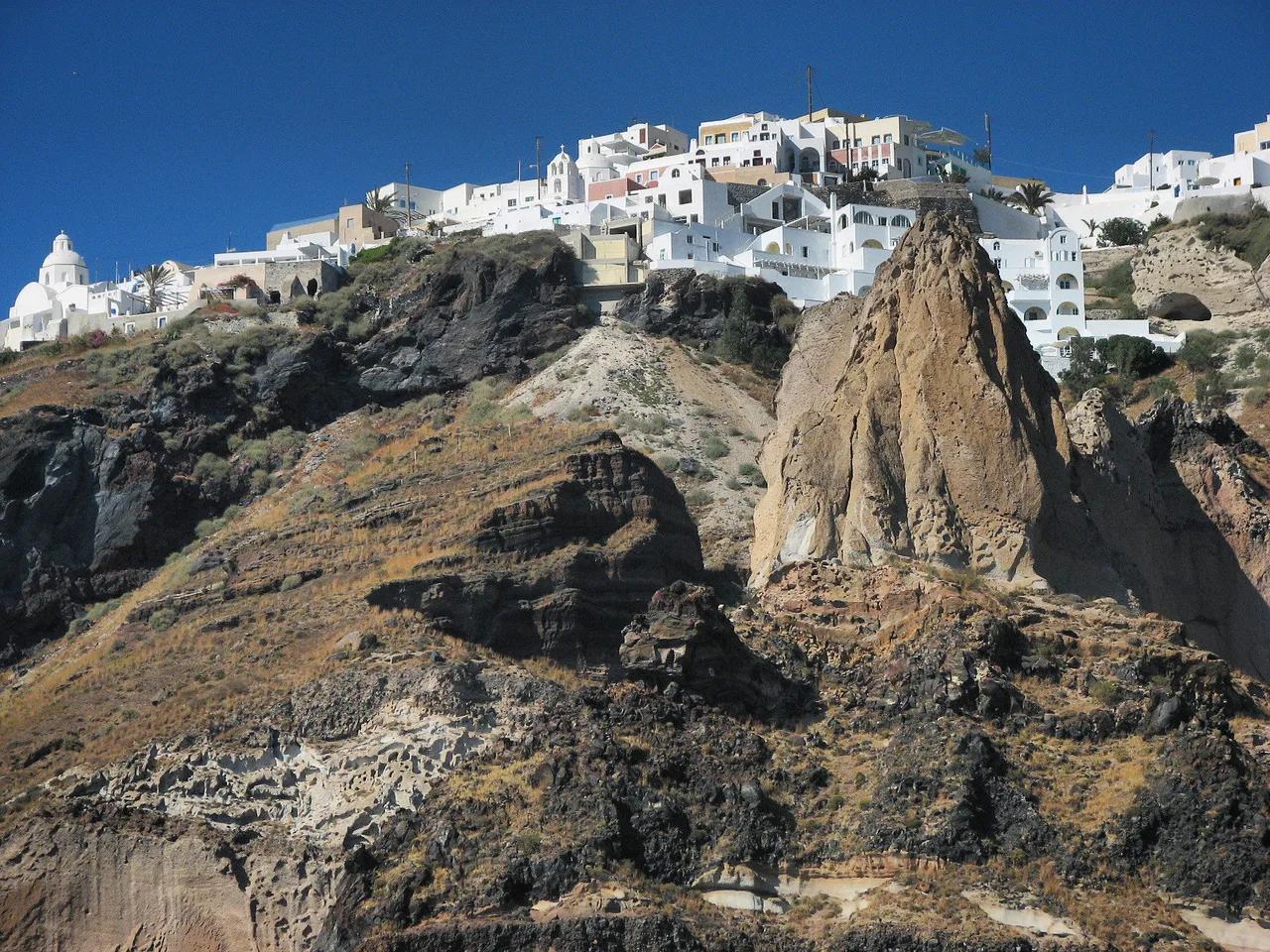
Fira, Oia and Imerovigli all sit along the caldera rim, where cliff exposure is the main concern. Inland stays trade views for easier exits and less drop-off risk. Ferries are cheaper to scale up but weather can halt them, as in February 2025. Flights are faster for leaving once an alert is issued. Pick refundable rates where you can. Travel insurance policies may exclude known events, so read the wording on what counts as covered. For the volcanic sites, tour operations change, so check that the volcanic islet in the caldera is open before paying. Boat options include guided volcano boat trips. Others prefer catamaran cruises around the caldera. Swimmers can read about the hot springs. For orientation, use the caldera and volcanic features map.
In February, about 7,000 by ferry and 4,000 by plane left the island, so a plan that relies on only one route is a gamble.
Frequently Asked Questions
Is it safe to travel to Santorini right now?
The 2025 swarm caused no major damage, and the emergency period ended in March 2025. Conditions can change, so check Civil Protection, your ferry or airline, and your own government's advisory shortly before departure.