6 Volcanoes in Greece: Which Ones You Can Visit (Santorini to Nisyros)
Last updated November 2026: volcanoes in Greece sit mainly along the South Aegean Volcanic Arc, and Santorini, Nisyros, Milos, Methana and Sousaki can all be visited. Kolumbo, an underwater volcano, is reached only by boat tour or dive. This guide sorts 6 places by access, effort and season, so you can choose before you book ferries.
Featured image: sergei.gussev, CC BY 2.0, via Flickr.
Greece's Volcanoes at a Glance
Greece's volcanic centres follow a curved line through the Aegean and the Saronic Gulf. Some are quiet but still steam, some are fossil landscapes, and one is entirely underwater. Use this table to see which are walkable and which need a boat. To compare Greece's volcanoes with Italy, Iceland and the Canaries, start with our overview of volcanoes in Europe.
Of the 6 places, Methana and Sousaki are the closest to Athens, so they work for a short trip with no island ferry.
| Place | Where | Status | Visit? | Guide |
|---|---|---|---|---|
| Santorini | Cyclades caldera islets (Nea Kameni) | Active volcanic centre | Yes, by boat and on foot | Section 1 below |
| Nisyros | Dodecanese, ferry from Kos | Dormant, with steaming ground | Yes, walk into Stefanos crater | Section 2 below |
| Milos | Aegean island | Volcanic landscape | Yes, coast and rock | Milos volcano guide |
| Methana | Peloponnese peninsula | Volcanic peninsula | Yes, on foot | Methana peninsula volcano |
| Sousaki | Near Corinth | Fumarole field | Yes, short stop | Sousaki fumarole field |
| Lesvos petrified forest | Lesvos | Fossil site, not a volcano | Yes, on foot | Lesvos petrified forest |
| Kolumbo | Underwater, near Santorini | Active submarine volcano | Boat tour or dive only | Kolumbo underwater volcano |
How the Volcanic Arc Works (and Which Volcanoes Are Active)

The arc forms where the African plate moves beneath the Eurasian plate, which feeds magma to the Aegean volcanoes. Geologists call a volcano active if it has erupted in recent geological time or shows unrest. Dormant means quiet but able to wake. Extinct means no longer supplied with magma. Greek volcanoes mostly fall in the first two groups. Steaming ground and gas vents can persist long after the last eruption. Kolumbo's submarine crater shows that active volcanism can sit beneath the sea next to a popular island.
6 Volcanoes in Greece and Volcanic Sites Worth Visiting
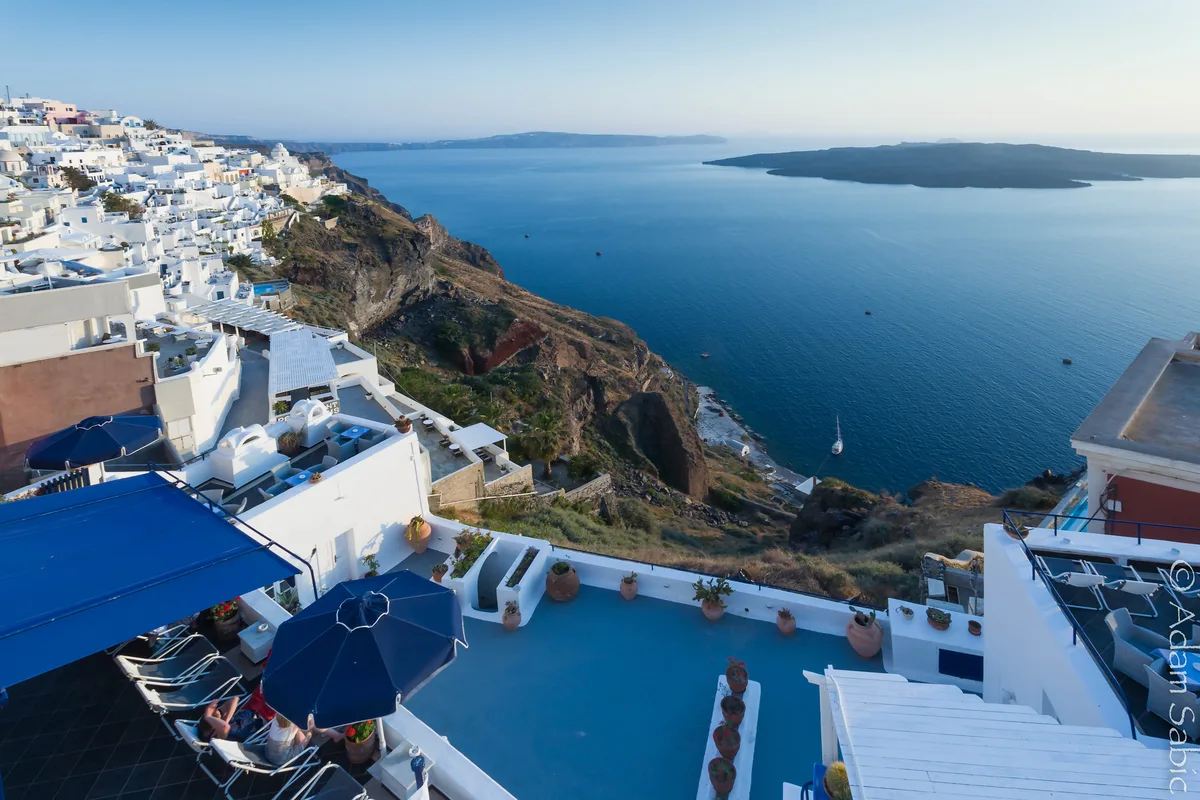
Prices and hours checked November 2026. This page quotes no fees, because ticket and boat prices change each season. Check each operator directly.
1. Santorini: Caldera and Nea Kameni
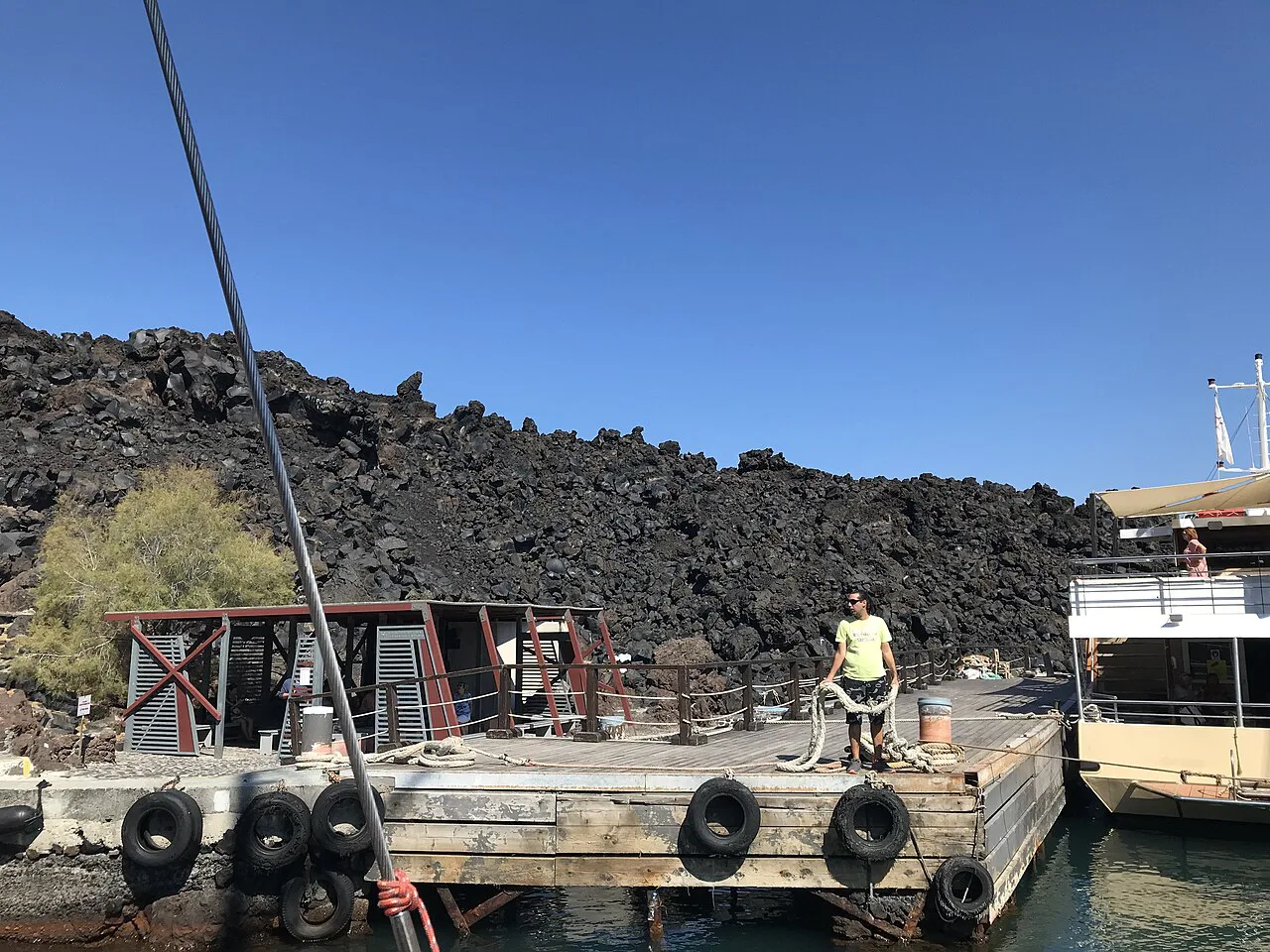
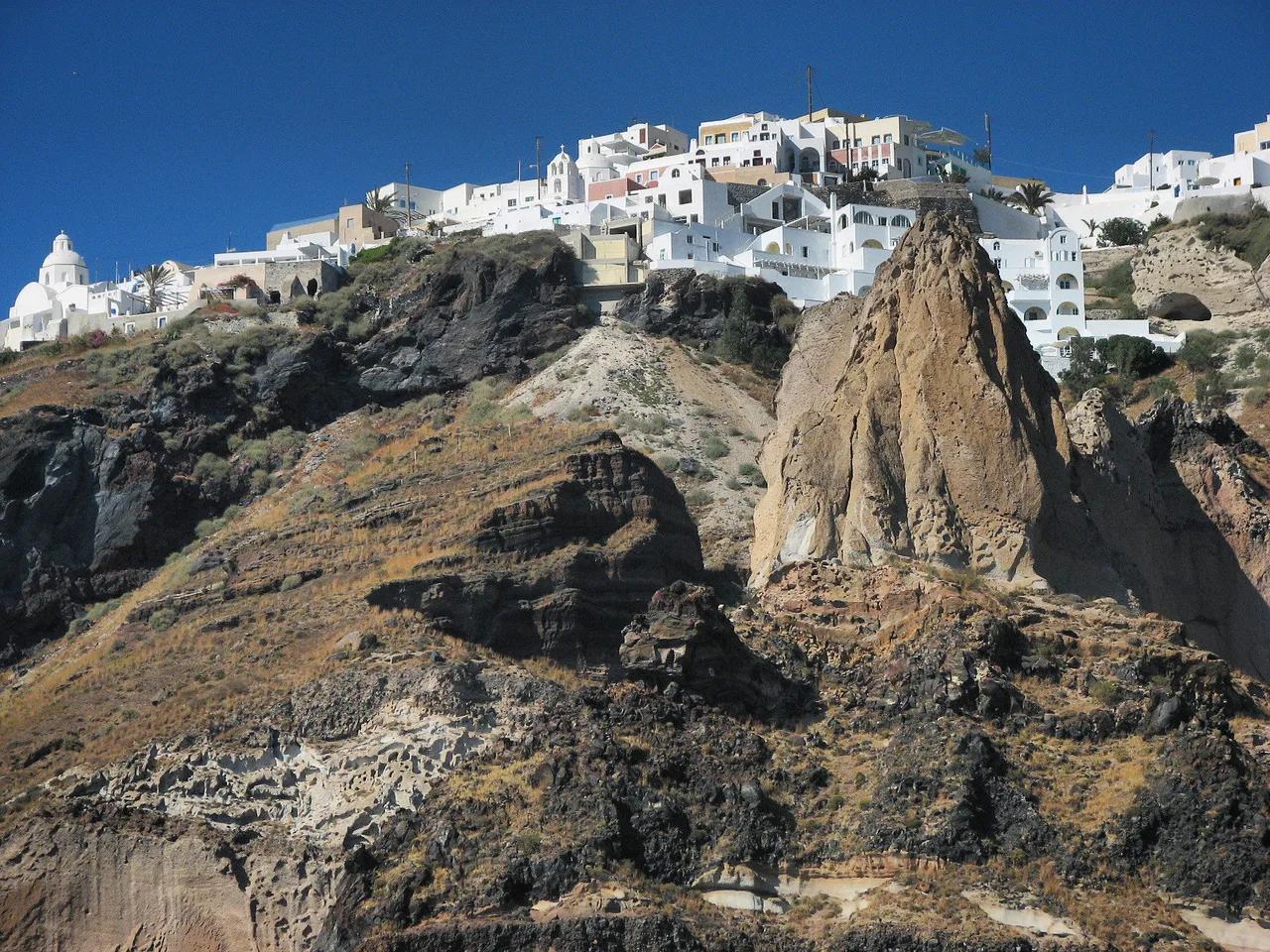
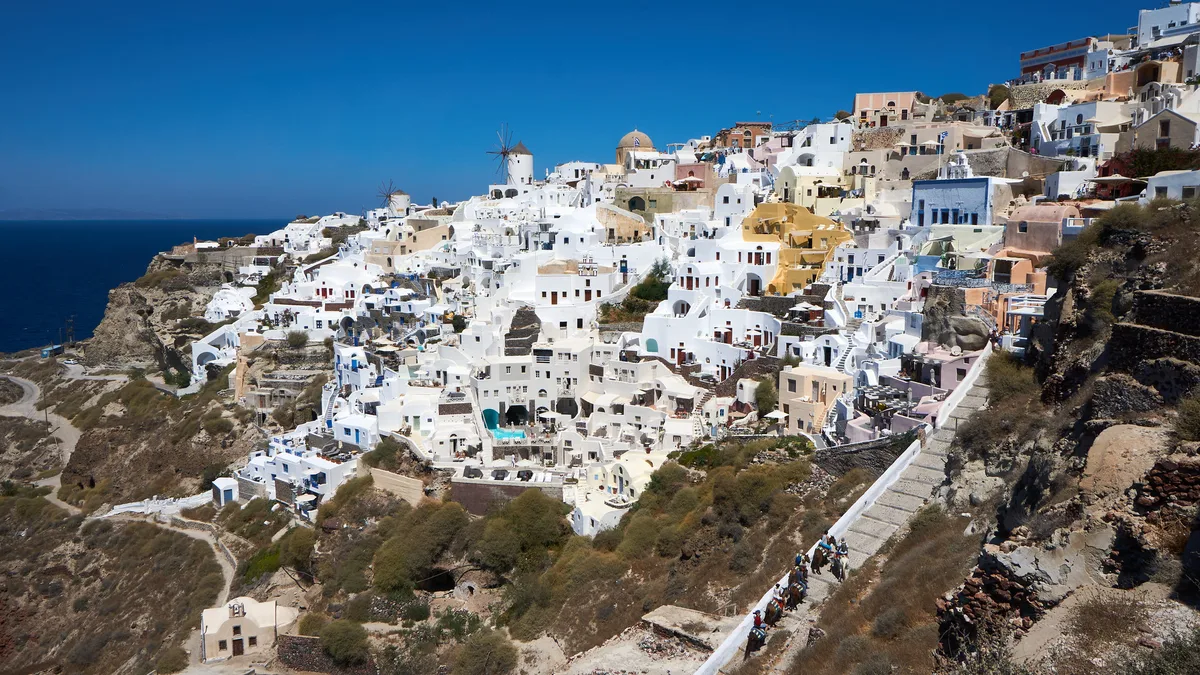
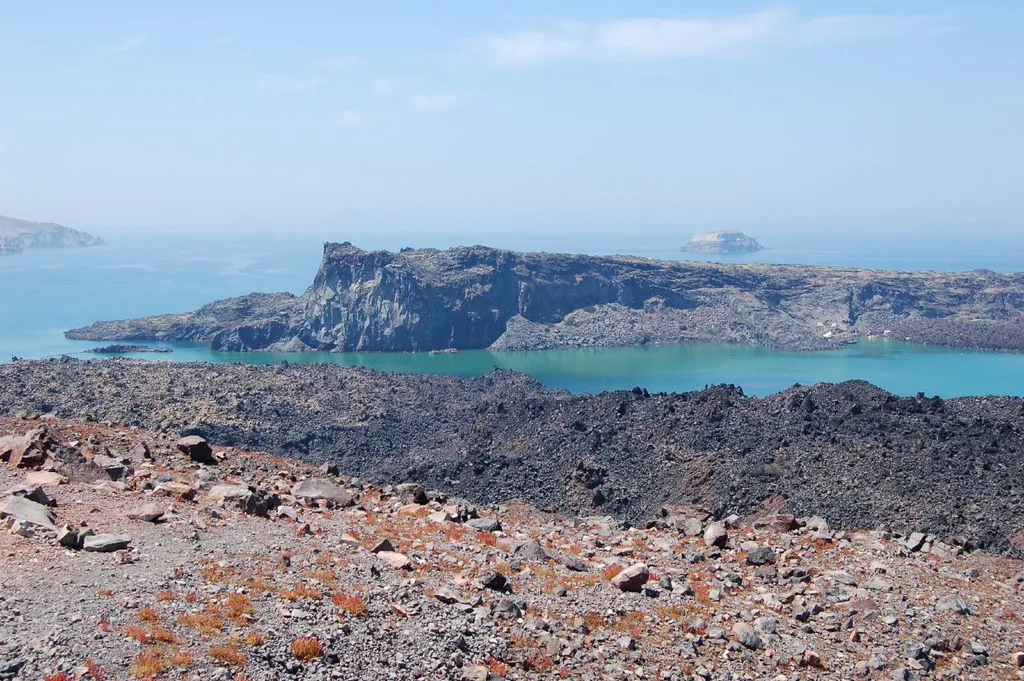
Santorini is the best-known volcanic centre in Greece, a flooded caldera with the Nea Kameni islets rising from its middle. Boat trips and hikes reach Nea Kameni, where you walk across dark lava fields and look back at the cliffs of the caldera rim. At Akrotiri, a Bronze Age town was buried under volcanic ash, which is why the site is often called the Pompeii of the Aegean.
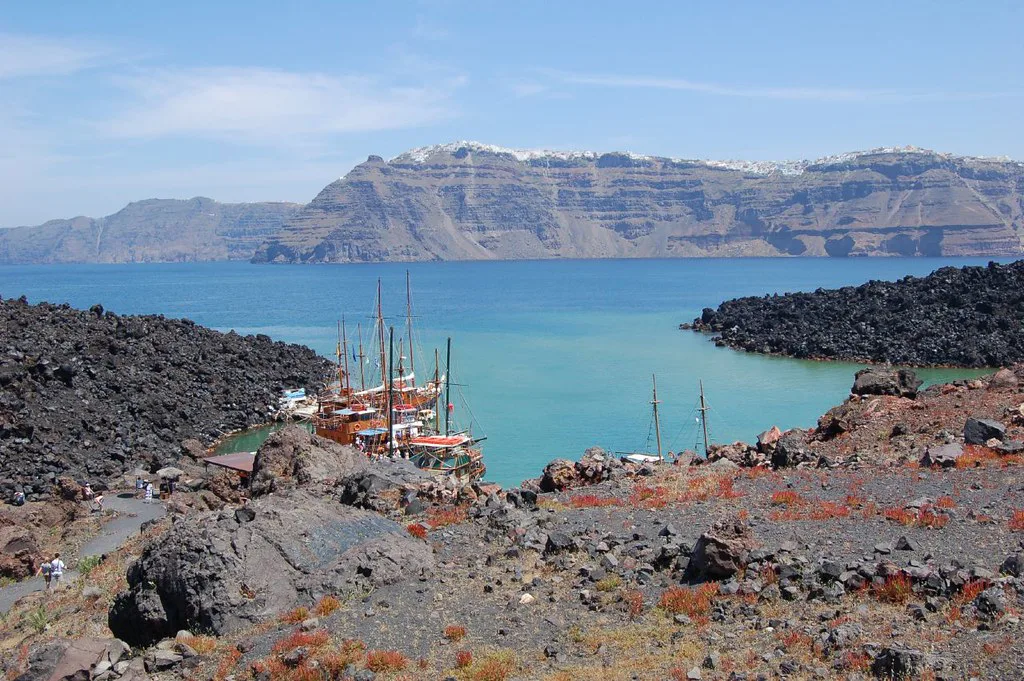
The island's official tourism page covers general visitor planning. Skip the boat on windy days, when departures can be cancelled. Best for geology and archaeology fans.
2. Nisyros: Walking Into Stefanos Crater
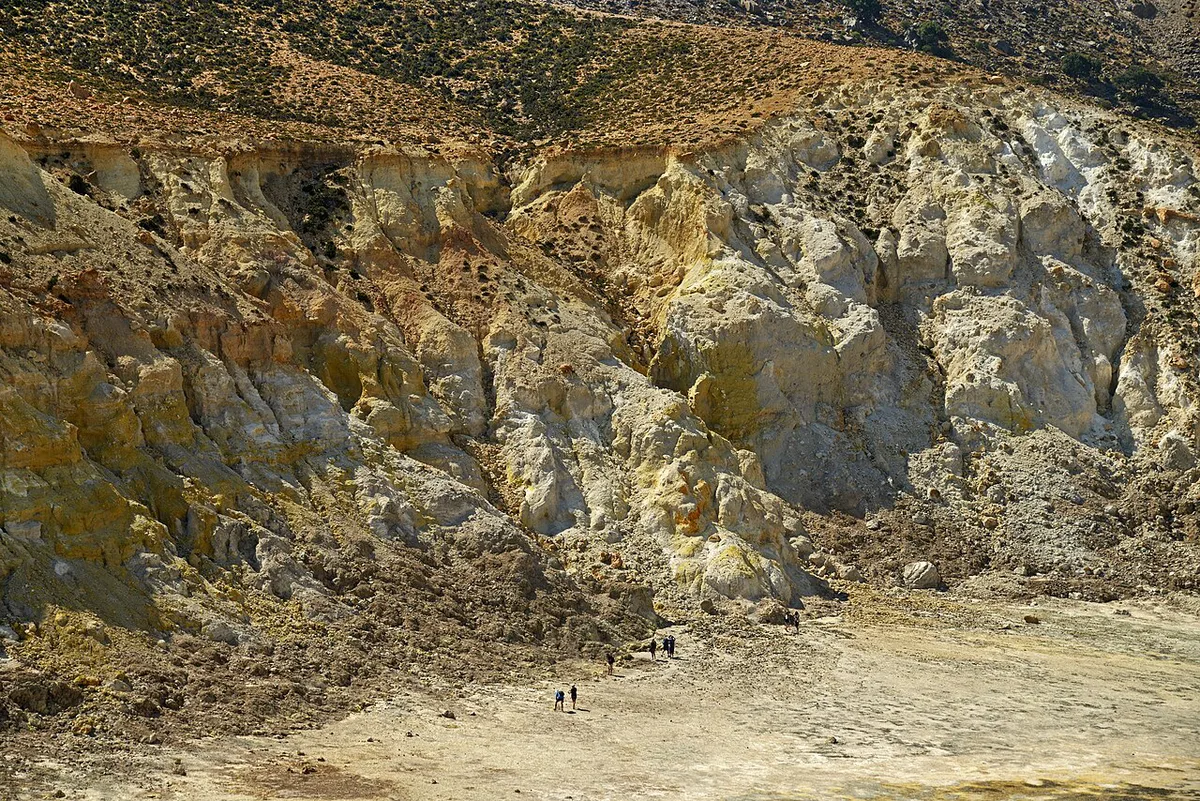
Nisyros is a round volcanic island in the Dodecanese, and its Stefanos crater has a floor you can walk onto. Ferries connect it with Kos. Timetables shift by season, so check the operator before fixing a day. Nikia and Mandraki are the villages most visitors combine with the crater visit.
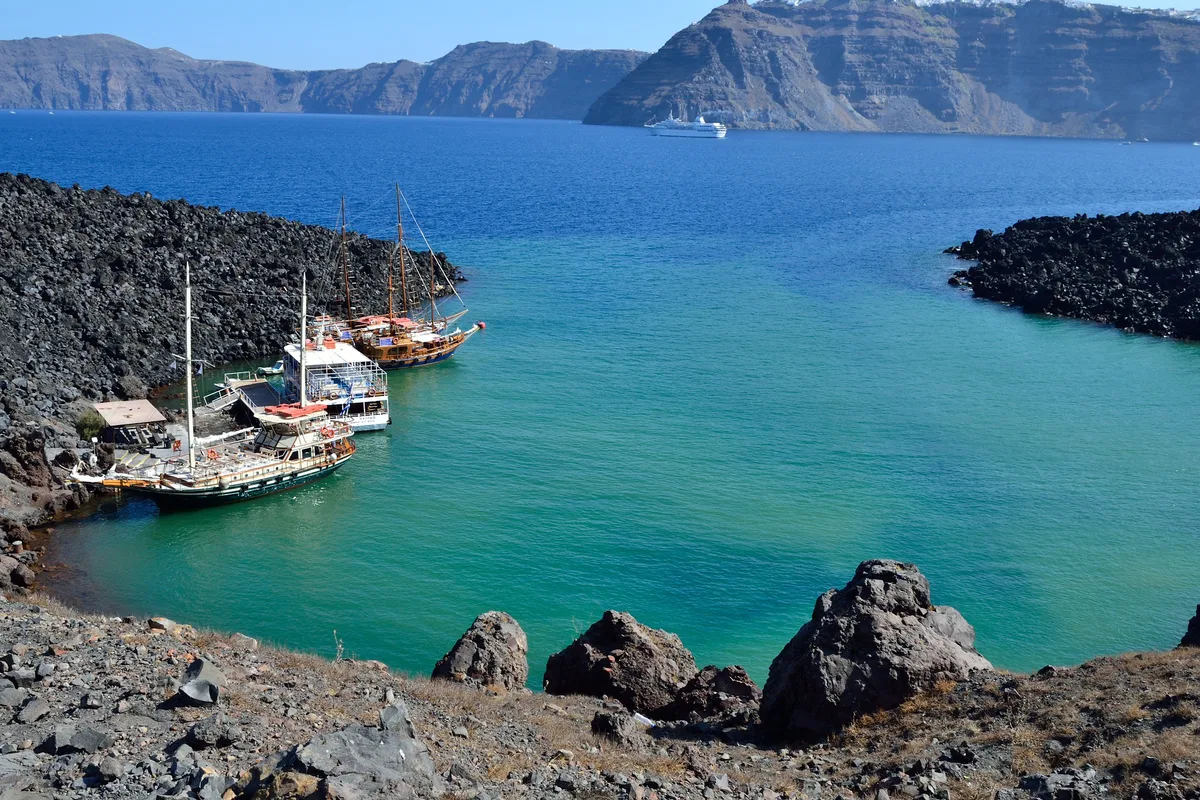
Expect heat, a sulfur smell and steaming ground, so wear closed shoes and carry water. Skip it if heat or gas bothers you, or if you only have a single ferry day to spare.
3. Milos: Volcanic Rock and Coast
Milos is an island whose coastline was shaped by volcanic activity, with rock in several colors along the shore. Its volcanic minerals supported a long mining tradition, which the Milos Mining Museum documents. For route ideas, see our Milos volcanic landscapes page.
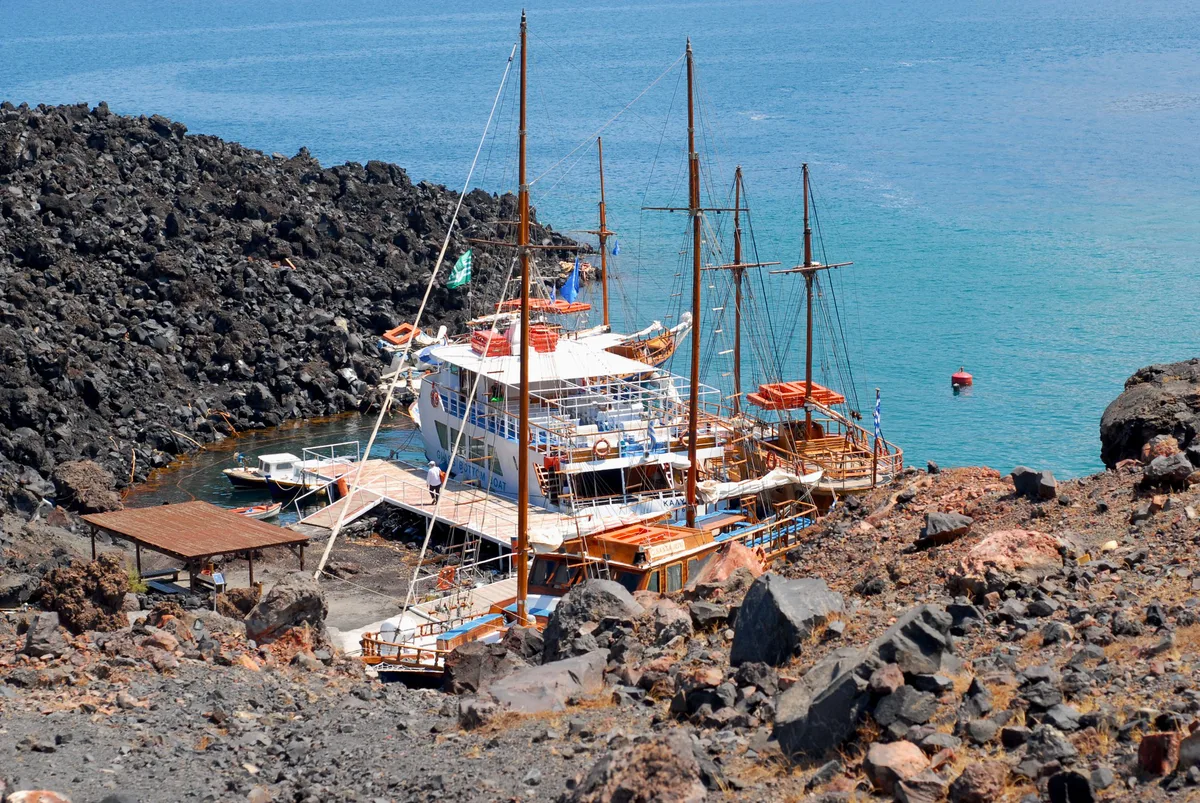
Boat tours and drives suit this island better than a single hike. Skip it if you want a crater to walk into. Milos is a coast-and-rock trip.
4. Methana: The Peninsula Volcano Near Athens
Methana is a volcanic peninsula in the Peloponnese, with lava domes and walking trails. It suits visitors who want a volcano without an island ferry. Plan it as a day trip or an overnight from Athens. Check current road and ferry options before choosing.
Trail details are in our guide to hiking Methana's volcanic peninsula. Skip it if you want steaming craters. Methana rewards walkers who like quiet trails.
5. Sousaki: Fumaroles Near Corinth
Sousaki is a fumarole field near Corinth, where gas escapes from the ground and stains the rock yellow. Sulfur smell is strong, so keep visits short and stay on clear ground. It works as a stop on a Corinth day, not a full outing.
Our Sousaki volcano walk page covers the setting. Skip it with young children or breathing problems, and avoid lingering near vents.
6. Petrified Forest of Lesvos (Fossil Site)
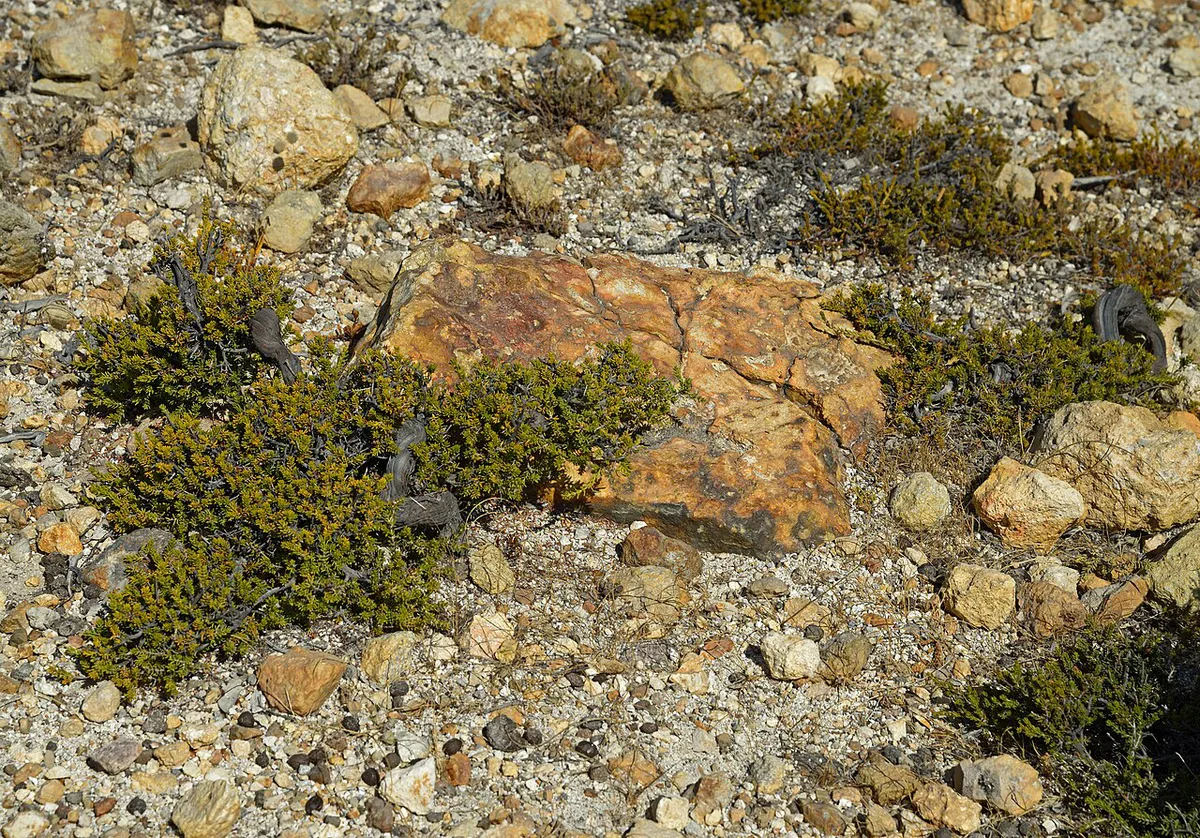
This is a fossil site, not an active volcano. Ancient volcanic material buried trees on Lesvos, preserving them as stone. The Lesvos UNESCO Global Geopark presents the area as part of its geological heritage. Walk the trails and look for fossilized trunks and stumps lying in the open ground.
Details on the site are in our Lesvos fossil forest guide. Skip it if you want steam, craters or lava. Best for families and fossil fans.
Which Volcano Should You Visit? (Decision Table)
Pick by time, effort and season, not by fame. Summer heat and autumn wind affect ferries and crater walks differently.
| If you want | Pick | Why |
|---|---|---|
| Closest to Athens | Methana or Sousaki | No island ferry needed |
| A crater floor | Nisyros | Walkable crater, ferry from Kos |
| Archaeology plus volcano | Santorini | Nea Kameni and Akrotiri |
| Coast and rock | Milos | Boat and driving trips |
| Easy family stop | Lesvos petrified forest | Fossil trails, no gas |
| Underwater volcano | Kolumbo | Boat tour or dive only |
Safety, Monitoring and What to Check Before You Go
The Institute of Geodynamics at the National Observatory of Athens monitors seismic activity in Greece. Check local closures and crater-access rules before each visit. Wear closed shoes on rocky or hot ground. Carry water, since shade is scarce. Leave vent areas if gas irritates your throat. Guided visits help on Nisyros and Nea Kameni, where heat and footing need attention. Common mistakes are skipping heat precautions, assuming every site is walkable, relying on a single ferry day, and treating Kolumbo as a land site.
Frequently Asked Questions
Is Santorini volcano still active?
Scientists treat Santorini as an active volcanic centre because it has an eruption history and is monitored. Visiting remains routine, but check closures and conditions before you go.
What volcano is due to erupt in 2026?
No Greek volcano has a published eruption date. Eruptions cannot be scheduled, so rely on monitoring updates from the National Observatory of Athens.
Explore More Guides
Keep planning your trip with these guides.