Nea Kameni, Santorini: Volcano Walk, Boat Trips & What to Expect
Last updated November 2026. Nea Kameni is the uninhabited volcanic island in the middle of the Santorini caldera, and you reach it by boat on a volcano tour or caldera cruise. Visitors walk up to the crater rim over dark lava and past steaming sulfur vents. It suits anyone who likes geology and big views, while heat, rough seas or limited mobility are good reasons to skip it.
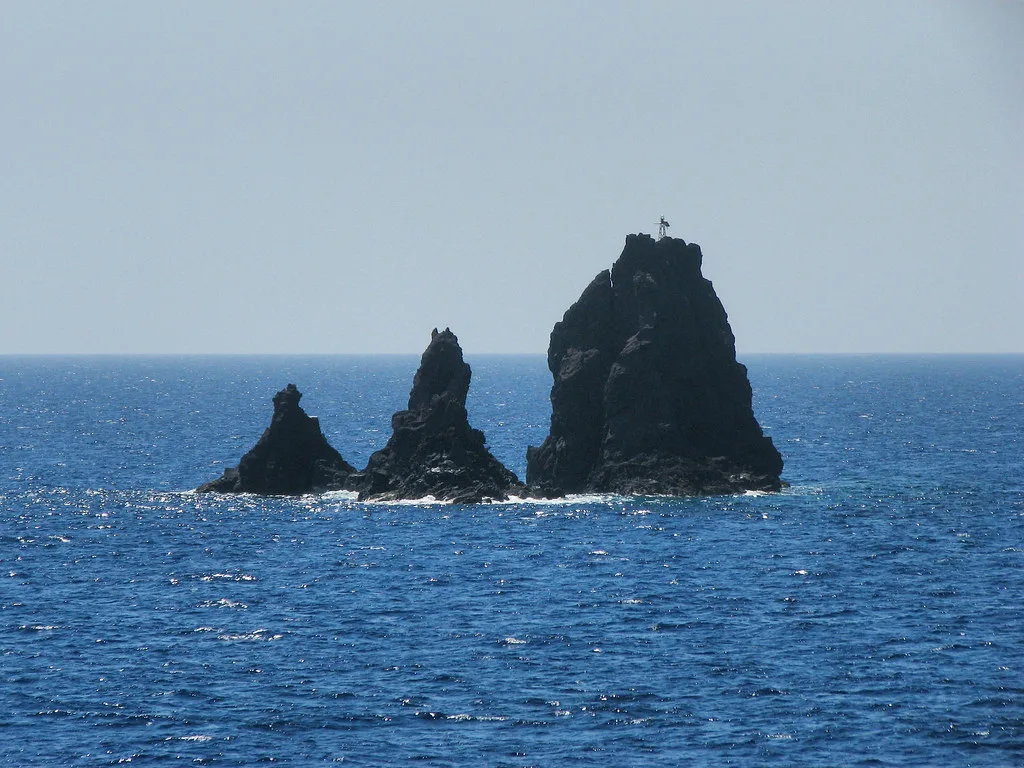
Featured image: sergei.gussev, CC BY 2.0, via Flickr.
What Nea Kameni Is (and Is It Worth It?)
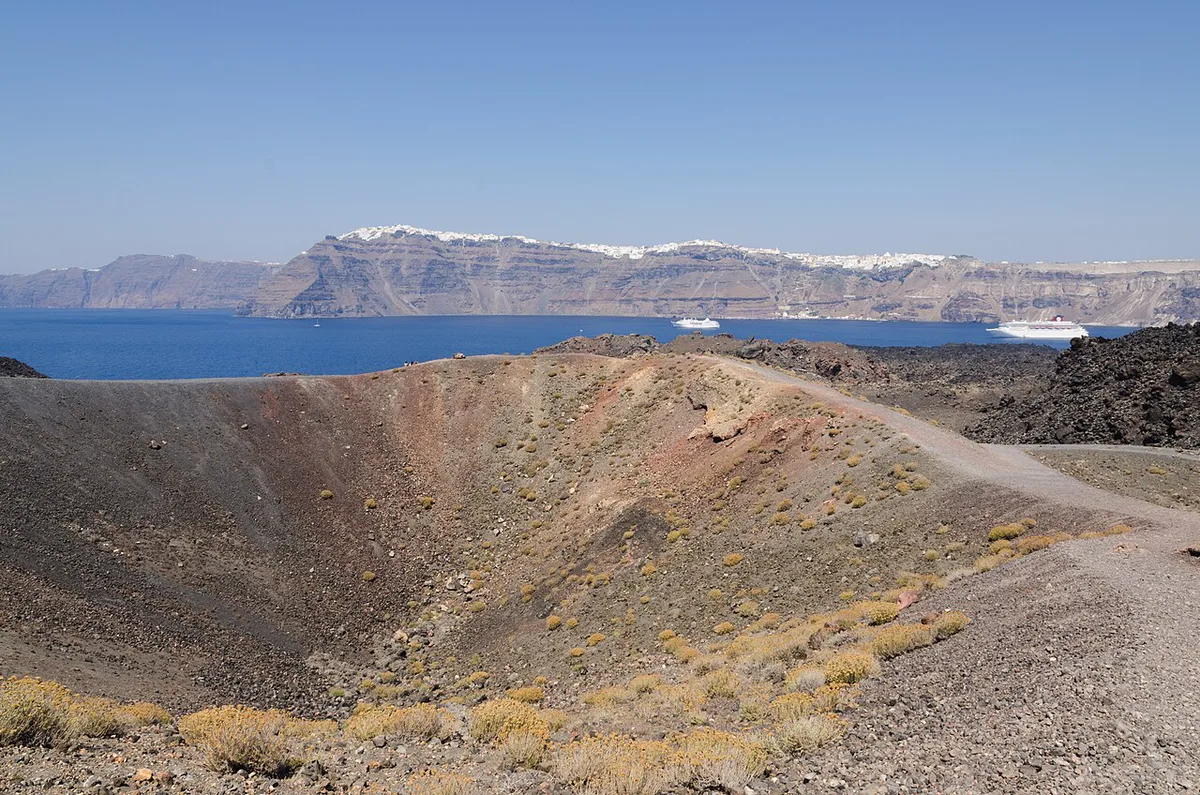
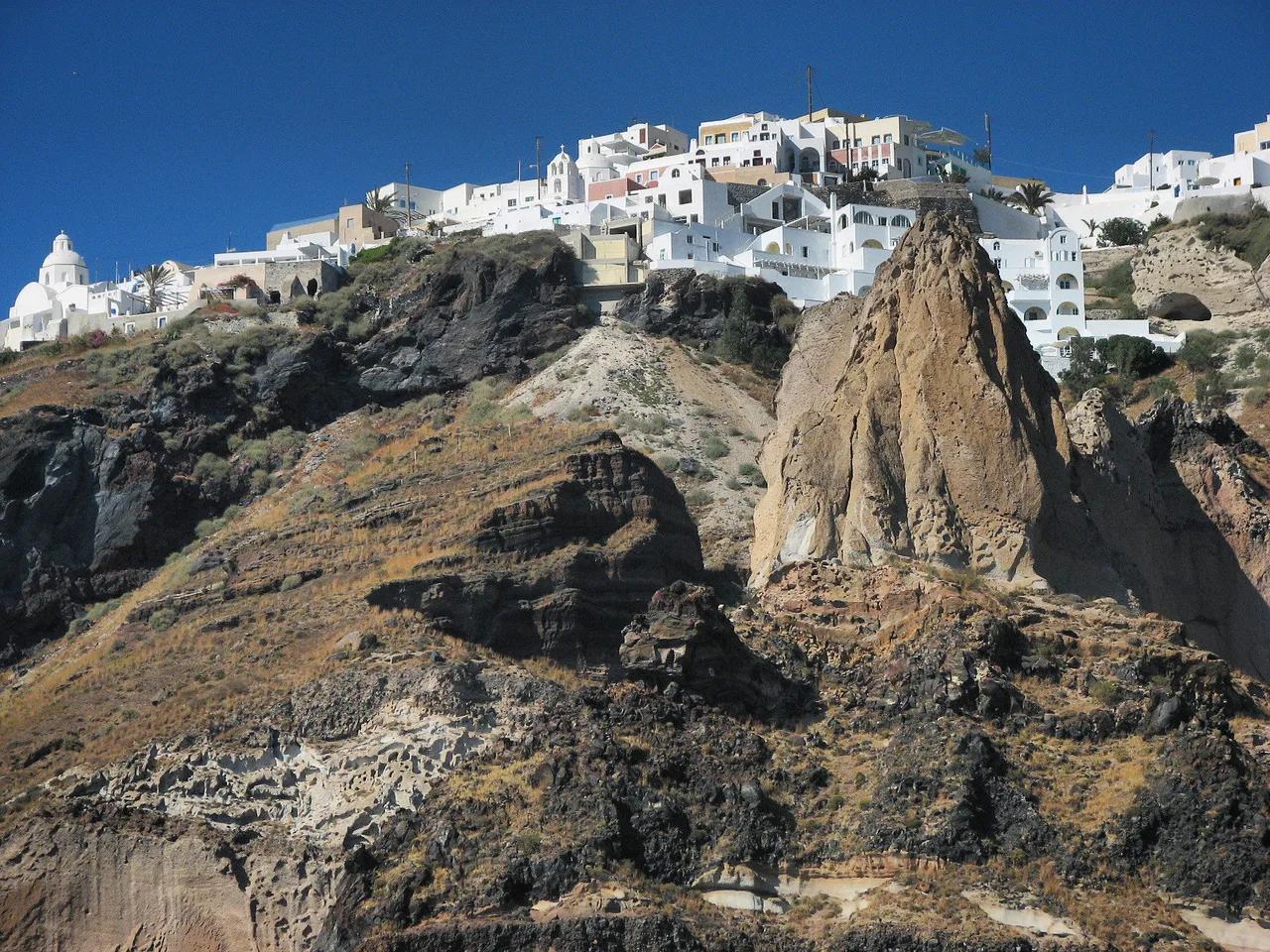
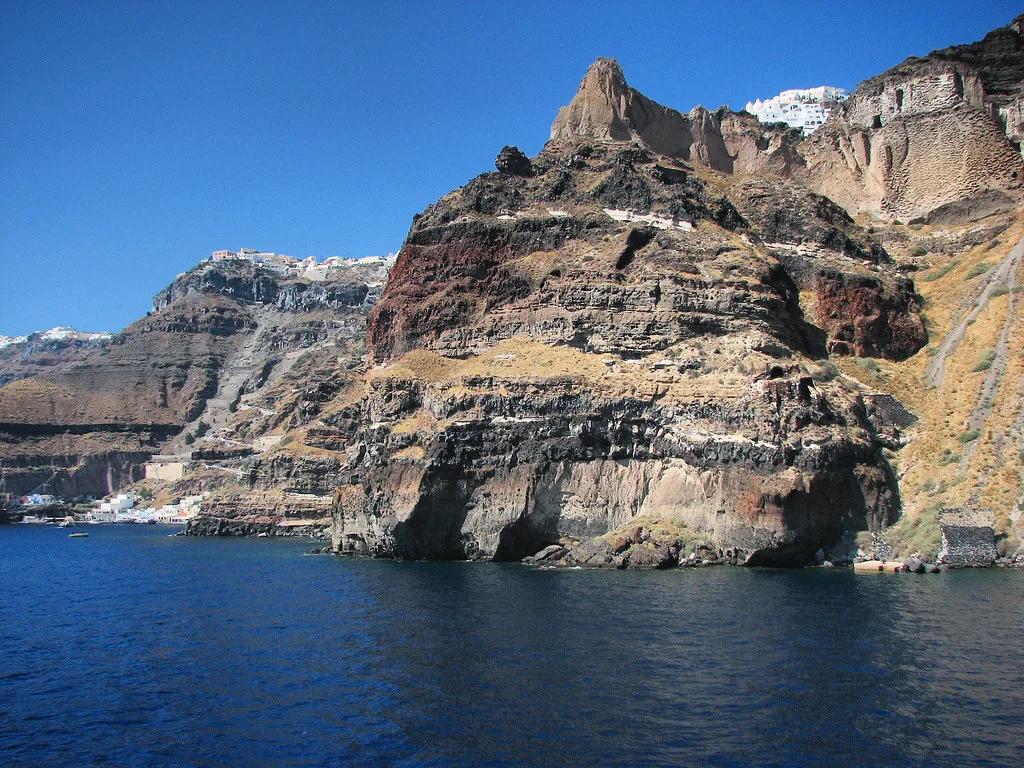
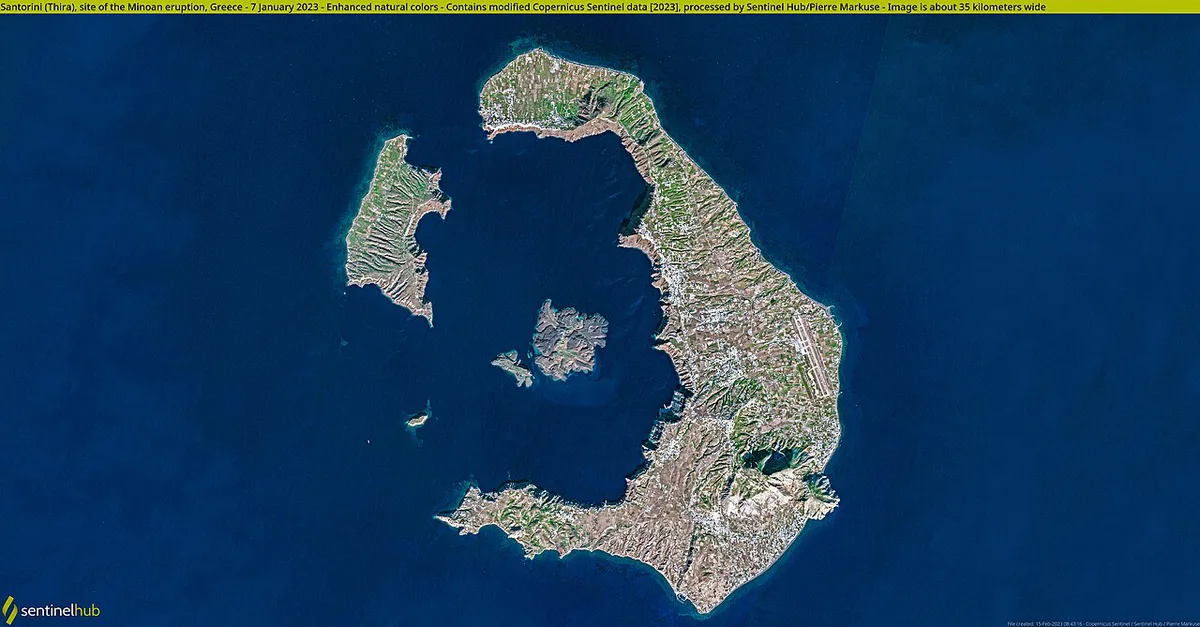
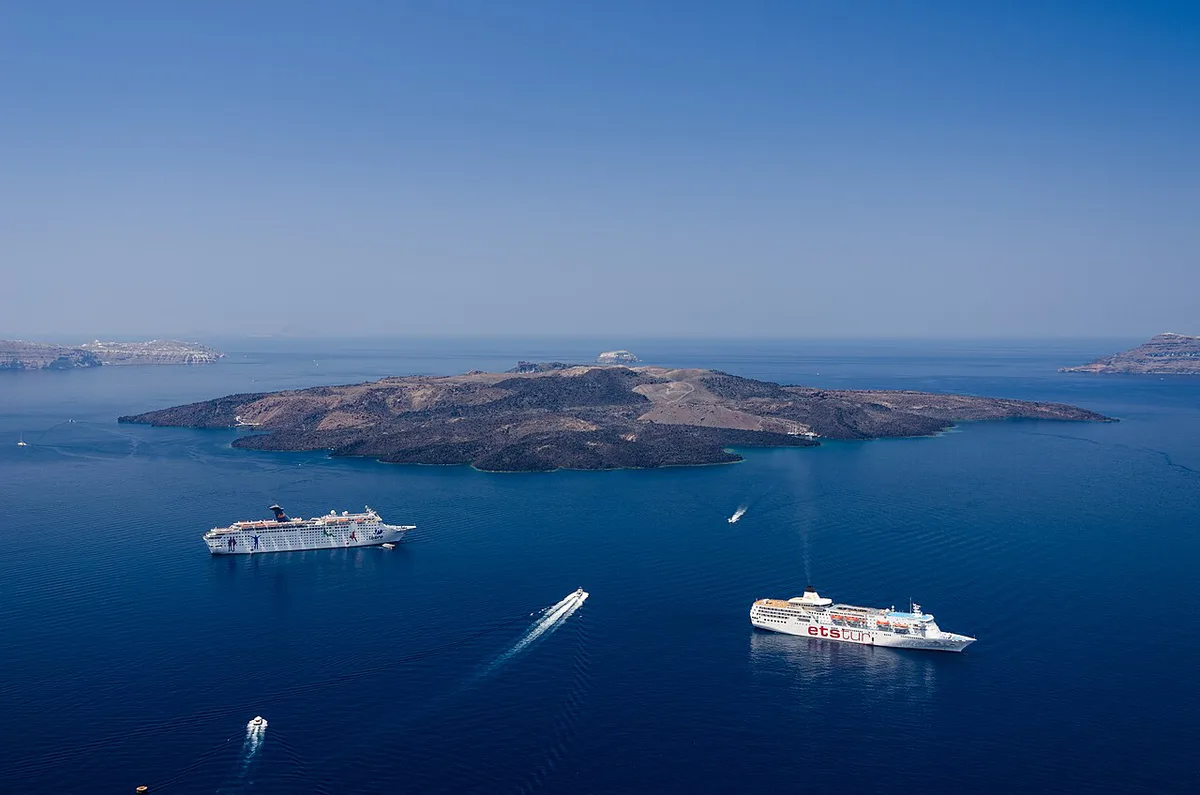
Nea Kameni is a young lava islet sitting in the flooded caldera of Santorini, with the cliff towns of Thira (Fira) on the rim in view. Nobody lives here, and there is no village, café or hotel. It is worth the boat ride if you want to stand on volcanic ground and look into a crater. For the wider story of the volcano, start with our Santorini volcano guide. Editorial judgement: it is a short, rugged stop rather than a full-day destination.
- Worth it: geology fans, photographers, and anyone who wants a guided walk with caldera views.
- Skip or shorten it: travelers with mobility limits, anyone facing extreme midday heat, and days with rough seas.
- Better alternative on a tight schedule: see the caldera from the cliff towns instead.
How to Get to Nea Kameni
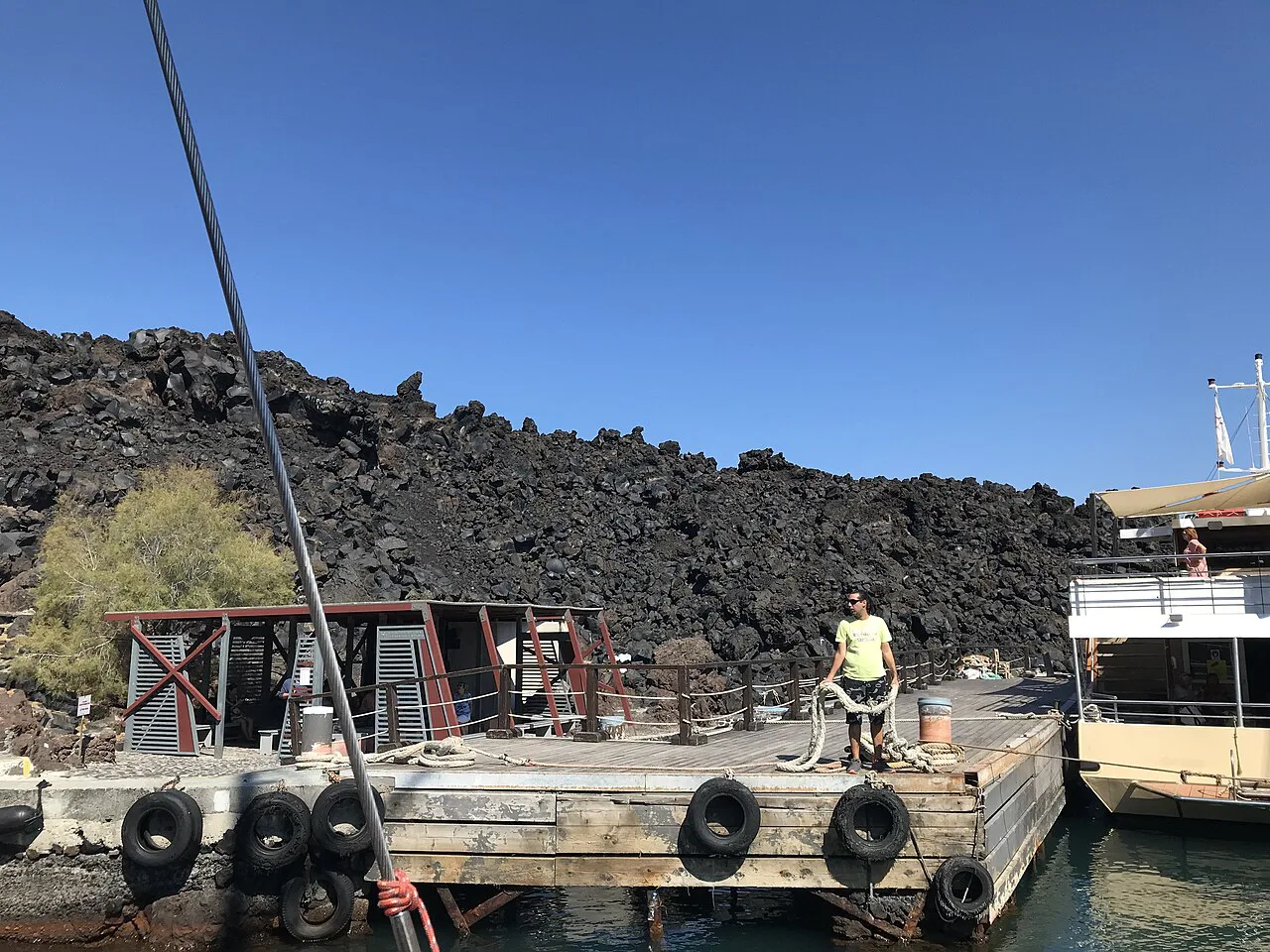
Boats are the only way to reach the islet. Most visitors join a volcano tour, which is built around the landing and a walk to the crater area. Our volcano tour booking guide covers how to choose between operators. Some caldera cruises also stop here, and the catamaran cruise guide explains what those trips add. Departure points mentioned for these trips include Fira Skala, Ammoudi and Vlychada, and each operator sets its own port. Independent visits are limited because this is a protected volcanic site, so plan on a boat operator handling the landing. Check your operator's port and any hotel transfer when you book.
What You Do on the Island
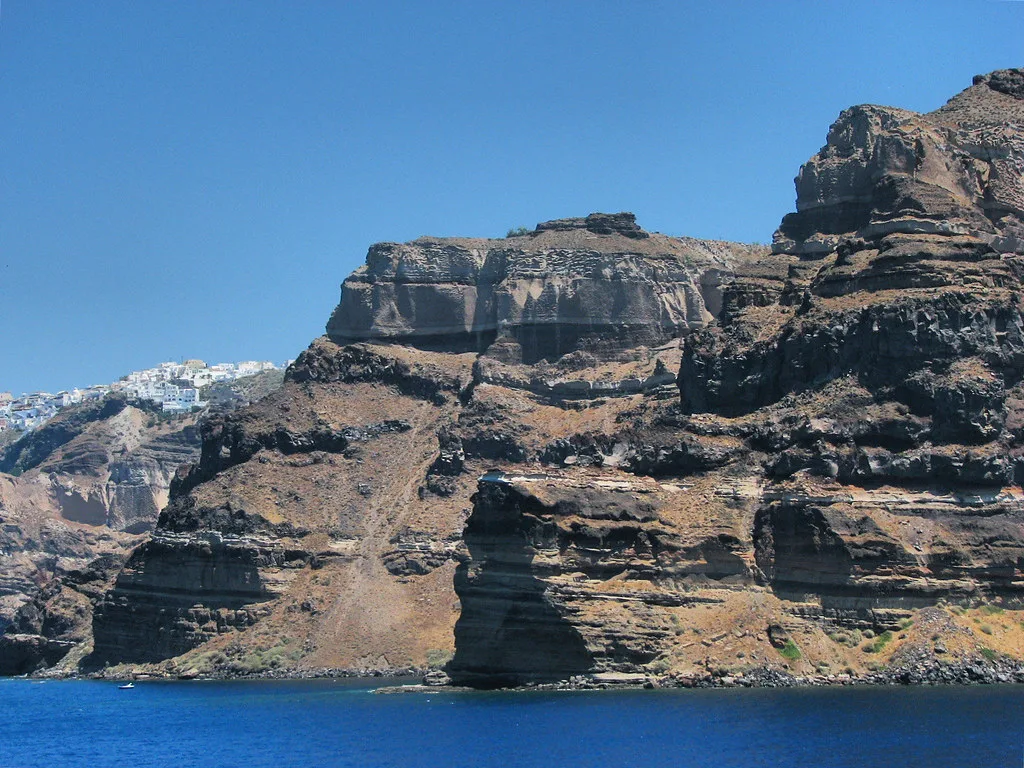
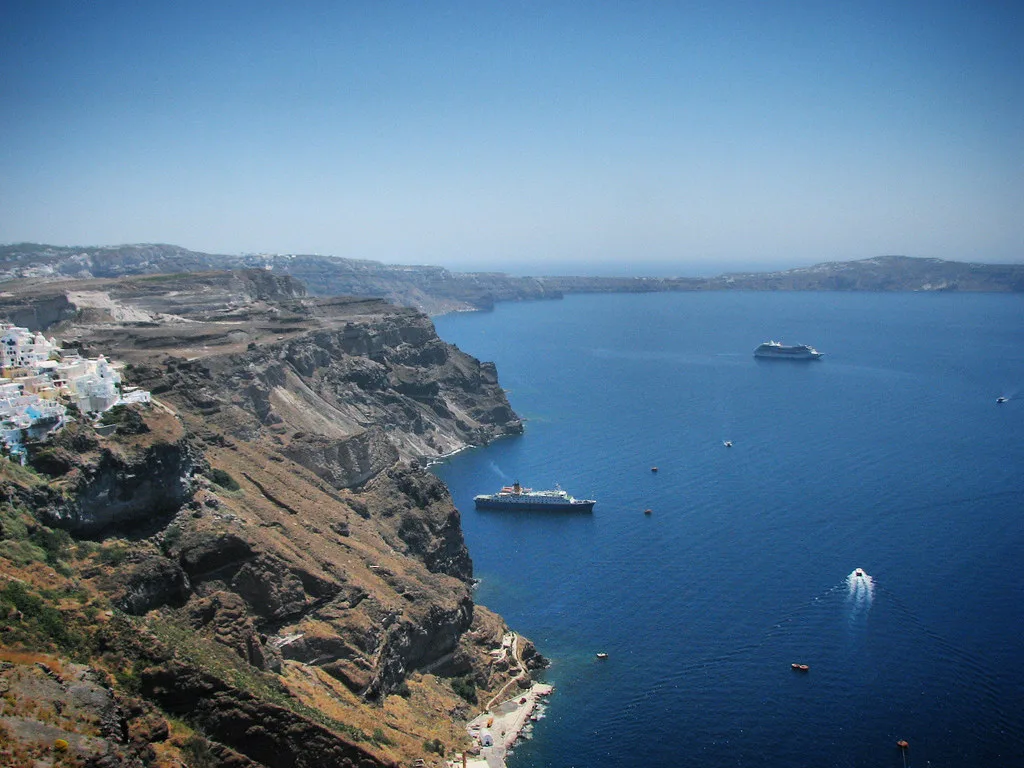
After landing, you follow a path up across black lava toward the crater area. Footing is loose and uneven, the ground is exposed, and there is almost no shade. Sulfur vents release steam and a noticeable smell near the crater. At the top, you look across the water to the cliffs of the Santorini Caldera: How It Formed, Safety & Best Ways to See It. Our volcano map shows where the islet sits relative to Fira, Palea Kameni and Thirasia. Stay on the marked path, because the site is protected and rules apply to rock collecting and drones.
Time, Cost and Effort: Trade-offs
Official landing fees and tour prices change by operator and season, so nothing here is a quoted fee. Check the operator's page for the current price in euros (€) and ask whether any island entry charge is bundled in. Use the table to compare the three common ways to go.
| Option | What's included | Time on island | Hot-springs stop | Price level | Best for |
|---|---|---|---|---|---|
| Volcano tour | Boat trip and island walk; guiding varies | Varies by operator | Varies by operator | Lower | Travelers focused on the volcano |
| Catamaran cruise | Caldera sailing with a stop here; extras vary | Varies by operator | Varies by operator | Higher | Sailing plus swim stops |
| Private or small-group boat | Set by the operator | Varies by operator | Varies by operator | Highest | Flexible timing and small groups |
Hot Springs: Nea Kameni vs Palea Kameni
Hot-spring swims are usually a separate stop from the Nea Kameni landing. The warm water is off the coast of Palea Kameni, the smaller neighboring islet. You normally swim from the boat rather than walk there. Expect water that is cooler or murkier than the photos suggest, and it can stain swimwear, so wear something old. Do not assume the stop is included in your ticket. Read our Santorini hot springs guide before you book, and leave health claims about the water out of your plans.
Best Time to Go and What to Bring
Tours depend on wind and sea conditions, so sailings can be cancelled or changed on rough days. Ask about the cancellation and rebooking terms before you pay. Morning departures avoid the worst heat because the lava surface offers almost no shade. Bring water, a hat and sunscreen, and wear closed shoes with grip rather than sandals. A light windbreaker helps on the boat deck.
- Mistake to avoid: sandals on loose lava.
- Mistake to avoid: setting out with no water or hat.
- Mistake to avoid: assuming the hot springs are included.
- Mistake to avoid: booking a midday slot in peak heat.
How the Island Formed (Short Version)
Nea Kameni was built up over centuries by repeated eruptions inside the caldera, which is why the lava looks so fresh. Those eruptions came long after the huge event that created the caldera itself. Our Minoan eruption guide covers that earlier explosion. For dated eruption records, the Institute of Geodynamics at the National Observatory of Athens is the Greek authority to consult.
Eruption History of Nea Kameni: 1570 to 1950
The short version above explains why the lava looks fresh. The record behind it is a run of eruptions, each of which added land to the islet or reshaped it. The dates below are the commonly cited ones; the Nea Kameni entry on Wikipedia gives the fuller timeline.
| Period | What happened |
|---|---|
| About 46 AD | Palea Kameni, the neighboring islet with the hot-spring stop, rose from the sea. It is the older of the two Kameni islands. |
| 1570-1573 | Nea Kameni first appeared, and its name means "New Burnt Island". |
| 1707-1711 | A new eruption built up the island's core and enlarged it. |
| 1866-1870 | Lava flows joined earlier lobes and created much of the surface seen today. |
| 1925-1928 and 1939-1941 | Further lava domes formed. The lava in these episodes was thick and slow-moving. |
| 1950 | The last eruption recorded here, which was small. |
This helps when you walk the crater path. Different flows cover different parts of the island, and some of the darker, blockier lava is from the 20th-century episodes. Your guide may point out which flow you are crossing, so ask if they don't mention it.
The island has been quiet for decades, but the steam vents on the crater rim are a reminder that the system underneath is still warm.
Is It Safe? Is the Volcano Active?
Santorini's volcano is classed as active but dormant, and it is monitored by Greek scientists. Visits are routine under normal conditions. Authorities can restrict access if monitoring shows unrest, so operators follow current instructions. For a measured answer, read whether the Santorini volcano is active. Earthquakes are a separate topic, covered in our Santorini earthquakes guide. For general visitor information on the island, see Visit Greece's Santorini page.
Frequently Asked Questions
Is the volcano near Santorini still active?
Yes, it is considered active but dormant, and Greek scientists monitor it. Current status is published by the National Observatory of Athens.
What sea is in Santorini, Greece?
Santorini lies in the Aegean Sea, in the southern Cyclades. Nea Kameni sits inside the flooded caldera in the middle of the island group.