Volcanoes in Italy Map: Active, Dormant and Visitable
Last updated November 2026. A volcanoes in Italy map shows four main zones: Sicily and the Aeolian arc, the Campanian coast around Naples, a central belt through Lazio and Tuscany, and seamounts under the Tyrrhenian Sea. Basilicata adds one inland volcano at Monte Vulture. Use this page as a text map, then follow the links to the full guide to Italy's volcanoes.
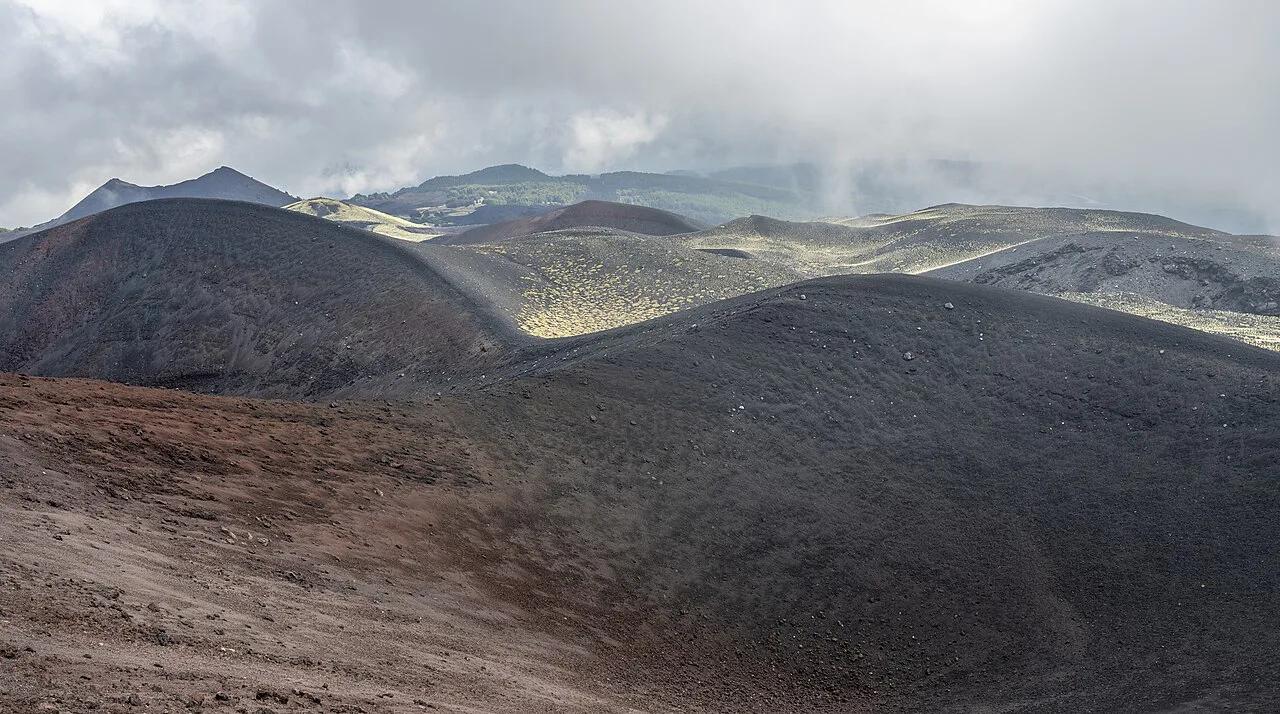
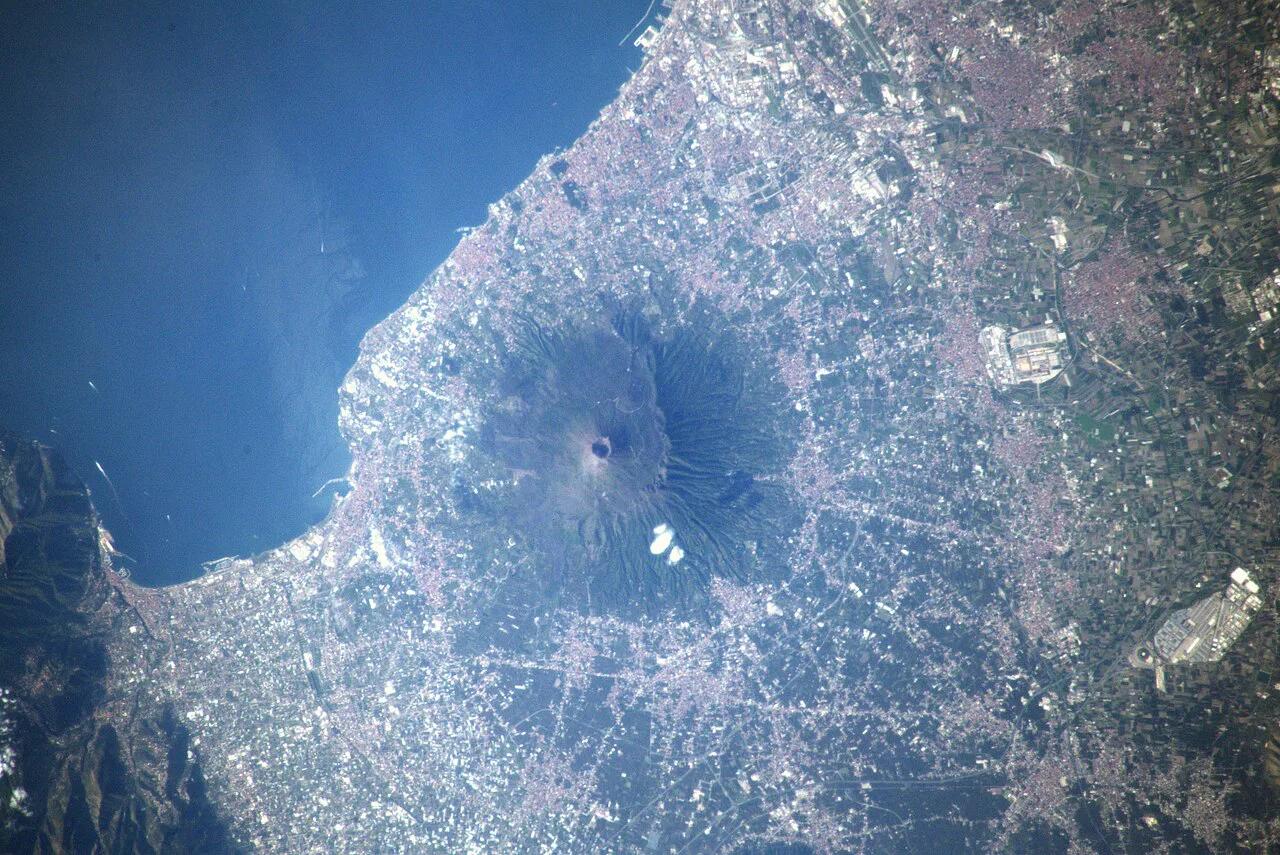
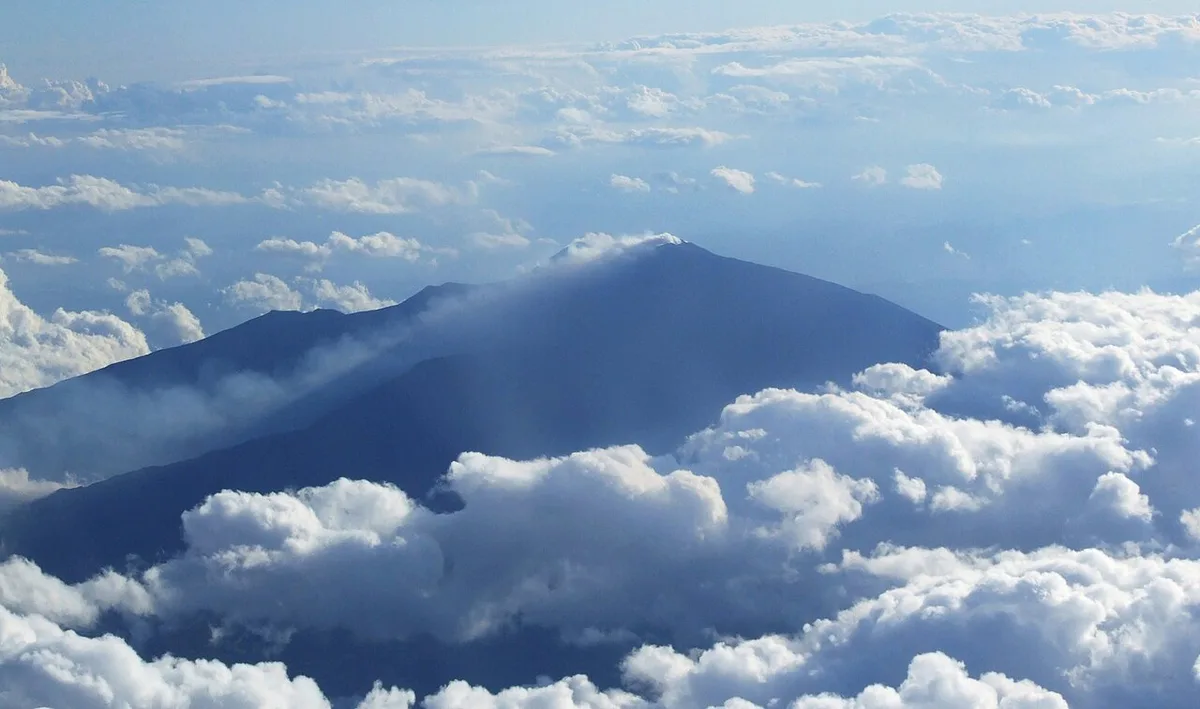
Featured image: ESA/Luca Parmitano, CC BY-SA 3.0 igo, via Wikimedia Commons.
Volcanoes in Italy: map by region
Read the country from south to north. Sicily and the Aeolian Islands hold Italy's best-known active volcanoes. Campania has the Vesuvius and Phlegraean Fields area, plus the island of Ischia. Lazio and the northern edge of Campania have low, older volcanic landscapes. Tuscany has one inland volcano, and Basilicata has another. Under the sea sit large volcanoes you cannot reach on foot. Treat any map you find, including a schematic one, as an orientation tool and not as hazard guidance. Names in Italian, such as I vulcani in Italia, lead to the same list.
- Sicily: Etna, on the eastern side of the island.
- Aeolian arc: Stromboli and Vulcano.
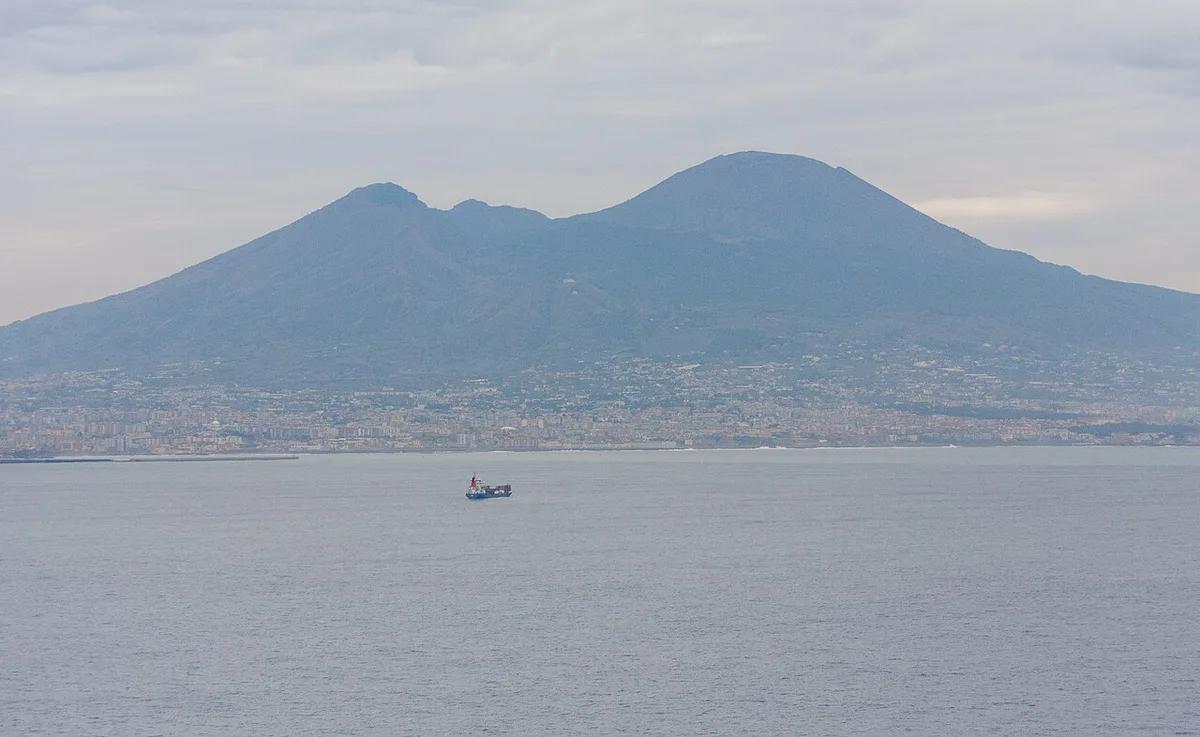
- Campania: Vesuvius, Campi Flegrei and Ischia, where Mount Epomeo rises.
- Lazio and northern Campania: Colli Albani and Roccamonfina.
- Tuscany: Monte Amiata.
- Basilicata: Monte Vulture.
- Tyrrhenian seafloor and the Sicily Channel: Marsili and Isola Ferdinandea.
Active, dormant and extinct volcanoes in Italy
Scientists disagree on where active ends and dormant begins, so counts vary by source. Campi Flegrei is restless, and Vesuvius is quiescent but not extinct. For current status, read the national volcano institute INGV. Our list of active volcanoes goes deeper on each one. The table below is a cautious grouping, not a hazard forecast.
| Volcano | Region | Status category | Visitable |
|---|---|---|---|
| Etna | Sicily | Active | Yes, with rules |
| Stromboli | Aeolian Islands | Active | Yes, with rules |
| Vulcano | Aeolian Islands | Check INGV for current status | Limited |
| Vesuvius | Campania | Quiescent, not extinct | Yes |
| Campi Flegrei | Campania | Restless caldera | Limited |
| Ischia / Mount Epomeo | Campania | Check INGV for current status | Yes |
| Colli Albani | Lazio | Quiet; terms contested | Yes, as landscape |
| Roccamonfina | Campania / Lazio border | Quiet; terms contested | Yes, as landscape |
| Monte Amiata | Tuscany | Quiet; terms contested | Yes, as landscape |
| Monte Vulture | Basilicata | Quiet; terms contested | Yes, as landscape |
| Marsili | Tyrrhenian Sea | Submarine | No |
| Isola Ferdinandea | Sicily Channel | Submarine | No |
Volcano-by-region guide
Each area has its own spoke page. Start with the region closest to your base.
- Sicily and the Aeolians: read Volcanoes in Sicily: Etna, Stromboli & Vulcano Guide for the island overview. Then compare the two headline cones in Stromboli versus Etna.
- Naples area: Volcanoes Near Naples: Vesuvius, Campi Flegrei & Ischia covers Vesuvius and Campi Flegrei. Mount Epomeo: Ischia Hike, Trails and Tips covers Ischia, and the Ischia tourism office lists local information.
- Rome and Lazio: Volcanoes Near Rome: What You Can Actually Visit is the day-trip starting point. Colli Albani (Alban Hills): Volcano Day Trip from Rome and Roccamonfina are low-profile, so expect volcanic landscape and not a crater hike.
- Tuscany: Monte Amiata: Tuscany's Dormant Volcano Visitor Guide is the inland option.
- Basilicata: Monte Vulture Guide: Lakes, Craters & How to Visit sits well away from the coastal clusters.
- Submarine: Marsili seamount and Isola Ferdinandea: The Sunken Volcano Island of Sicily can only be read about.
Which volcanoes can you actually visit?
Match the volcano to your effort level. Crater-rim hikes suit fit walkers, viewpoints suit most visitors, and museums or observatories suit rainy days. Summit zones on active volcanoes can close or require guides as activity changes. Etna's managing body, Parco dell'Etna, publishes access information. Vesuvius has its own authority, the Vesuvius National Park. Guided options are compared in our Volcano Tours Italy: Etna, Stromboli, Vesuvius Compared guide. Visitors with limited mobility, or on a single-day Rome itinerary, should skip crater hikes. Anyone expecting a constant lava show should skip them too.
| Traveler type | Best fit | Effort | Cost level |
|---|---|---|---|
| First-timer from Naples | Vesuvius | Low to medium | Low |
| Hiker wanting a summit | Etna | High | Mid |
| Island traveler | Stromboli or Vulcano | Medium | High |
| Rome day-tripper | Colli Albani | Low | Low |
| Geology fan | Campi Flegrei | Low | Low |
Planning your route by map
Cluster volcanoes by base town, not by distance on the map. Naples works for Vesuvius, the Phlegraean Fields and Ischia. Catania or Taormina works for Etna. The Aeolian ports work for Stromboli and Vulcano. Rome suits short trips to the Lazio hills. Ferries and hydrofoils to the islands get cancelled in rough weather, so build buffer days and check the operator's timetable. Summer heat, winter snow and cloud on the summit all change what you will see. Plan one volcano per day, and leave Etna and the Aeolians for separate trips.
Mistakes to avoid
Most planning errors come from reading the map too literally.
- Treating "extinct" or "dormant" as a guarantee. Check current status on the INGV observatories for Etna or Vesuvius and Campi Flegrei.
- Booking a tight ferry connection to Stromboli with no spare day.
- Planning to visit Marsili or Isola Ferdinandea. Both are underwater.
- Expecting a hike at Colli Albani or Roccamonfina. These are gentle volcanic landscapes.
- Skipping the official alert status before a summit trip.
Frequently Asked Questions
Is Vesuvius going to erupt again?
Vesuvius is quiescent, not extinct, so a future eruption cannot be ruled out. Nobody can give a reliable date. The Osservatorio Vesuviano publishes monitoring information.
Is Mount Etna still erupting?
Etna is one of Italy's active volcanoes, and its activity changes from week to week. Current status is published by the Osservatorio Etneo. Read it before you book a summit excursion.
What volcano is due to erupt in 2026?
No volcano is "due" on a schedule, and forecasts of this kind are unreliable. Watch the alert levels for Etna, Stromboli and Campi Flegrei on the INGV site instead.