Colli Albani (Alban Hills): Volcano Day Trip from Rome
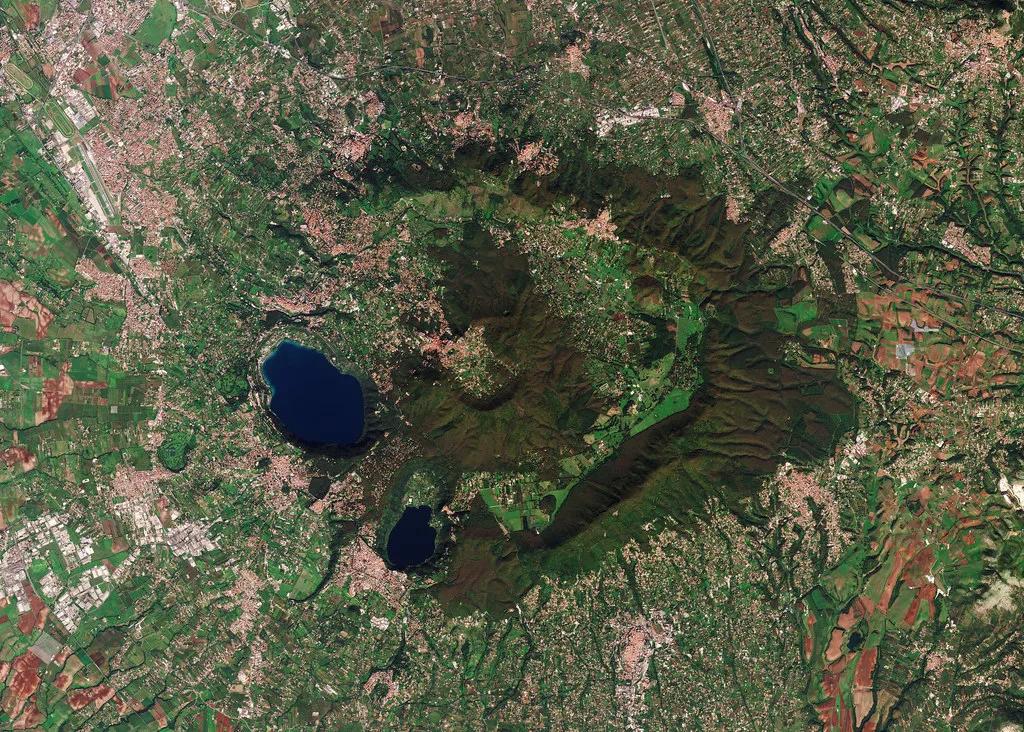
Last updated November 2026: the Colli Albani, or Alban Hills, are a dormant volcanic complex southeast of Rome. Crater lakes, Monte Cavo and Castel Gandolfo make them a practical volcano day trip from the capital. Our overview of Volcanoes Near Rome: What You Can Actually Visit shows where they fit among the other options.
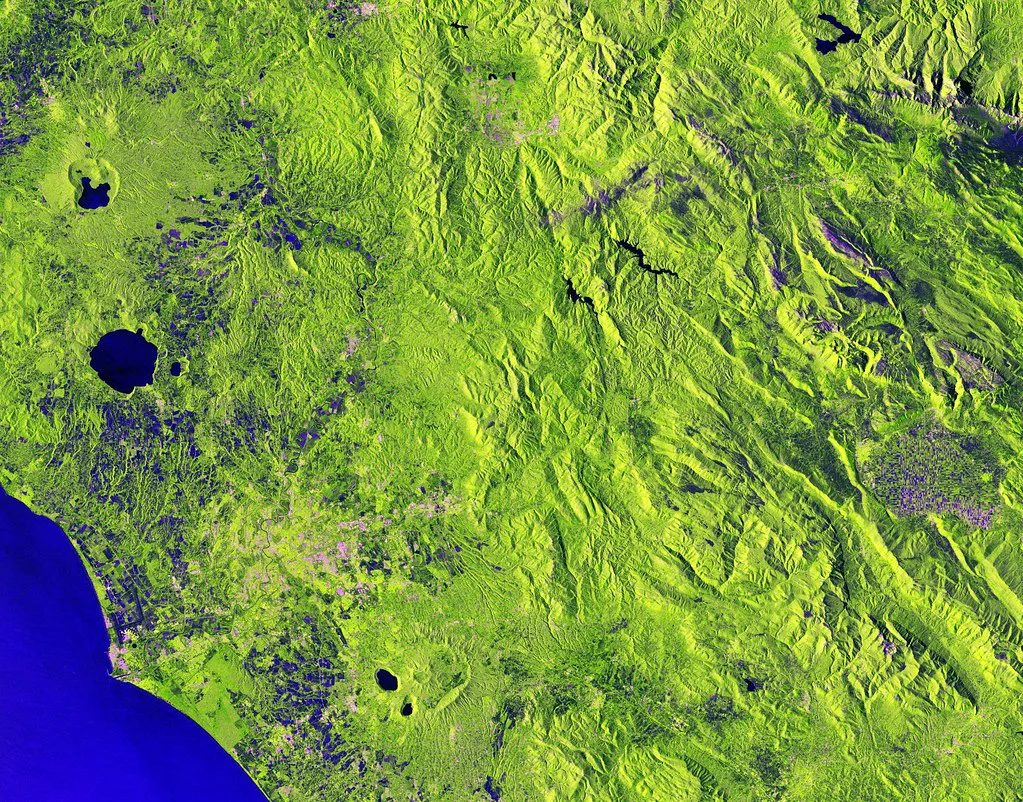
Featured image: europeanspaceagency, CC BY-SA 2.0, via Flickr.
What Are the Colli Albani? (Quick Answer)
Colli Albani is the Italian name for the Alban Hills, a Quaternary volcanic centre about 15 to 25 km (9 to 16 miles) southeast of Rome. It sits in Lazio, west of the central Apennines. A USGS publication abstract puts the last eruption at about 19,000 years ago. That makes the system dormant, not extinct. You can place it on our map of Italian volcanoes. For the national picture, start with 7 Volcanoes in Italy: Active, Dormant and Visitable.
- Location: Lazio, about 15 to 25 km (9 to 16 miles) southeast of Rome.
- Last eruption: about 19,000 years ago, per the USGS publication abstract.
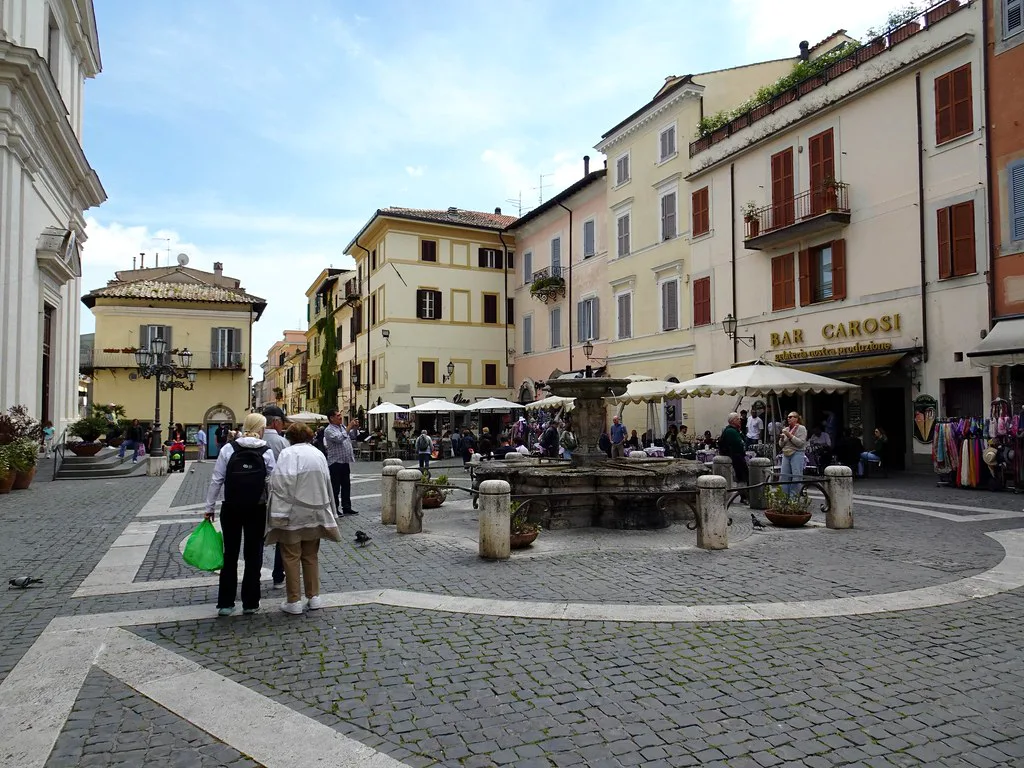
- Key sites: Lake Albano, Castel Gandolfo, Monte Cavo, Frascati and Rocca di Papa.
- What you will not see: an active cone, lava or a summit crater walk.
Is the Colli Albani Volcano Dangerous?
USGS research on the Alban Hills covers crustal structure and volcanic unrest, so scientists treat the system as one to watch. Italy's national geophysics institute, INGV, is the place to read current monitoring information. Compare this with the Active Volcanoes in Italy: Where to Visit & What to Know, where eruptions are recent and visible. On a day trip you will walk through towns, woods and lakeshores. Nothing here resembles a smoking summit.
Last eruption was about 19,000 years ago, yet Romans cut a drainage tunnel in 398-397 BCE, so human engineering here is far younger than the volcano.
Lake Albano and Castel Gandolfo
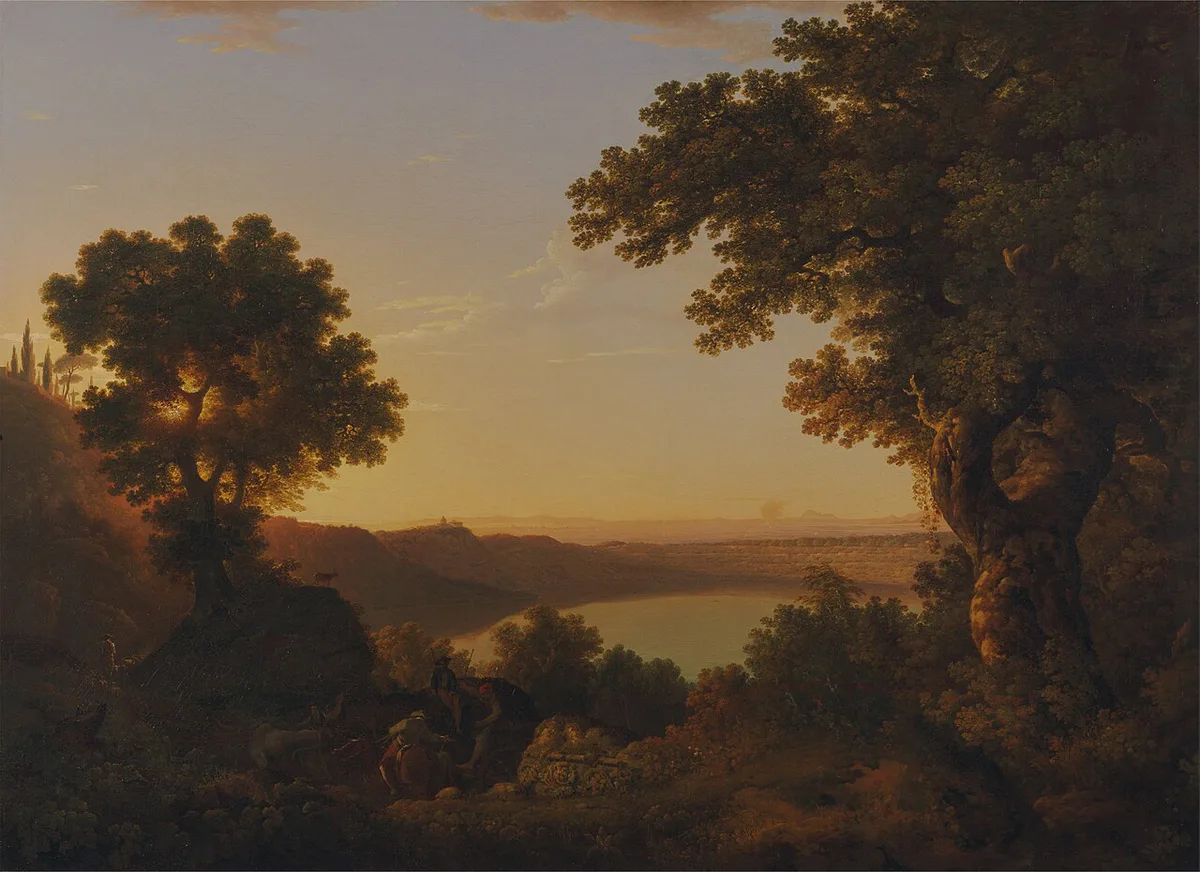
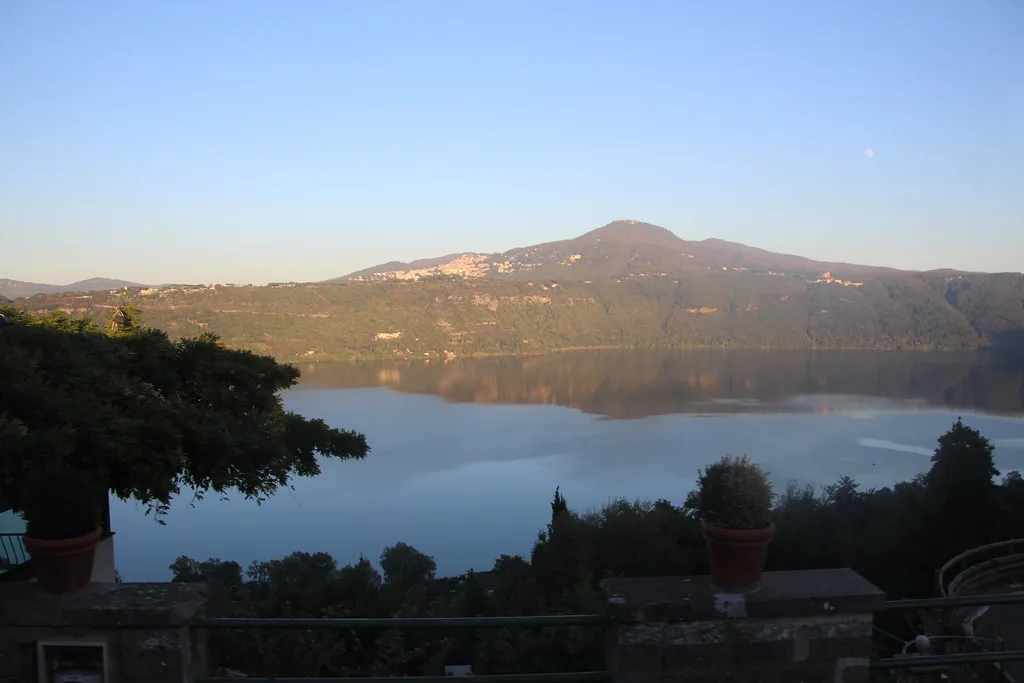
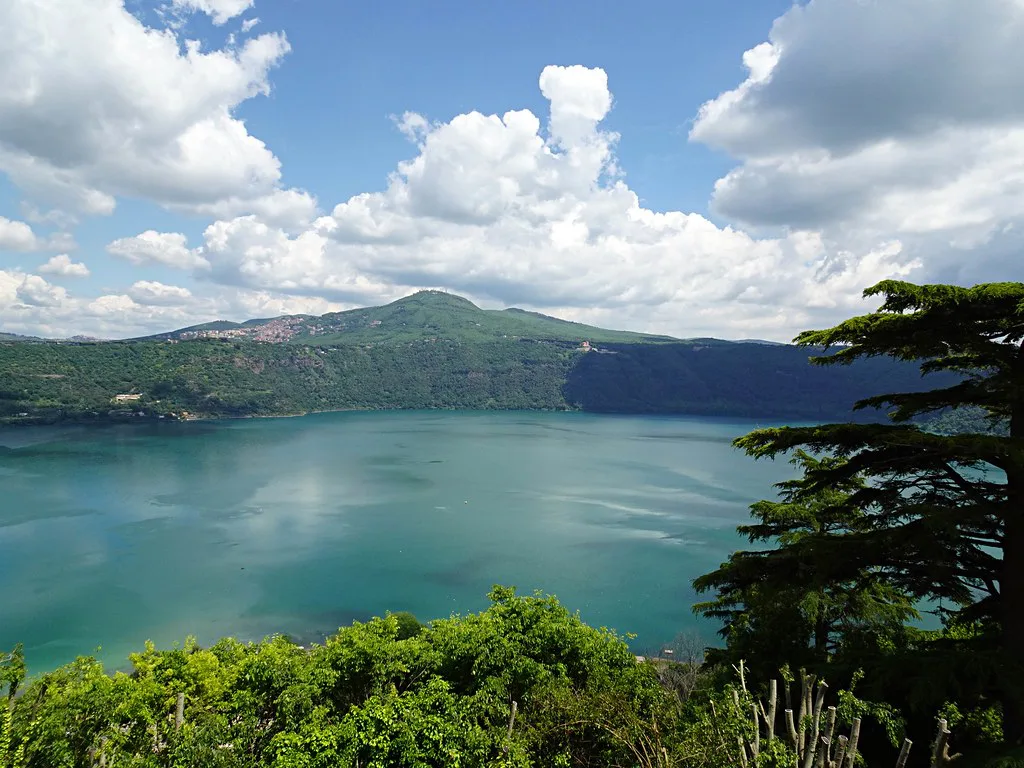
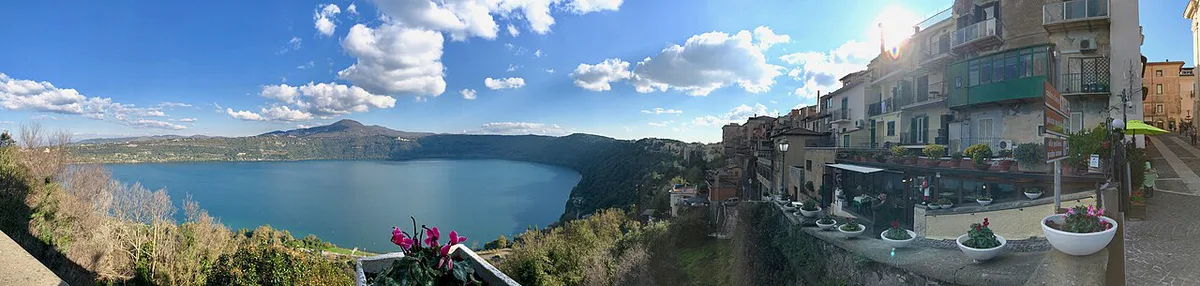
Lake Albano is a volcanic crater lake about 20 km (12 miles) southeast of Rome, at the foot of Monte Cavo. It is about 170 m (560 ft) deep, the deepest lake in Lazio. It measures 3.5 km by 2.3 km (2.2 by 1.4 miles) and is also called Lago di Castel Gandolfo. Two overlapping craters formed it, which explains the 70 m ridge on its floor. Castel Gandolfo overlooks the water and hosts the Papal Palace. In 1960 the lake held the canoeing and rowing events of the Rome Olympics. Palace tours, gardens and closures are set by the Vatican, so read its official pages before you plan around them. Swimming and boating rules are set locally, so check the municipality's notices for current limits.
Monte Cavo and the Sacred Mountain
Monte Cavo was the ancient Mons Albanus, a sacred mountain of the Latins. It rises above Lake Albano and anchors the skyline of the hills. Rocca di Papa and Frascati are towns within the same volcanic complex. Road, trail and seasonal access to the summit change, so use the Castelli Romani regional park for current routes. Treat any summit plan as provisional until you have read that page.
History Worth Knowing
Romans cut a drainage tunnel through the crater rim, traditionally dated to 398-397 BCE. It runs 1,350 m (about 4,400 ft), and tradition credits 30,000 workers. Plutarch reports that in 406 BCE the lake surged over the surrounding hills without rain. A limnic eruption, a sudden release of trapped gas, is one proposed explanation. Treat it as a hypothesis, not a settled event.
How to Visit from Rome
Lake Albano lies about 20 km (12 miles) from Rome, so a half-day or full-day trip is realistic. Our guide to volcanoes near Rome compares this trip with other nearby options. Public transport and car trade-offs are below. No fares or frequencies are listed here, because operators change them.
| Option | Flexibility | Time | Cost |
|---|---|---|---|
| Car | High: lake, Monte Cavo and towns in one loop | About 20 km (12 miles) to Lake Albano | Fuel and parking; no fixed fare |
| Public transport | Tied to operator routes | Check current timetable | Check current fare on the operator's site |
- Half day: Lake Albano and Castel Gandolfo only.
- Full day: add Monte Cavo, then a meal in Frascati or Rocca di Papa.
- Weekends: allow extra time and check local traffic rules.
Colli Albani vs Other Volcanoes Near Rome and Naples
Vesuvius sits on the Naples side and is a very different visit. Our guide to volcanoes near Naples covers it in depth. Another dormant option is Roccamonfina, a volcano with its own regional park. The Alban Hills suit travellers who want volcanic landscape and history close to Rome. Browse all of Italy's volcanoes to compare them.
| Volcano | Status | Effort from its city | Best for |
|---|---|---|---|
| Colli Albani | Dormant, with monitored unrest | Short trip from Rome | Crater lakes, history, easy day out |
| Vesuvius | Active, monitored by INGV Osservatorio Vesuviano | Day trip from Naples | A classic cone and national park |
| Roccamonfina | Dormant | Needs its own planning | Quiet volcanic scenery |
Who Should Go, Who Should Skip
Go if you want volcanic geology and Roman history in one easy day. Skip if you want a dramatic crater walk or visible activity.
- Go: travellers who enjoy lakes, hill towns and ancient sites.
- Go: volcano fans building a wider Italian itinerary.
- Skip: anyone expecting an active cone or lava.
- Mistake to avoid: assuming every site is open all year.
- Mistake to avoid: skipping a check of Castel Gandolfo palace access.
Frequently Asked Questions
Is Lake Albano worth visiting?
Yes, if you like crater lakes and history. It is about 170 m (560 ft) deep and hosted the 1960 Olympic rowing and canoeing events. Castel Gandolfo overlooks it.
Can you swim in Lake Albano, Italy?
Rules for swimming, boating and shoreline access change often. Check the notices of the local municipality before you go. Do not assume any shore is open.