Mount Vesuvius Eruption 79 AD: Timeline and Facts
Last updated November 2026. The Mount Vesuvius eruption of 79 AD buried Pompeii, Herculaneum, Stabiae and Oplontis, and its main phases lasted about a day. Pliny the Younger's letters give the only surviving eyewitness account, and the archaeology shows how each town died. This guide sets out the sequence, the open questions on date and death toll, and which site shows which part of the story.
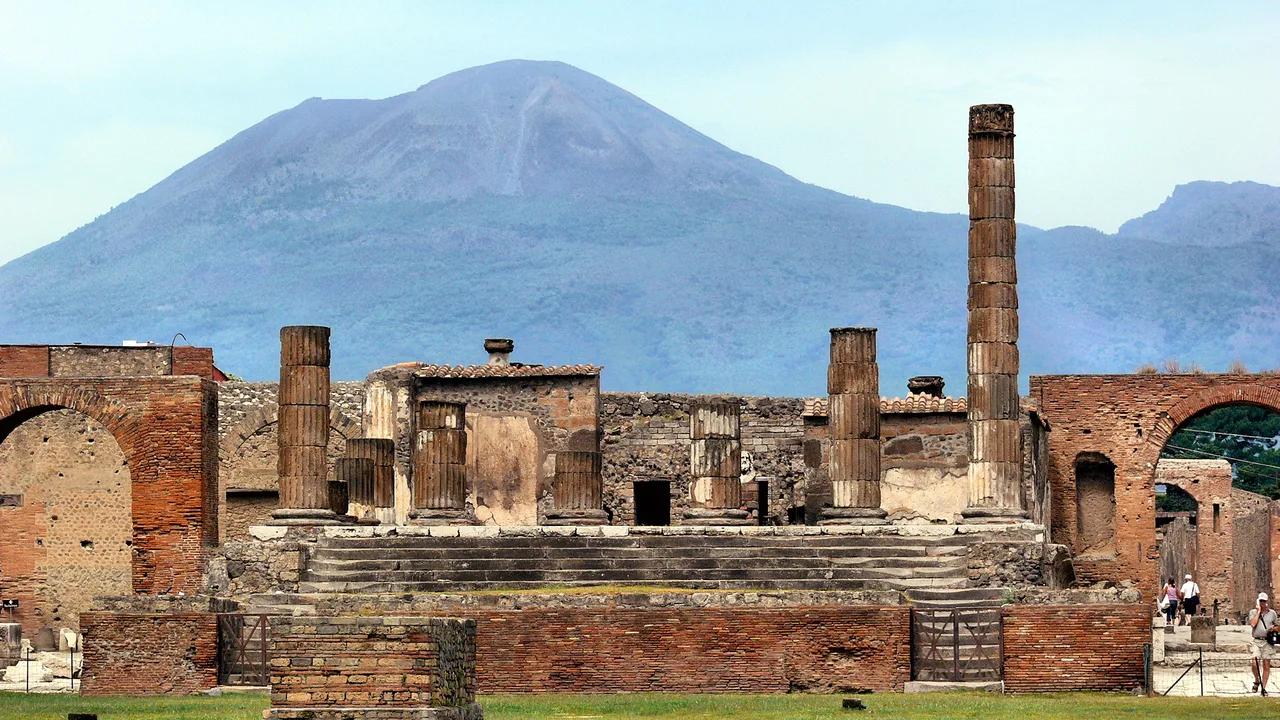
Featured image: Russ2009, CC BY-SA 2.0, via Flickr.
What happened in 79 AD: the short answer
Vesuvius erupted in 79 AD after a long quiet spell. A towering column of gas and pumice rose first, and glowing avalanches of gas and ash followed. Pompeii, Herculaneum, Stabiae and Oplontis were buried within roughly a day. Tradition dates the start to August 24, but scholars debate that date. The death toll is also contested, and our page on Pompeii casualty estimates covers the figures. For the wider story of the volcano's history, start with the Vesuvius eruption overview.
Mount Vesuvius eruption 79 AD timeline, phase by phase
The order of events explains who died where. Volcanologists describe a Plinian eruption, named after Pliny's account. Our guide to what type of volcano Vesuvius is explains the mechanics. In short, a sustained column fed a fall of pumice, and then the column collapsed into surges and flows. The main phases ran for about a day, according to the standard reconstruction.
| Phase | What fell or flowed | Effect | Best site to see it |
|---|---|---|---|
| 1. Plinian column | Gas, ash and pumice thrown high above the crater | Darkness and a steady fall of pumice over the area south-east of the volcano | Pompeii |
| 2. Pumice fall | Light stones piling up for hours | Roofs loaded and collapsing; many people fled | Pompeii |
| 3. First surges | Fast, hot clouds of gas and ash | Herculaneum overwhelmed; its fleeing residents were caught | Herculaneum |
| 4. Later surges and flows | Denser, deadlier currents reaching further out | Pompeii's remaining residents killed; towns sealed under deposits | Pompeii and Oplontis |
Why Pompeii and Herculaneum were destroyed differently
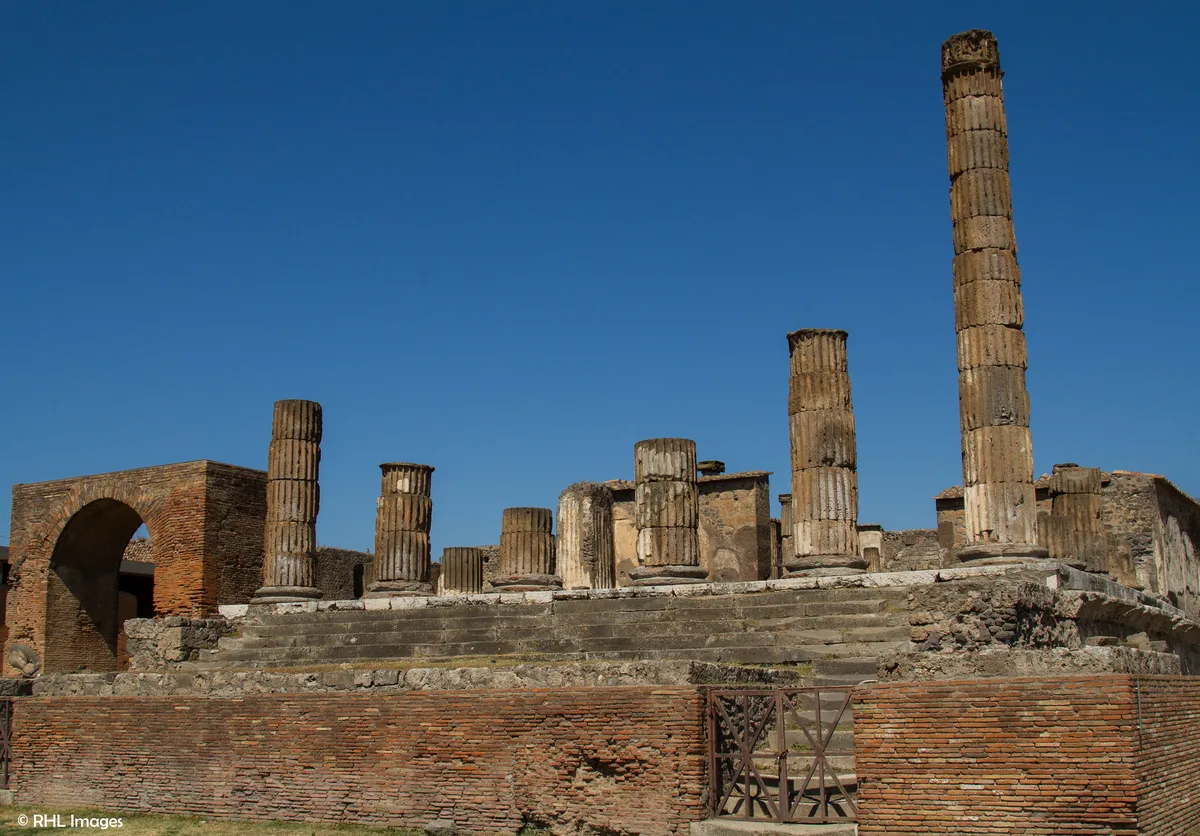
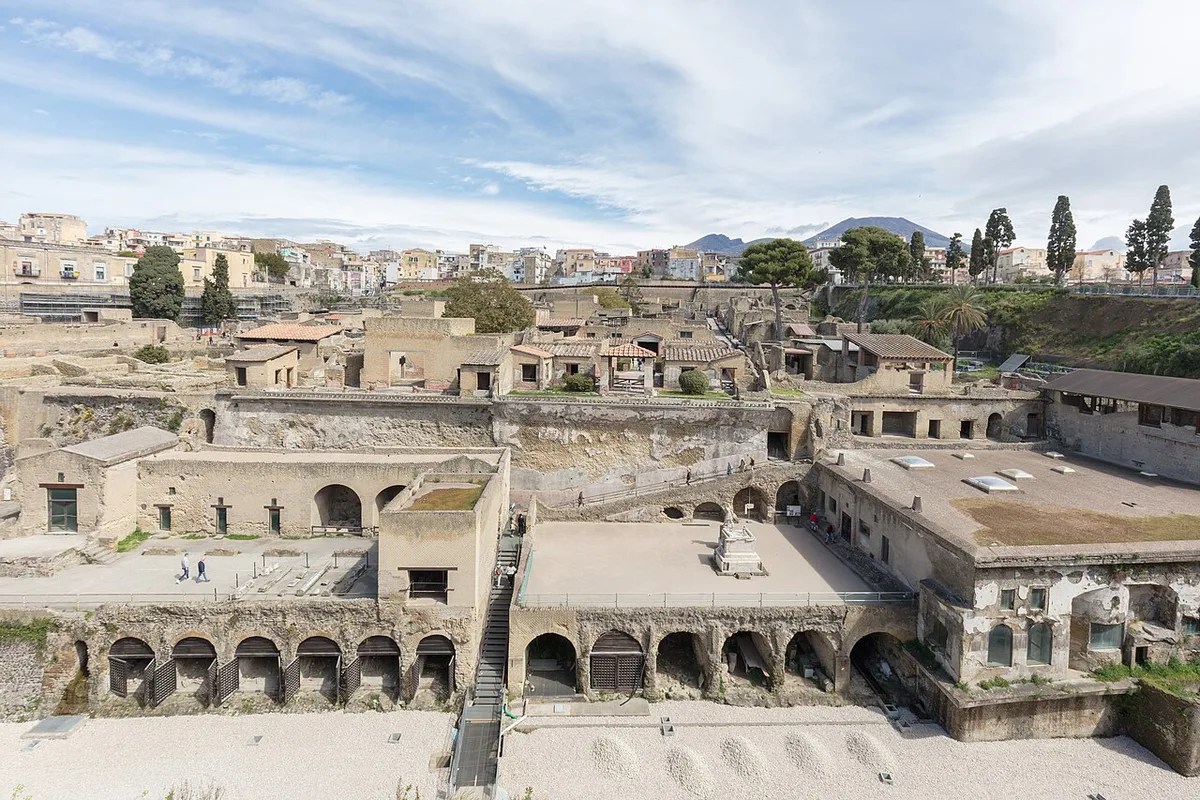
Wind carried the pumice toward Pompeii. Stones fell there for hours before any surge arrived, which gave residents time to leave. Many probably did, and later surges killed those who stayed. Herculaneum lay in a different position relative to the volcano. Surges struck it early, before deep pumice could pile up. The deposits there sealed buildings under a thick, hard cover. That cover kept organic material that rotted away elsewhere, including charred wood, beams and furniture. Upper floors survive better at Herculaneum than at Pompeii. Excavators have reported burial of around 20 m there, though depth varies across the site. Pompeii is larger and more exposed, with roofs lost and walls open to the sky.
What Pliny the Younger saw
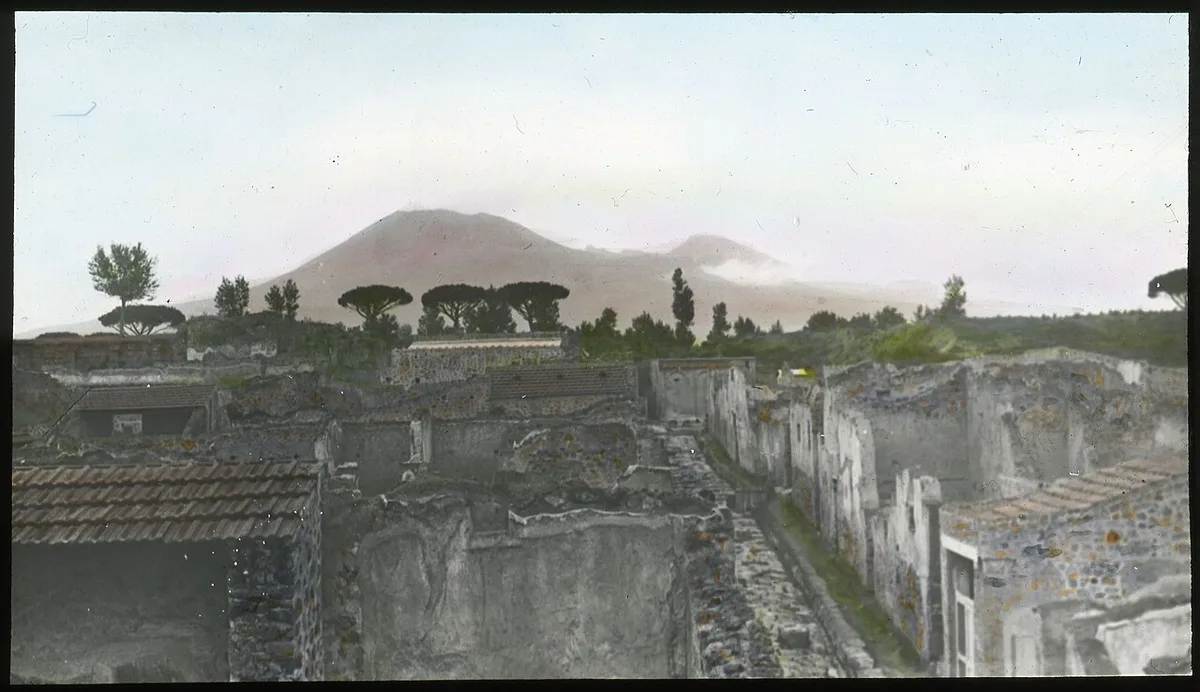
Pliny the Younger watched from Misenum across the bay. Decades later he described the eruption in two letters to the historian Tacitus, numbered 6.16 and 6.20. Those letters are the primary account. He compared the rising cloud to an umbrella pine, and later writers took the term "Plinian" from that image. His uncle, Pliny the Elder, commanded the fleet at Misenum. The elder Pliny sailed toward the danger to help Rectina and others, then died at Stabiae. His nephew's letters also describe darkness, falling ash and crowds fleeing along the coast. Pliny's tone is a witness's, not a historian's. He wrote years afterwards, so details may have faded.
The date and death-toll uncertainties
August 24 is the traditional date, drawn from a medieval copy of Pliny's text. Scholars debate it. Some point to autumn fruit, heavier clothing and other finds at Pompeii as signs of a later date. No single date has settled the question. Death-toll figures are equally unsettled. Skeletons found in Pompeii and Herculaneum give a minimum, but they cannot count those lost elsewhere or those who escaped. Treat any single number as an estimate, and read our account of the last eruption for how later events compare.
What the eruption preserved
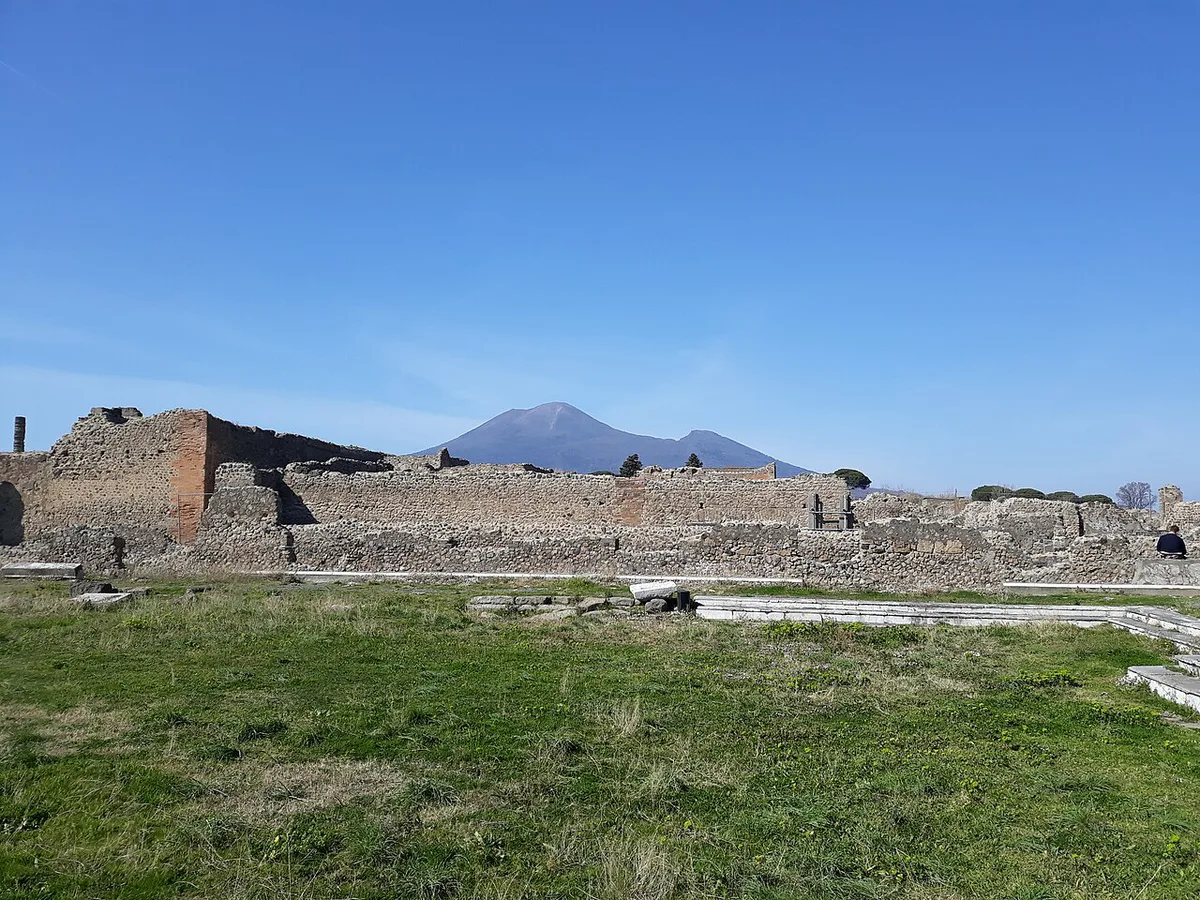
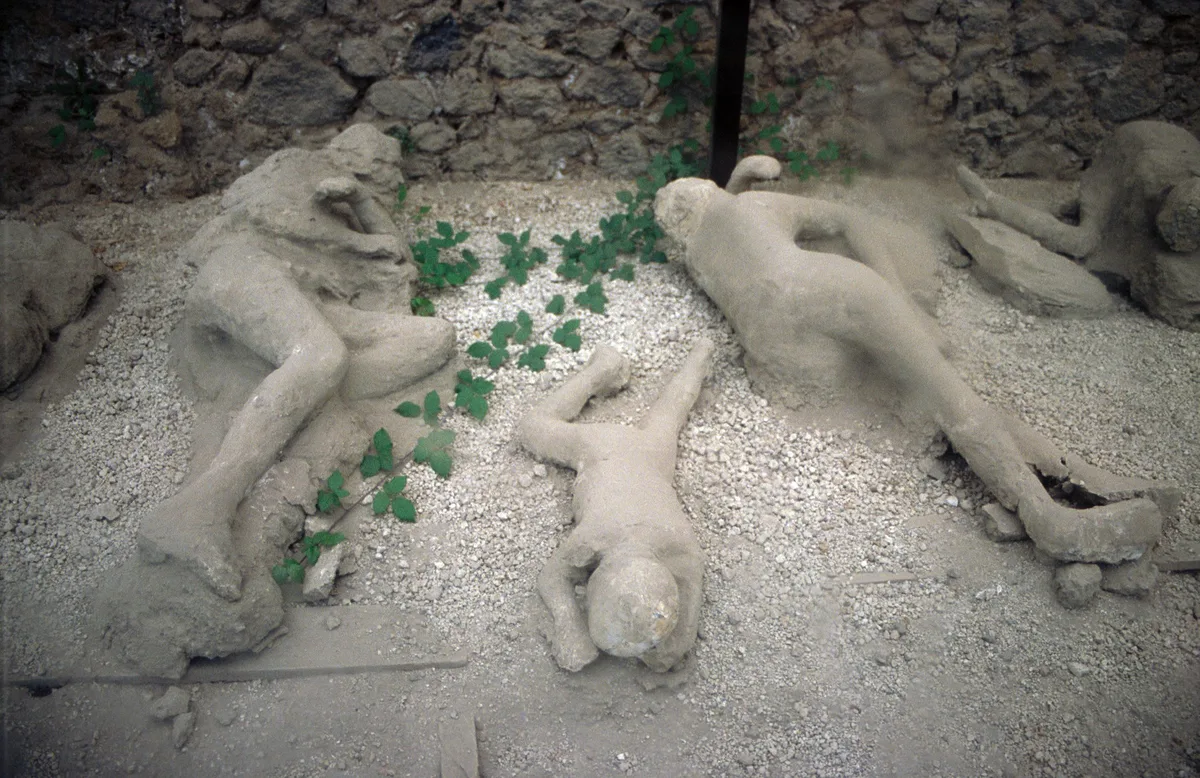
The same deposits that killed people also preserved evidence. At Pompeii, ash hardened around bodies and left hollows. Archaeologists filled these with plaster to make the well-known casts. At Herculaneum, heat carbonized wood, food and papyrus. The Villa of the Papyri produced the famous library of charred scrolls, mostly Greek texts. Digital imaging and scanning now let researchers read parts of rolls that no one dares to open. Finds from both towns, including many scroll fragments and frescoes, are displayed at the National Archaeological Museum of Naples. Scroll counts differ between sources, so check any specific figure against the institution holding the papyri.
Where to see the evidence today
Each site shows a different part of the story. Pick by what you want to understand, not by popularity.
Choose Herculaneum for preserved wood, since burial there is reported at around 20 m, though depth varies across the site.
| Choice | Best for | Time trade-off |
|---|---|---|
| Pompeii only | First-time visitors wanting scale | Half a day to a full day |
| Herculaneum only | Preserved wood and upper floors | About half a day |
| Pompeii plus Herculaneum | Comparing the two deaths | Full day, rushed if combined with the crater |
| Oplontis added | Quiet villa interiors | Short add-on |
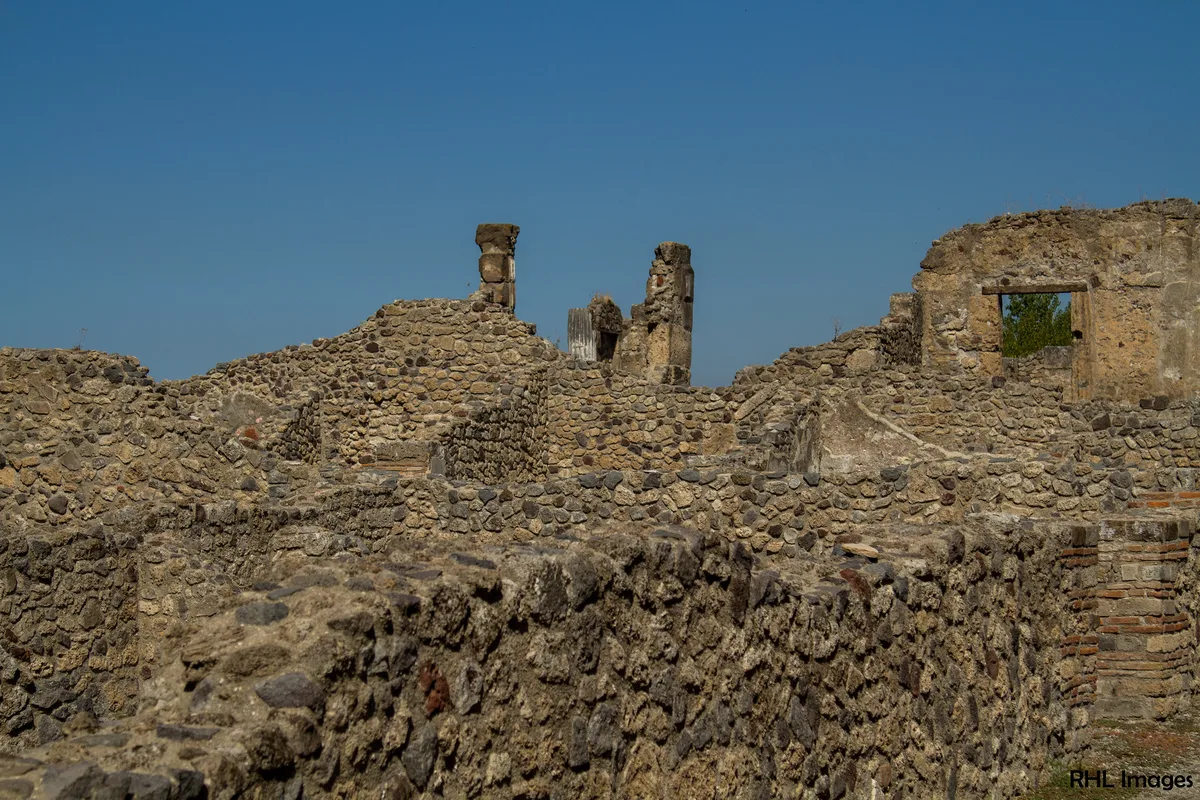
- Pompeii: the pumice-fall story, with roads, houses and casts. Details are on the Pompeii Archaeological Park site.
- Herculaneum: surges, preserved wood and upper floors. It is smaller, so a half day is enough.
- Oplontis: a villa with well-kept wall paintings and fewer crowds. Read our Oplontis villa guide for what to expect.
- Crater rim: the source of it all. Our Vesuvius crater guide describes the view.
Is the volcano a risk now?
Vesuvius is monitored continuously by the INGV Osservatorio Vesuviano. Civil defence planning divides the surrounding communities into zones, and Italy's civil protection pages explain them. Our guide to the Vesuvius Red Zone: What It Is and Visitor Impact covers the evacuation area. For current activity, read whether Vesuvius is still active. For tickets and hours, use our Vesuvius tickets page and the official sites. Do not rely on this page for prices. For the climb itself, see the Vesuvius hike guide.
For the wider city context, see our complete tourism attractions guide.
How 79 AD compares with other Mediterranean eruptions
The 79 AD event is the best-documented explosive eruption of the ancient world, but it is one of several that shaped Mediterranean history. Comparing them shows why Vesuvius is studied as the reference case.
| Eruption | Style | What it shows |
|---|---|---|
| Vesuvius, 79 AD | Plinian column, then surges and flows | Towns buried within about a day, with an eyewitness account in Pliny's letters |
| Santorini (Minoan), Bronze Age | Very large explosive eruption | No written eyewitness account; the date is still debated. See our Minoan eruption guide |
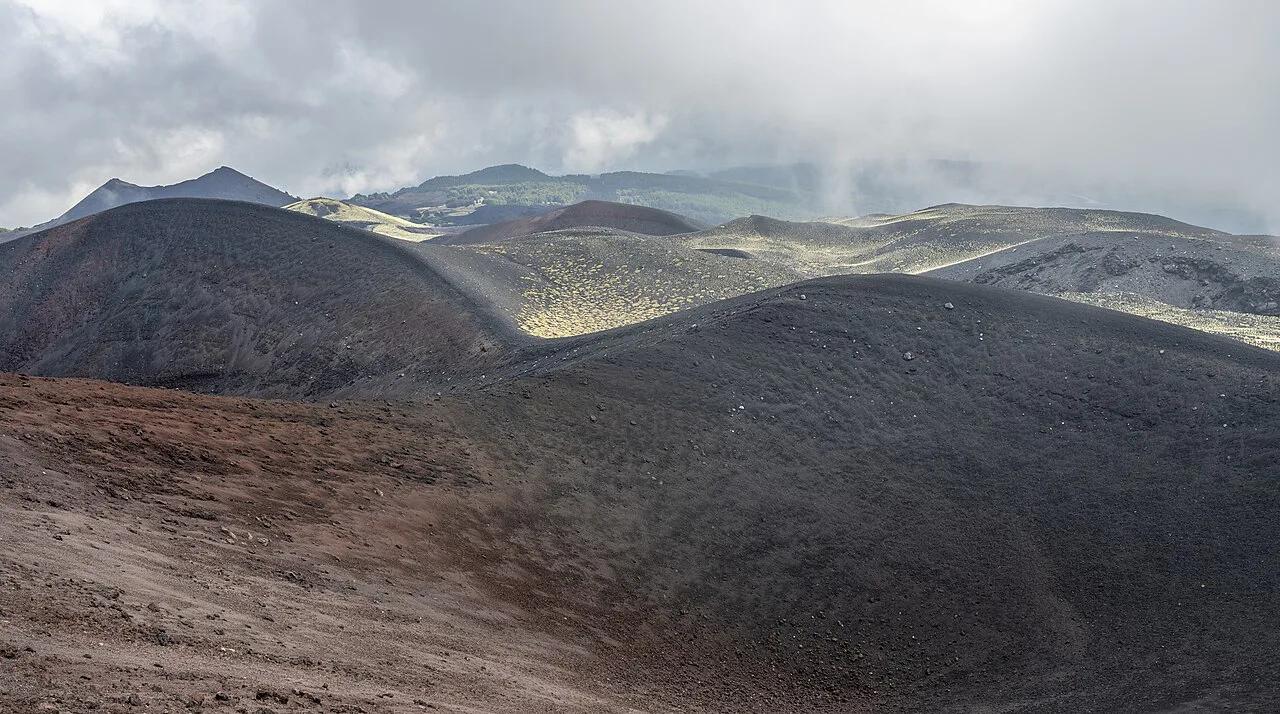
| Etna, 1669 | Long-running lava flows | Slow lava overran villages and reached Catania, so people could usually move out of the way. See the Etna 1669 eruption |
| Campi Flegrei | Large caldera west of Naples | Its last eruption, in 1538, built Monte Nuovo. Read the Campi Flegrei eruption page |
The contrast with Etna is the useful one for visitors. Lava is slow and destroys property, while the surges that struck Herculaneum and Pompeii moved too fast to outrun. That difference is why the Naples area is planned around early evacuation rather than damage control.
Frequently Asked Questions
Did Mount Vesuvius erupt in 1944?
Yes. The 1944 eruption is the most recent major one, and it came during the Second World War. Our guide to the most recent Vesuvius eruption has the details.
Did anyone survive Pompeii after the eruption?
Many residents probably escaped during the pumice fall, before the deadly surges arrived. Pliny's letters describe crowds fleeing along the coast. Exact survivor numbers are unknown.