Mount Vesuvius Facts: Height, Eruptions and Risk
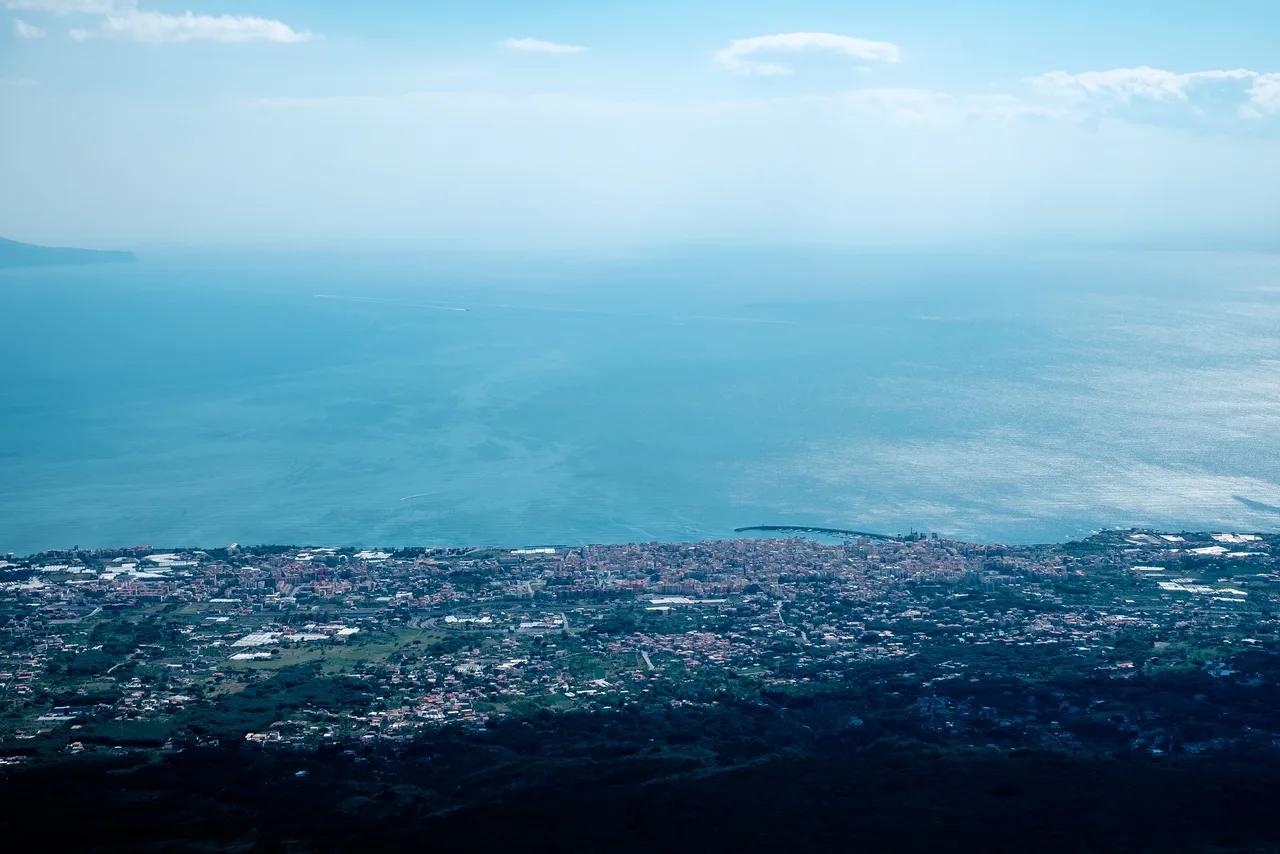
Last updated November 2026: these mount vesuvius facts cover its height, the AD 79 eruption, the 1944 eruption and today's monitoring. The Parco Nazionale del Vesuvio protects what it describes as the last active volcanic complex on the European mainland, set beside Naples on the Gulf of Naples. It buried Pompeii and Herculaneum in AD 79, and a large population still lives inside its emergency planning zone.
Featured image: dambranslv, CC BY 2.0, via Flickr.
Mount Vesuvius Facts at a Glance
Vesuvius is a stratovolcano, built from alternating layers of ash and lava. Its summit reaches 1,282 m (about 4,206 ft) above sea level. Our guide to the type of volcano Vesuvius is explains how explosive and effusive eruptions shaped that cone. You can trace the summit and its neighbours on the Vesuvius map. For a wider overview, start with our main Mount Vesuvius guide.
| Fact | Detail |
|---|---|
| Location | Campania, beside Naples and the Gulf of Naples |
| Summit height | 1,282 m above sea level (Gran Cono) |
| Volcano type | Stratovolcano inside the older Monte Somma caldera |
| Status | Active but quiet, with small fumaroles on the Gran Cono |
| Last eruption | 1944 |
| Nearby places | Naples, Ercolano, Torre del Greco, Pompeii |
Geography and Structure: Vesuvius and Monte Somma
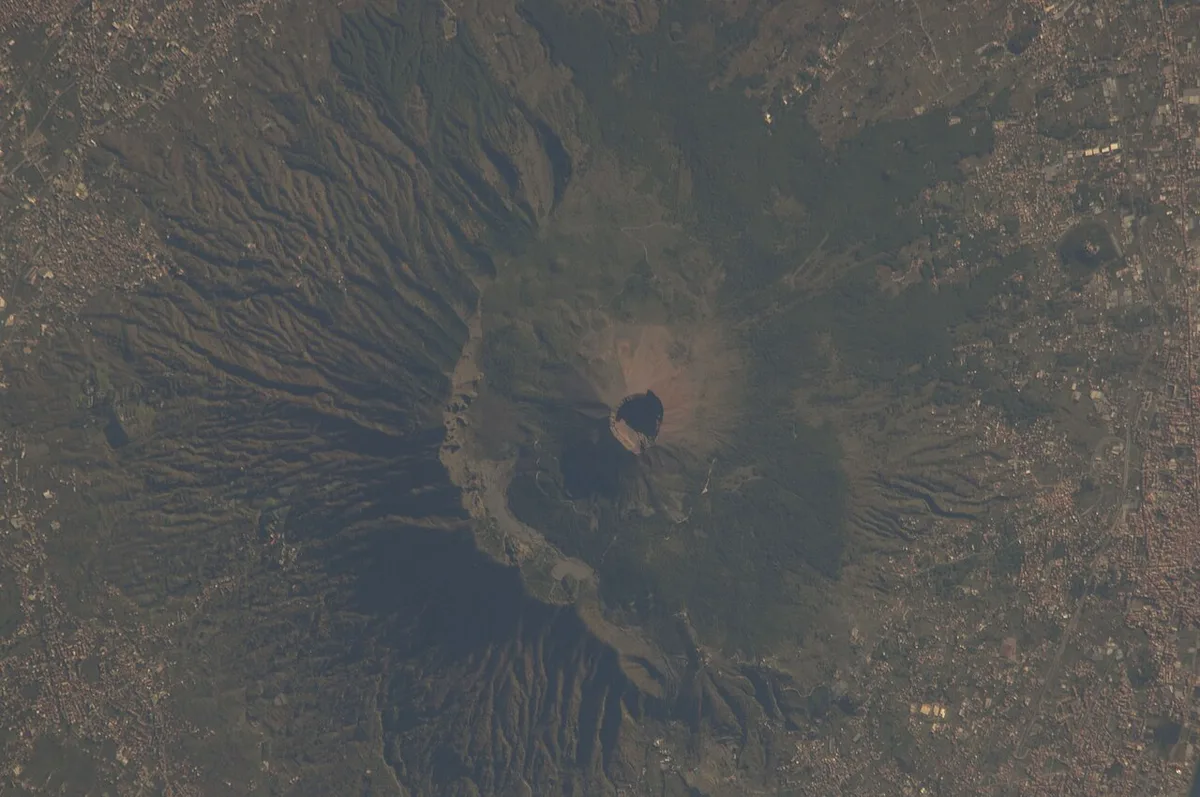
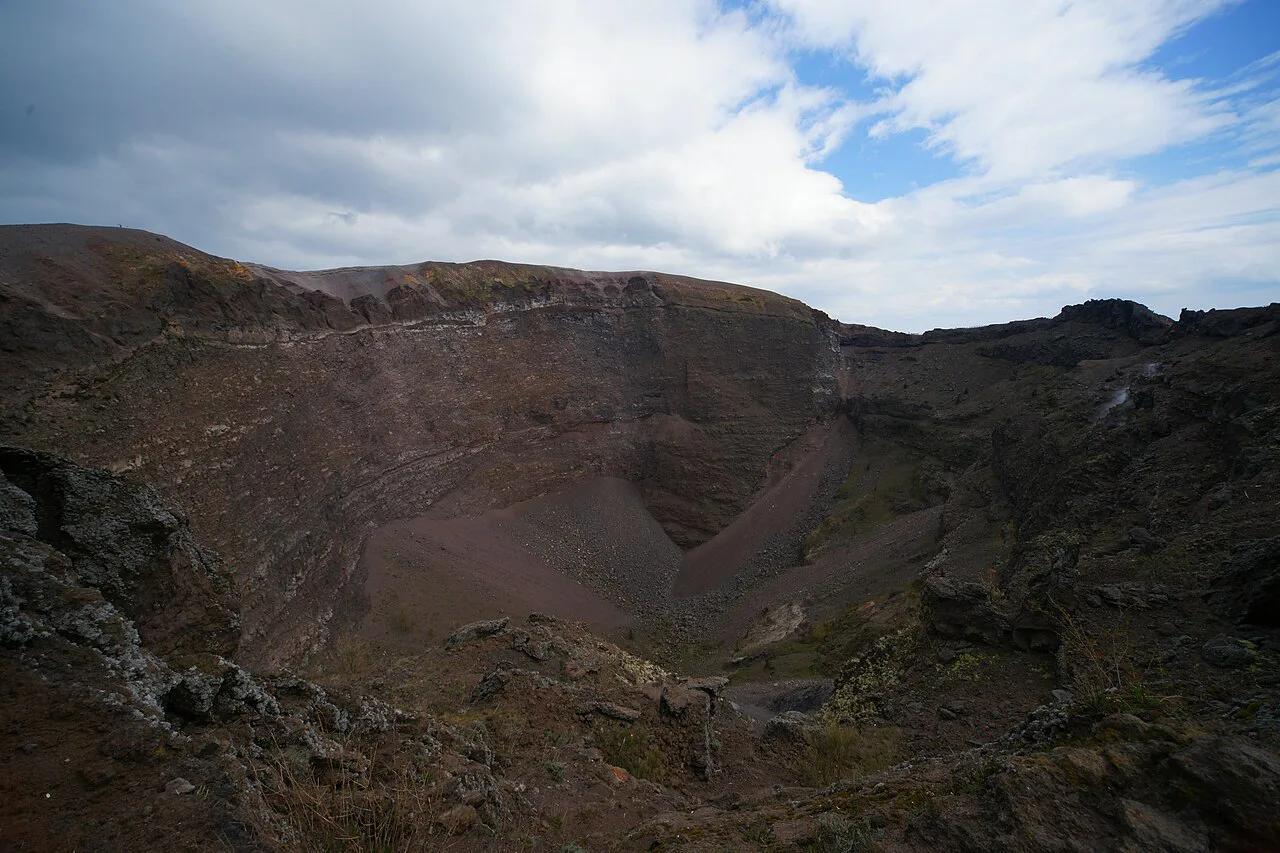
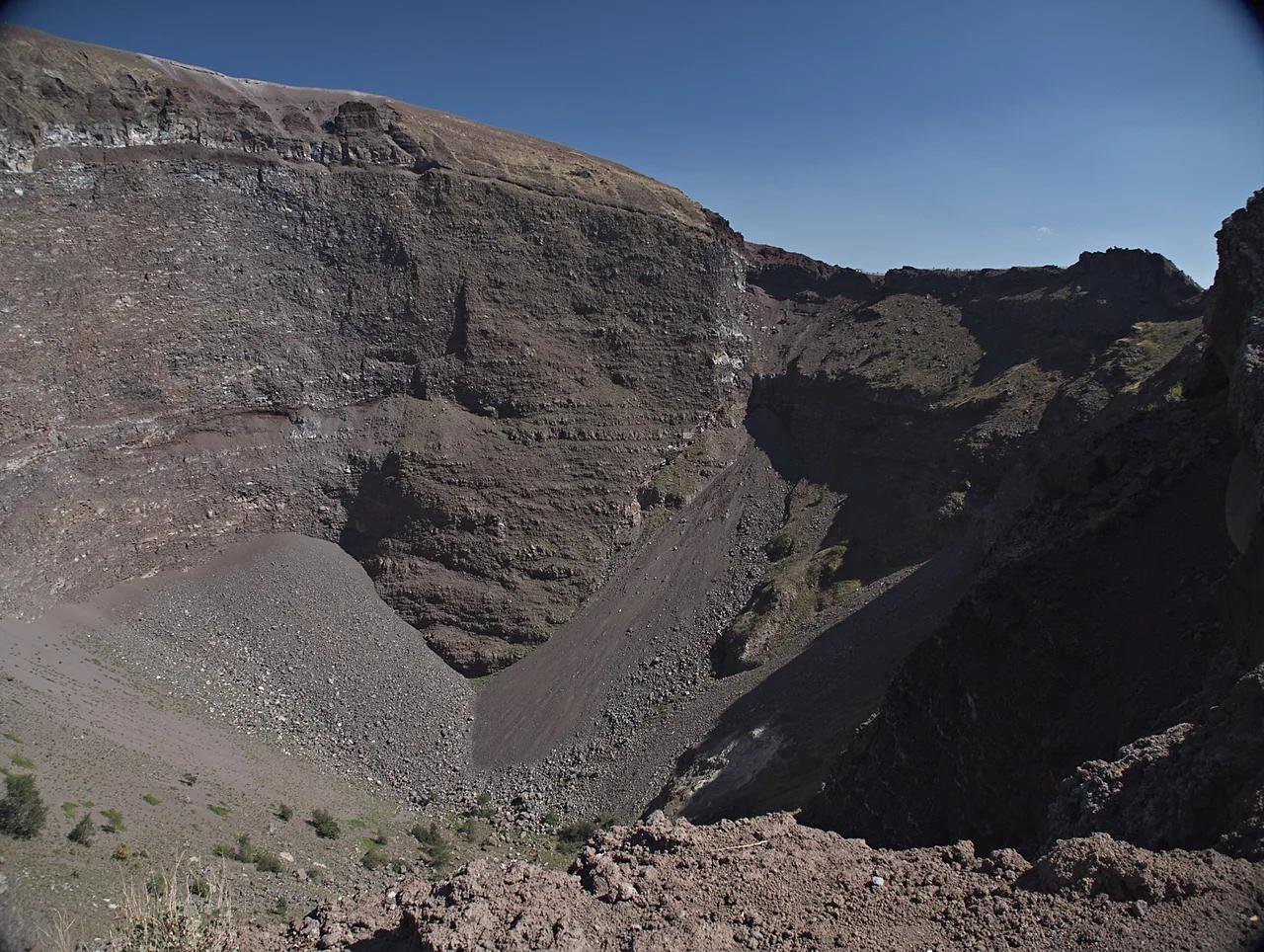
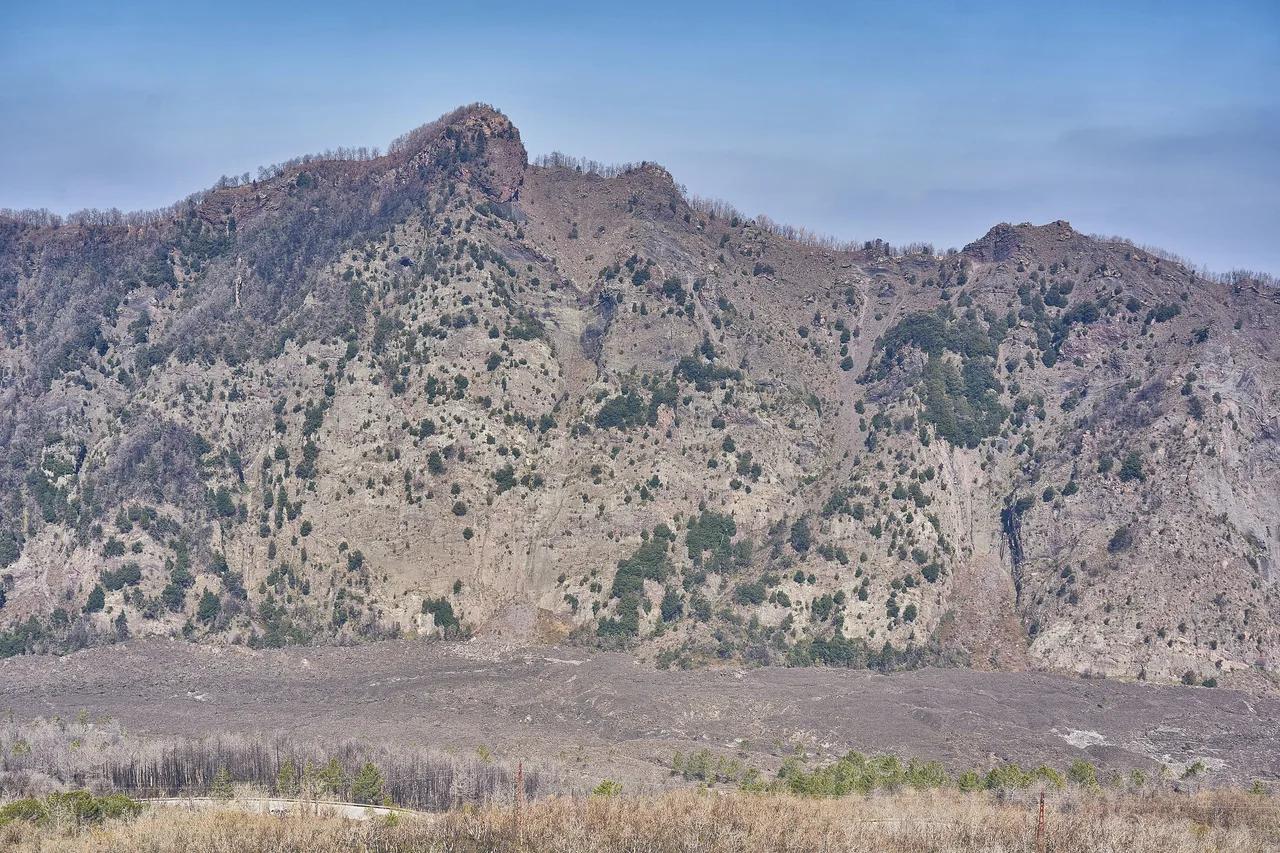
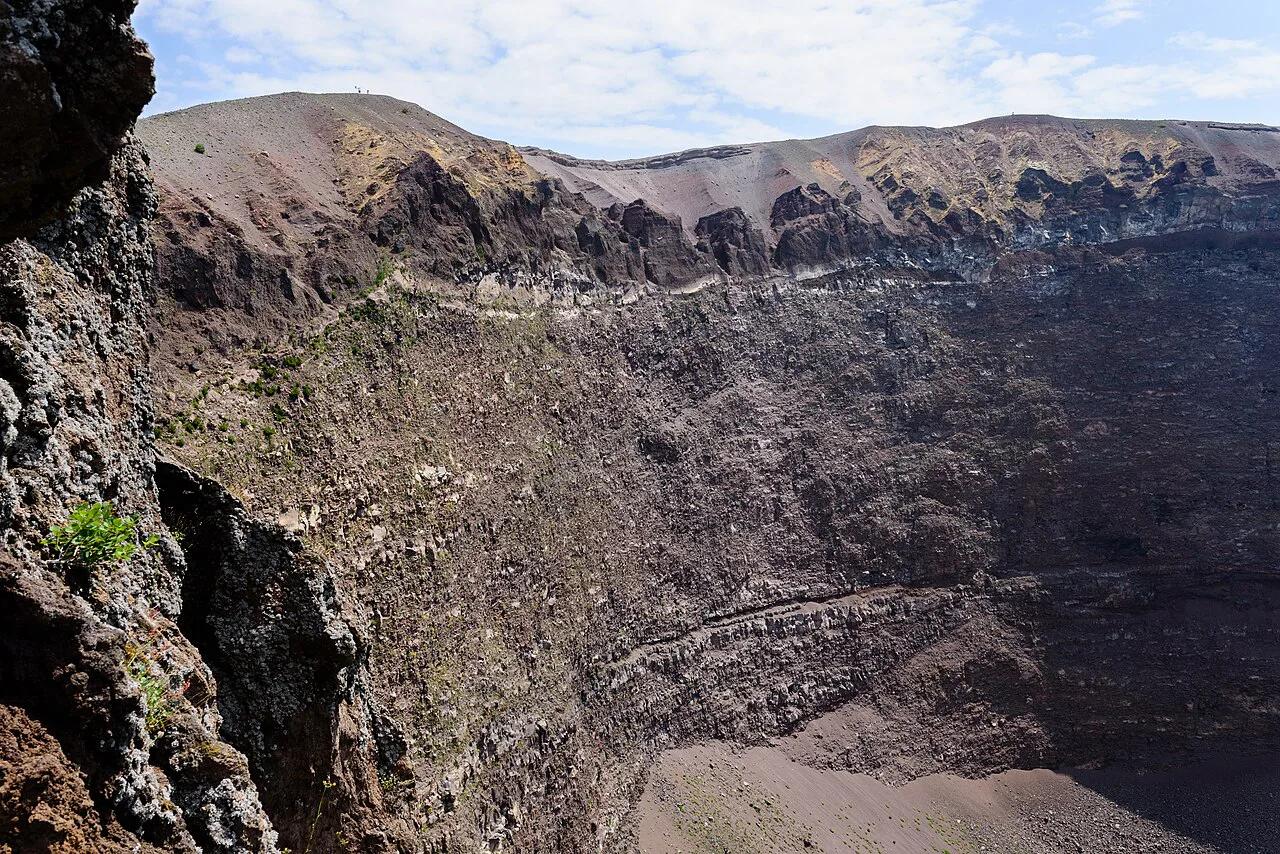
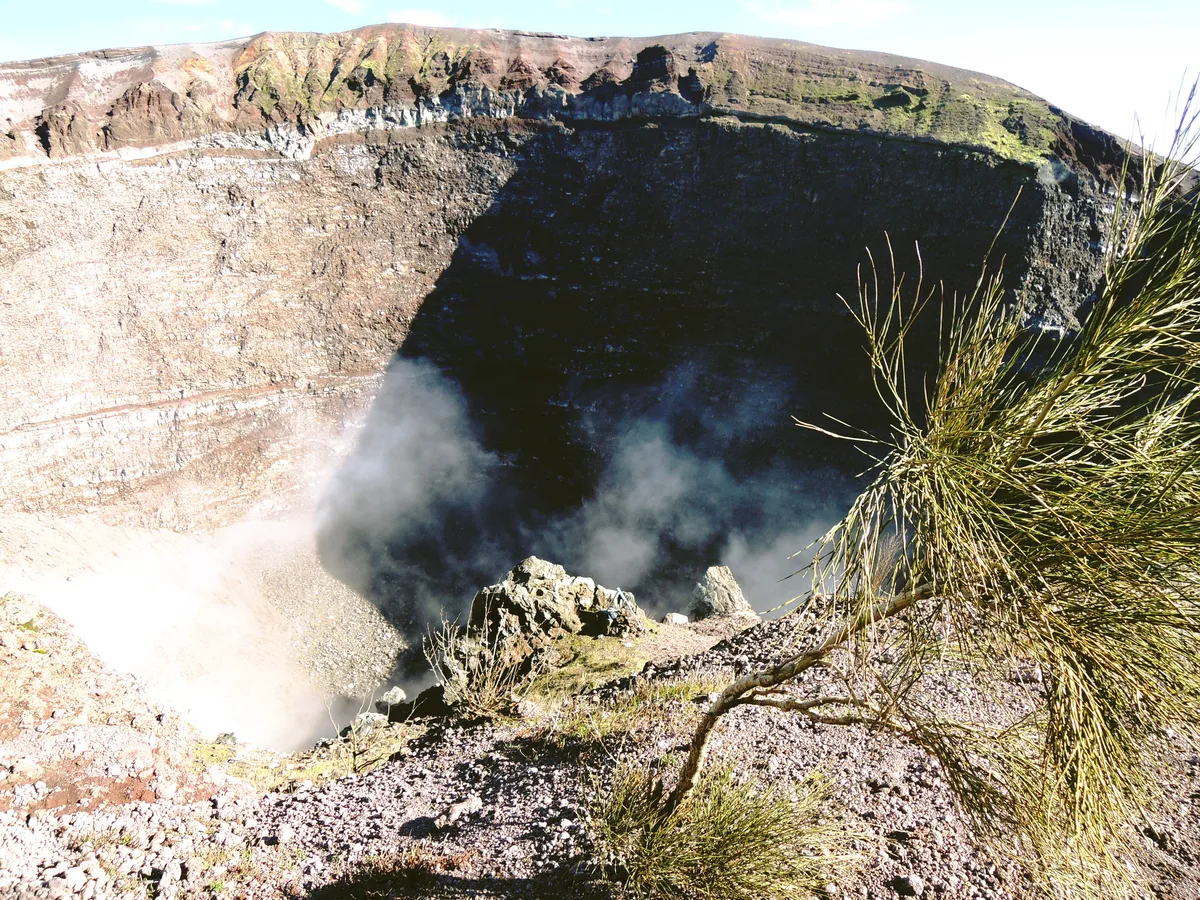
Two volcanic structures share one mountain. Monte Somma is the older volcano, and the Gran Cono is the cone that grew inside it. Together they form the Somma-Vesuvius complex. A depression called the Valle del Gigante separates the two peaks. It splits into the Atrio del Cavallo to the west and the Valle dell'Inferno to the east. The present crater measures about 650 m across and 230 m deep. Our Vesuvius crater guide covers what you can see at the rim.
- Gran Cono (Vesuvius): 1,282 m summit, crater about 650 m wide and 230 m deep.
- Monte Somma: 1,132 m at Punta Nasone, base diameter about 15 km.
- Somma's northern rim survives as a ridge of small peaks called cognoli.
- Somma's southern rim has vanished, leaving a flat area called Piano delle Ginestre.
- Why it matters: the Gran Cono is the younger, smaller volcano that you climb today.
The AD 79 Eruption: What Actually Happened
The eruption began on 24 August AD 79. Ash and pumice fell on Pompeii for many hours. Then a dense pyroclastic flow swept down the volcano and overwhelmed the city. Pompeii was not lava-covered. Pliny the Younger watched the event from across the Bay of Naples. Herculaneum, closer to the vent, was hit by pyroclastic flows much earlier. Hundreds of people sheltering in a cellar near the old shoreline were found only in 1982. Our guide to the AD 79 eruption gives the full sequence. The toll is explained in How Many People Died in Pompeii? The Numbers Explained. The villa at Oplontis was also buried. You can see finds from these sites at the National Archaeological Museum of Naples.
Eruption Timeline: From AD 79 to 1944
Counts below are recorded eruptions, and totals differ between catalogues. The 1944 eruption was the last. Lava poured northwest and destroyed the villages of San Sebastiano and Massa, then stopped about 120 m above sea level. Published accounts put the death toll at 47, mostly from collapsing buildings. See the full list of Vesuvius eruptions for detail. Our page on the last eruption in 1944 goes further.
- 25,000 to 17,000 years ago: earliest eruptions partly destroy ancient Monte Somma.
- AD 79: the eruption that buried Pompeii and Herculaneum.
- AD 79 to 1600: 11 recorded eruptions.
- 1600s: 10 recorded eruptions, and lava vents open in the crater from 1631.
- 1700 to 1750: 9 recorded eruptions. 1751 to 1800: 9 more.
- 1801 to 1850: 13 recorded eruptions. 1851 to 1900: 10.
- 1903 to 1904: effusive. 1906: effusive with some explosive activity.
- 1929: effusive. 1930 to 1944: sporadic effusive eruptions from the 1929 vent.
- 1944: major explosive and effusive eruption, 47 deaths.
Is Vesuvius Still Active? Monitoring and Risk Today
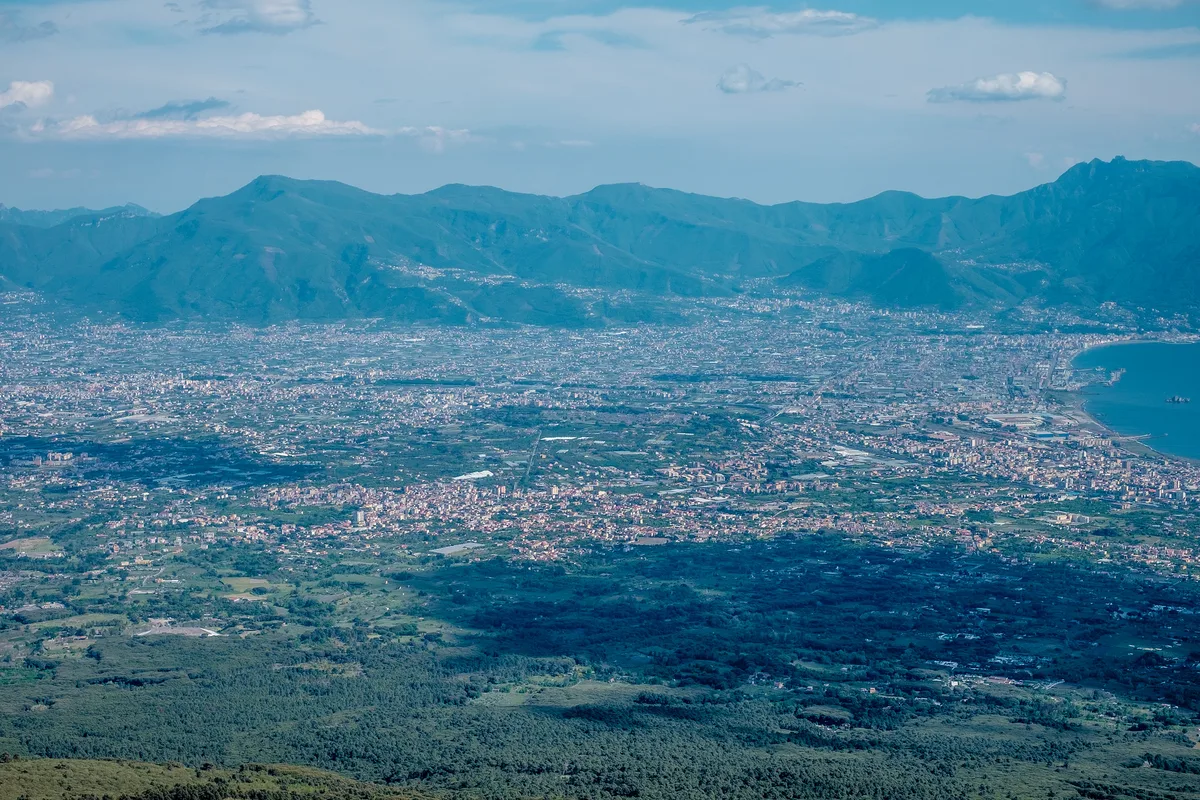
Vesuvius is active but quiet. Small fumaroles on the Gran Cono show that heat remains below. The INGV Osservatorio Vesuviano monitors the volcano and publishes its status. Italy's Civil Protection plan for Vesuvius defines the red zone for evacuation. Roughly 700,000 people live inside it. Read our page on whether Vesuvius is still active for the wider picture. The history of the monitoring station is in our Vesuvius Observatory guide. Check the observatory's site for the current alert level.
Myths vs. Facts
Several popular claims about Vesuvius are wrong or incomplete. This table corrects the most common ones.
| Myth | Fact |
|---|---|
| Vesuvius is dormant or extinct | It is active. Fumaroles still vent on the Gran Cono. |
| It erupted once, in AD 79 | Records list dozens of eruptions between AD 79 and 1944. |
| Lava buried Pompeii | Ash fall and pyroclastic flows buried it. |
| Vesuvius is the old, original volcano | Monte Somma is older. The Gran Cono grew inside its caldera. |
| The last eruption was long ago | The last eruption was in 1944, within living memory. |
Vesuvius National Park: Nature and Culture Facts
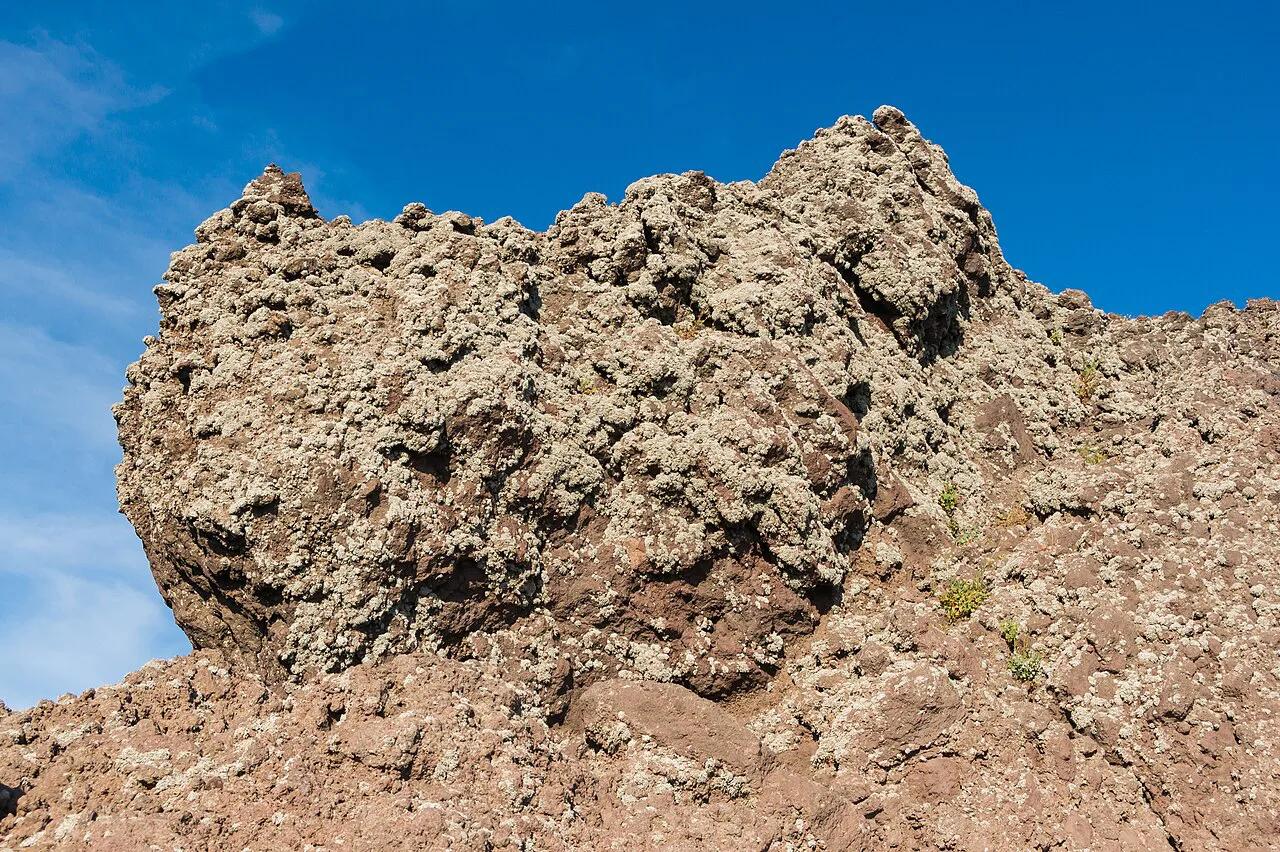
The Parco Nazionale del Vesuvio was designated on 5 June 1995. According to the Vesuvius National Park authority, it covers 8,482 ha across 13 municipalities. Over 900 plant species have colonised the volcanic slopes. Lichen first colonises fresh lava, and scrub follows. Fertile volcanic soil supports vineyards, and local grapes go into Lacryma Christi wine.
Visiting Vesuvius: Facts That Affect Your Plan
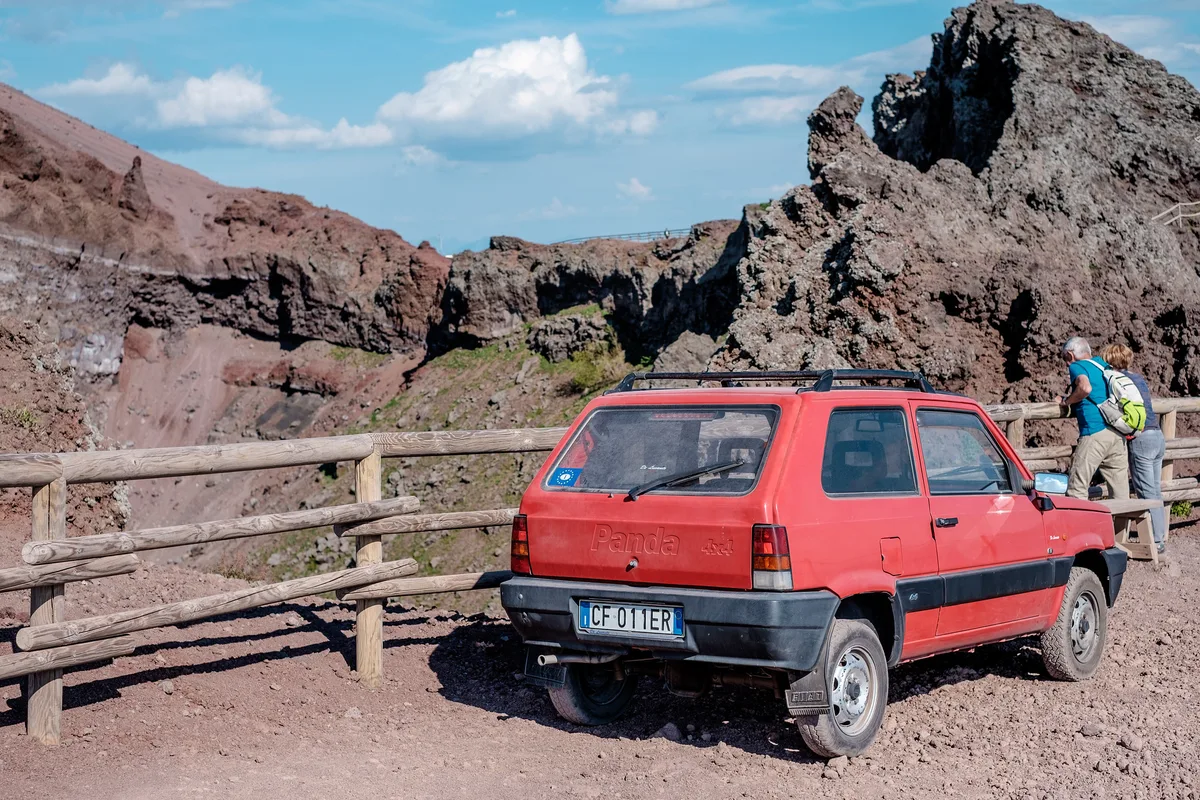
The park's Trail 5, the Gran Cono, is about 3.8 km and rated moderate. Check the park site for trail times, since they depend on the option you choose. Our Vesuvius hike guide covers the climb. Entry rules and fees sit in our Vesuvius tickets guide. Weather matters, so read Vesuvius Weather: Summit Conditions, Seasons & Go/No-Go Guide before you commit. Skip the climb in poor visibility or if walking on loose ground is a problem. Crater access can also close. Browse Hotels Near Mount Vesuvius: Best Bases by Trip Type if you want to stay close.
Trail 5 covers about 3.8 km to the Gran Cono, which rises to 1,282 m; the route is rated moderate. Check the park site for current trail times.
| Option | Effort | Best for | Read more |
|---|---|---|---|
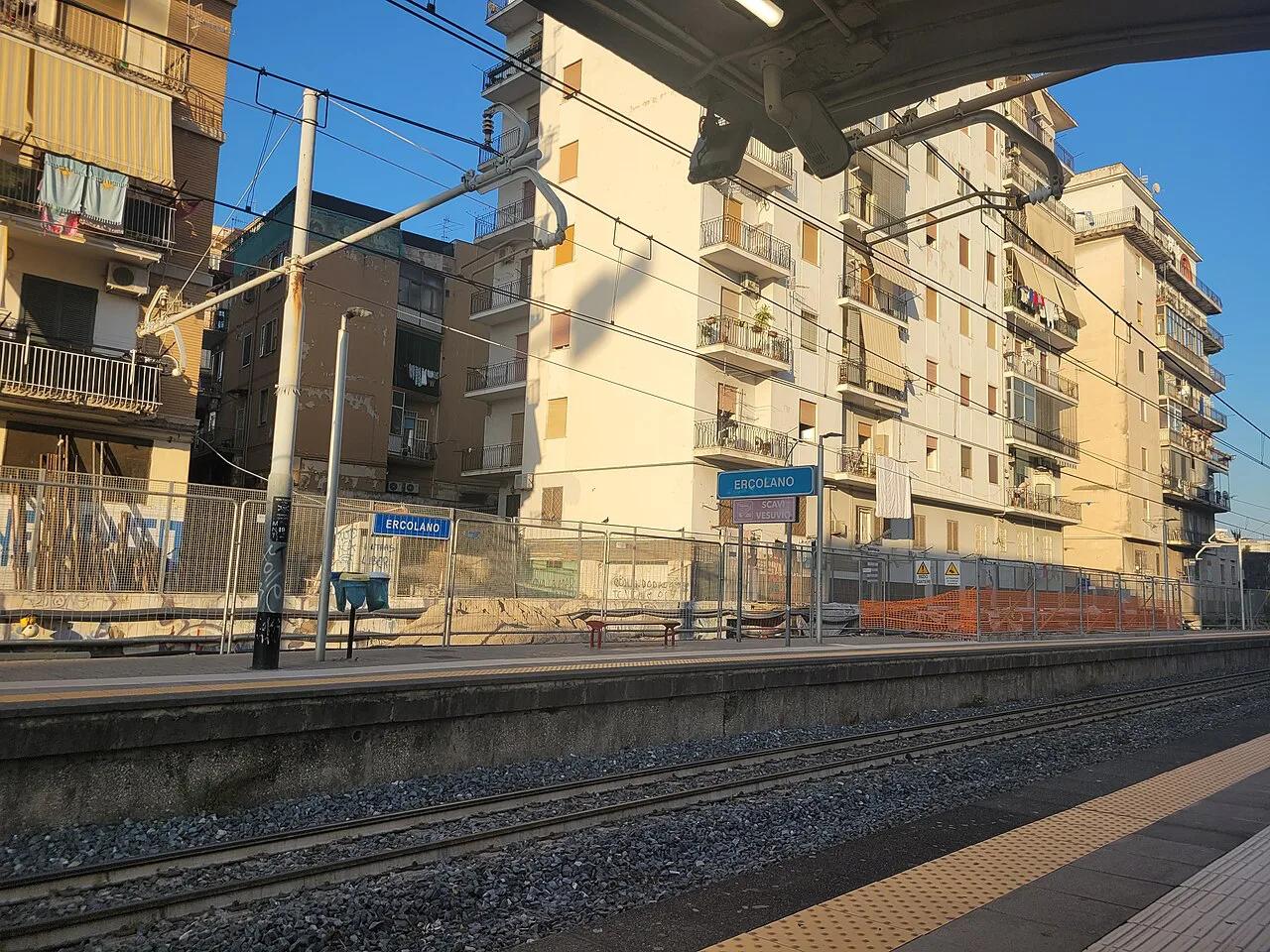
| Self-guided from Naples or Ercolano | Moderate | Independent travelers | Vesuvius from Naples: How to Get There, Costs & Timing |
| Guided tour | Low to moderate | Travelers wanting commentary | Vesuvius Tours: Which Type to Book, DIY Costs and Timing |
| Combined Pompeii day | Moderate | History-focused visitors | Pompeii and Vesuvius Tour: Which Option Fits? |
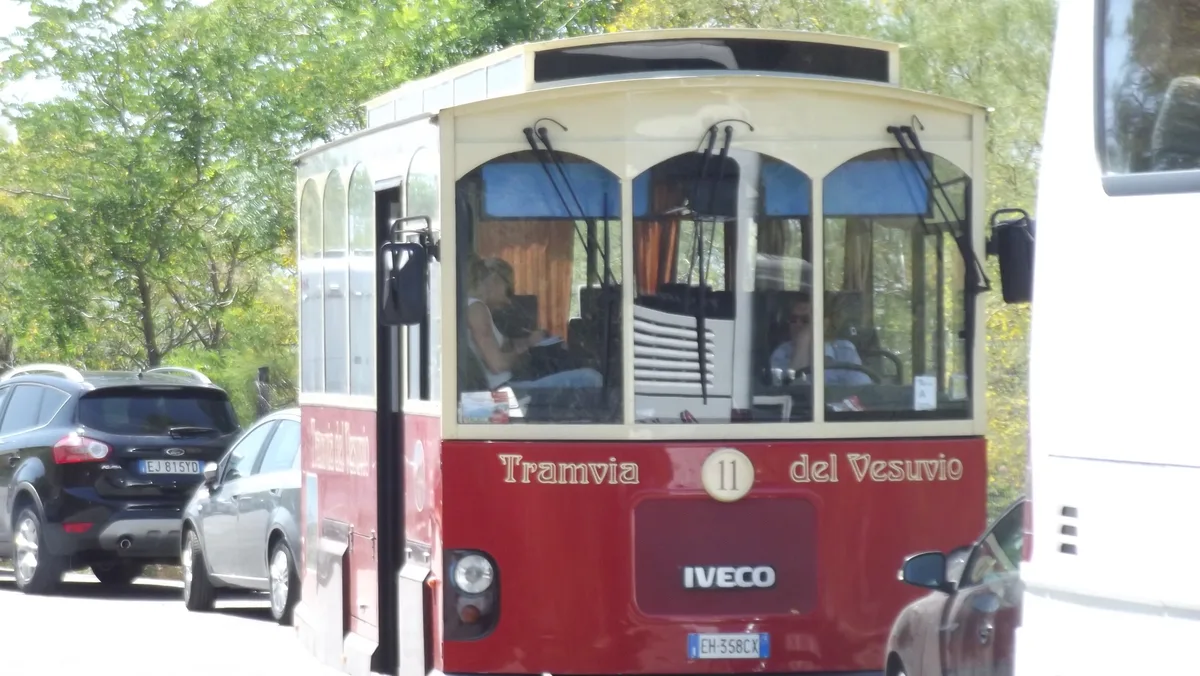
| Drive to the upper approach, then walk | Low to moderate | Short on time | Vesuvius Parking: Where to Park, Cost and the Walk to the Crater |
Frequently Asked Questions
What did Mount Vesuvius do to Pompeii?
Vesuvius erupted on 24 August AD 79. Ash fell on Pompeii for many hours. A pyroclastic flow then overwhelmed the city. Herculaneum was struck even earlier by similar flows.
How tall is Mount Vesuvius?
The Gran Cono, the summit of Vesuvius, reaches 1,282 m above sea level. Monte Somma, the older rim beside it, reaches 1,132 m at Punta Nasone. Heights can change after eruptions.