What Type of Volcano Is Stromboli? Stratovolcano Explained
Last updated November 2026: Stromboli is a stratovolcano, which answers what type of volcano is Stromboli volcano in one line. "Stratovolcano" describes the steep cone, while "Strombolian" describes the style of eruption that Stromboli made famous. Our Stromboli volcano guide covers the island itself, and this page explains the classification and what it means for a visit.
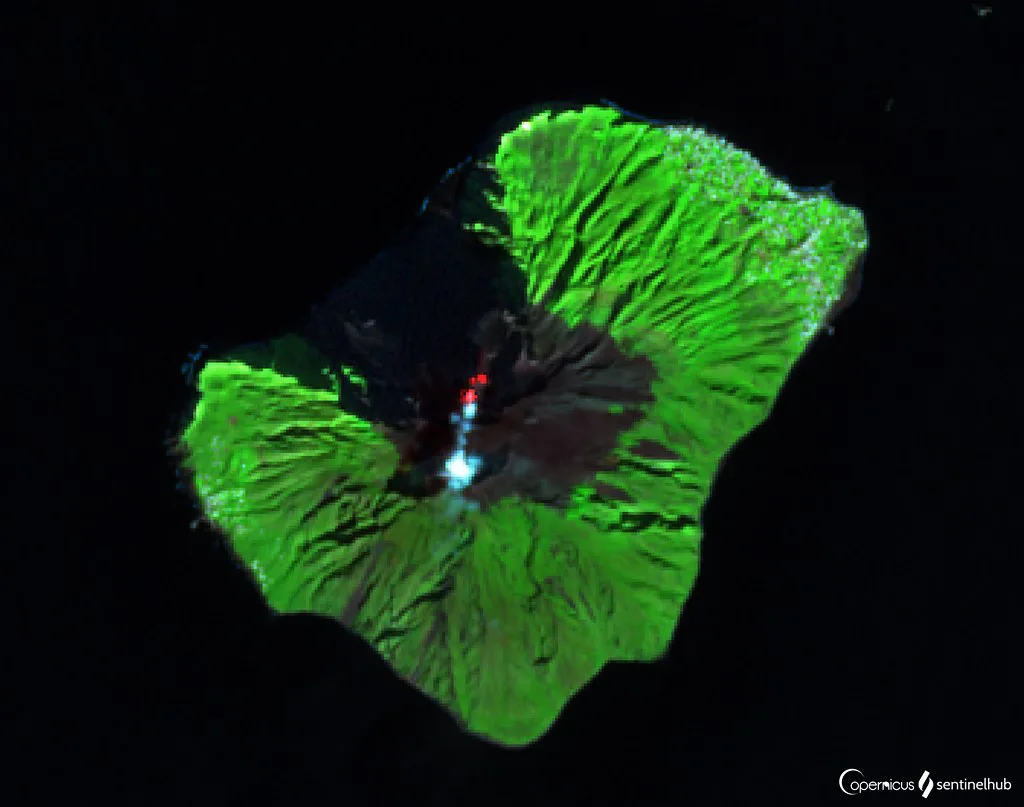
Featured image: SentinelHub, CC BY 2.0, via Flickr.
Short answer: what type of volcano is Stromboli?
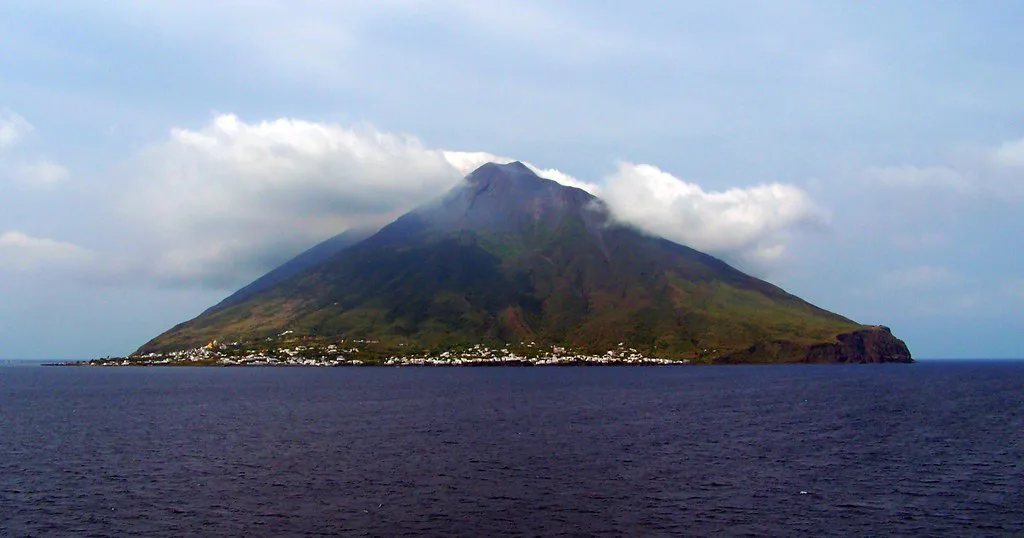
Stromboli is a stratovolcano, a steep composite cone built from alternating layers of lava and ash. It sits in the Aeolian volcanic arc north of Sicily. Its near-constant, mild explosions gave the name "Strombolian" to an eruption style seen at volcanoes worldwide. Cone type and eruption style are two separate ideas. Many searchers mix them up, so keep the split in mind: shape versus behavior.
What makes Stromboli a stratovolcano
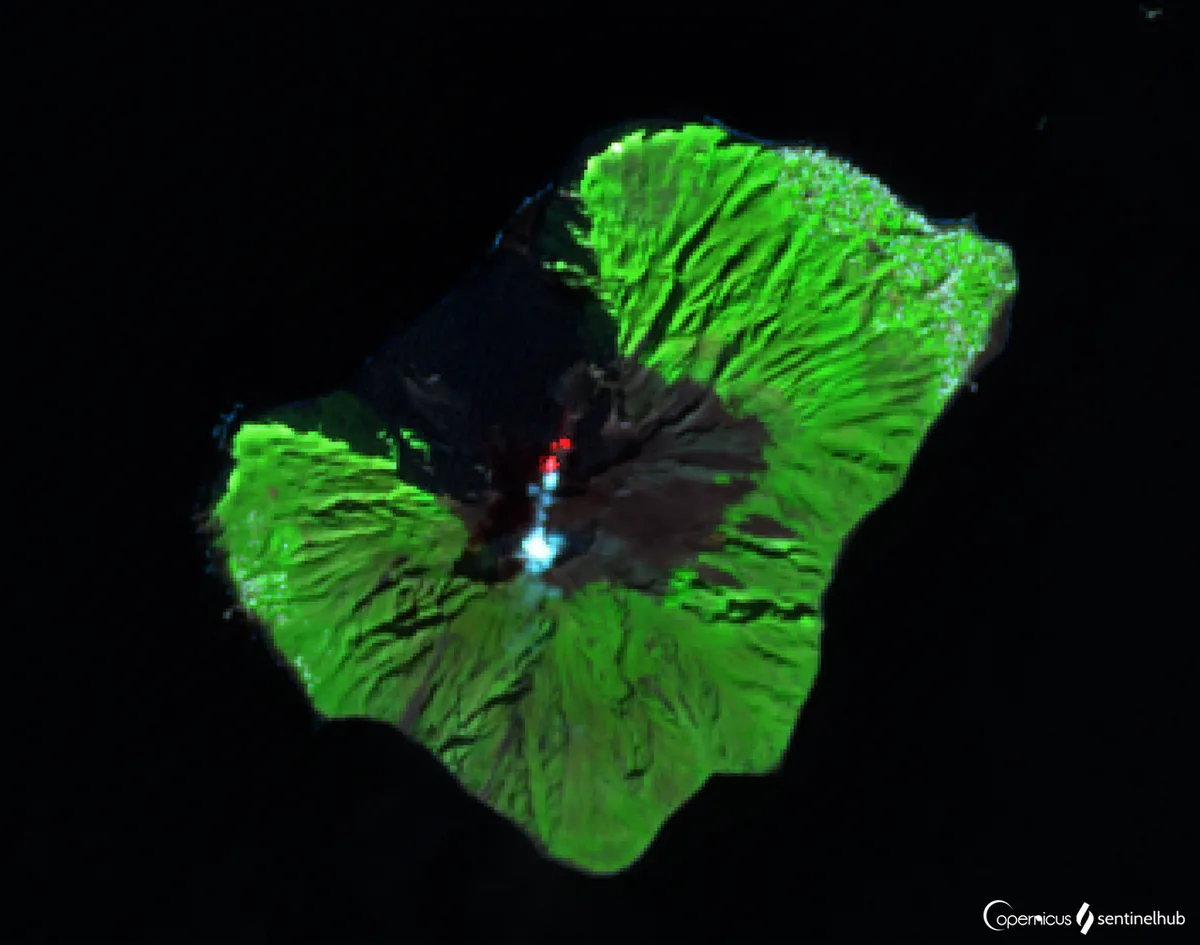
Stromboli is the exposed top of a much larger structure. The island covers 12.6 km² and its summit stands 924 m (about 3,030 ft) above sea level. NASA's Earth Observatory says the whole edifice rises more than 2,000 m (6,500 ft) from the sea floor. Other published estimates run higher, so treat the base-to-summit figure as a range. NASA also ties the volcano to the African plate sliding under the Eurasian plate, and says the island has been building for nearly 200,000 years.
- Cone shape: the name comes from the Greek strongýlē, meaning round, after the volcano's rounded, conical outline seen from a distance.
- Collapse scar: the Sciara del Fuoco, Stromboli: What It Is and How to See It is a horseshoe-shaped depression on the northwest flank, formed by several collapses over the last 13,000 years.
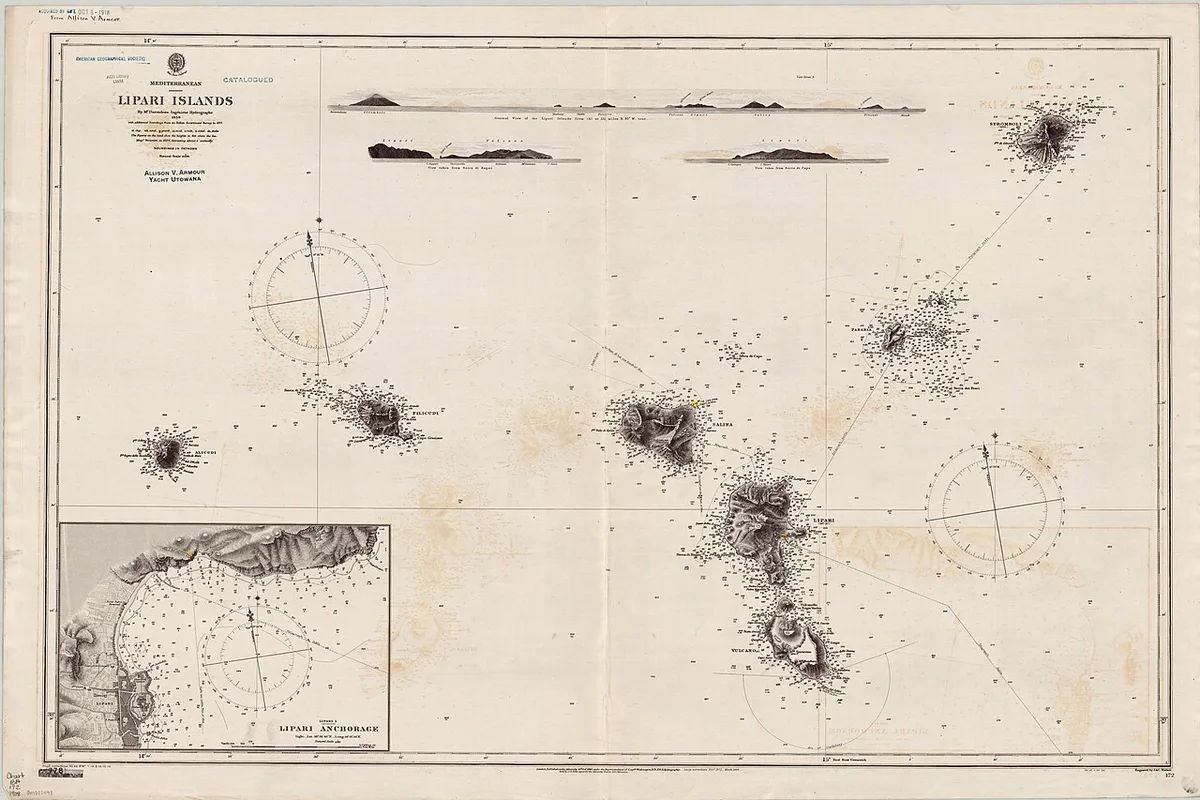
- Remnant plug: Strombolicchio lies about 2 km northeast and is the volcanic plug left from the original volcano.
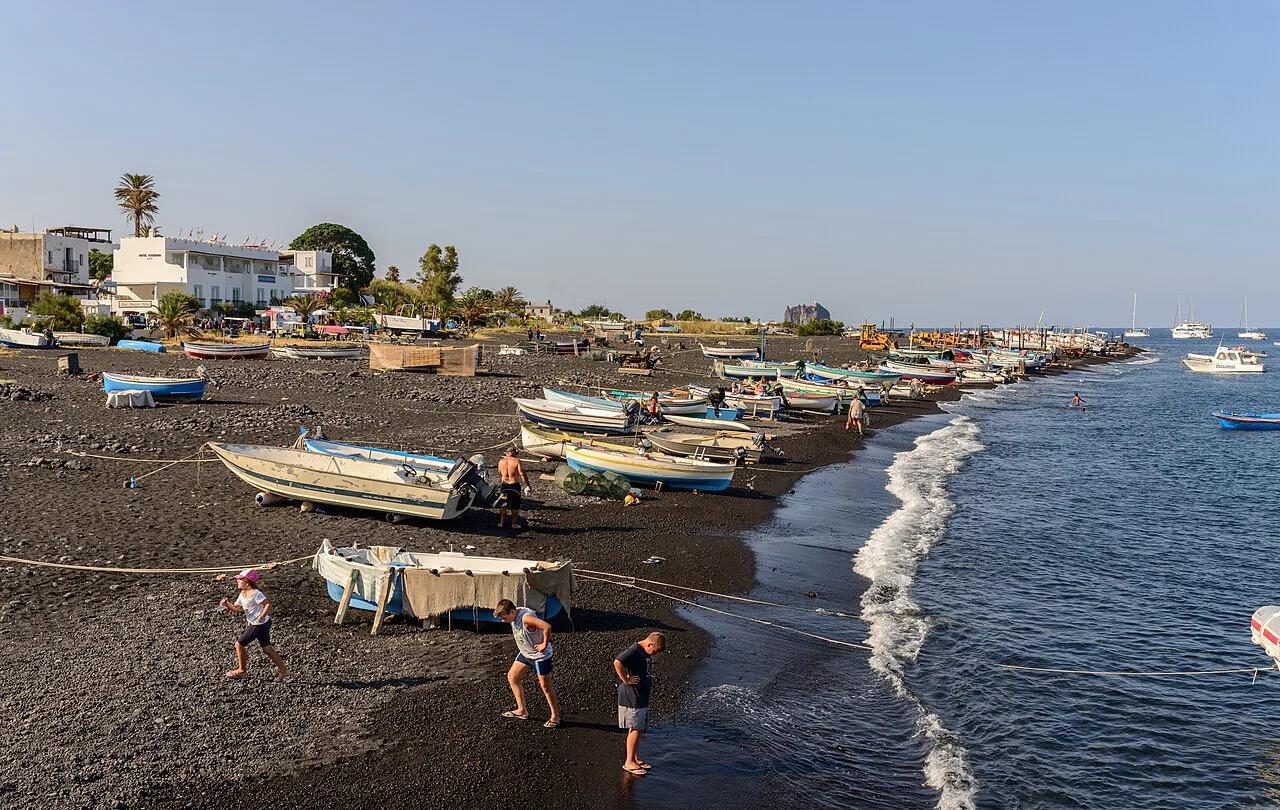
- Setting: the island is one of seven Aeolian Islands in the Tyrrhenian Sea, off the north coast of Sicily.
What "Strombolian" means
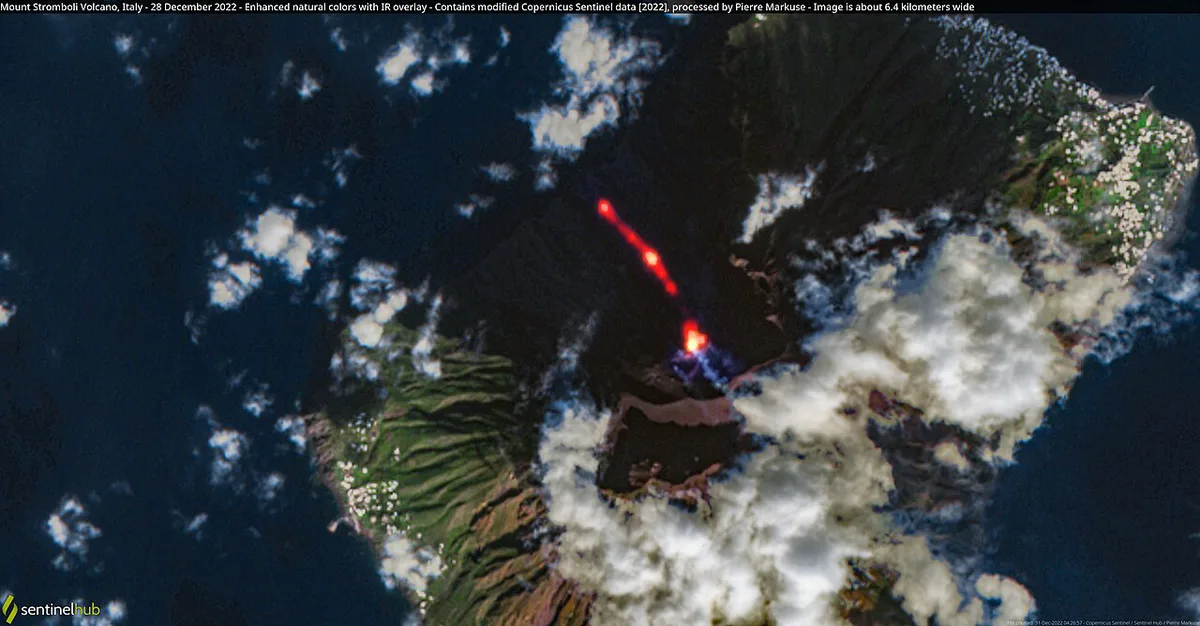
Strombolian activity is a run of small gas explosions that throw incandescent lava, ash and volcanic bombs above the crater rim. Explosions at Stromboli typically come several times an hour, though the gaps range from minutes to hours. Activity is almost exclusively explosive. Lava flows still happen in high-activity periods, including 2002, 2003, 2007 and 2013–14. NASA reports that the current eruption has run uninterrupted since 1932. As of June 2024, two summit craters each held multiple active vents. Night-time lava spray is why the island earned the nickname "Lighthouse of the Mediterranean". For current behavior, read the INGV Stromboli monitoring page. Our Stromboli eruption guide explains the typical cycle in more detail.
Stromboli vs other volcano types
Two different scales are in play. One describes cone shape, such as stratovolcano, shield volcano or caldera. The other describes eruption style. The table covers the four styles most often compared with Strombolian activity.
| Eruption style | Typical behavior | Named after or seen at |
|---|---|---|
| Strombolian | Frequent small gas explosions throwing incandescent bombs and ash | Stromboli |
| Vulcanian | Short, stronger explosions that break up a plugged vent | Vulcano |
| Hawaiian | Fluid lava fountains and long flows | Hawaii |
| Plinian | Huge, sustained ash columns | Vesuvius, AD 79 |
- Etna on Sicily is also a stratovolcano and one of Italy's four active volcanoes.
- A shield volcano has broad, gentle slopes built by runny lava, so Stromboli's steep cone does not fit that type.
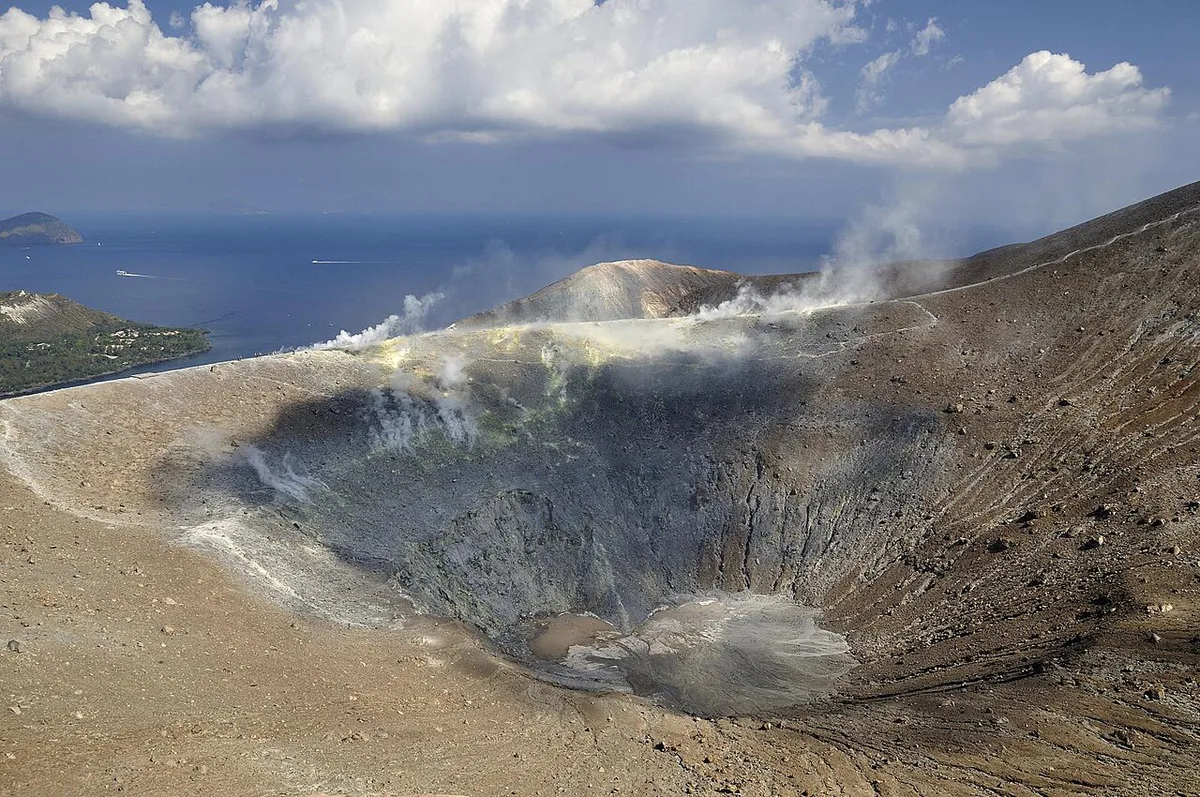
- Neighboring Vulcano gave its name to Vulcanian eruptions. You can see its summit crater at the Gran Cratere.
Rare violent events: why "mild" is not harmless
Strombolian activity is usually predictable, but Stromboli can still produce sudden, much stronger explosions. Paroxysms and pyroclastic flows are rare, yet they have killed people. In 1919, blocks weighing up to 60 tons killed four people and destroyed twelve homes. The 1930 eruption, the largest of that century, sent pyroclastic flows into the sea. Casualty figures for 1930 differ between sources. Recent events are better documented.
Hard hats and a guide matter on the crater trail, because blocks of up to 60 tons killed people in 1919.
- 3 July 2019: two major explosions around 16:46 local time killed a hiker near the summit, and 6 people suffered minor injuries.
- 28 August 2019: an explosive eruption sent a pyroclastic flow down the northern flank and into the sea, with an ash column reaching 2,000 m (6,600 ft).
- 4 July 2024: Stromboli erupted alongside Etna, and Italy's Civil Protection Department issued the highest alert level.
What the volcano type means for visitors
A stratovolcano with steady Strombolian activity gives you a rare option: you can watch eruptions from a safe distance. The crater itself is another matter. Hikers need boots, a hard hat and a guide, since outfitters on the island issue helmets with their gear. Ferries and hydrofoils to the Aeolian Islands mainly leave from Milazzo, which is 63 km from Stromboli. Choppy seas can cancel crossings, so build a spare day into any day trip. Schedules change by season, so check Liberty Lines timetables before you book.
| Option | What you see | Effort and constraints |
|---|---|---|
| Guided summit hike (hike guide) | Crater-rim views of explosions | Highest effort; guide and hard hat required; current access rules apply |
| Boat trip at night (tour guide) | Explosions and glowing flows on the Sciara del Fuoco | Low effort; depends on sea conditions |
| Village viewpoints | Plumes and smoke from the town of Stromboli | Easy; best when the summit is clear of cloud |
| Webcam (live view) | Remote live view | No travel; useful for checking conditions before you go |
- Mistake: confusing the cone type with the eruption style.
- Mistake: assuming mild activity means the summit is open to anyone.
- Mistake: booking a day trip with no weather buffer.
- Mistake: hiking without a guide or hard hat.
- Orientation: use our Stromboli map to place the villages and the Sciara del Fuoco.
- Remote village: Ginostra on the southwest side is linked to the main town only by boat.
Key facts at a glance
Use this table for a quick reference. Figures vary slightly between publications, for example 924 m versus 926 m for the summit.
| Fact | Detail |
|---|---|
| Type | Stratovolcano with Strombolian activity |
| Summit height | 924 m (about 3,030 ft) |
| Height above sea floor | More than 2,000 m (NASA); other estimates are higher |
| Island area | 12.6 km² |
| Location | Aeolian Islands, Tyrrhenian Sea, off northern Sicily |
| Current eruptive phase | Continuous since 1932 (NASA) |
| Population | About 500 as of 2016 |
| Villages | San Bartolo and San Vincenzo (northeast); Ginostra (southwest) |
Frequently Asked Questions
Does anyone live on Stromboli island?
Yes. About 500 people lived on the island as of 2016. They live mainly in San Bartolo and San Vincenzo in the northeast, with the smaller village of Ginostra in the southwest.
What happens if Stromboli erupts?
Normal Strombolian explosions throw bombs and ash a short distance above the crater. Rare paroxysms can send pyroclastic flows down the Sciara del Fuoco and into the sea, as on 28 August 2019. In July 2024 Italy's Civil Protection Department issued its highest alert.
When did Stromboli volcano last erupt?
Stromboli erupts almost constantly in small explosions, so it never fully stops. Its most recent strong events include the highest-alert episode of 4 July 2024. Check the INGV bulletins for the latest activity.
Is Stromboli volcano still erupting?
Yes. NASA reports the current eruptive phase has run uninterrupted since 1932. For today's status, check INGV and the Civil Protection alert level.