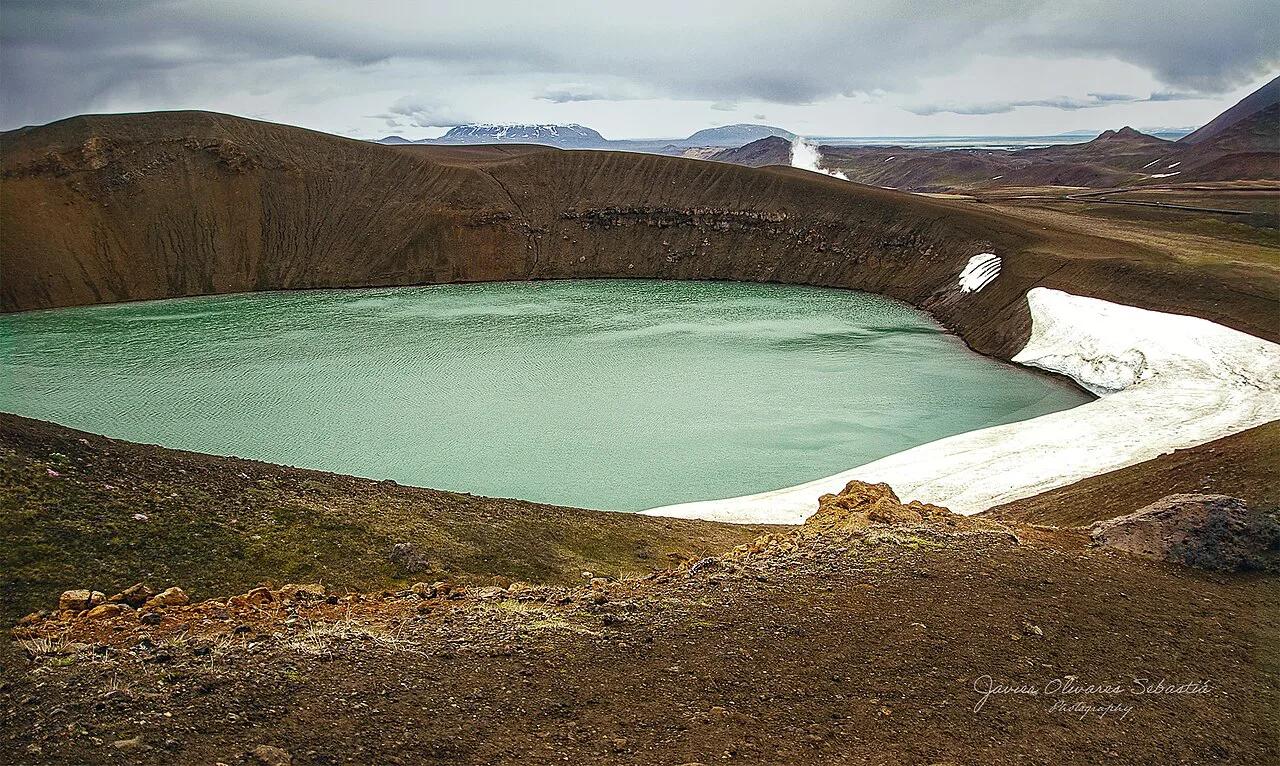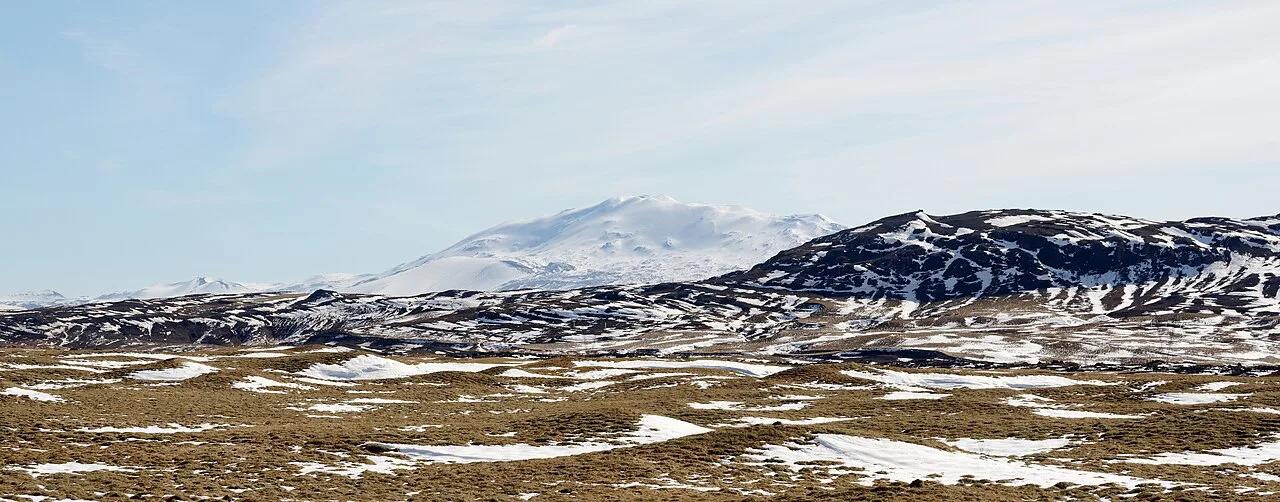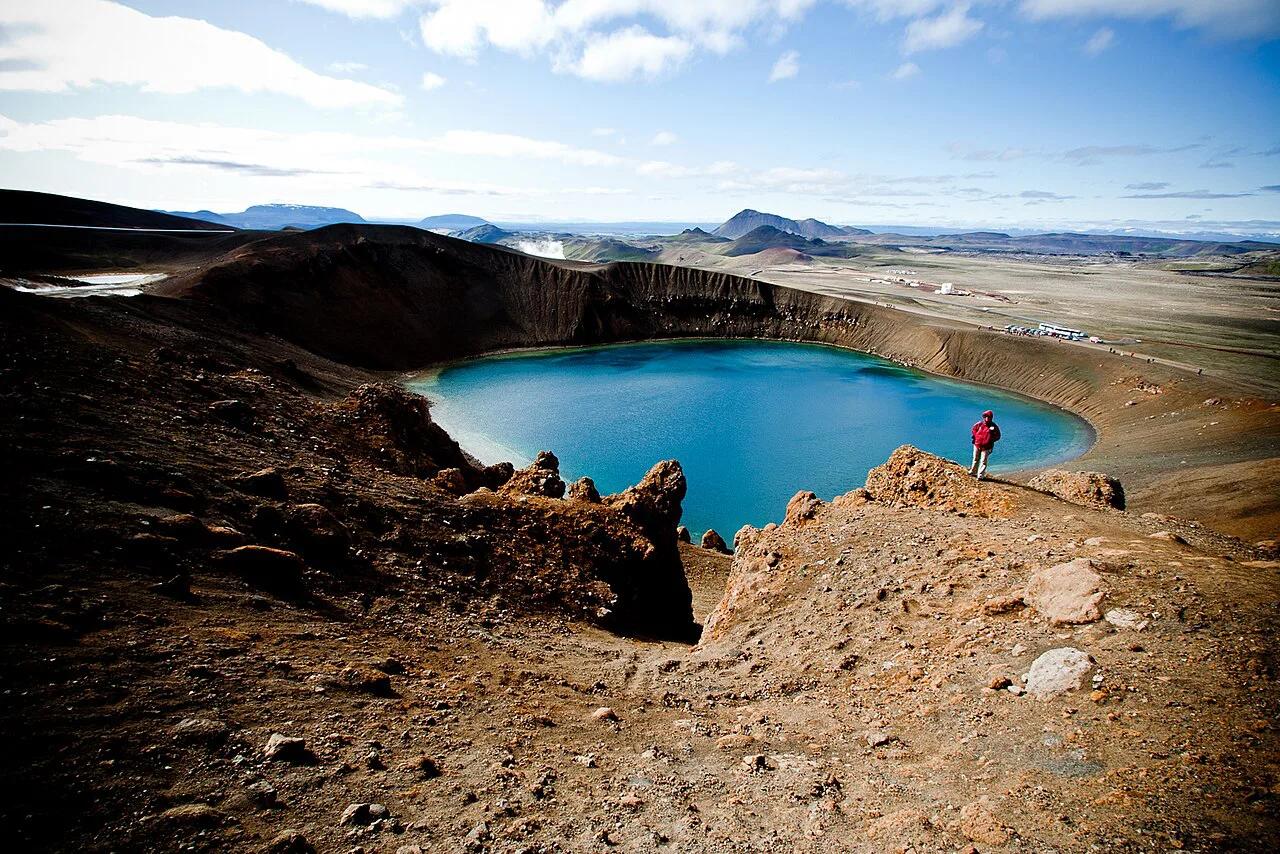
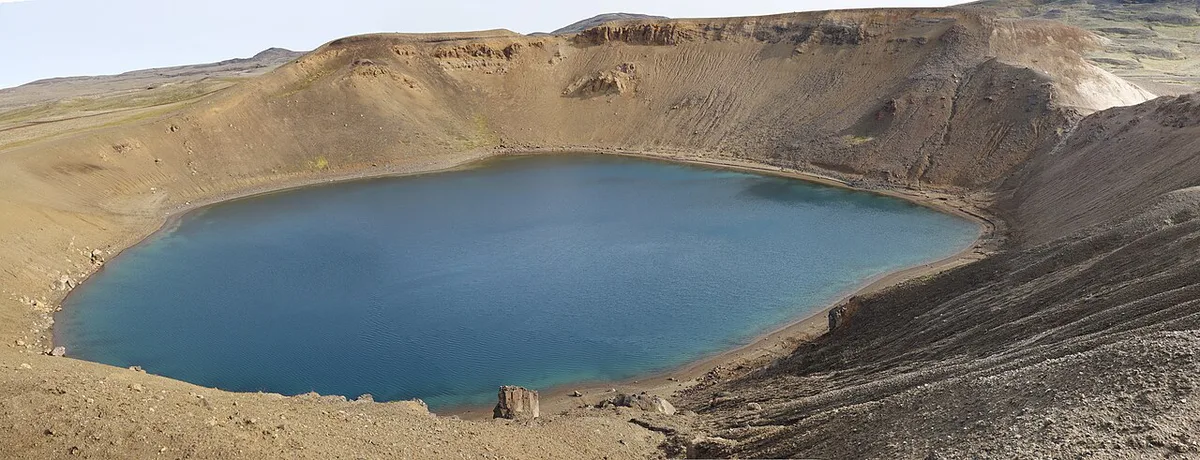
Last updated November 2026: viti crater is the turquoise-green crater lake at Krafla, in the Mývatn area of northeast Iceland. It formed in a 1724 explosion at the start of the Mývatn Fires. This guide covers the Krafla Víti, not the separate crater lake of the same name at Askja.
Featured image: batintherain (https://www.flickr.com/people/batintherain/), CC BY-SA 2.0, via Wikimedia Commons.
Víti crater at a glance
Víti is a short stop inside the wider Krafla volcanic area. Most visitors pair it with the lava field next door and treat it as a half-day add-on to the Mývatn circuit.
| Question | Short answer | Check before you go |
|---|---|---|
| Where | Krafla caldera, near Mývatn and Reykjahlíð | Parking area and signed path on site |
| What you see | Explosion crater with a green-blue lake | Lake colour changes with light and weather |
| Entry | No fee is confirmed for this guide | Landowner or operator notice at the car park |
| Time | Short stop; longer with the lava field | Daylight, wind and path condition |
| Best season | Summer is the easiest | Road status in winter |
| Swimming | No | Use the Mývatn Nature Baths instead |
What Víti crater is, and which Víti this guide covers
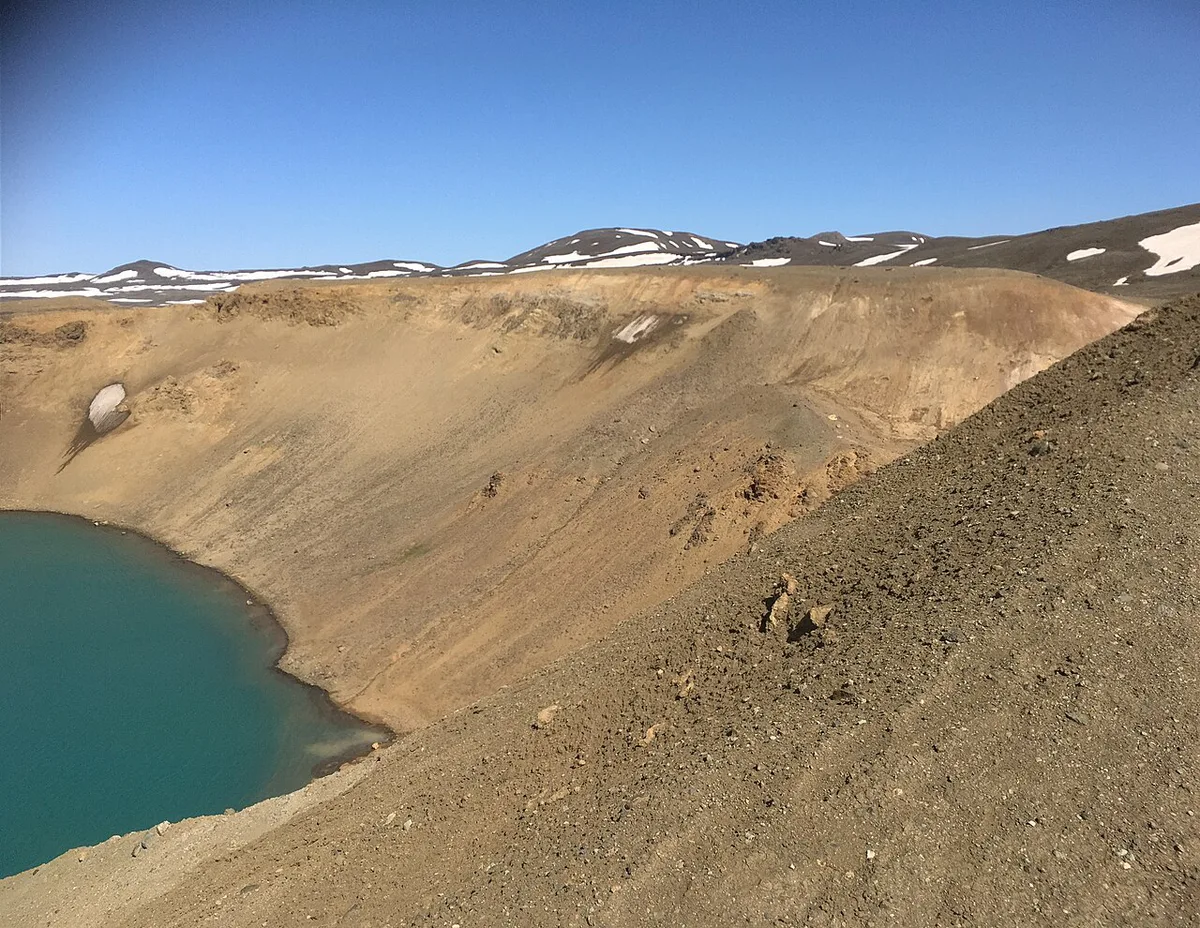
Víti means "hell" in Icelandic, and the name is used for more than one crater. The Krafla Víti is an explosion crater from a phreatic eruption in 1724, the opening event of the Mývatn Fires. A phreatic eruption is a steam blast driven by heated groundwater, so it throws out rock rather than lava.
- Krafla Víti: the crater in this guide, reached by road from the Mývatn side.
- Askja Víti: a different crater lake in the highlands, with its own access and rules.
- Krafla, Víti and Leirhnjúkur: three separate features that sit close together and are often blurred into one stop.
How to get to Víti crater from Mývatn
Most visitors drive from Reykjahlíð to the Krafla road and follow signs to the parking area. Public transport to the site is limited, so a rental car or a guided Mývatn tour is the practical choice.
- Self-drive: flexible timing, but you carry the weather and road risk yourself.
- Guided tour: less driving stress in winter, with fixed stops and timings.
- Road status: check road.is and Safetravel Iceland conditions on the day.
The walk: parking, the rim and Leirhnjúkur
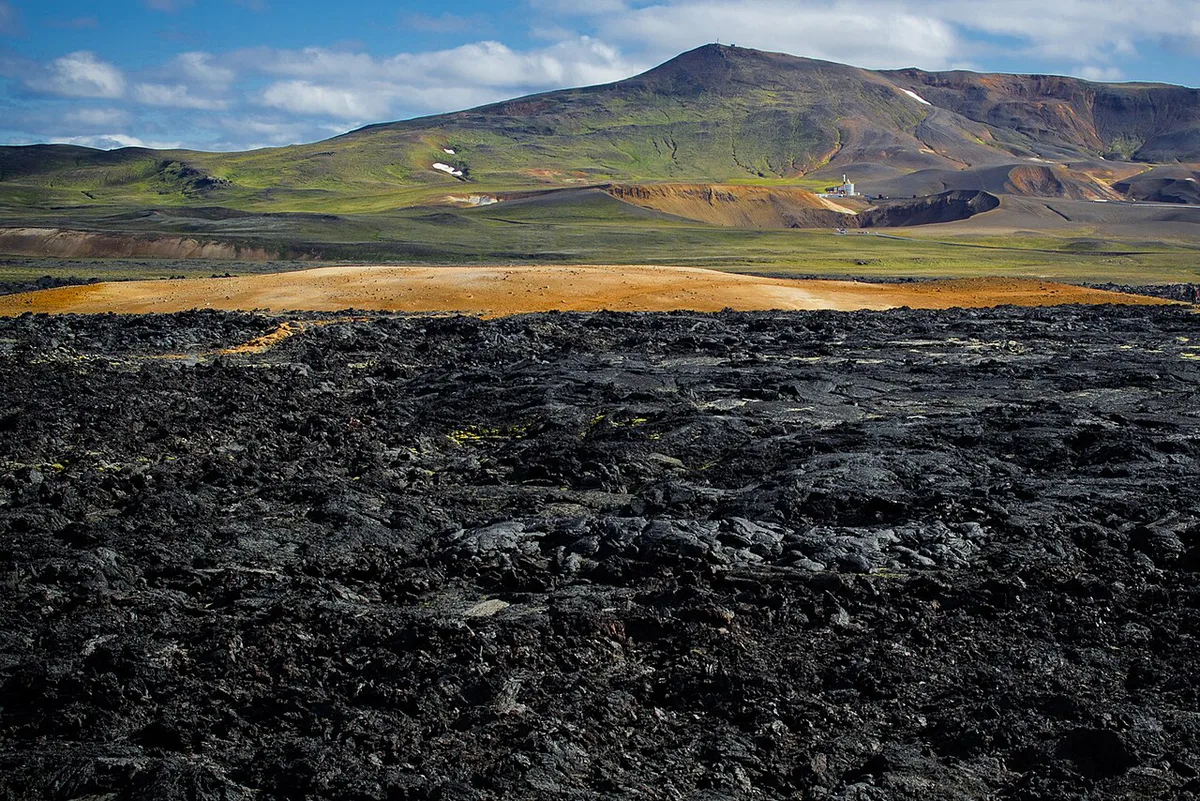
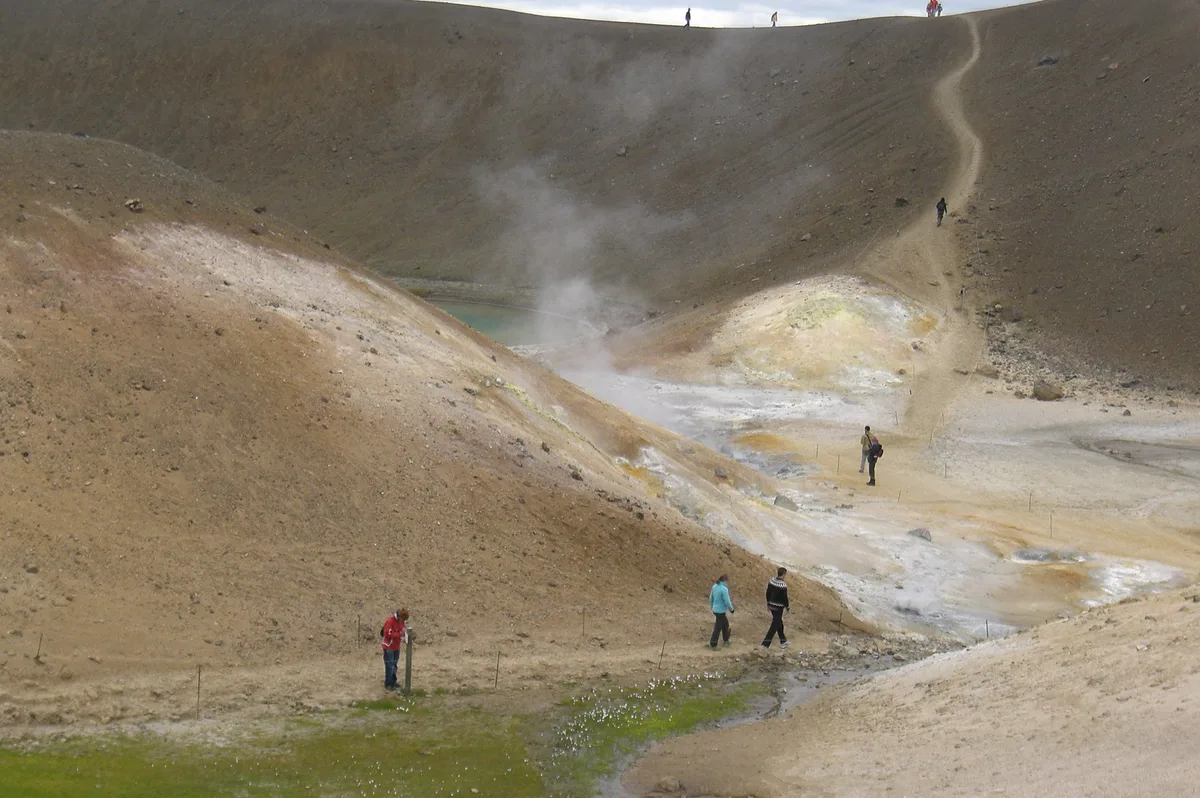
From the parking area, a marked path leads to the crater rim, where you look down on the lake. Walk the rim only on signed ground, because crater edges are unstable. Many visitors continue to the steaming lava field at Leirhnjúkur, and you can do both on one outing.
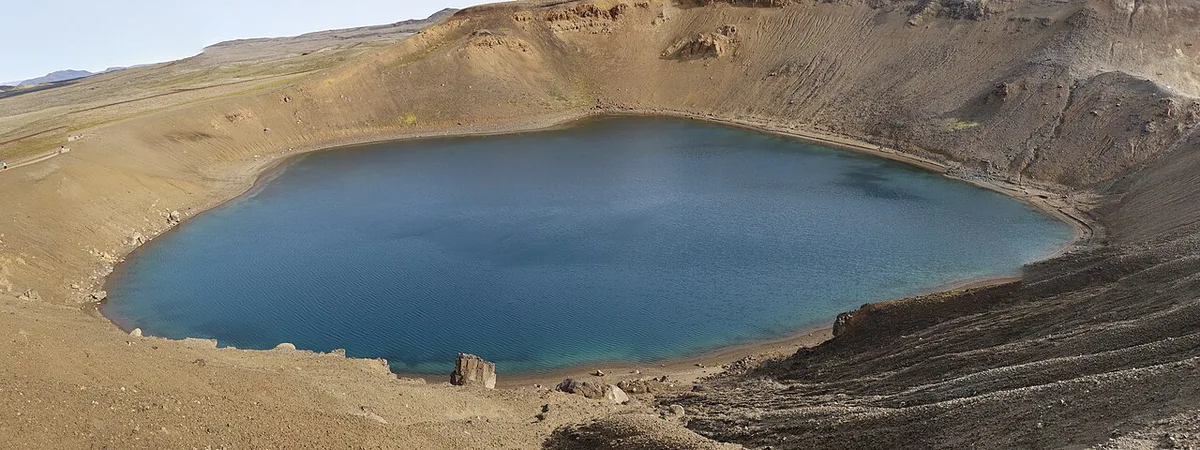
- Víti only: the shortest option, with a view and photos from the rim.
- Víti plus Leirhnjúkur: adds a walk across fresh lava and vents on marked boardwalks and paths.
- Footwear: sturdy shoes with grip, since gravel, mud and ice are all possible.
When to go: season, weather and winter access
Summer is the easiest season, with the longest daylight and the clearest paths. In winter the road can close and the rim can be icy, so check road.is and the Icelandic Met Office at vedur.is before you set out. Snow cover can hide the lake colour, and wind and fog can remove the view altogether.
- Summer: best visibility and the lowest access risk.
- Shoulder months: possible snow or ice on the rim; carry layers.
- Winter: treat the road as closed until the official road map says otherwise.
Víti crater safety and what not to do
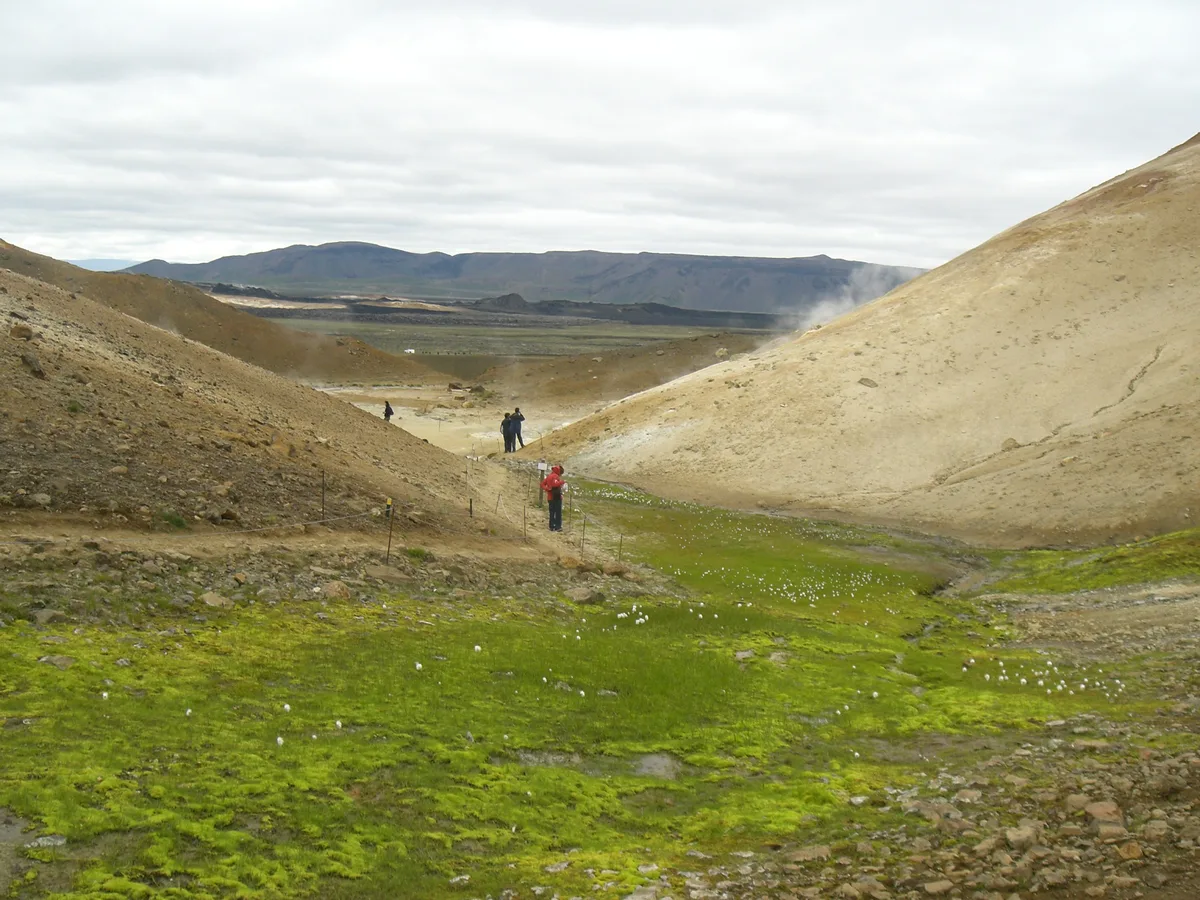
Krafla is an active volcanic area, and the ground around the crater is geothermal. Stay on marked paths, keep back from the edge and turn around if fumes or fog build up. Follow any closure notices from Icelandic safety authorities and the Met Office.
- Do not swim in Víti. It is a crater lake, not a bathing spot.
- Do not step onto steaming or discoloured ground.
- Do not assume the winter road is open.
- Do not confuse it with Askja's Víti when you read trip reports.
- Leave a buffer in your day for wind and fog.
Costs and what's free
No entry fee is confirmed for Víti, so look for signs at the car park and check Visit Mývatn for current information. Your real costs are fuel or a rental car, any parking charge and an optional paid soak at the Mývatn Nature Baths.
How to combine Víti with Hverir, Hverfjall and Dimmuborgir
Use Krafla as your first stop and then work around the lake in a loop. Cut the lowest-value stop first if weather or time turns against you. Drive times between sites are best checked on a current map, since straight-line distances mislead.
| Stop | What you see | Effort | Best used as |
|---|---|---|---|
| Víti and Leirhnjúkur | Crater lake plus lava field | Easy to moderate walking | Anchor of the day |
| Hverir geothermal field | Steam vents and mud pots | Short, flat walk | Half-day add-on |
| Hverfjall tephra crater | Huge crater with a steep rim path | Steeper hike | Full-day option |
| Dimmuborgir lava formations | Lava towers and arches | Marked trails | Full-day option |
| Skútustaðagígar pseudocraters | Craters along the lake shore | Easy path | Bad-weather or low-energy stop |
Where to stay around Mývatn and how to get around
Reykjahlíð is the practical base, since it sits by the lake and close to the Krafla road. Look at North Iceland tourism listings for current places to stay, and book early for summer.