Sousaki Volcano, Greece: What to See, Access and Safety
Last updated November 2026. Sousaki volcano is an extinct volcano with a modern solfatara (gas-vent) field in northeastern Corinthia, at the northwest end of the Aegean volcanic arc. Expect altered ground and gas vents rather than a crater or lava. This guide covers what you will see, who should go, and how to plan a safe stop within Greece's volcano circuit.
Featured image: George Chrysafoudis, CC BY 2.0, via Wikimedia Commons.
Sousaki volcano at a glance
Short answer: Sousaki is a geology and landscape stop, not an eruption site. It suits people who want to see volcanic ground up close and who have their own transport. Anyone expecting a hike to a crater should look at other islands instead.
- Location: northeastern Corinthia, with Agioi Theodoroi as the nearest named settlement to check on your map.
- Status: described as an extinct volcano with a modern solfatara field.
- Setting: northwest end of the Aegean volcanic arc, also called the Hellenic Volcanic Arc.
- Best for: geology fans, photographers and travelers building a Greek volcano route.
- Facilities: do not assume any. Check locally for gates, signage and access rules.
What Sousaki is: extinct volcano, active gas vents
Sousaki belongs to the Hellenic Volcanic Arc, the chain of volcanic centers that curves through the Aegean. Its volcanic activity is generally described as finished, which is why it counts as extinct. Gas vents in the area still release volcanic gases, and that is what makes it a solfatara field. A solfatara is a vent site that gives off sulfur-rich gases rather than lava or ash. Greece's national geodynamics institute, the Institute of Geodynamics at NOA, is the place to look for authoritative background on Greek volcanic and seismic activity. Sousaki's status as extinct is a classification, so treat the vents with respect all the same.
What you will actually see
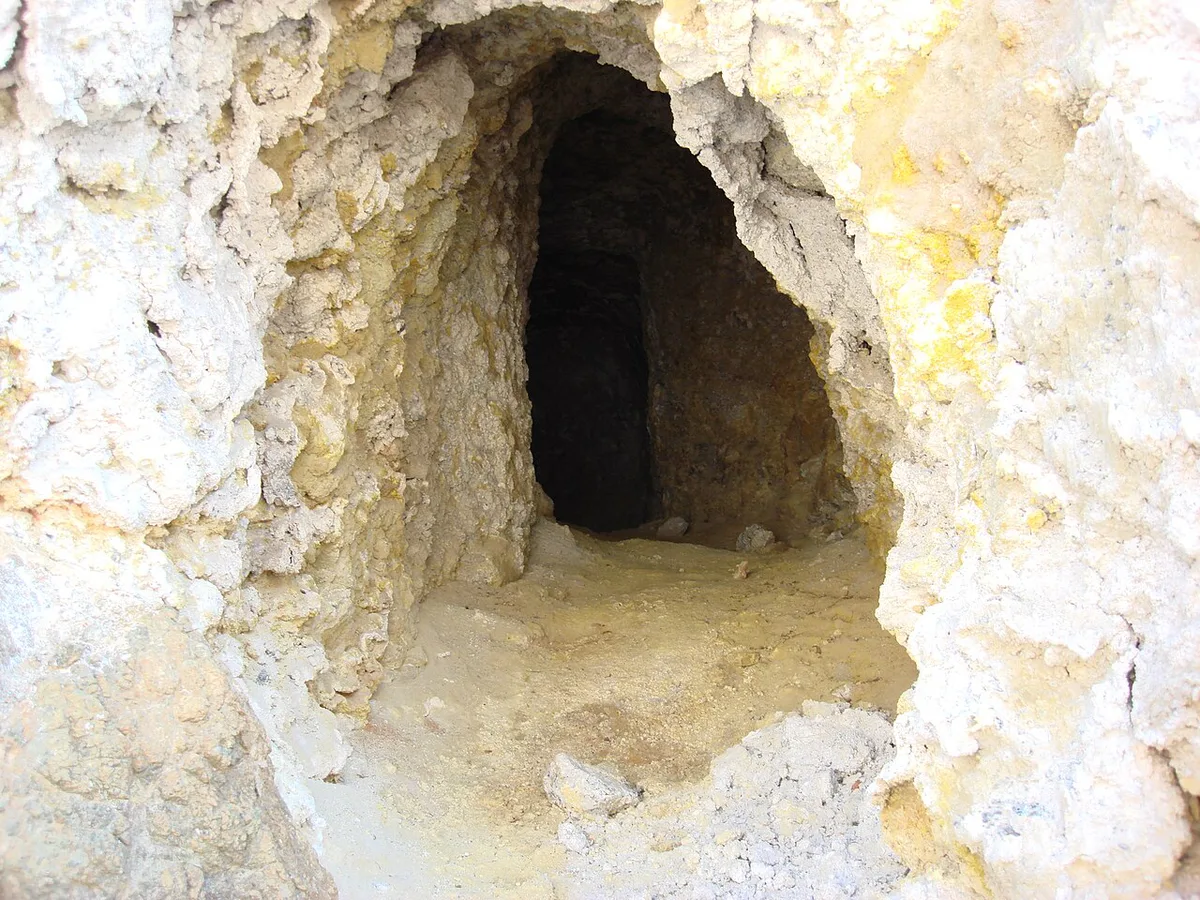
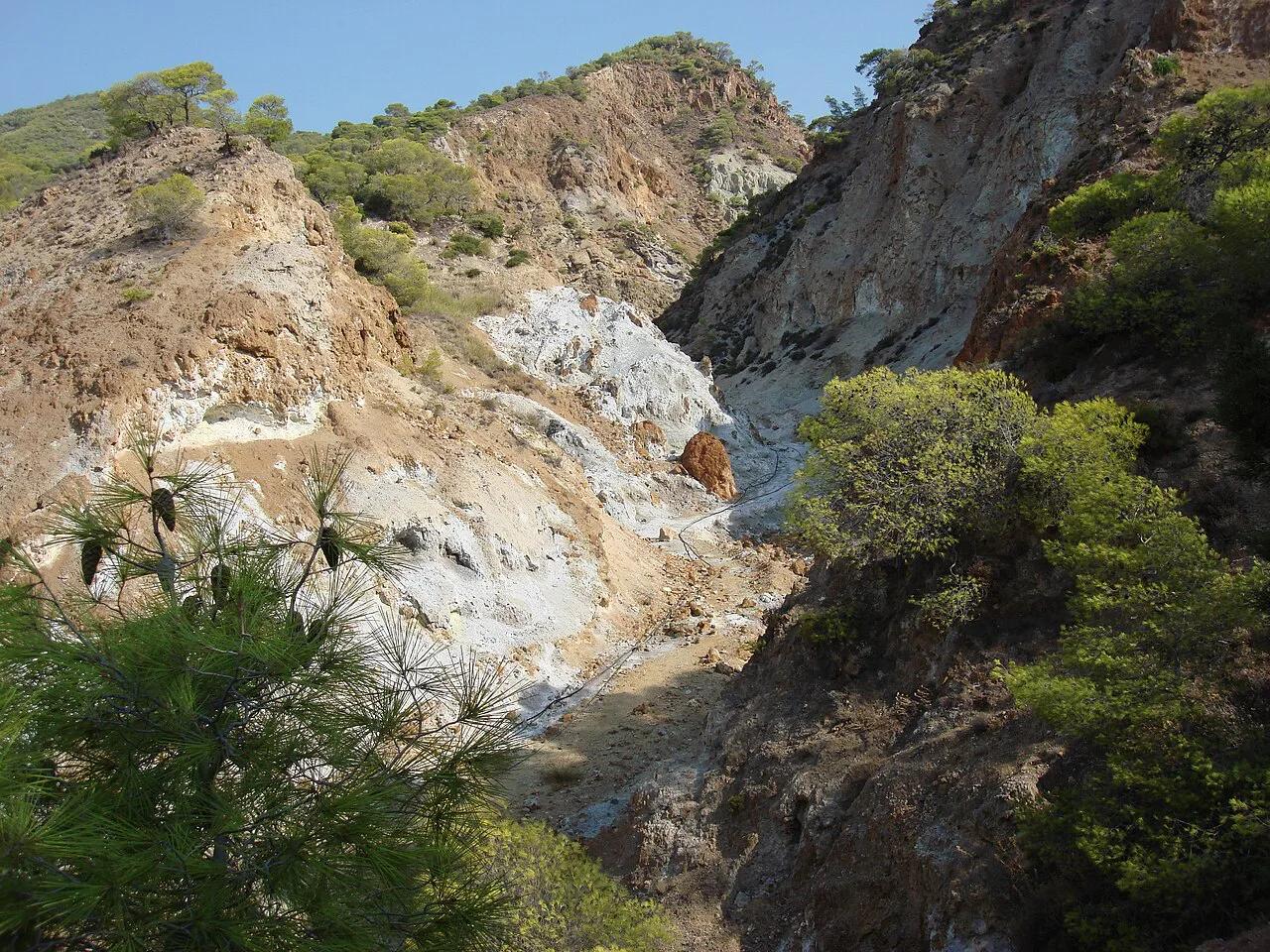
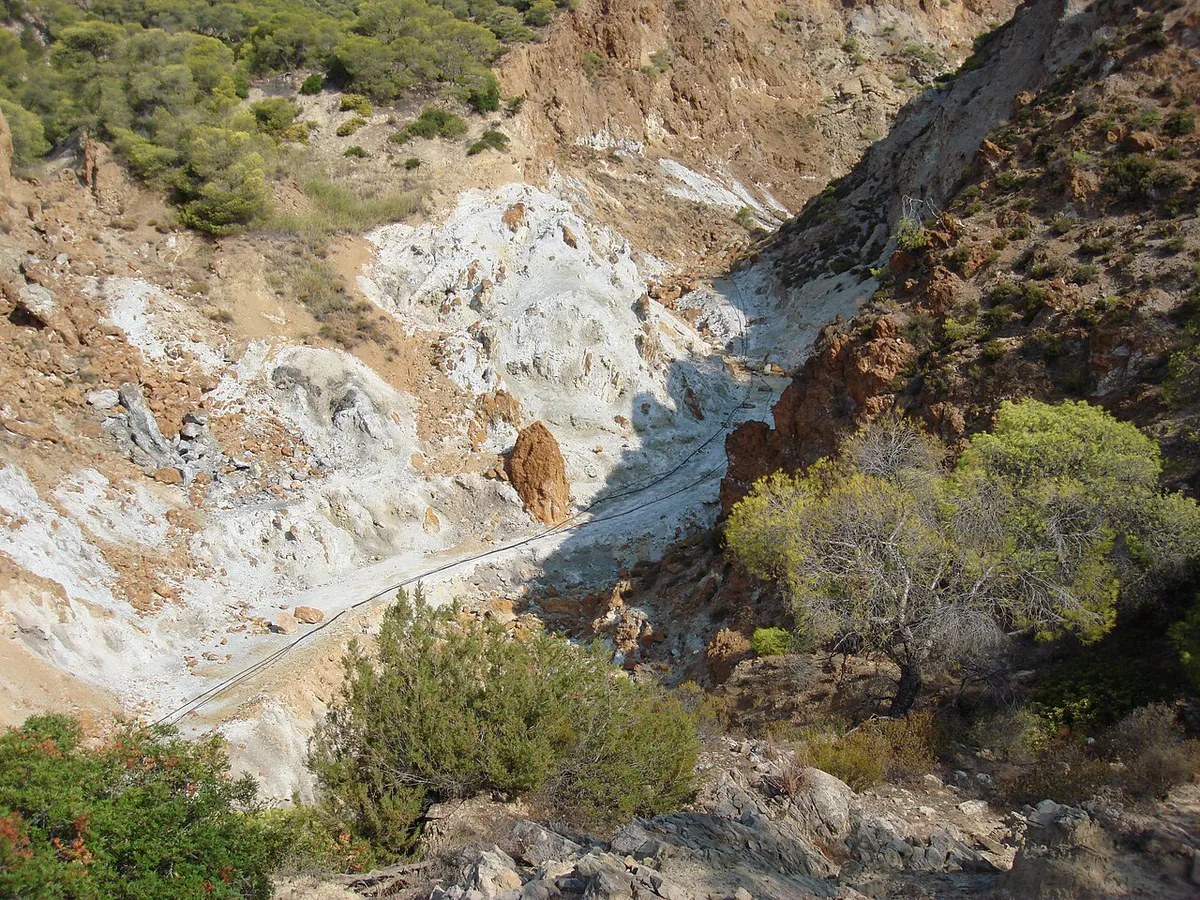
Picture eroded volcanic terrain with patches of altered, discolored ground. Yellow sulfur deposits and fumarole activity are the features that set the area apart. Do not expect a cone, a crater rim or a summit to climb. Visitors who arrive wanting scenery from a distance usually get more from the colors of the ground than from any single viewpoint. Check locally for any signage or marked paths before you plan your time on site.
Is Sousaki worth visiting? Decision guide by traveler type
Sousaki rewards a narrow audience. Use this quick guide to decide.
- Geology fans: yes. A solfatara field in mainland Greece is rare to see without a boat trip.
- Photographers: yes, for textured, colored ground. Plan around light and wind, and protect your camera from gas and dust.
- Families with young children: think twice. Gas vents and uneven ground call for close supervision.
- Travelers without a car: probably skip it. Public transport to the site is unconfirmed, so check KTEL Korinthias before assuming a route.
- Tight Athens itineraries: only if you can spare a half day. Pair it with another Corinthia stop rather than treating it as a quick photo break.
How to get there and how long to allow
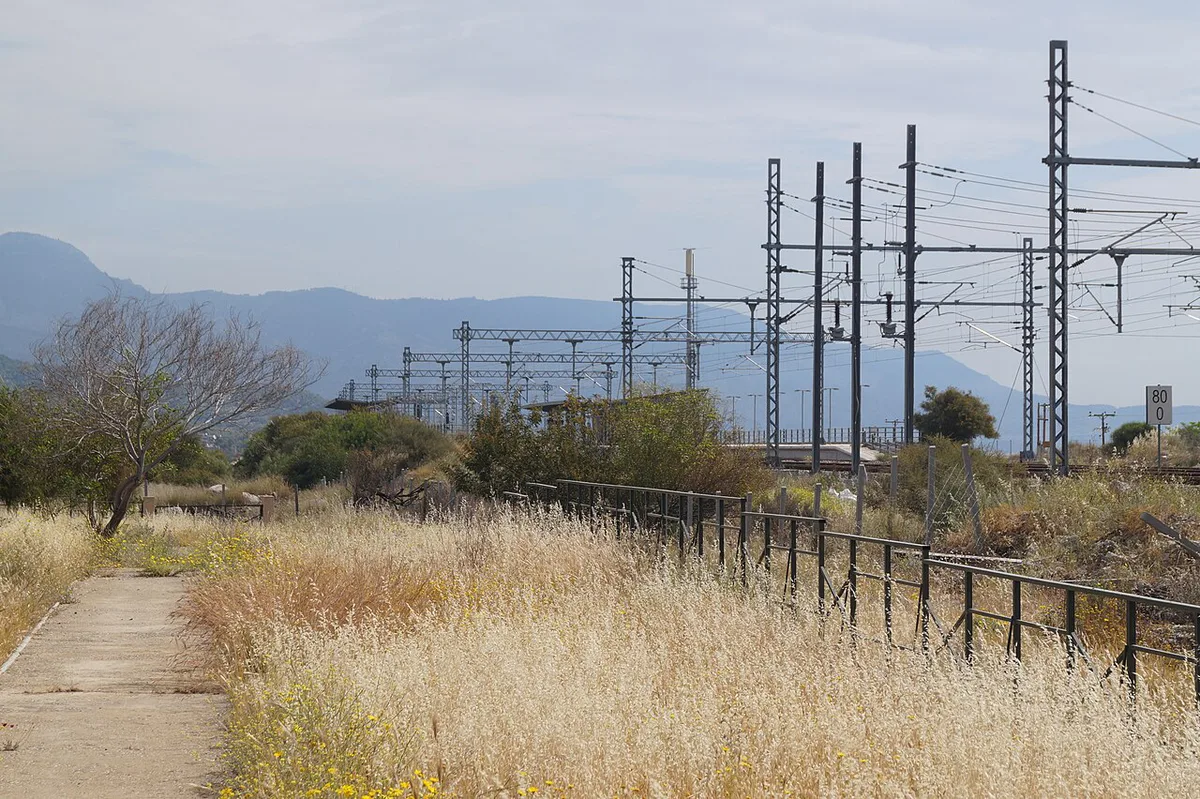
Sousaki sits in northeastern Corinthia, near the Isthmus of Corinth and the Saronic coast. Agioi Theodoroi, Loutraki and Corinth are the towns to check on a map for your approach. A car is the realistic option from Athens or Corinth. Journey times, road conditions and any gate or fee are not confirmed here, so check locally and with the municipality before you drive. Do not rely on a phone map alone for the final stretch, because tracks near remote sites are often unmarked.
Safety, fire season and visiting etiquette
Gas vents and unstable ground are the main hazards at any solfatara. Stay out of low hollows where gases can collect, and keep children and pets close. Hot or crumbly surfaces can give way, so walk on firm, established ground. In the dry months, Greek civil protection can restrict access to natural areas on high fire-risk days. Check the daily fire-risk map before you leave. Leave rocks and sulfur where they are, because collecting samples damages a site that others come to see.
- Footwear: closed shoes with grip, not sandals.
- Gas: leave the area if you smell strong sulfur or feel dizzy.
- Fire: do not smoke, and skip the visit on high-risk days.
- Samples: look and photograph only.
Best time to visit and what to bring
Spring and autumn are the more comfortable seasons for exposed ground with little shade. Midday summer heat is a poor fit for a site that may have no shade or water. Bring drinking water, sun protection, sturdy shoes and a charged phone. Pack out all rubbish, since you should not expect bins or toilets on site.
Sousaki versus other Greek volcanoes
Greece offers several volcanic stops with very different visitor experiences. This table keeps the comparison qualitative, because no hard figures are confirmed for Sousaki. A site with infrastructure and a site with none demand different planning. Lesvos adds a volcanic-heritage angle through its fossil forest, and the Lesvos UNESCO Global Geopark publishes visitor information. On Milos, the Milos Mining Museum shows how volcanic rock shaped the island's economy.
| Site | Volcanic status | What you see | Access difficulty | Best for |
|---|---|---|---|---|
| Sousaki | Extinct, with solfatara vents | Altered ground, sulfur, fumaroles | Remote, car likely needed | Geology fans, photographers |
| Methana | Peloponnese volcanic peninsula | Volcanic landscape and walking terrain | Check locally | Day-trip walkers |
| Milos | Island with volcanic landscapes | Colored rock and mining heritage | Easier, with island visitor services | Island travelers |
| Kolumbo | Submarine volcano | Nothing on foot; reached by research or dive | Not reachable on foot | Armchair volcano fans |
| Petrified Forest of Lesvos | Ancient volcanism preserved in fossils | Fossilized trees | Organized visitor site | Heritage and fossil fans |
Combining Sousaki with nearby stops
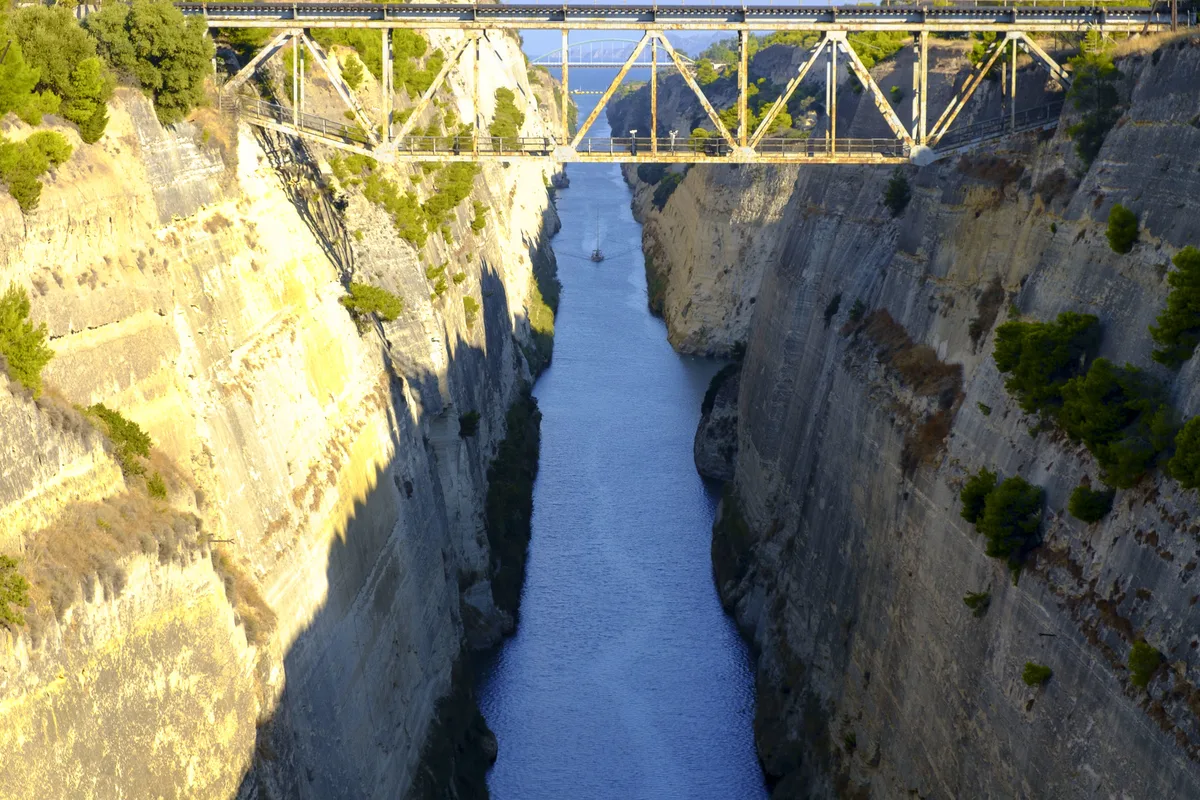
Corinth and the Corinth Canal are the obvious neighbors on the route from Athens. Both are places to name on a map, but opening hours and access conditions are not confirmed here. Build your plan around the Sousaki visit and add one nearby stop, not three. Local tourism offices in Corinthia can suggest further options.
Mistakes to avoid at Sousaki
Most disappointments come from wrong expectations or poor timing.
- Expecting a crater, lava or an eruption show.
- Going at midday in summer heat.
- Trusting a phone map without checking the road.
- Assuming there are facilities, shade or water.
- Ignoring fire-risk warnings on dry, windy days.
Frequently Asked Questions
Are there volcanoes in Greece?
Yes. Greece lies along the Hellenic Volcanic Arc, which includes Sousaki in Corinthia, Methana, Milos and the submarine Kolumbo. Their visitor experiences differ widely, from a remote solfatara field to island sites with services.