Milos Volcano: Is It Active? What to See and How to Visit
Last updated November 2026. The Milos volcano is not a cone you hike to. Milos is a volcanic island in the Cyclades, and its volcanism shows up in cliffs, colored rock, sea caves and warm shorelines. This guide matches each feature to a place you can visit and explains how to plan the trip. It also sits within our wider look at volcanoes across Greece.
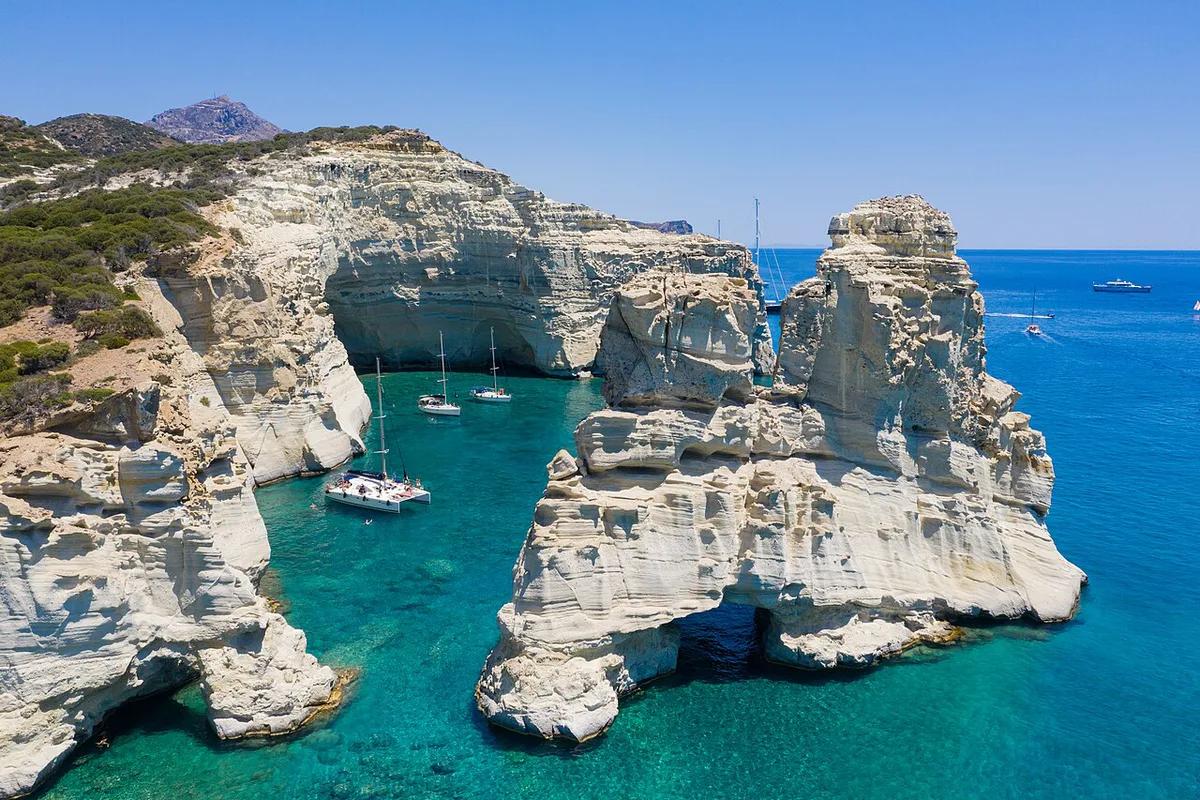
Featured image: dronepicr, CC BY 2.0, via Wikimedia Commons.
What the Milos volcano actually is
Milos belongs to the Hellenic volcanic arc in the south Aegean. Its volcanic history includes underwater and above-water eruptions, lava domes and steam-driven explosion craters. No single summit marks the island, so there is no crater rim to walk to. Visitors read the volcano from the coastline, the rock colors and the warm ground instead. Antimilos is a separate small island northwest of Milos, with its own volcanic edifice. Elevation figures quoted online for a "Milos volcano" often belong to Antimilos, not to the main island. For official status wording such as active, dormant or extinct, check the Smithsonian Global Volcanism Program entry for Milos before you repeat any label.
How volcanism shapes the Milos landscape
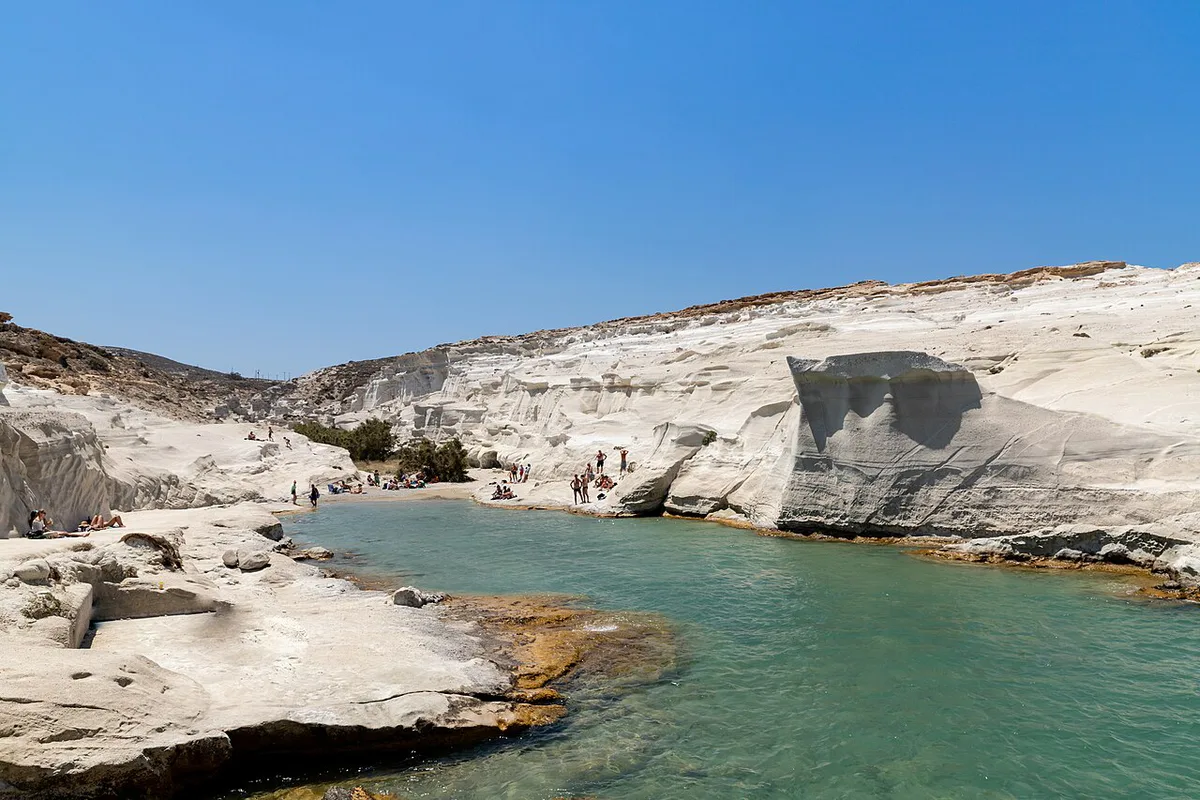
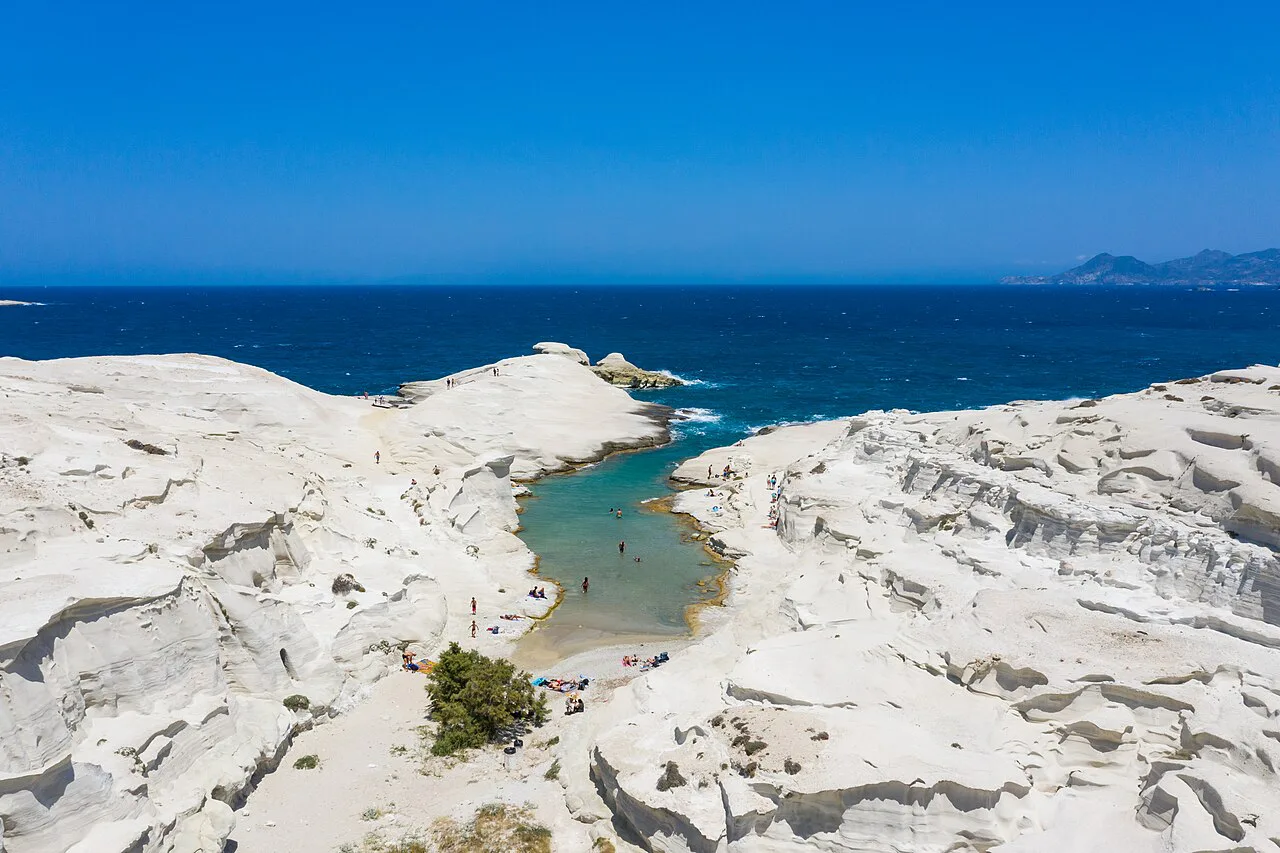
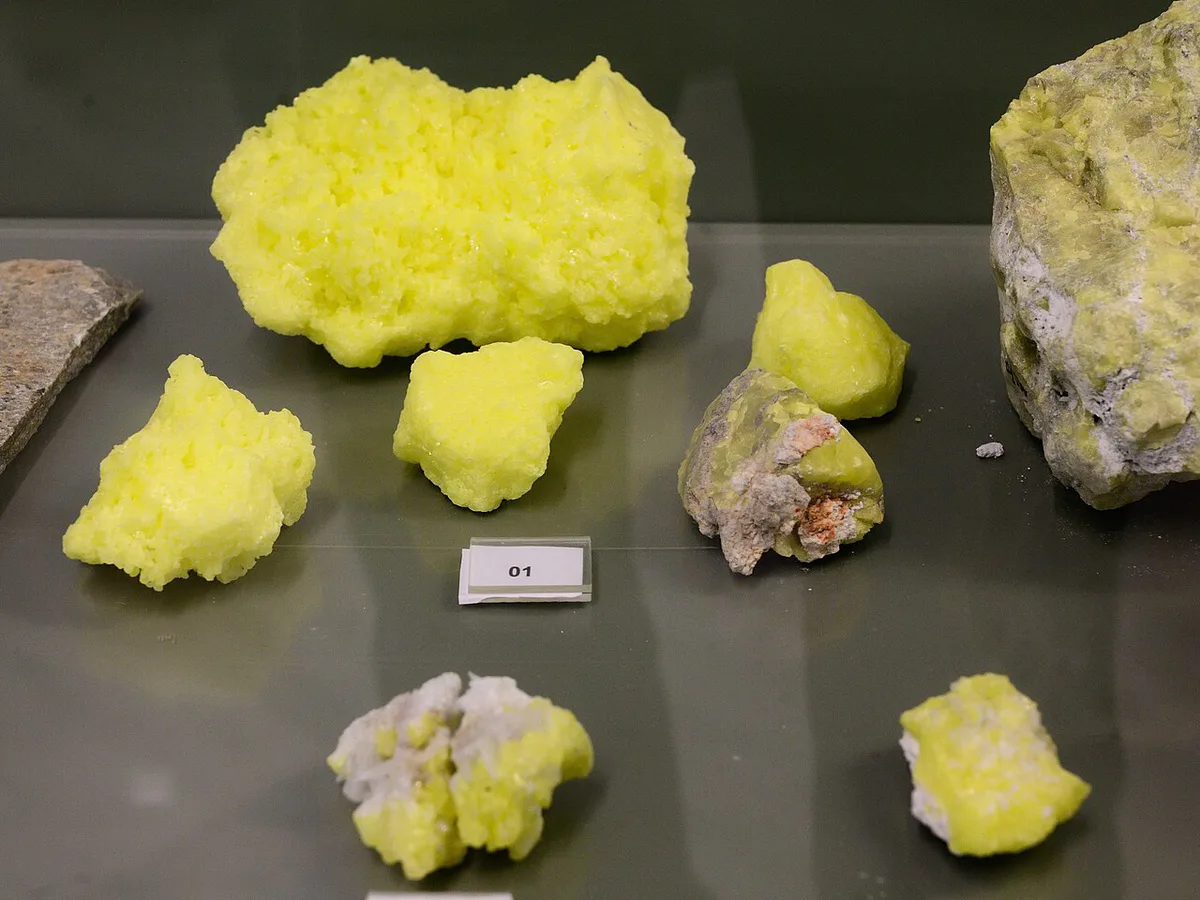
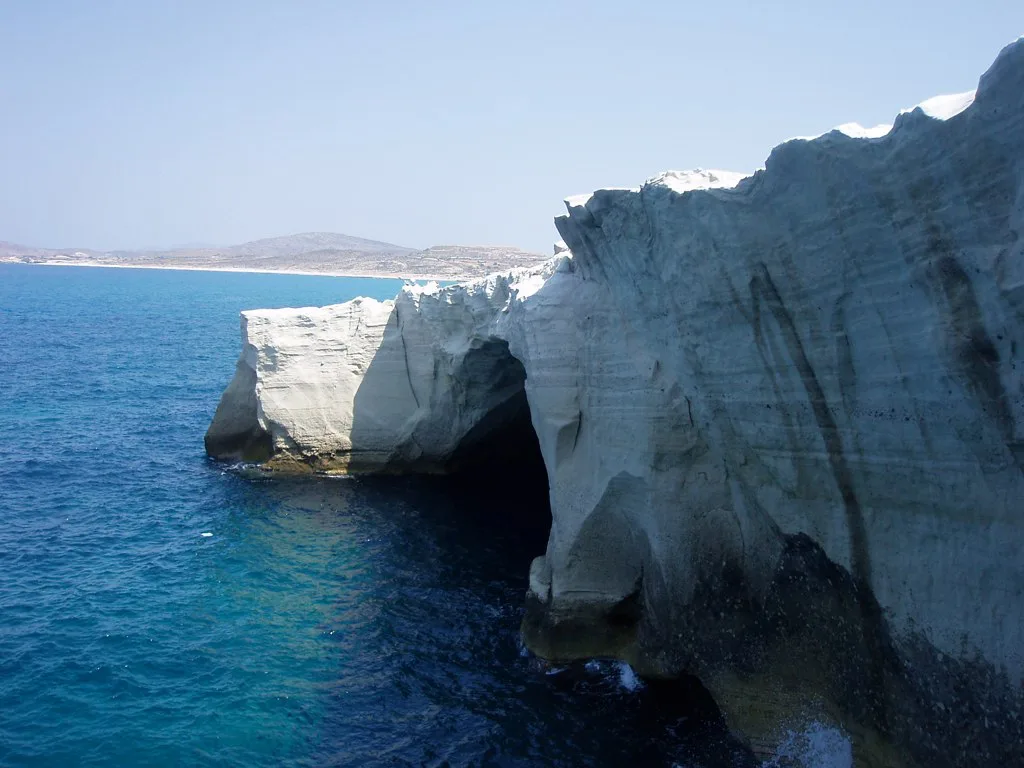
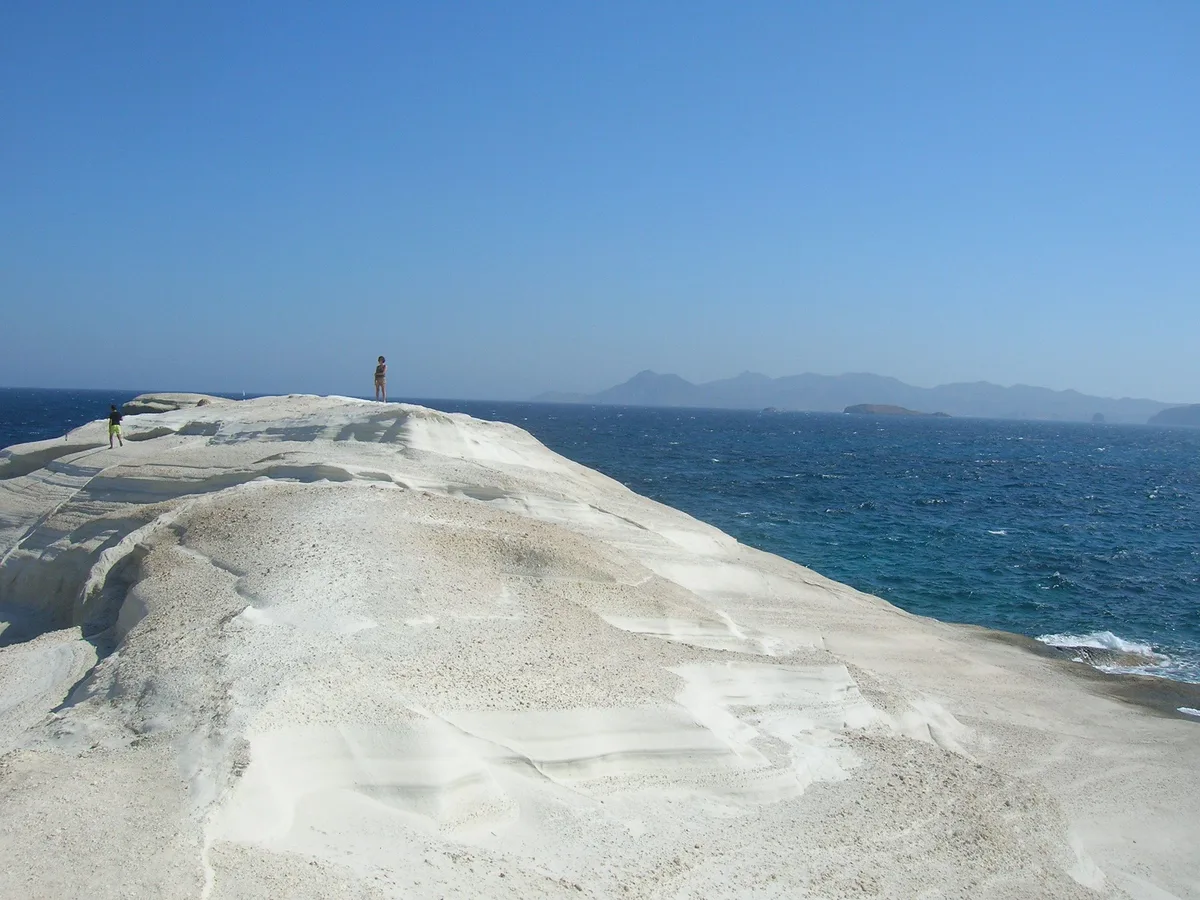
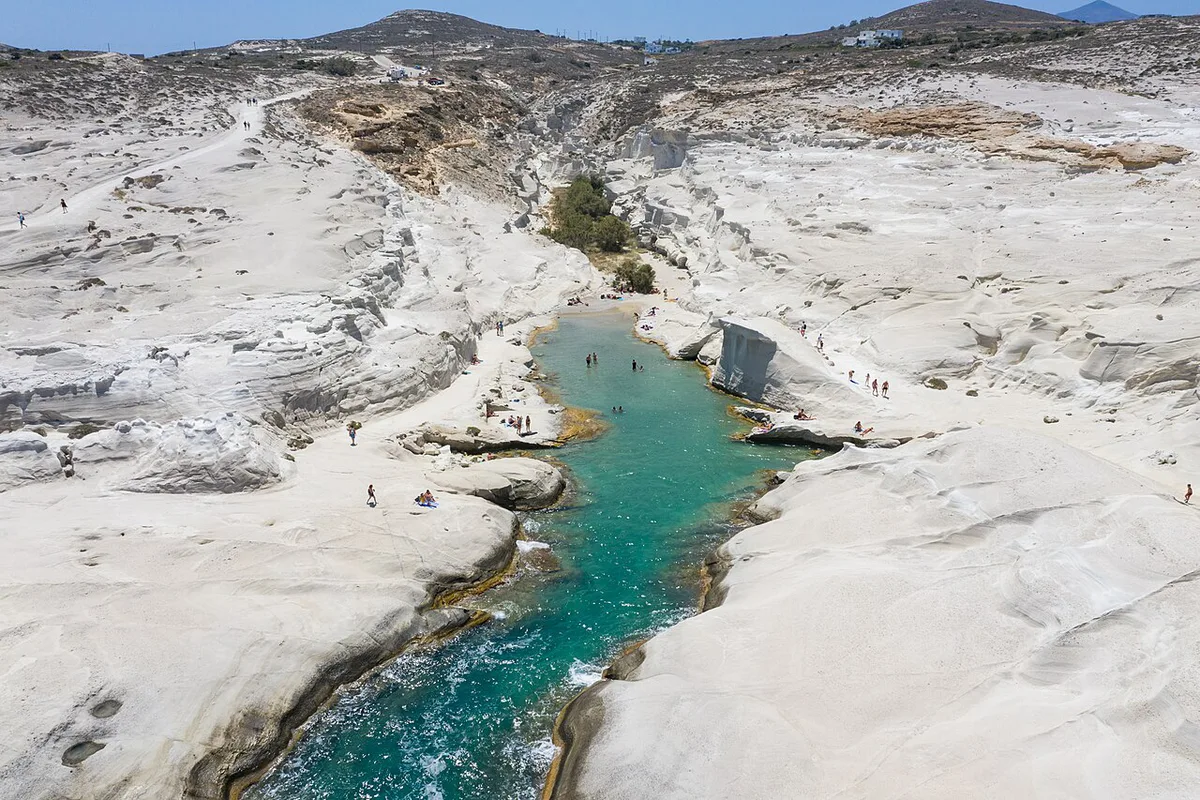
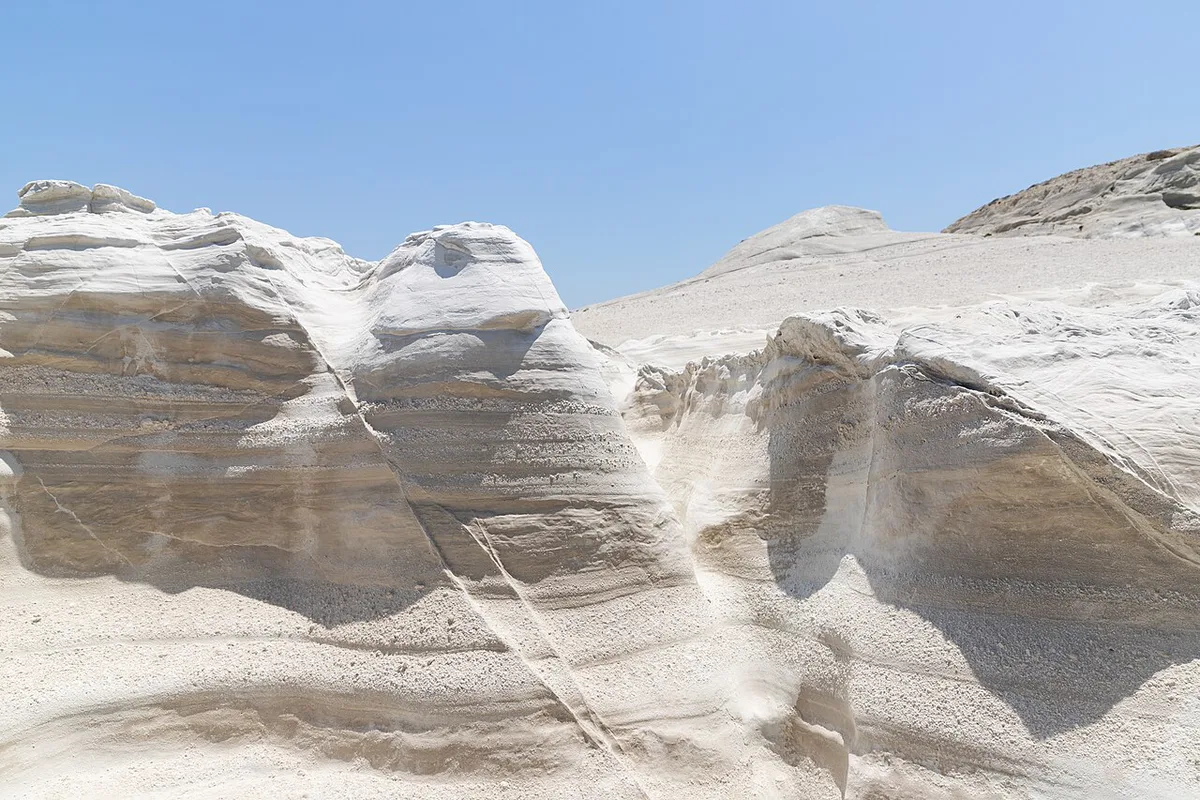
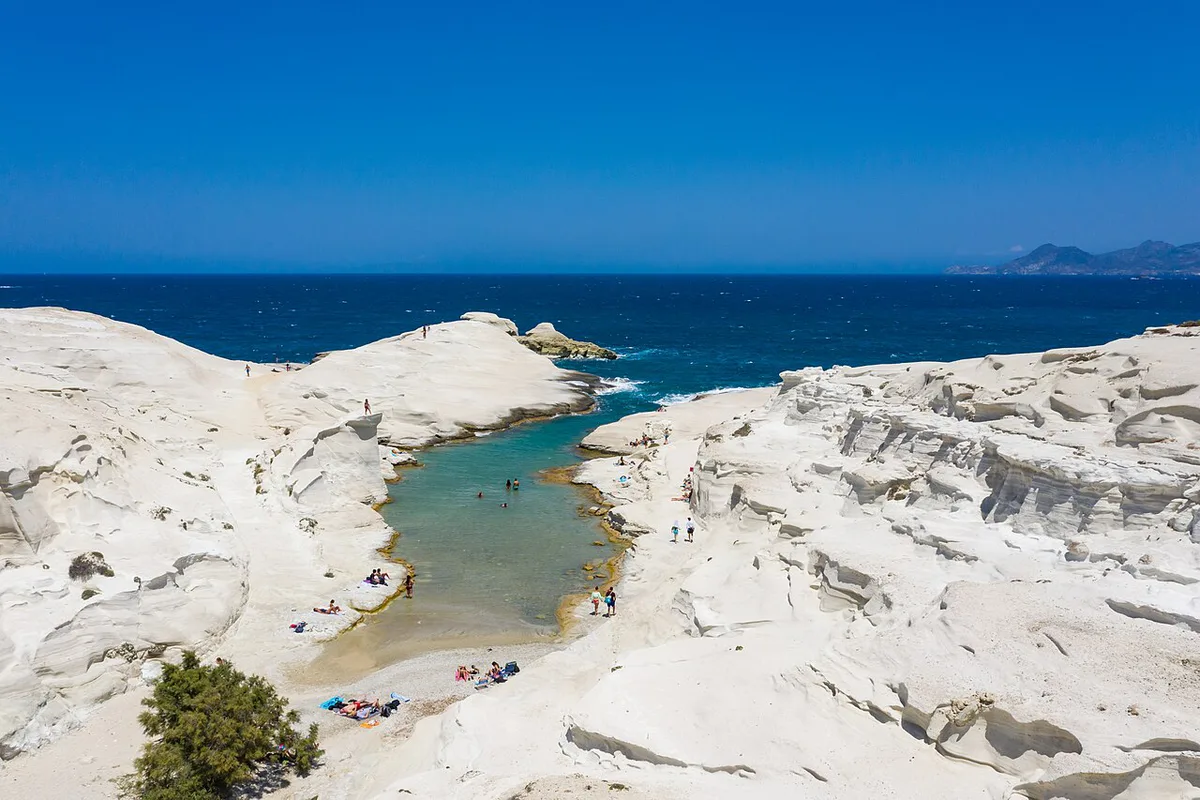
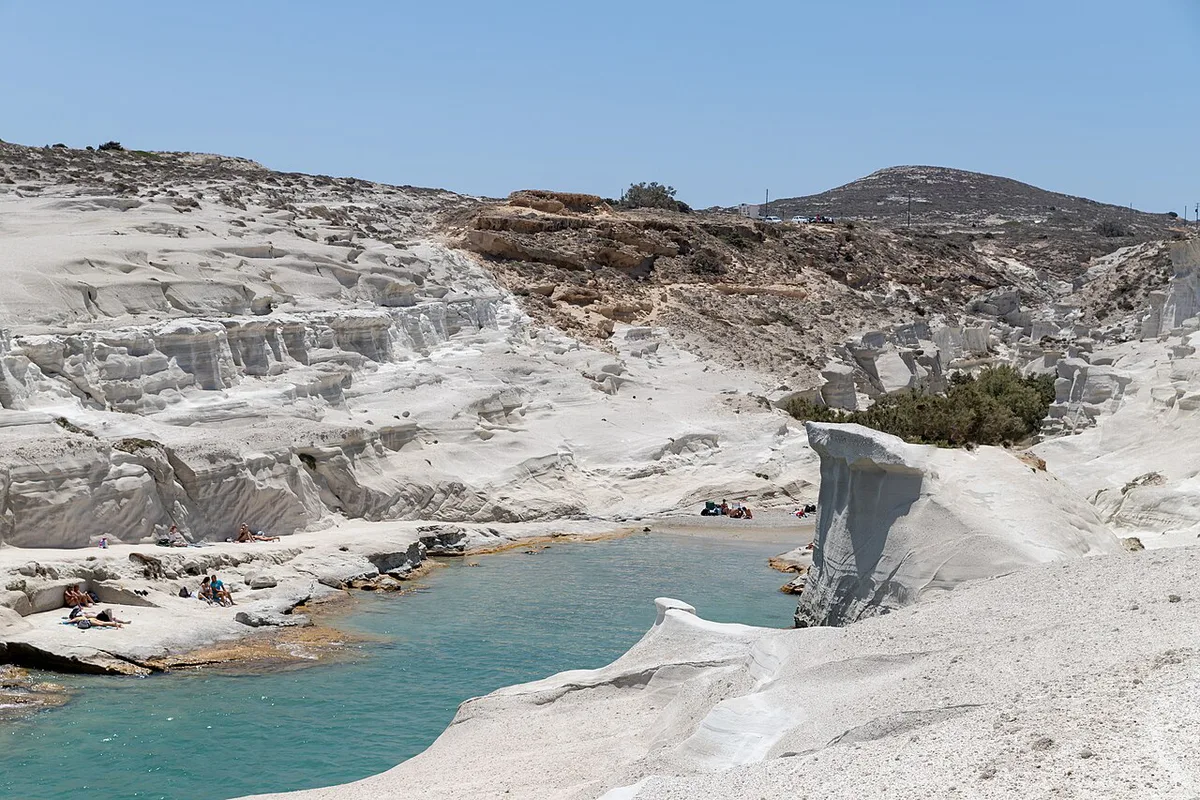
Different eruption styles left different rocks, and each rock gives a different shoreline. Pale, smooth volcanic cliffs at Sarakiniko look like a moonscape beside deep blue water. Sea stacks and arches around Kleftiko come from volcanic rock carved by waves. Warm water seeps up through the shore near Paleochori, where geothermal heat reaches the beach. Colored rock layers on several beaches record past eruptions and mineral alteration. Sulphur and other minerals were mined on the island for centuries. The Milos Mining Museum explains how that industry grew from the island's geology.
- Sarakiniko: pale volcanic cliffs and smooth rock platforms at the sea edge.
- Kleftiko: sea caves and rock arches, best seen from the water.
- Paleochori and Firiplaka: thermal activity and colored rock, with pebbles at Firiplaka.
- Mining remnants: sulphur-era sites that illustrate the island's mineral wealth.
Best volcanic sights on Milos, ranked by effort
Start with sites that need little effort, then add boat or hiking days. Travelers who care about geology should prioritize Sarakiniko, Kleftiko and the thermal beaches. Beach-focused visitors can use the same list but spend more time at Paleochori and Firiplaka.
| Site | What you see | Access | Who should skip it |
|---|---|---|---|
| Sarakiniko | Pale volcanic cliffs and rock platforms | Road access by car, ATV or bus | Anyone wanting shade at midday in summer |
| Kleftiko | Sea caves, arches and rock stacks | Boat tour, commonly from Adamas | Visitors prone to seasickness or on windy days |
| Paleochori | Thermal activity and colored cliffs | Road access | Anyone wary of warm ground and sand |
| Firiplaka | Colored rock above a pebble beach | Road access | Visitors who dislike pebbles; bring water shoes |
| Tsigrado | Secluded cove | Steep, uneven access | Mobility-limited visitors and weaker swimmers |
Hot springs and thermal activity: what to expect
Warm water and heated ground occur at a few shallow coastal spots, especially around Paleochori. Treat any steaming or discolored patch as hot enough to burn. Skip swimming near visible vents, wear shoes on pebbly or rocky shores, and avoid digging deep into the sand. Stay out of closed or fenced mining areas. For hazard guidance, follow the General Secretariat for Civil Protection and local signs.
Eruption history and risk
Milos has a long record of volcanism. Older eruptions built the island's rocks, and later steam-driven explosions carved small craters. A mudflow deposit in the southeast buried part of an ancient Roman-era port town, according to geological descriptions. Greek volcanoes are watched by seismic networks. The Institute of Geodynamics at the National Observatory of Athens publishes seismic information for Greece. For the submarine side of the Aegean arc, see Kolumbo near Santorini.
Plan your time on the island
A half-day suits a self-drive loop to Sarakiniko and one thermal beach. A full day adds Kleftiko by boat and a swim stop. Two days let you split boat and road sightseeing, so a windy morning does not cancel everything. Boat tours give sea-cave access but depend on weather. A car gives flexibility but needs parking planning at busy coves.
- Half-day: Sarakiniko early, then Paleochori or Firiplaka.
- Full day: Kleftiko boat tour, then an afternoon on the road loop.
- Two days: boat day first, with the second day held as a weather backup.
Getting there and getting around
Milos has its own airport, and ferries from Piraeus arrive at the port of Adamas. Operators, schedules and durations change by season, so use the operators' own timetables. Adamas is the usual base for boat tours and car or ATV rental. The Visit Greece page on Milos gives official island background. Last verified November 2026: transport details above are general and should be checked against current timetables.
Costs and season
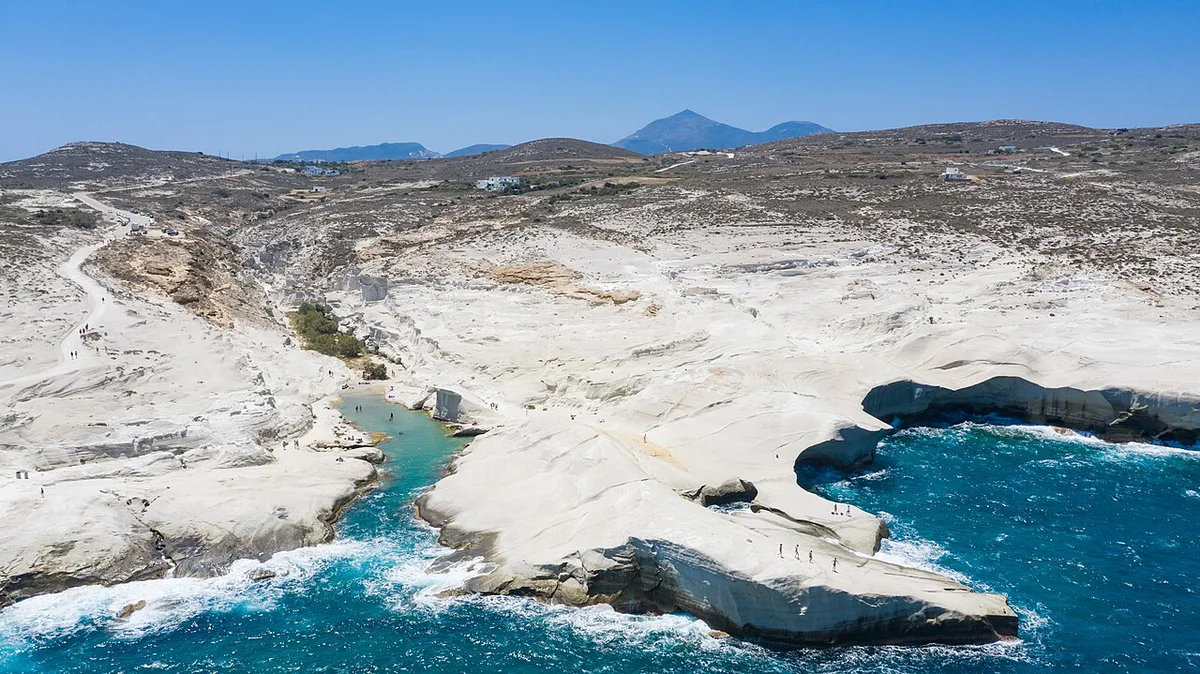
Most volcanic sights are free natural sites. Costs come from boat tours, car or ATV rental and ferry or flight tickets, and all three climb in July and August. Boat tours to Kleftiko can be canceled when the meltemi wind blows, so keep a flexible day. May, June and September are quieter than midsummer. Visit Sarakiniko early or late in peak season because the rock reflects heat and the platform has little shade. Cliff edges and wet rock are slippery, so wear grippy shoes.
Where Milos fits among Greece's volcanoes
Milos is a scenic, coastal volcanic island, not a crater hike. Readers wanting a walkable volcanic peninsula can compare it with Methana. Fumaroles on land are easier to see at Sousaki Volcano, Greece: What to See, Access and Safety. A volcanic-geology day out in the north Aegean is possible at the Lesvos petrified forest. The Lesvos UNESCO Global Geopark adds geological context there.
Frequently Asked Questions
What is Milos, Greece known for?
Milos is known for its volcanic coastline, including Sarakiniko's pale cliffs and the sea caves of Kleftiko. It also has thermal beaches such as Paleochori and a mining past.
What airport do you fly into for Milos?
Milos has its own airport, so flights land on the island itself. Ferries from Piraeus arrive at Adamas port instead.