
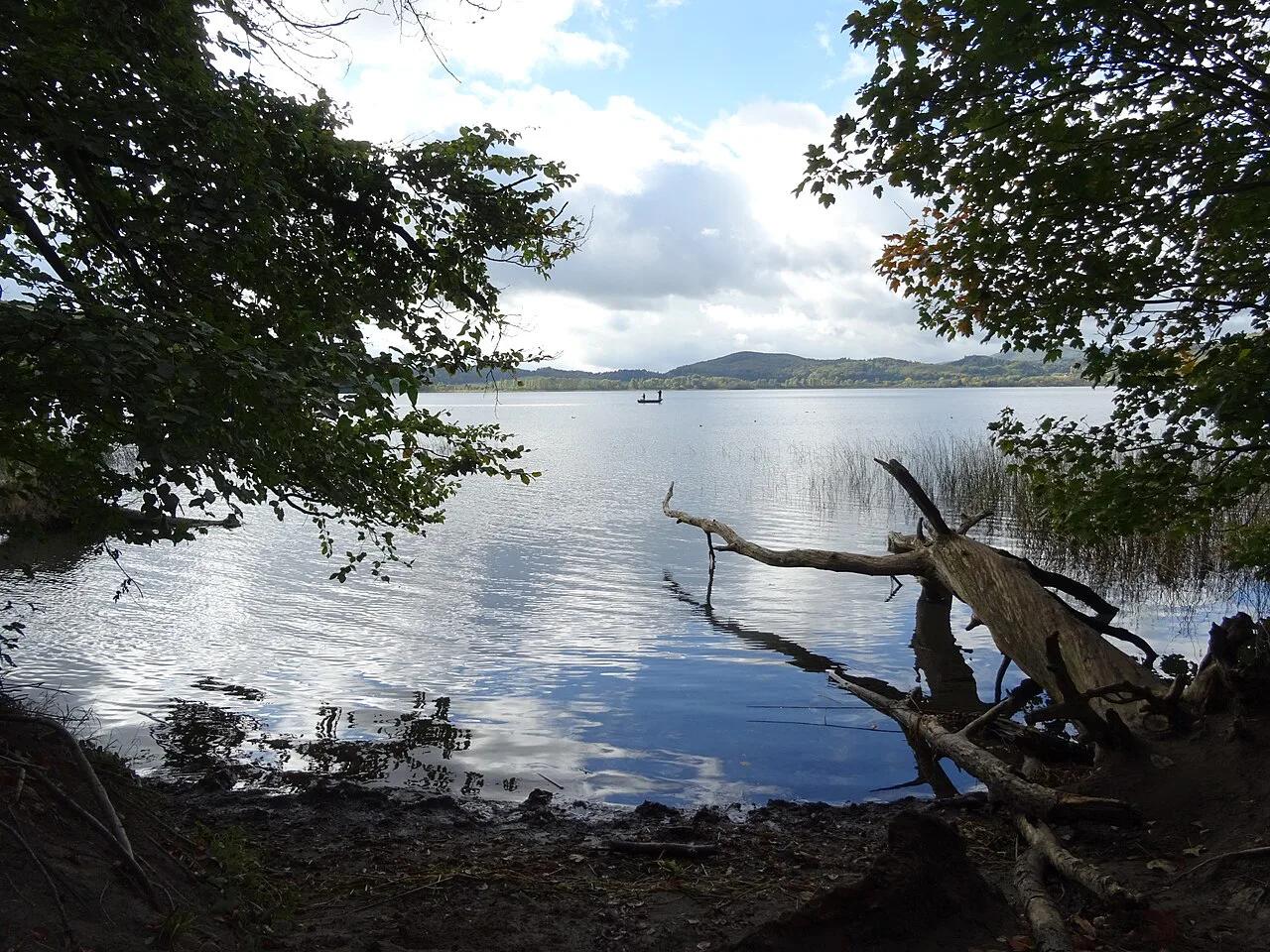
6 Best Eifel Volcanoes to Visit: Maars, Museum & Geyser
Last updated November 2026: the Eifel volcanoes sit in Rhineland-Palatinate, in a volcanic field of scoria cones and maars centred on the UNESCO Global Geopark Vulkaneifel. Best first stops are the maars around Daun, the Eifel Volcano Museum and the Mendig lava cellars. Worried about risk? Read current activity and risk in the Eifel before you plan.
Featured image: Karbohut, CC BY-SA 4.0, via Wikimedia Commons.

Eifel Volcanoes at a Glance
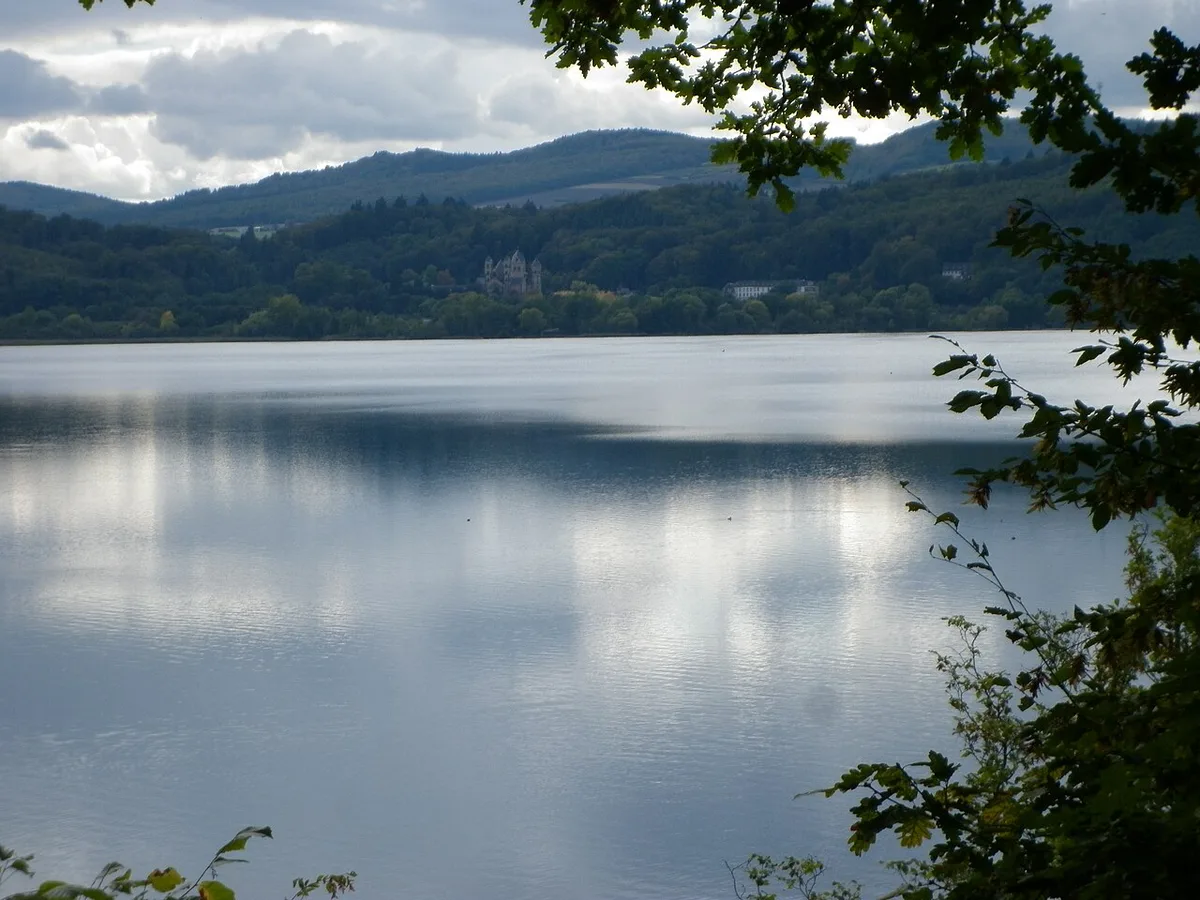
Volcanic Eifel splits into two fields. The West Eifel holds the Daun maars, and the East Eifel holds the Laacher See caldera near Maria Laach. Figures cited for the Geopark Vulkaneifel region count 280 scoria cones and 103 maars. A scoria cone is a classic cone-shaped pile of volcanic cinders. A maar is a crater blasted out when rising magma meets groundwater. Only 12 of those maars hold water, so most are dry bowls of farmland or forest. Eruptions here belong to the deep past, and the full status question has its own page.
6 Best Eifel Volcanoes Sites to Visit
These six stops are ranked for first-time visitors who want to see volcanic features, not read about them. Prices and hours checked November 2026. Fees are not listed for most stops, so confirm admission on each official page. The closest comparison elsewhere is France's Chaîne des Puys in the Auvergne, another dormant chain of cinder cones.
1. Vulkaneifel maars around Daun
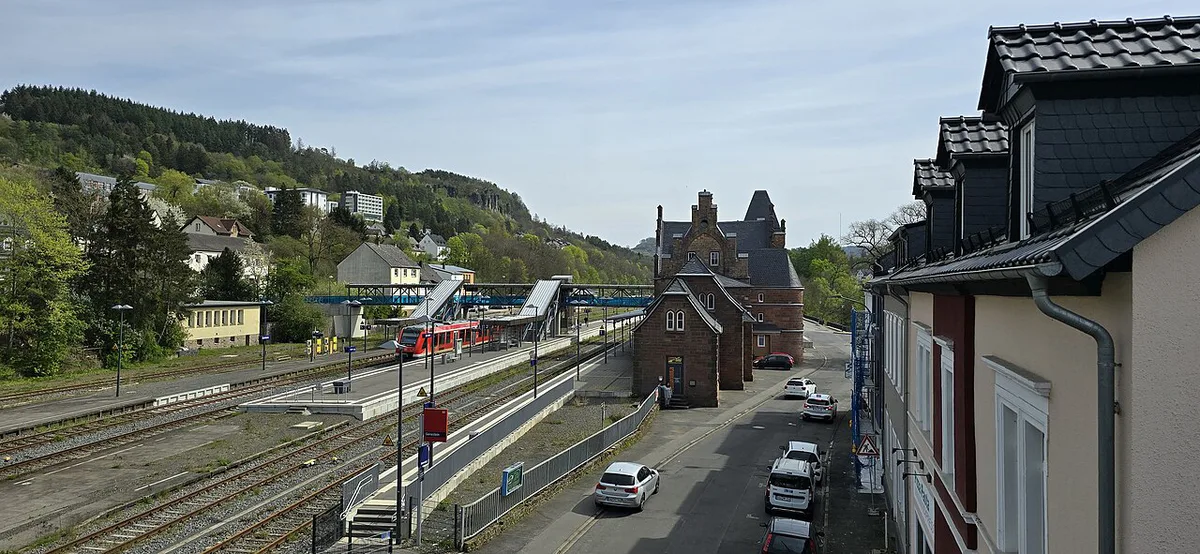
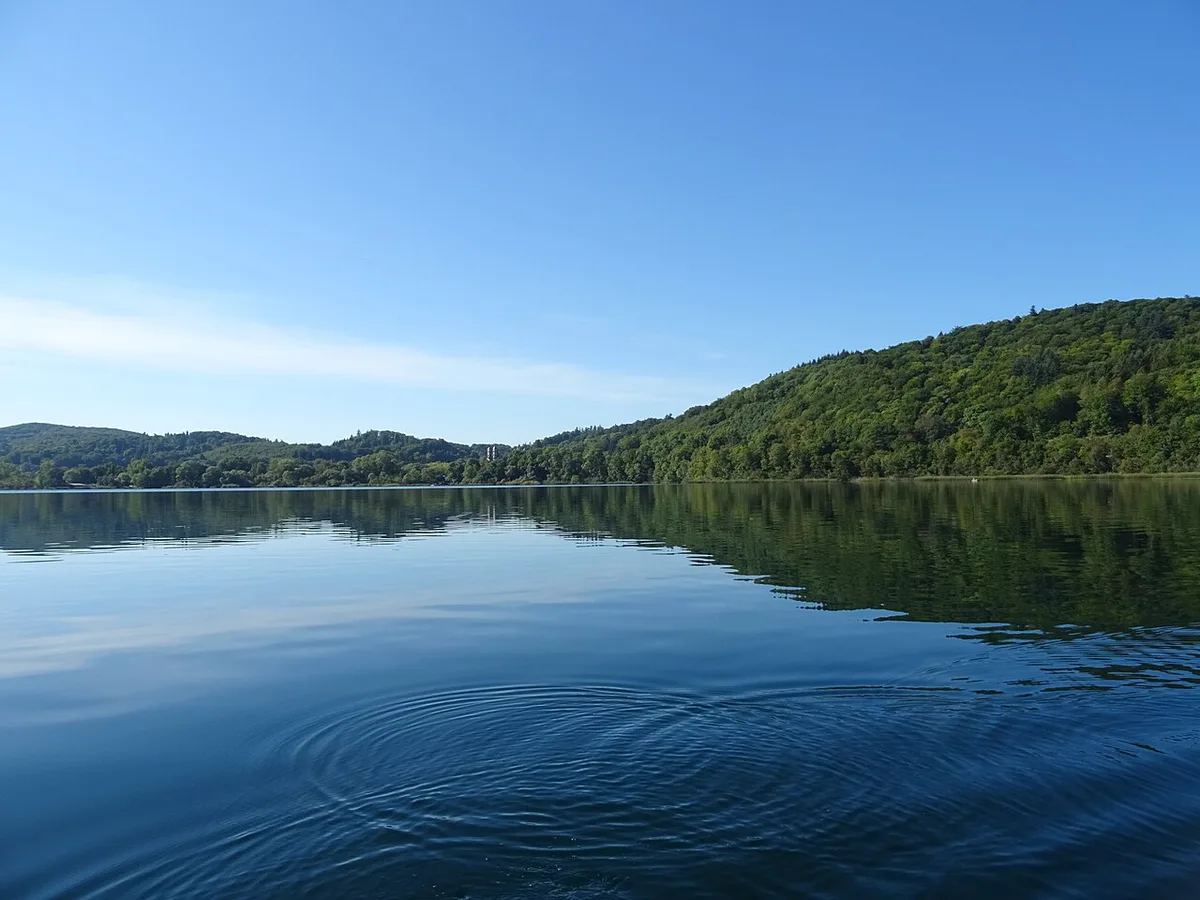
This is the core Eifel volcano experience: explosion craters left where magma met groundwater. Daun is the natural base for the West Eifel field. Expect a mix of landscapes. Only 12 of the roughly 103 maars hold water, so some stops show a lake and others show a quiet grassy hollow.
Reaching the craters is easiest by car, with walking on foot once you park. Our guide to the maar crater lakes covers individual craters. Best for walkers and photographers. Skip it if you want a summit climb, since maars are holes rather than peaks.
2. Eifel Volcano Museum, Daun
Housed in the old Daun district office at Leopoldstraße 9, 54550 Daun, this museum explains how the High Eifel formed. Interactive models, information panels and photographs show continental drift and what separates a scoria cone from other volcanic formations.

From April to October it opens Tuesday to Sunday and on holidays, 11:00 to 16:30. It is closed on Mondays. Winter guided tours are possible by prior appointment. Best on a wet day or before you head out to the craters. Skip it if you only want outdoor scenery.
3. Ulmen Maar and its tunnel
Ulmen is a town beside a volcanic lake, and its maar is one of the water-filled minority. Its tunnel was dug in medieval times to supply water to local mills. Today it works as a public photo spot, listed as the Ulmen maar gallery.
Plan a short stop and pair it with Daun, since both belong to the same West Eifel cluster. Best for visitors who like a human story attached to the geology. Skip it if you want long hikes.
4. Drees mineral springs near Daun
Drees is the local word for a mineral spring. Carbon dioxide rising from underground makes the water naturally fizzy and mineral-rich. Hotzendrees sits at the foot of the Burgberg castle hill in Daun and is a stop on the Drees hiking trail.
Steinborner Drees lies a few kilometres from Daun, where ferrous mineral water bubbles up in the middle of the village. Rengener Drees sits on the edge of its village, in the fields. Best for a casual tasting walk. Skip them if you dislike the metallic taste of iron-rich water.
5. Mendig lava cellars
Mendig is the underground stop on the East Eifel side, where volcanic rock was put to practical use below ground. Use the lava cellars at Mendig for visit details. Official East Eifel information sits with Vulkanpark Osteifel.
Mendig and the Laacher See caldera near Maria Laach belong to the East Eifel field. Treat them as a separate trip from Daun. Best for visitors who prefer indoor, rain-proof stops. Skip it if you want open crater views.
6. Andernach cold-water geyser
Geysir Andernach is a cold-water geyser. It is a volcanic gas feature of the East Eifel, not a hot-spring display. Andernach cold-water geyser has the full visit guide. The operator's own pages at Geysir Andernach explain how it works and when it runs.
Pair it with Mendig on the East Eifel side rather than with Daun. Best for families and anyone curious about gas-driven volcanism. Skip it if timed visits do not suit your schedule.
Eifel Volcano Sites Compared
Use this table to match a stop to your day. Time estimates are editorial planning guesses, not official figures.
| Site | What it shows | Typical time | Access | Indoor/outdoor | Season risk |
|---|---|---|---|---|---|
| Daun maars | Explosion craters, a few with lakes | Half day | Car easiest | Outdoor | Low |
| Eifel Volcano Museum | Cone and maar formation | 1 to 2 hours | Daun town centre | Indoor | Closed Mondays; winter hours differ |
| Ulmen maar and tunnel | Water-filled maar, medieval tunnel | Short stop | Car or local transit | Outdoor | Low |
| Drees springs | Fizzy mineral water | Short stops | Walking trail in Daun | Outdoor | Low |
| Mendig lava cellars | Underground lava use | Check official page | East Eifel | Underground | Check seasonal hours |
| Andernach geyser | Volcanic gas feature | Check official page | East Eifel | Outdoor | Check running times |
How to Plan Your Time
Group stops by side and avoid crisscrossing. For a half-day, stay around Daun: the museum opens at 11:00, so start there, then walk to Hotzendrees. For one day, add Ulmen after Daun and keep Mendig for another trip. For a weekend, spend day one on the Daun and Ulmen cluster and day two on Mendig, the Laacher See and Andernach. Check drive times between the two sides on a mapping service.
Costs, Tickets and Opening Hours
Museum hours run Tuesday to Sunday and holidays, 11:00 to 16:30, from 23 March to 31 October 2027. Winter blocks, such as 26 to 31 December 2026 and 2 to 6 January 2027, run daily from 13:00 to 16:30. Hours change yearly, so check the live Daun museum page. Admission figures were not available for the sites above, so check each operator's official page.
Winter blocks such as 2 to 6 January 2027 open at 13:00, later than the 11:00 start on regular days, so plan a later first stop.
Where to Stay and Getting Around
Daun works as a base for the Vulkaneifel maars, the museum and the Drees springs. For car-free links, check current VRS and Deutsche Bahn timetables, since the Daun and Mendig sides are separate areas.
Mistakes to Avoid
Do not plan a museum visit on a Monday, because it is closed. Do not assume every maar is a lake, since only 12 of 103 hold water. Avoid covering both the Daun and Mendig sides in one half-day. Do not rely on winter hours, which shift between 11:00 and 13:00 openings.
Beyond the Eifel: Other German Volcanic Areas
Germany has more volcanic areas than the Eifel. Start with other German volcanic areas for the overview. For deeper trips, read about the Kaiserstuhl volcanic massif. The Vogelsberg volcanic region is another option. Another is the Siebengebirge hills. Eifel National Park, established in 2004 and covering about 42 square miles, is a nearby but different trip focused on nature and history rather than volcanoes.
Eifel National Park covers about 42 square miles and is a nature trip, so don't count it as a volcano stop.
Frequently Asked Questions
Where is the Eifel in Germany located?
The Eifel is in western Germany. Its volcanic part, the Vulkaneifel, lies in Rhineland-Palatinate and splits into West Eifel and East Eifel fields. Eifel National Park is a separate, non-volcanic trip.
Are there any volcanoes in Europe?
Yes, and Germany has several volcanic areas besides the Eifel, including the Kaiserstuhl, Vogelsberg and Siebengebirge. Start with German volcano areas compared to choose between them.
Explore More Guides
Keep planning your trip with these guides.