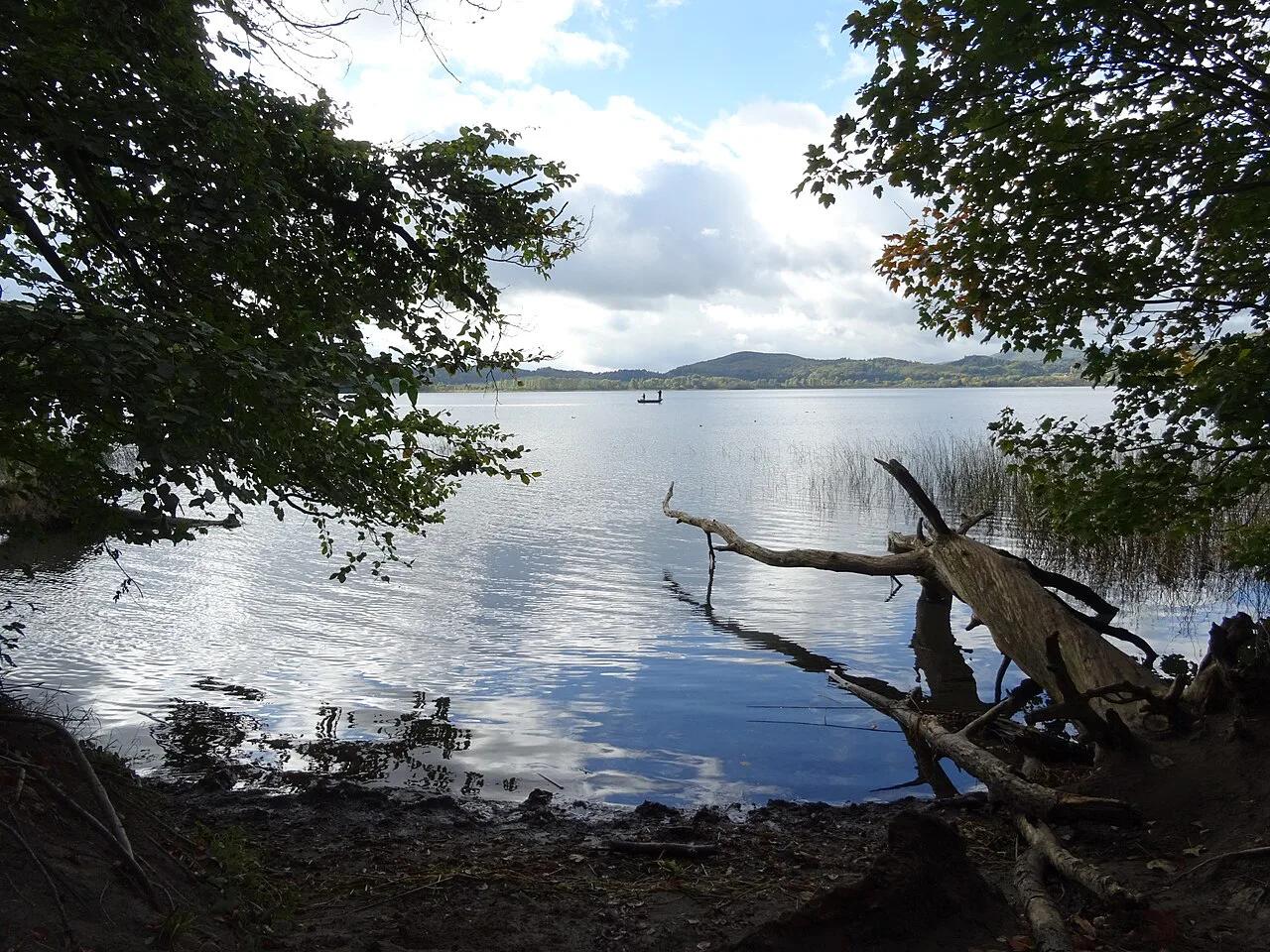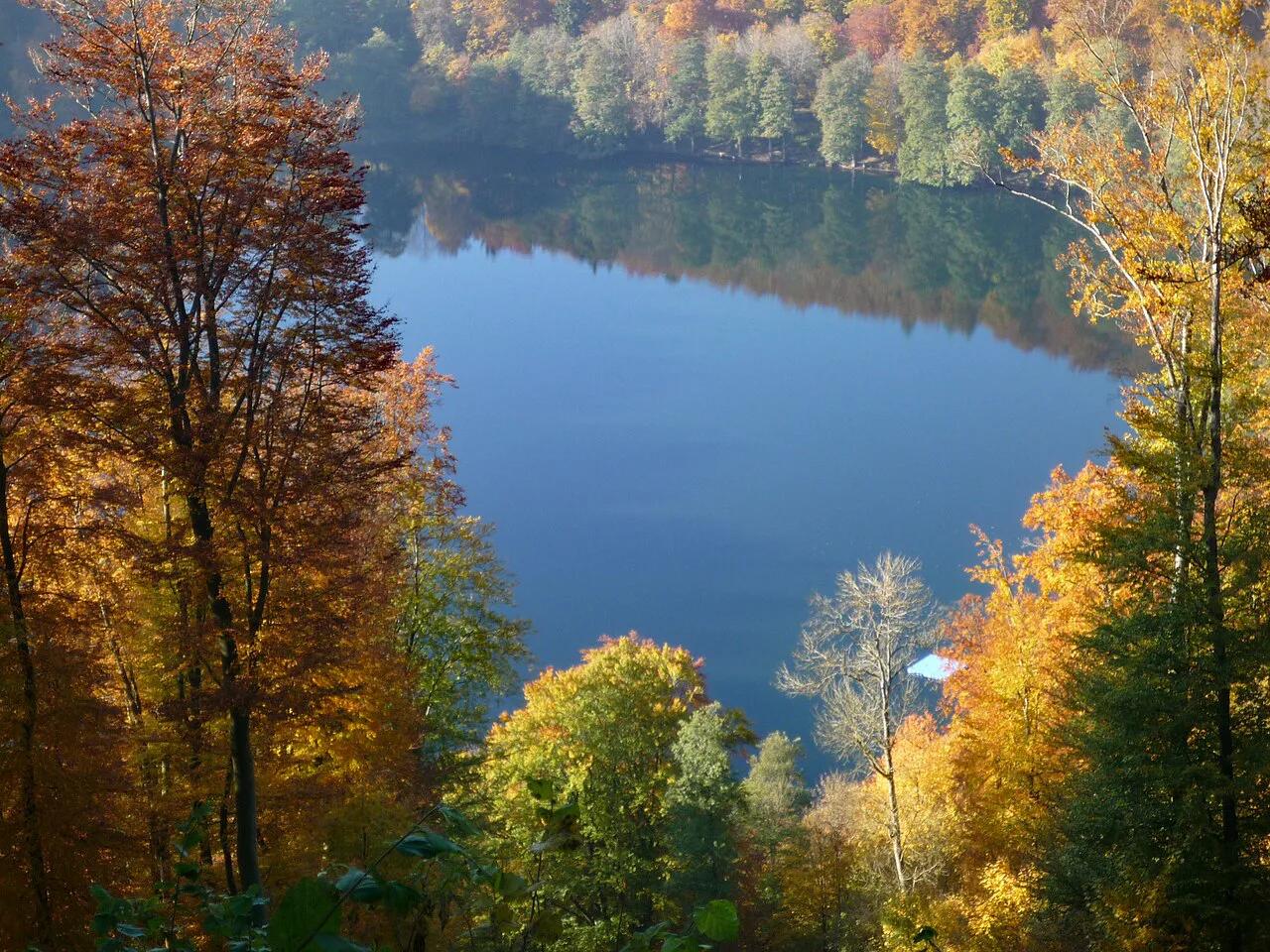
Eifel Maars: Which Crater Lakes to Visit, Swim and Hike
Last updated November 2026: the Eifel maars are craters blasted out by steam explosions, and about eleven of them still hold water. Daun, Manderscheid and Ulmen are the practical bases for visiting them. Our Eifel volcanoes guide covers the wider region, and this page helps you choose which maars suit your time and your swimsuit.
Featured image: Hartmut Schmidt, Heidelberg, CC BY-SA 4.0, via Wikimedia Commons.
What Is a Maar, and How Many Eifel Maars Can You Visit?
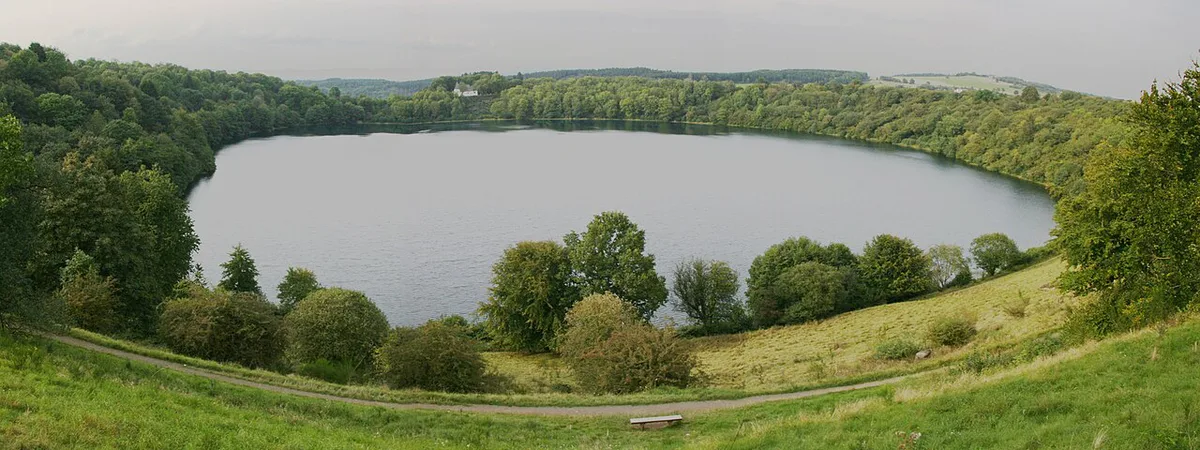
A maar forms when rising magma meets water-bearing rock. Steam explosions shred the surrounding rock and blast out a funnel. After the volcanic activity fades, groundwater fills many of these craters. Eifel tourism counts more than 70 maar volcanoes in the region, but only eleven still hold water. Silt has filled in the rest. Sources vary slightly, since the Geopark lists about 19 features, including dry maars, bogs and non-maars. Working with "about eleven" water-filled maars is safe. Questions about future eruptions belong in our guide on whether the Eifel could erupt again.
Which Eifel Maar Should You Visit?
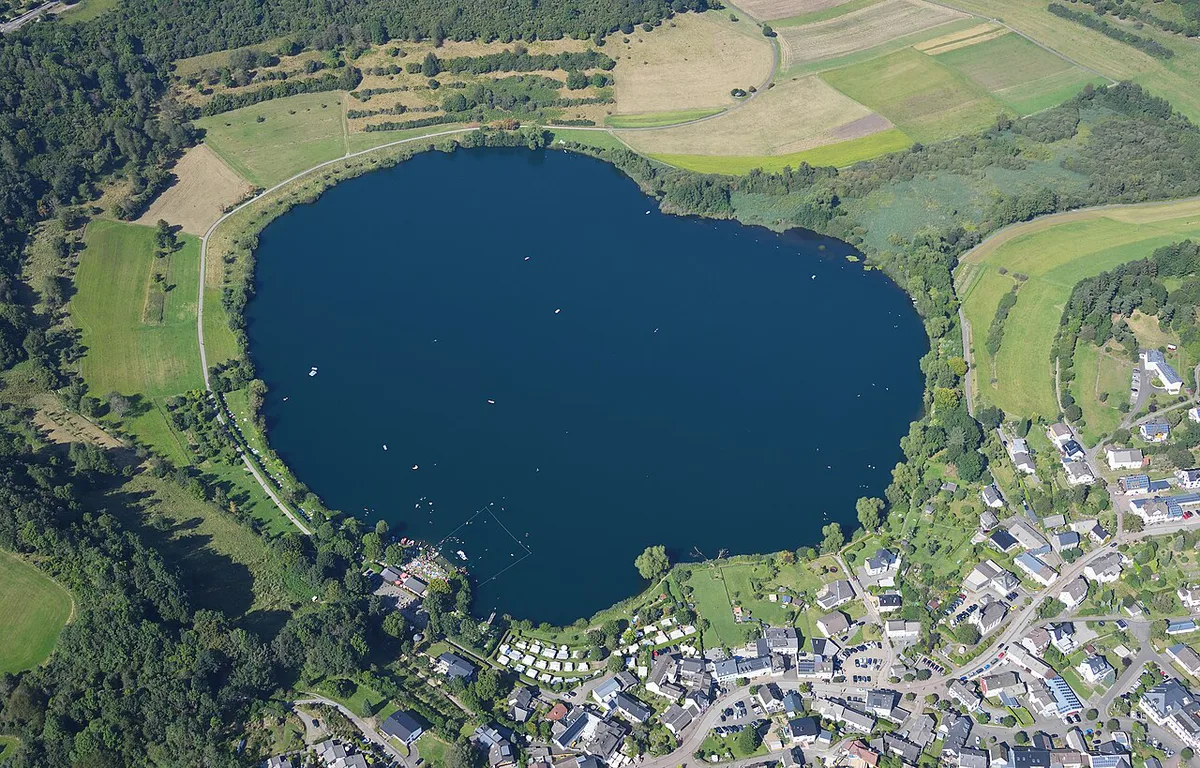
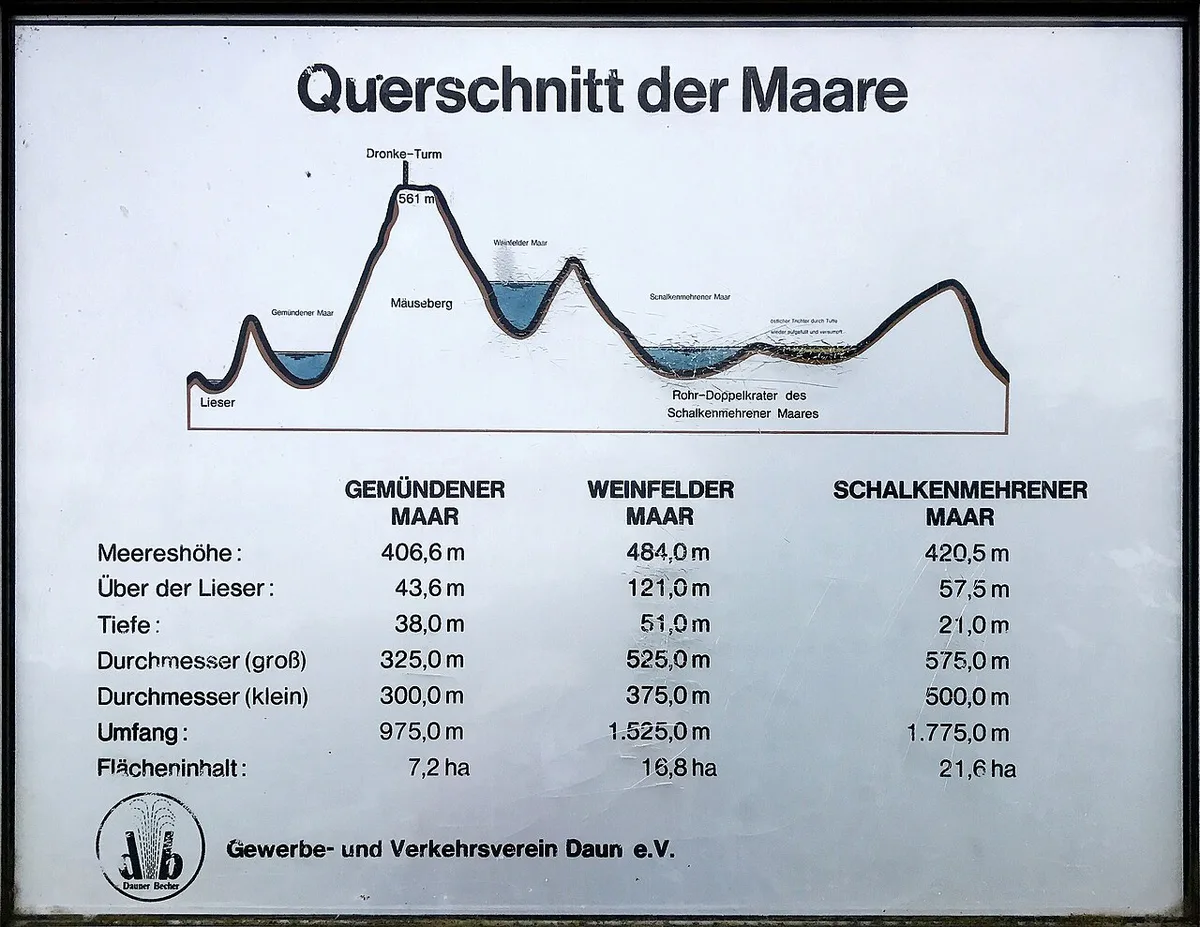
Start with the Daun cluster, where three maars sit within a few kilometres of Daun. Weinfelder Maar, also called Totenmaar, lies about 2 km from Daun. It measures roughly 525 m across and drops 51 m, which makes it the deepest of the three. Gemündener Maar is the smallest at 325 m and sits about 1.5 km from Daun. Schalkenmehrener Maar is the largest and a double maar, with a western lake and an eastern dry maar. Geopark Vulkaneifel publishes a profile of each one. Meerfelder Maar, near Manderscheid, fills only part of a 1,700 m basin, the largest maar crater in the Eifel.
| Maar | Swimming | Character | Best fit |
|---|---|---|---|
| Gemündener Maar | Allowed; outdoor pool, sunbathing area and boat rental | Smallest Daun maar, 325 m across | Families and easy afternoons |
| Schalkenmehrener Maar | Geopark calls it the maar for swimming | Largest Daun maar, a double maar | Swimmers |
| Weinfelder Maar | Check locally | Deepest Daun maar at 51 m | Quiet walkers |
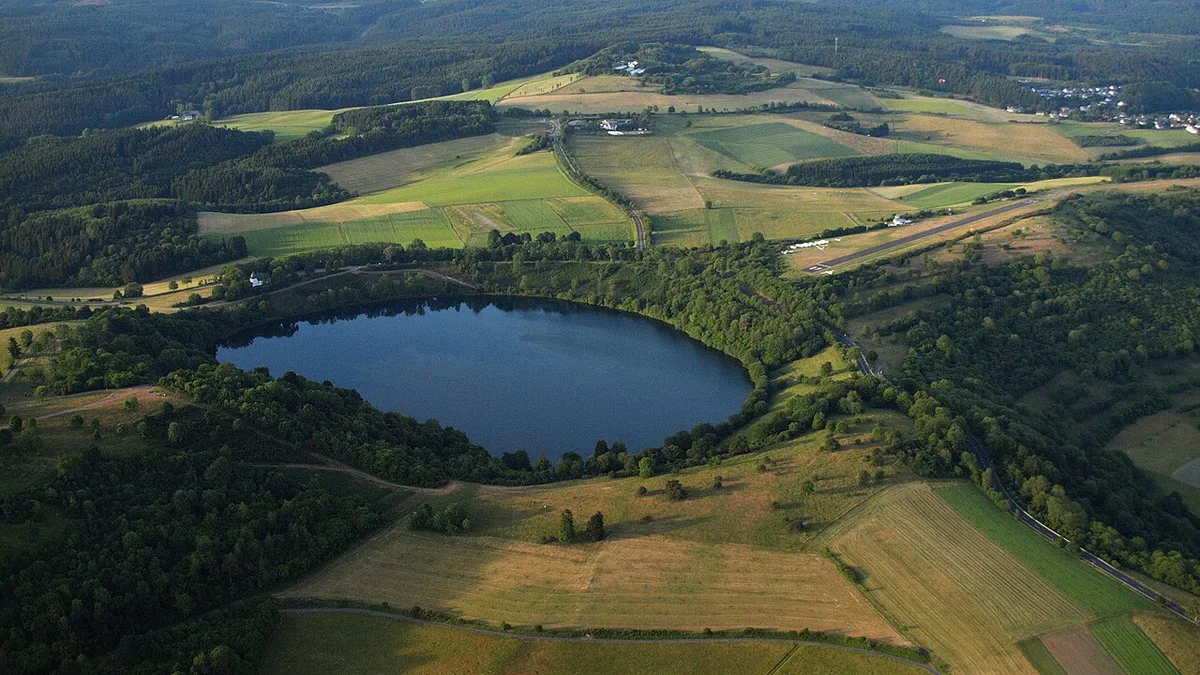
| Pulvermaar | Natural swimming pool; suits non-swimmers and small children | Largest water surface and greatest depth | Swim plus hike |
| Meerfelder Maar | Check locally | Largest crater, only partly water-filled | Calm scenery near Manderscheid |
| Ulmener Maar | Check locally | Youngest maar; tuff wall up to 20 m thick | Geology fans |
| Holzmaar | Check locally | Smallest water-filled maar, heavily researched | Research-minded walkers |
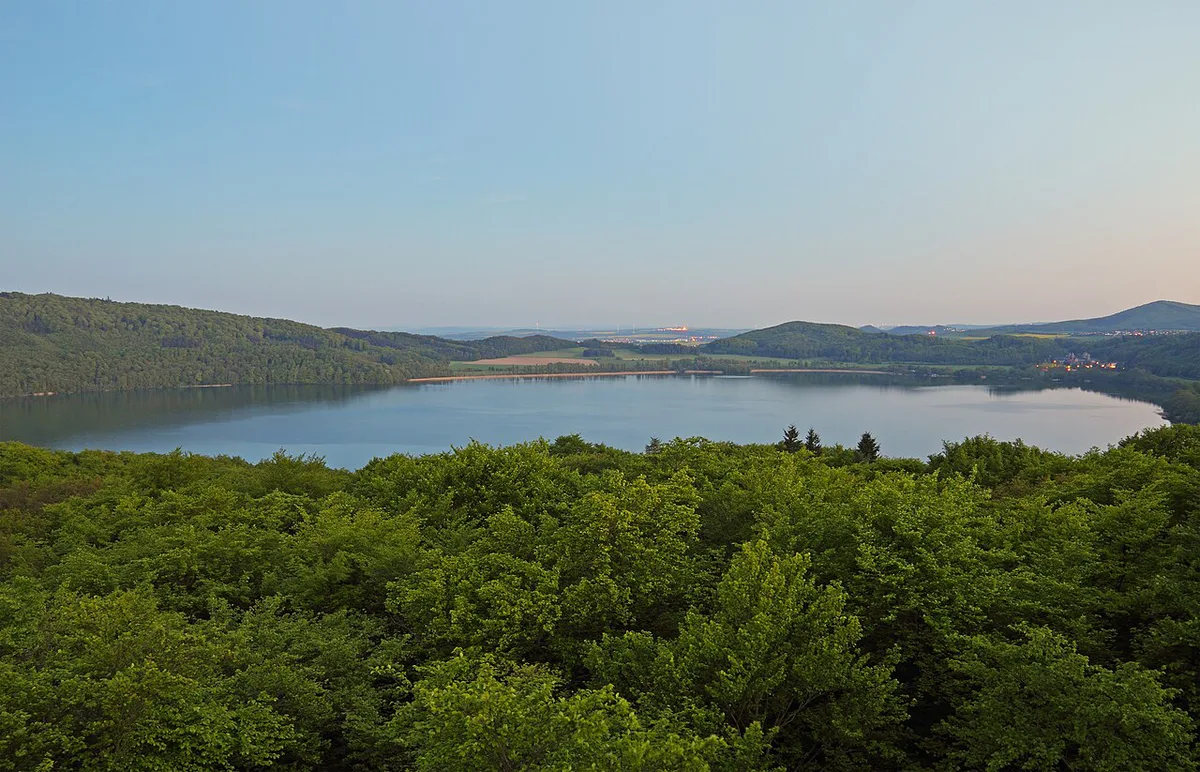
- Daun maars: three craters close together, with swimming at two of them. This is the best first visit.
- Pulvermaar: pick it for a swim and a hike around the largest water surface of any Eifel maar.
- Meerfelder Maar: choose it for quiet shores and an enormous crater near Manderscheid.
- Ulmener Maar: formed roughly 10,000 to 10,900 years ago depending on the source, and the youngest of the Eifel maars.
- Holzmaar: the smallest water-filled maar, studied by researchers since the 1980s.
Can You Swim in the Eifel Maars?
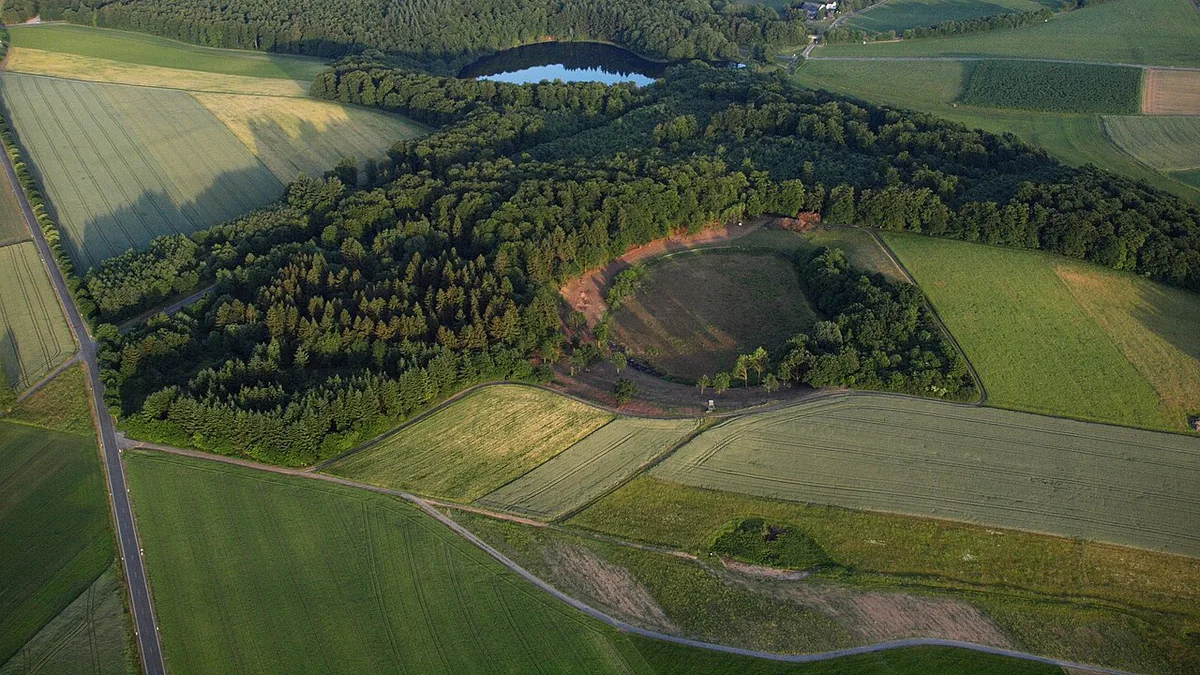
Geopark Vulkaneifel names three maars as swimming spots. Gemündener Maar allows swimming and adds an outdoor pool, a large sunbathing area and boat rental. Schalkenmehrener Maar is labelled the maar for swimming. Pulvermaar is described as a natural swimming pool that also suits non-swimmers and small children. Other maars are not bathing sites just because they look like lakes. Moor maars such as Dürres Maar are protected habitats. Check the local tourist office for water-quality notices, lifeguard cover and the bathing season before you pack towels.
Gemündener Maar allows swimming and sits about 1.5 km from Daun, so a swim fits neatly into a stay based there.
Maar Itineraries by Time Available
Match your time to the clusters. Eifelsteig Stage 11 from Daun to Manderscheid covers 23.3 km in about 7:00 h and is rated hard. The Maare-Mosel Cycle Route is gentler. It runs 57.7 km from Daun to Bernkastel-Kues in about 4:45 h on a former rail line.
- Half day: visit Gemündener and Schalkenmehrener Maar near Daun, and swim at either.
- One day: spend the morning at the Daun maars and the afternoon at Pulvermaar. Alternatively, pair Meerfelder Maar with the Maarmuseum in Manderscheid.
- Two to three days on foot: walk Eifelsteig Stage 10 from Gerolstein to Daun (23.8 km, 6:30 h, hard). Then continue on Stage 11 to Manderscheid.
- By bike: ride the Maare-Mosel Cycle Route from Daun to Bernkastel-Kues (57.7 km, 4:45 h, easy).
- Shorter walk: Stage 1 of the Maare-and-Thermen-Route runs from Ulmen to Lutzerath (18.6 km, 6:30 h, medium).
Getting Around, Costs and Where to Base Yourself
Walking the shore of most maars costs nothing. Fees apply for extras such as boat or pedalo rental, the outdoor pool at Gemündener Maar and museum entry. Current prices sit on each operator's site. Daun works as a base for the three Daun maars, which lie 1.5 to 2 km out. Manderscheid suits Meerfelder Maar, Ulmen suits Ulmener Maar, and Gerolstein is where Eifelsteig Stage 10 begins. Rail and bus timetables for the Vulkaneifel are not covered here, so check the regional operator before relying on public transport. A single base can cost time, since Daun and Manderscheid are separate maar areas.
Walking Eifelsteig Stage 11 from Daun to Manderscheid covers 23.3 km in about 7:00 h, and the two towns are separate maar areas.
Not Every Crater Lake Is a Maar
Windsborn crater lake in Bettenfeld is not a maar. Geopark Vulkaneifel calls it the eruptive crater of a volcanic mountain, and it stays filled with water all year. Hinkelsmaar is also not a true maar. It is a stratovolcano in the Mosenberg-Meerfeld system, and a tunnel dug in 1840 drained its crater lake. Laacher See is a water-filled caldera. Many real maars are dry or moor-filled, so expect bog vegetation rather than a lake.
- Strohner Määrchen: one of the last raised bogs in the Eifel.
- Dürres Maar: filled with an intermediate moor and protected since 1979.
- Mürmes: an oval fen with peat layers four metres thick.
- Mosbrucher Weiher: a partly moored dry maar, protected since 1939.
- Jungferweiher: a dry maar flooded again in 1942 by damming the Nollenbach.
Maar Museums and Geology Stops
Four museums explain the volcanism. Eifel-Vulkanmuseum in Daun, Maarmuseum in Manderscheid and Vulkanhaus Strohn are dedicated to it. Gerolstein Natural History Museum sits in the old town hall and shows regional minerals, rocks and fossils. Near Manderscheid, the dried-out Eckfelder Maar is the oldest maar and an archaeological site. Finds there include a 50 cm skeleton of the Eckfeld prehistoric horse. Opening hours and tickets change, so use each museum's official site.
Next Steps in the Volcanic Eifel
Our German volcano overview places the maars in a national context. For underground heritage, visit the Mendig Lava Cellars: Tours, Hours & Lava-Dome Tips. Andernach's cold-water geyser is a separate volcanic attraction and not a maar. Another German volcanic region is the Kaiserstuhl.
Frequently Asked Questions
Where is the Eifel in Germany?
Eifel is a volcanic upland in Rhineland-Palatinate. Koblenz lies close by. Daun, Manderscheid, Ulmen and Gerolstein are the main bases for the maars.