Is the Eifel Volcano Active? What Science Says
Last updated November 2026. Is the Eifel volcano active? Not in the sense of erupting: the Eifel is a dormant volcanic field in western Germany, and scientists treat it as able to erupt again someday. Visitors face no routine volcanic hazard, and the sections below explain the terms, the visible evidence and the practical cautions.
Featured image: CEphoto, Uwe Aranas, CC BY-SA 3.0, via Wikimedia Commons.
Short answer: is the Eifel volcano active today?
No eruption is under way in the Eifel. Researchers class the region as dormant, which means the magma system is quiet but not considered dead. Its last major eruption formed the Laacher See area roughly 13,000 years ago. Geologists date that event from the ash and deposits it left behind. For a full tour of the landscape, start with our Eifel volcanoes guide. For an official reading on current conditions, consult the Rhineland-Palatinate geological survey.
What active, dormant and extinct mean for the Eifel
Volcanologists use three loose labels. Active usually means erupting now or in recent history. Dormant means quiet but capable of waking. Extinct means the plumbing is cut off for good.
Definitions vary between agencies, so the answer depends on which one you use. Under a broad definition that counts eruptions in the last several thousand years, the Eifel can fall into the active category. Under a strict definition of ongoing eruption, it does not. Dormant is the fair middle description, and most scientists apply it here.
A volcanic field, not one volcano
Search results often ask about the Eifel volcano, but no single cone exists. The region is a field of many small vents, including maars, cinder cones and lava flows. A maar is a crater formed by a gas-driven explosion that later filled with water. Our Eifel maars guide shows what those lakes look like on the ground.
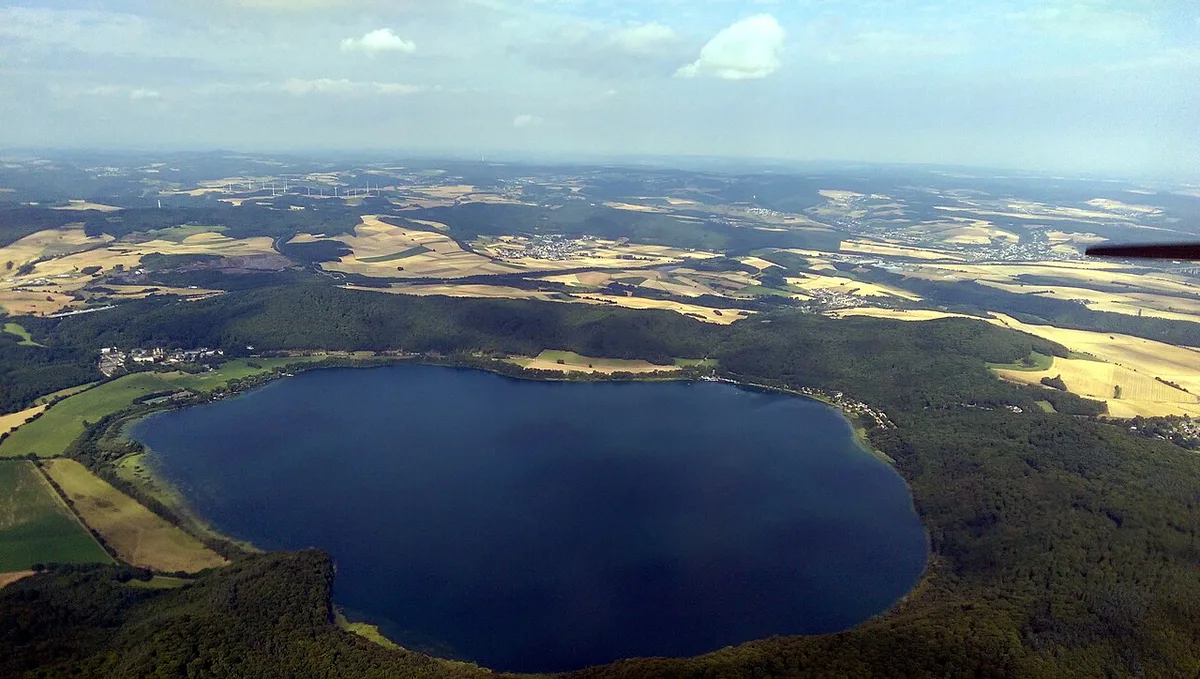
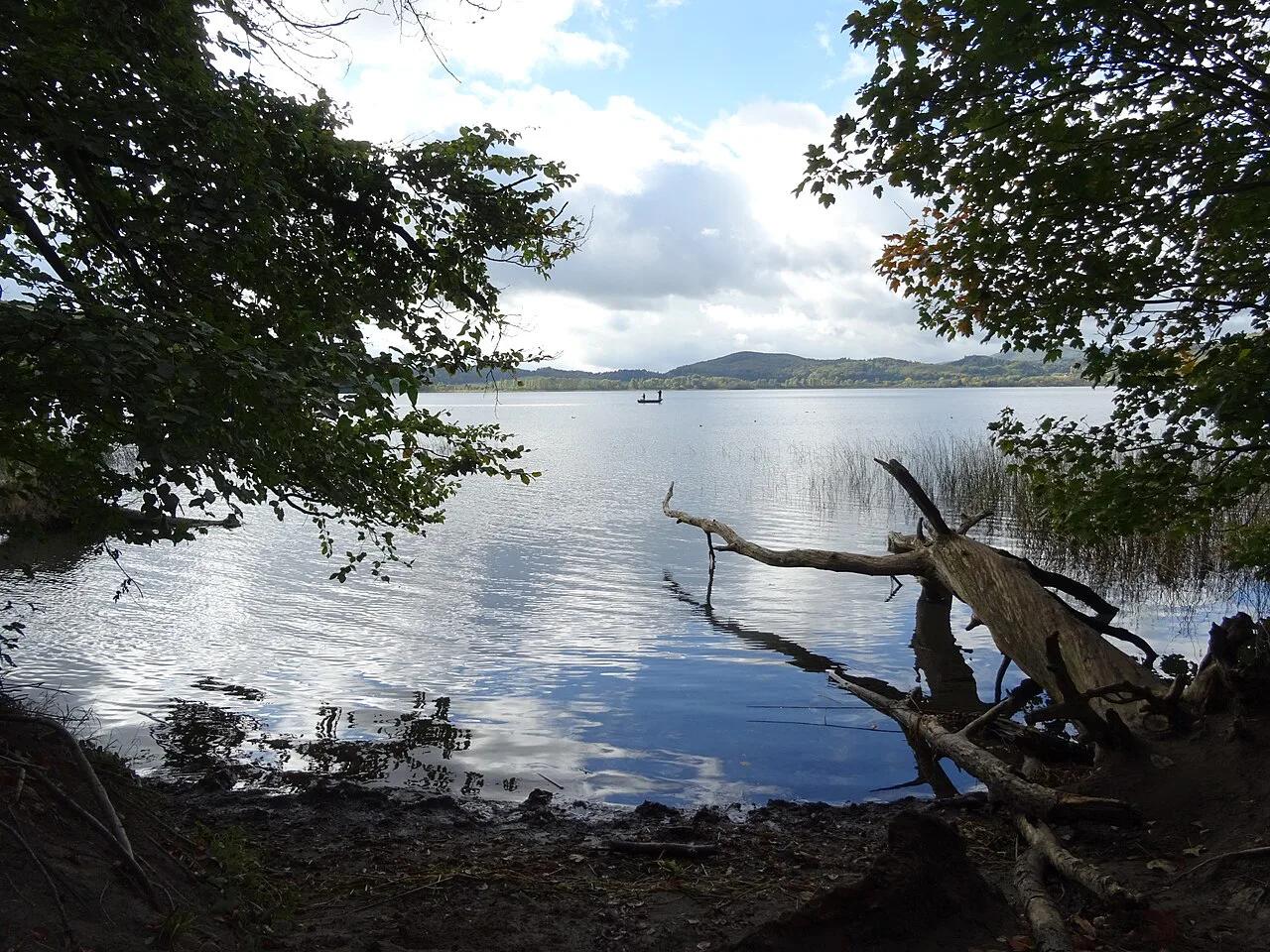
Researchers usually split the field in two. The West Eifel holds the maar lakes around the Geopark Vulkaneifel. The East Eifel lies near Mendig and Andernach, and includes Laacher See, a flooded caldera. Laacher See produced the large eruption mentioned above. For visitor information on the western half, see the Geopark Vulkaneifel. The eastern half is covered by the Vulkanpark Osteifel.
Signs the region is still volcanically alive
Several features show that heat and gas still move beneath the Eifel. None of them is a forecast of an eruption.
Carbon dioxide output is one of 3 types of evidence scientists watch, alongside quakes and ground movement, so gas seeps here are not an alarm on their own.
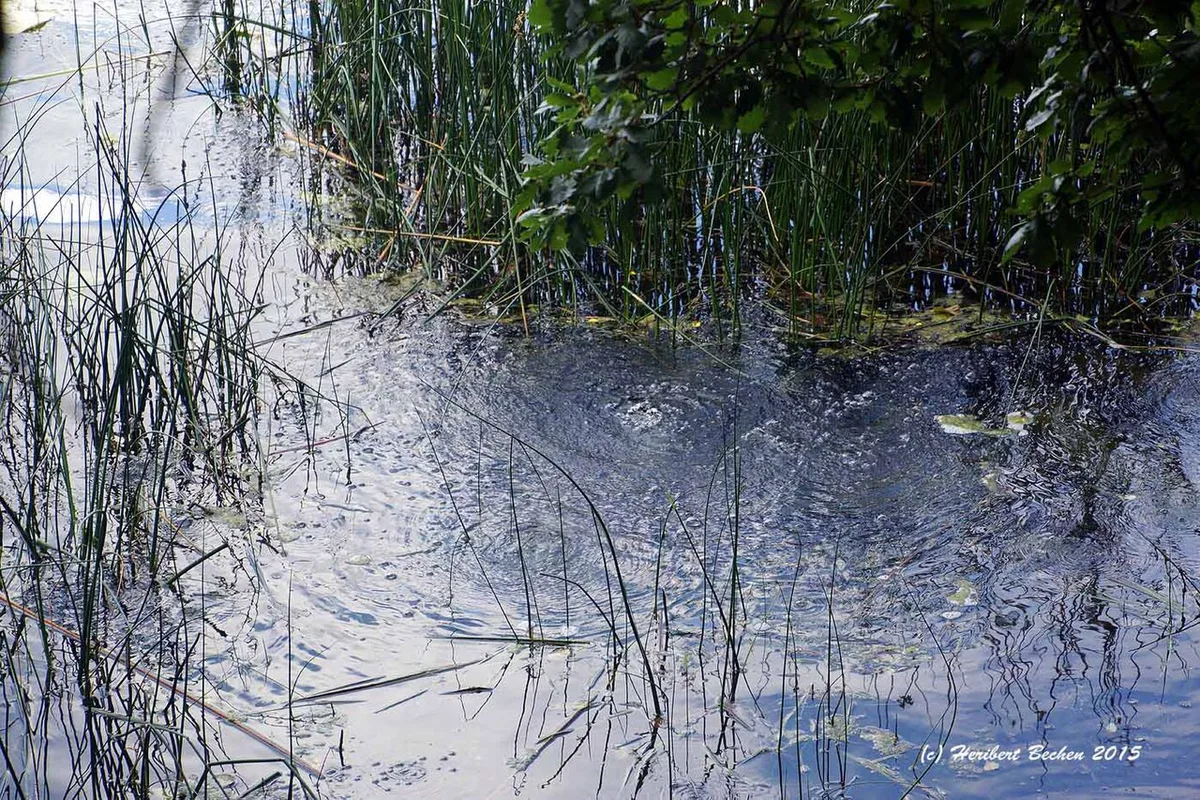
- Carbon dioxide degassing: gas seeps from the ground in places, and it is the same gas that powers the geyser below.
- Mineral springs: fizzy, carbonated water rises at several sites across the region.
- The cold-water geyser at Andernach: gas pressure drives water upward, and our Andernach geyser guide covers the visit.
- Lava-flow remains: underground basalt workings near Mendig reflect past eruptions, as described in our Mendig lava cellars guide.
How scientists monitor the Eifel and what a warning would involve
Volcano observers generally track three signals. Seismic instruments record small earthquakes. Ground-deformation surveys detect swelling or sinking. Gas measurements show changes in carbon dioxide output. A meaningful warning would normally combine several of these signals, rather than rest on one reading.
Official communication would come through state and regional authorities. Check the geological survey and local civil-protection channels for current statements. Nothing on this page replaces an official bulletin.
Is it safe to visit the Eifel volcanic region?
Yes. Tourist sites in the Eifel are managed as ordinary attractions, with no volcanic hazard in routine visits. The practical cautions are different from eruption risk. Gas can collect in low, enclosed spaces such as cellars, caves and pits, so obey posted signs and staff instructions. Keep to marked paths near crater edges and lake shores. Weather and slippery slopes cause more trouble for hikers than geology does. Tour availability and seasonal closures change, so check each site's current hours before you travel.
Gas in cellars, caves and pits is the real concern for visitors, even though the last major eruption was roughly 13,000 years ago.
Where to see volcanic features: choose by interest
Pick a stop based on what you want to learn. Maars suit walkers and photographers. The geyser suits a short, easy stop. The lava cellars suit anyone curious about the rock itself. Costs and schedules differ, so confirm each on the official site.
| Interest | Best stop | Guide |
|---|---|---|
| Crater lakes and walks | West Eifel maars | Maar landscape |
| Gas-driven geyser | Andernach | Cold-water geyser |
| Lava history underground | Mendig | Lava cellars |
| Big picture of the field | Whole region | Eifel overview |
How the Eifel compares with other German volcanic areas
Germany has several volcanic regions, and the Eifel is the one with the most recent activity in the scientific record. Our German volcanoes overview compares them side by side.
In the south-west, Kaiserstuhl is an eroded volcanic hill. Further east, Vogelsberg is a large volcanic massif. Near Bonn, Siebengebirge offers hills shaped by older volcanism. These areas are generally described as long inactive, so they raise no eruption question for visitors. Return to the Eifel volcanoes hub to plan a route.
What to do if volcanic conditions change during your trip
The Eifel has no eruption under way, and its last major eruption occurred roughly 13,000 years ago. That long interval is why a visit does not require special volcanic preparations. Still, use official information if circumstances change while you are in the region.
Scientists look for a combination of 3 types of evidence: small earthquakes, ground movement and changes in carbon-dioxide output. A single observation would not normally establish an eruption warning. State and regional authorities would communicate any meaningful change through official civil-protection and geological-survey channels.
If an authority issues instructions, follow the specified area closures, route advice and staff directions at visitor sites. Do not enter closed caves, cellars, pits or other low enclosed spaces, where gas can collect. Check current notices before setting out, especially when planning a visit to Laacher See, Mendig or Andernach.