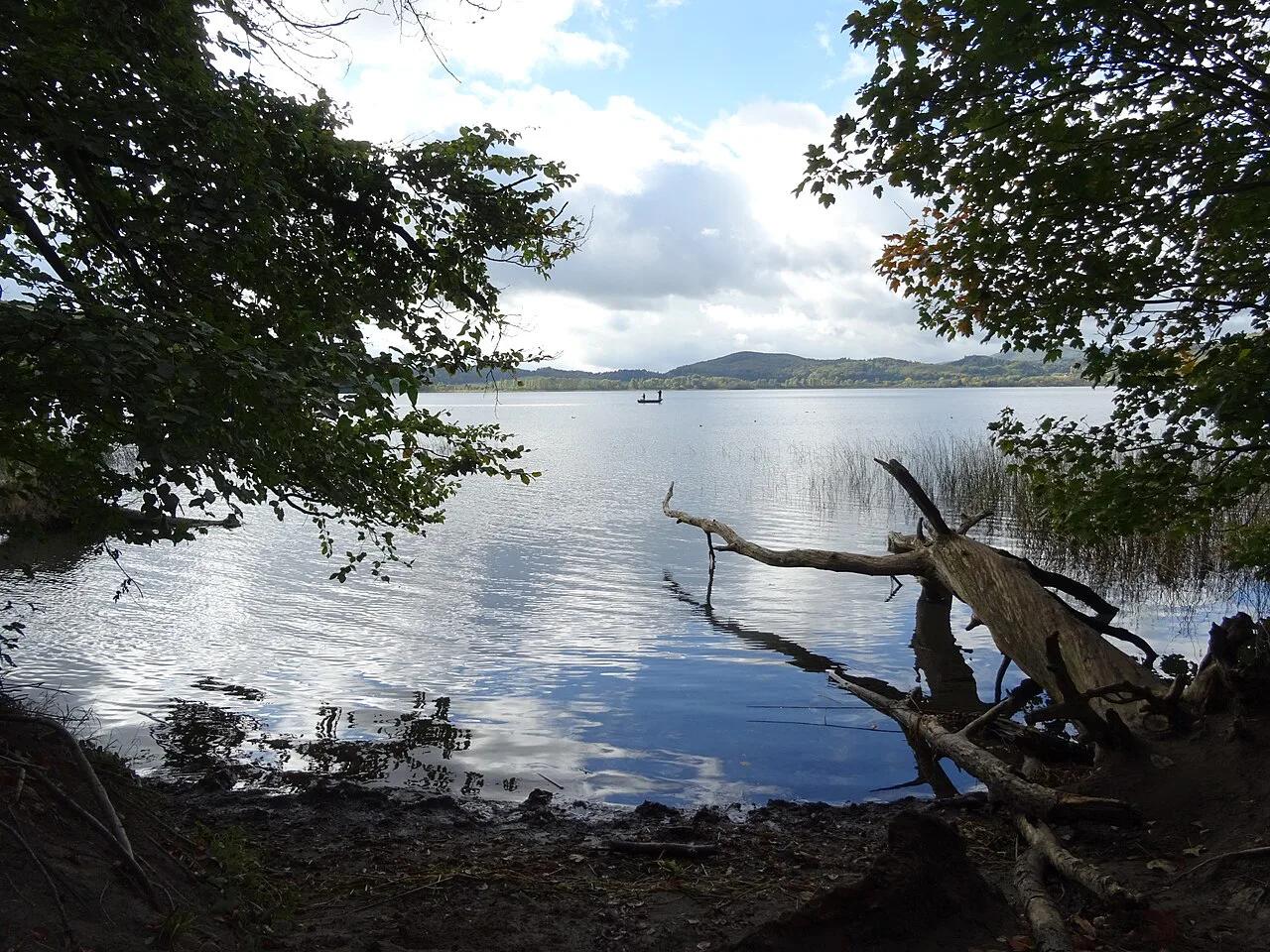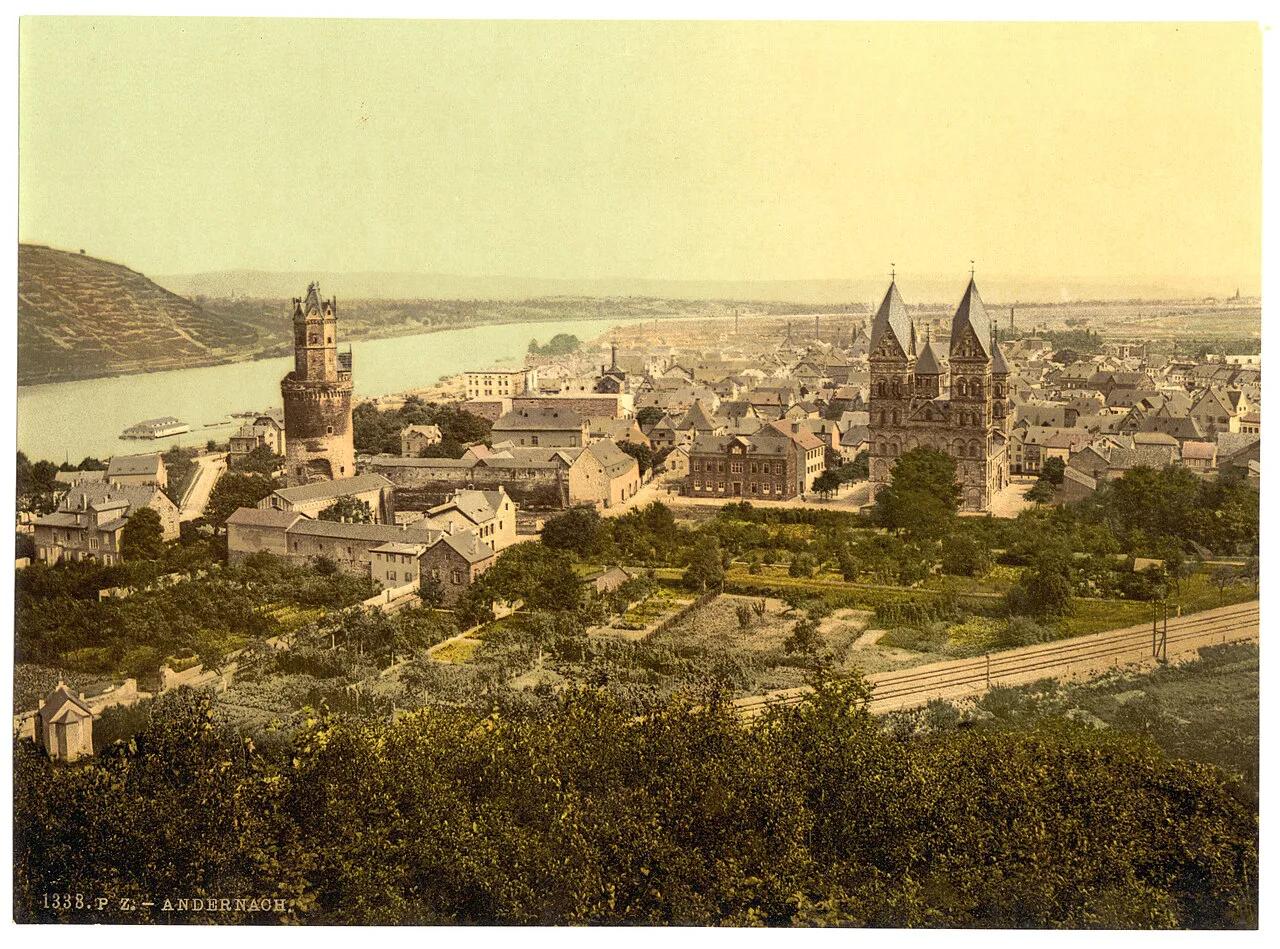
Andernach Geyser: Tickets, Boat Times & Is It Worth It?
Last updated November 2026: geysir Andernach is a cold-water geyser on Namedy Island in the Rhine, driven by volcanic carbon dioxide and reached only by boat from Andernach. Boats leave at 11:15, 13:05, 15:00 and 17:00 in peak season, and island access runs from April to October. Below you will find ticket logic, timing, transport and a clear verdict on who should skip it.
Featured image: Wikimedia Commons, Public domain, via Wikimedia Commons.
Geysir Andernach at a glance
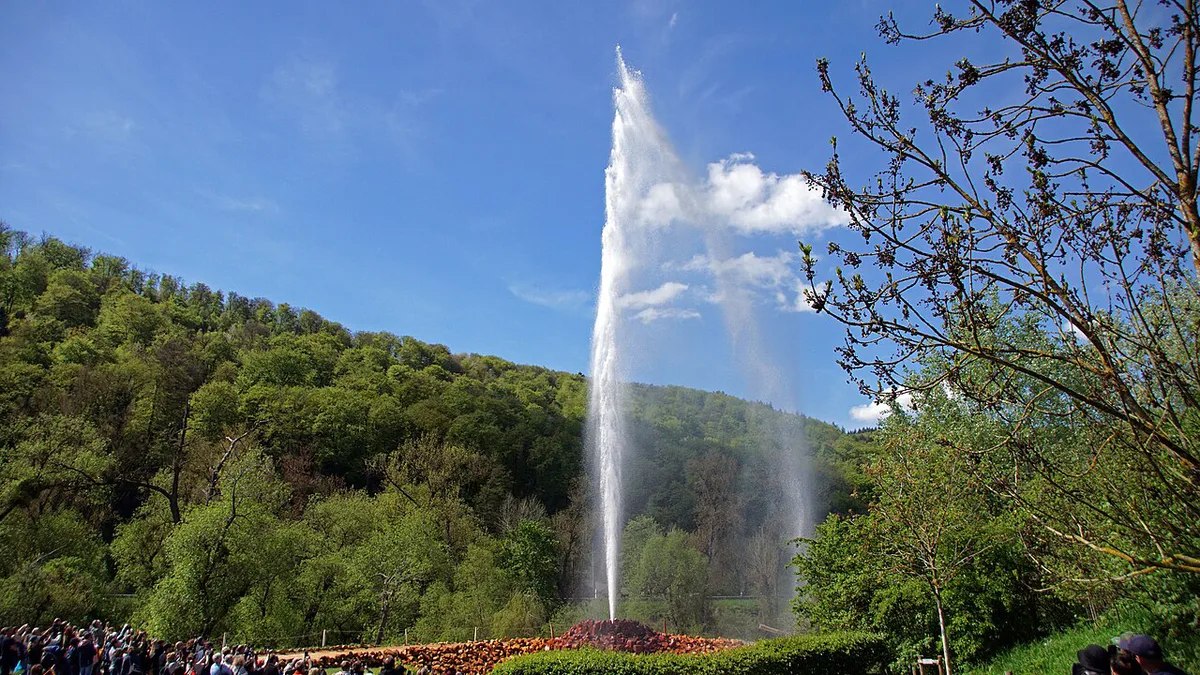
Billed as the world's highest cold-water geyser, the Andernach geyser can reach up to 60 m under ideal conditions. A visit has three parts: the Geysir-Zentrum museum, a boat to Namedy Island, and a short walk to the eruption. Budget about 90 minutes for the boat trip including the island, plus museum time before departure. Verdict: it suits families, geology fans and Rhine day-trippers, and it disappoints anyone expecting Iceland-style drama or short on time.
| Item | Detail |
|---|---|
| Island season | April to October |
| Boat departures (peak season) | 11:15, 13:05, 15:00, 17:00 |
| Boat trip including island | About 90 minutes |
| Adult ticket | €15 (2019 price; check current fare) |
| Walk from pier to geyser | About 400 m |
| Boat capacity | Up to 350 people |
| Facilities on island | None; chapel and guide only |
How the Andernach cold-water geyser works
Hot geysers such as those in Iceland run on heat. Andernach runs on gas. Carbon dioxide linked to Eifel volcanism dissolves in groundwater held in natural underground reservoirs. Water can carry only so much gas before pressure builds and the mixture rises. Think of a shaken soda bottle opened at the top. Eruptions here build slowly and hold near their peak for about five minutes, instead of one short explosive burst. A gate valve controls the borehole, so operators can time the show precisely. The 60 m figure is a ceiling reached only in ideal conditions, not a promise for every departure.
- For the wider volcanic setting, start with the Eifel volcanic field.
- The gas source raises an obvious question, answered in our note on the Eifel's current volcanic status.
A short history of the geyser
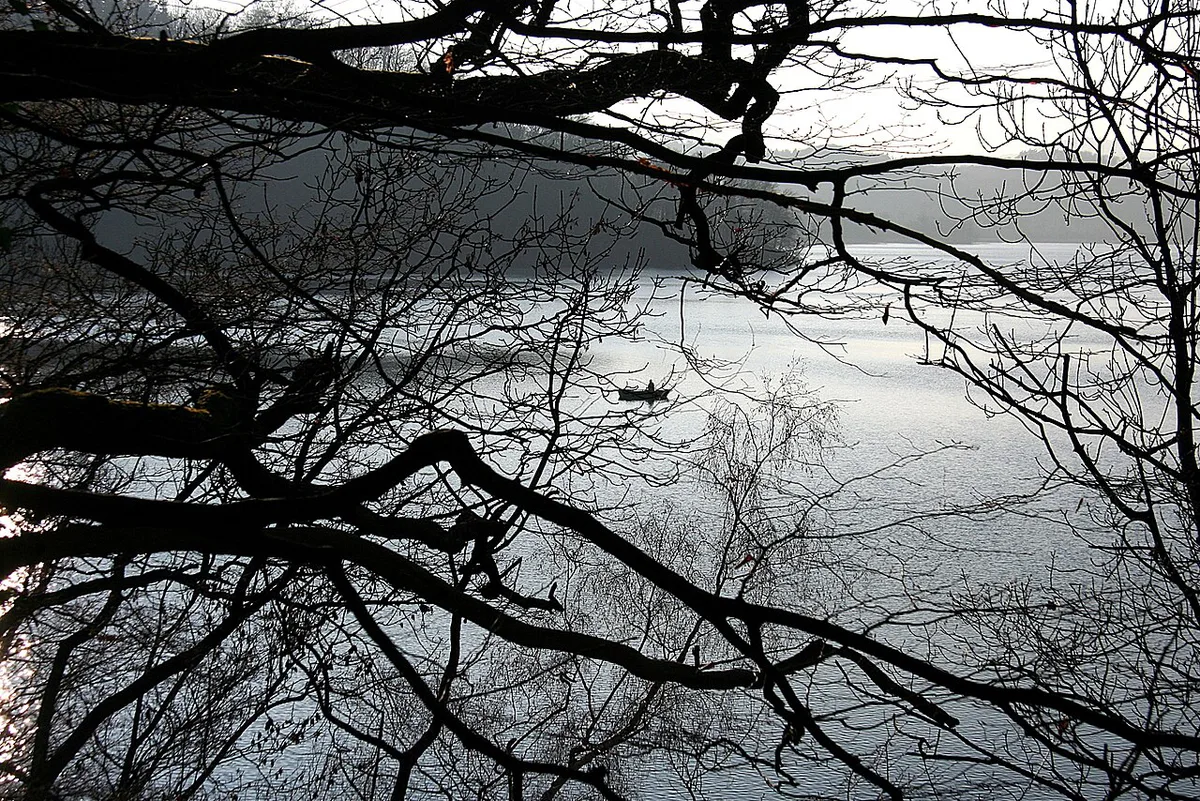
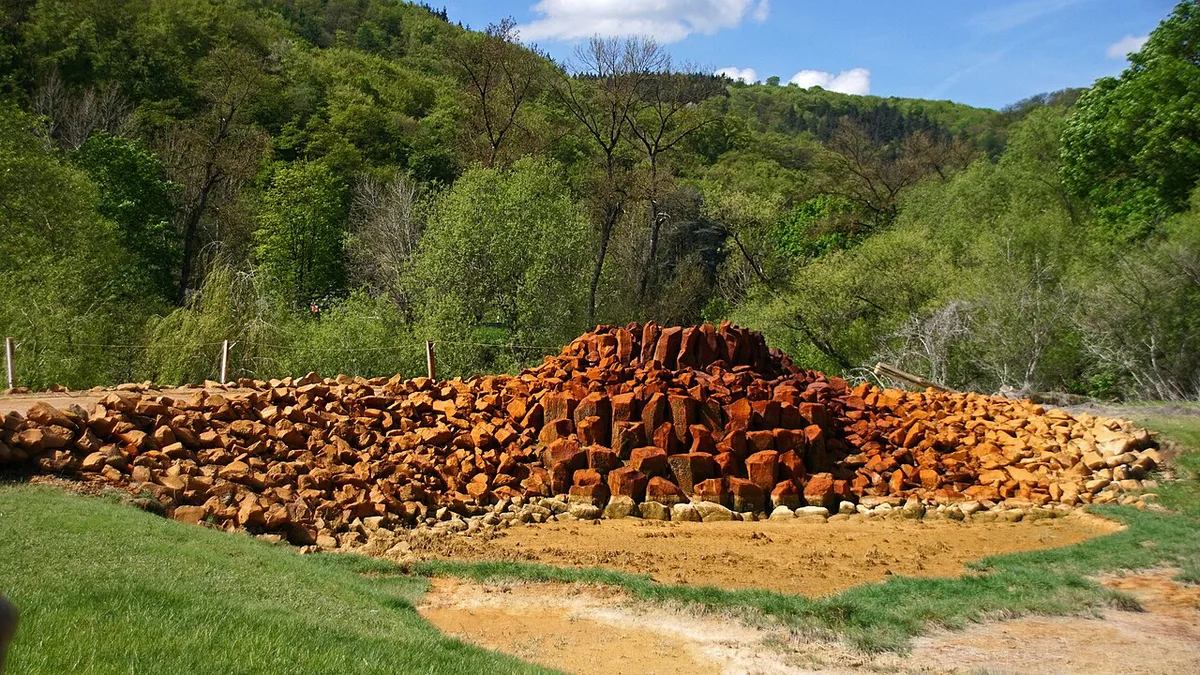
Drilling on Namedy Island in the early 20th century aimed at gas-rich mineral water, sold as Namedyer Sprudel. Fountains shot skyward during production and became a regional attraction. Poor maintenance weakened the flow, and the geyser closed in 1957. In 2001 the city of Andernach drilled again, and the first hole sent water up about 40 m. By then the island was a nature reserve, so environmental groups challenged public access in court. The compromise was limited, controlled visits, which is why you reach the geyser only on a scheduled boat. Because the borehole is human-made, even though the gas and water are natural, some visitors call the attraction semi-artificial.
Geysir Andernach tickets, boat times and season
The adult fare was €15 in 2019, with family and season tickets also offered. Check the current price on the official Geysir Andernach site before you budget. The boat trip is bundled into admission and is mandatory, so you cannot buy a museum-only entry as a route to the island. Peak-season departures are 11:15, 13:05, 15:00 and 17:00. The museum is reported to stay open all year, while island trips run only from April to October. In summer holidays, reserve online and pay on site, because each boat carries up to 350 people. A 17:00 departure returns around 18:30 if the 90-minute round trip holds. The same boat also works as a ferry to Leutesdorf on the opposite bank. Ask the operator about its weather and cancellation policy before travelling a long way.
| Question | Answer |
|---|---|
| What is included? | Museum, boat and island visit |
| How do you book? | Reserve online, pay on site |
| When is booking most useful? | Summer holidays and peak season |
| Can you skip the boat? | No; it is the only route to the island |
How to get to Andernach and the geyser
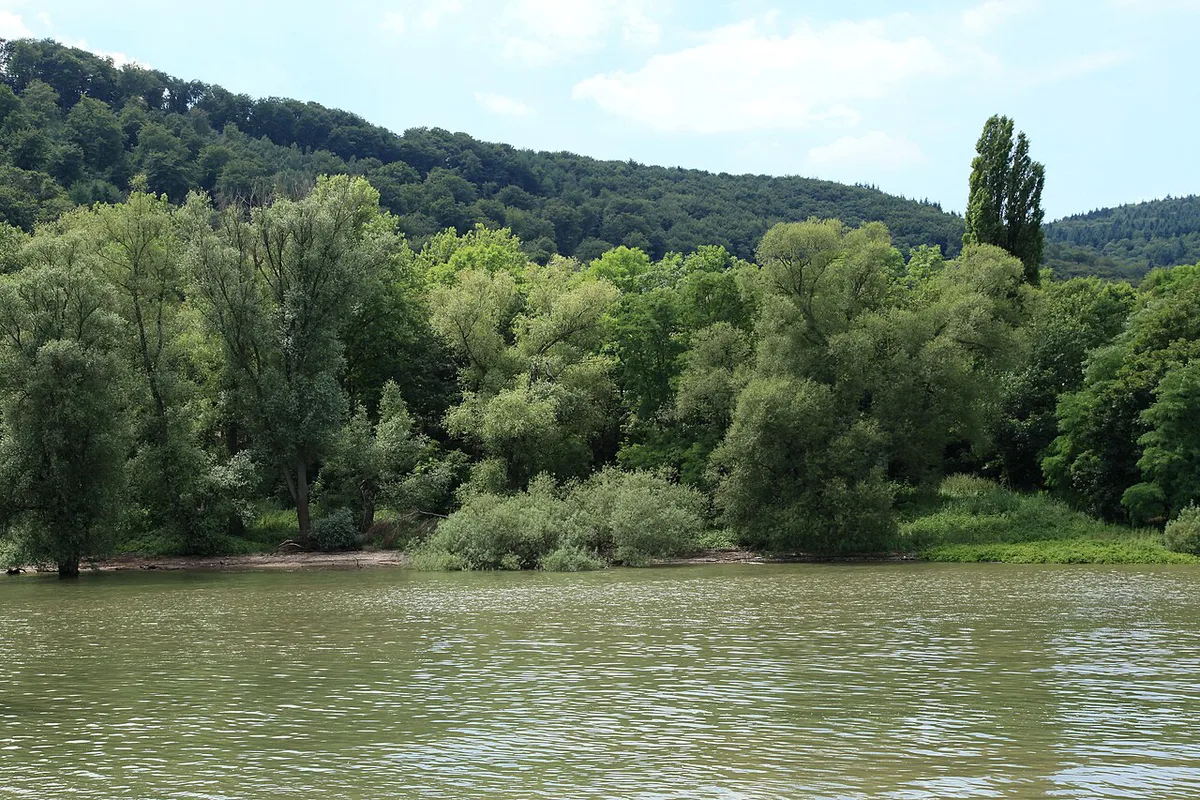
Andernach sits on the Rhine about 45 km south of Bonn, with Koblenz and Neuwied as the nearest larger towns. Trains reach Andernach station on the Rhine line, which is the simplest option for day-trippers from Cologne, Bonn or Koblenz. Walking time from the station to the Geysir-Zentrum and pier is not confirmed here, so check it on the city of Andernach tourism site. Parking in Andernach can be difficult at busy times. Arrive early if you drive, and look up official car parks and Park & Ride options before leaving. Rail removes that risk entirely, and the boat then doubles as your Rhine excursion.
Parking and the unconfirmed walk from the station can eat into the 90 minutes before your boat, so build in slack.
How to plan your visit: sample timelines
The museum recommends arriving 90 minutes before your boat. Visitors who treat the museum as optional find that too long, so choose a version by how much exhibition you want. Both versions below assume the 90-minute boat round trip and an eruption that builds slowly. Add parking time if you drive.
| Step | Short on time | Full half day |
|---|---|---|
| Arrive and park or walk from station | About 30 minutes before departure | About 90 minutes before departure |
| Museum and café | Quick pass through key rooms | Full exhibition, hands-on displays |
| Boat, island walk and eruption | About 90 minutes | About 90 minutes |
| Buffer and meal in Andernach | Optional | About 60 minutes |
| Total | About 2 hours | About 4 hours |
What it is like on Namedy Island
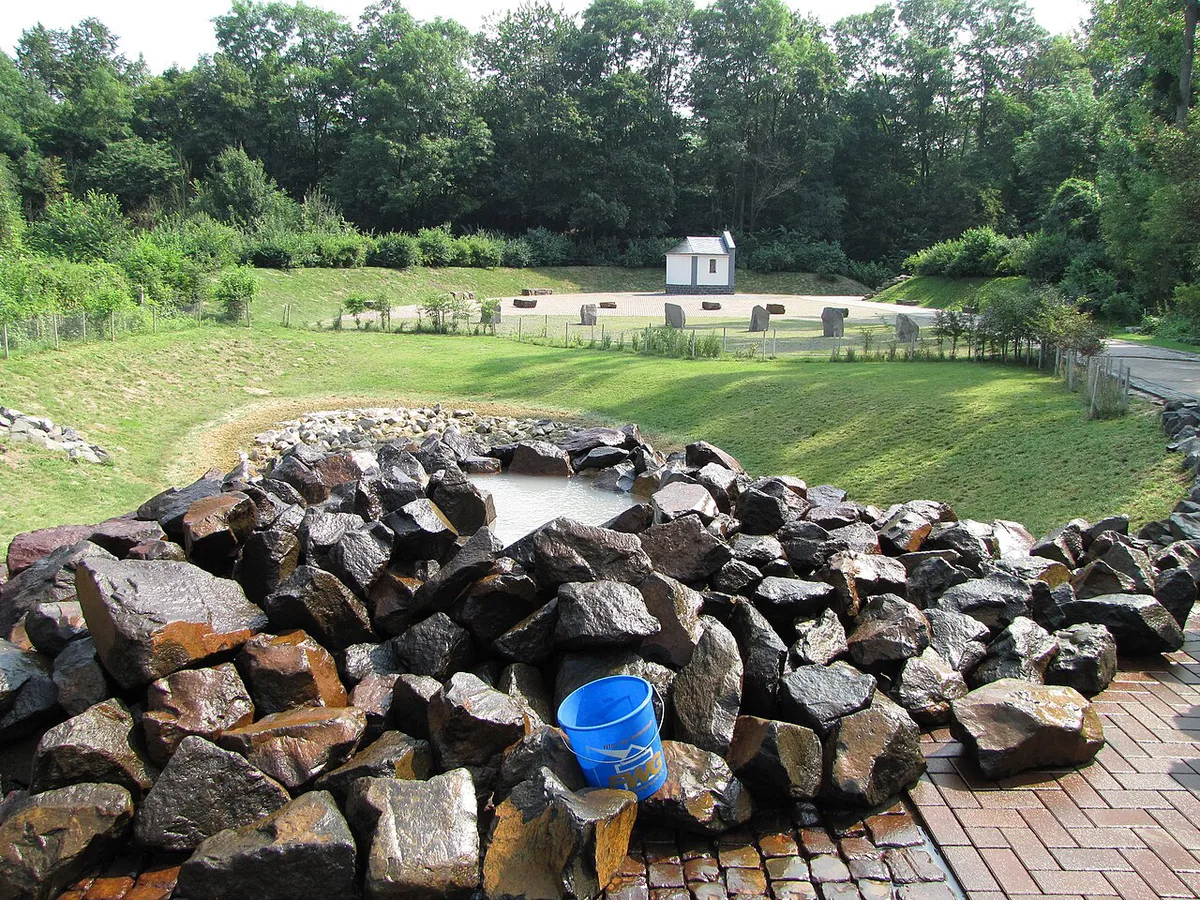
After landing at a long pier, you walk about 400 m to the viewing area. Namedy Island is a nature reserve, and the area holds only the geyser and a small chapel. A guide talks for around five minutes before the eruption starts. There are no loudspeakers, so a full boat of 350 people can make the commentary hard to hear. Nothing on the island offers toilets or food. Use the museum before you leave and the boat's snack counter afterwards. Water from the eruption tastes mineral and salty, according to visitor reports. For photos, expect the column to climb gradually and stay near its top for about five minutes, so you do not need to rush the first frame. Pier length and the 400 m walk matter for accessibility, so ask the operator about strollers and reduced mobility before booking.
Is the Andernach geyser worth it?
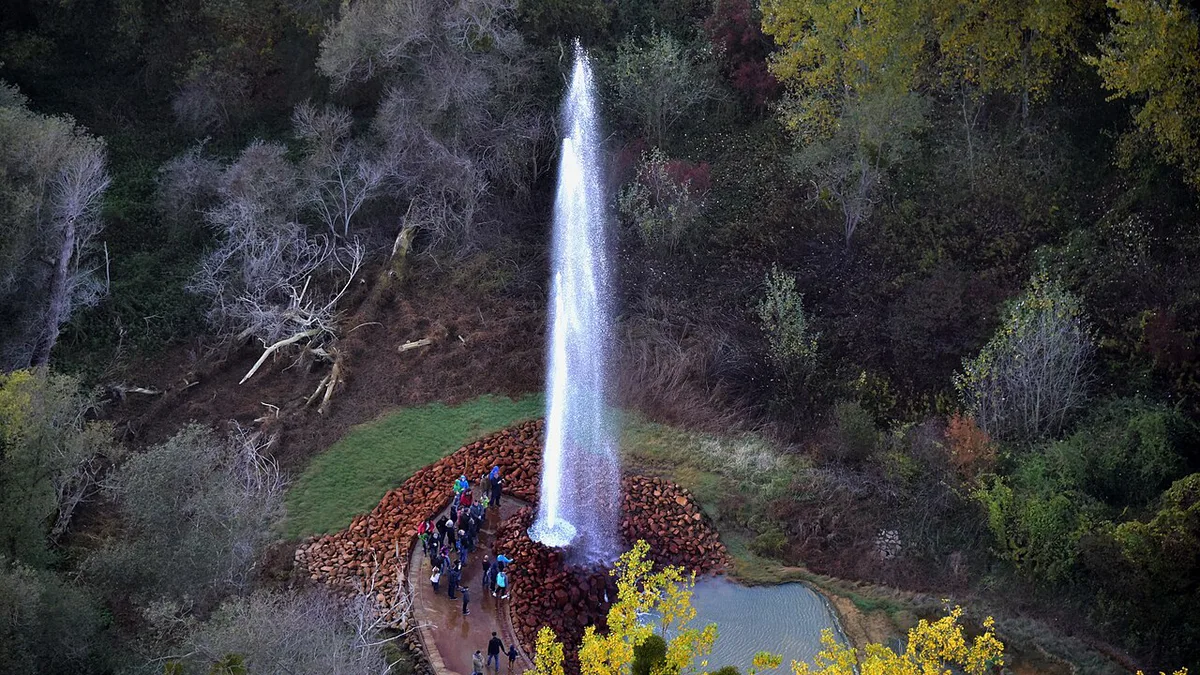
Mixed reviews are fair. The geyser itself is memorable, yet the €15 ticket buys a bundle with a mandatory museum and a crowded boat. Set expectations before you go.
- Go if you are travelling with children who like science and hands-on displays.
- Go if you already plan a Rhine day trip or an Eifel volcano tour.
- Go if you enjoy geology and want to see volcanic gas at work.
- Skip it if you have under two hours or visit outside April to October.
- Skip it if you want a hot geyser with a short, explosive eruption.
- Skip it if packed boats and narrow museum corridors put you off.
- Mistake to avoid: arriving at peak times without a booking.
- Mistake to avoid: expecting toilets or food on the island.
- Mistake to avoid: treating 60 m as guaranteed.
What to combine with the geyser
Volcano-themed days work well in this part of the Eifel. Pair the geyser with the Mendig lava cellars for underground basalt. Laacher See adds a crater lake, and our guide to Eifel maars explains how such lakes formed. A visitor in 2020 walked from the Kanzlei viewpoint to Burg Namedy and glimpsed an eruption from the trail. Treat that route as an anecdote and check access first. Andernach old town is also worth an hour before or after your boat, and the city tourism site lists current sights. For the national picture, see volcanoes across Germany. Kaiserstuhl is another volcanic landscape to explore later. Vogelsberg and Siebengebirge cover more ground, via the Vogelsberg volcano region and the Siebengebirge hills.
Frequently Asked Questions
What is a geysir?
Geysir is the Icelandic origin of the word geyser, meaning a spring that erupts water. In Andernach the spelling Geysir is the local name for a cold-water geyser powered by carbon dioxide.
Are there any cold water geysers?
Yes, Andernach on the Rhine is a well-known example. Gas dissolved in groundwater drives it, not heat, and the borehole is human-made. For other volcanic sites, see our overview of German volcanoes.