Lagoa de Santiago, Azores: How to See It, Viewpoints & Hiking Tips
Last updated November 2026. Lagoa de Santiago is a small lake in the Sete Cidades volcanic crater area on western São Miguel, in the Azores. It suits walkers and viewpoint-hoppers who already have a car or a tour, and it is easy to skip on a short layover. For the famous twin-lake panorama, start with our Azul and Verde viewpoint guide.
Featured image: Portuguese_eyes, CC BY-SA 2.0, via Flickr.
What Lagoa de Santiago is and where it sits
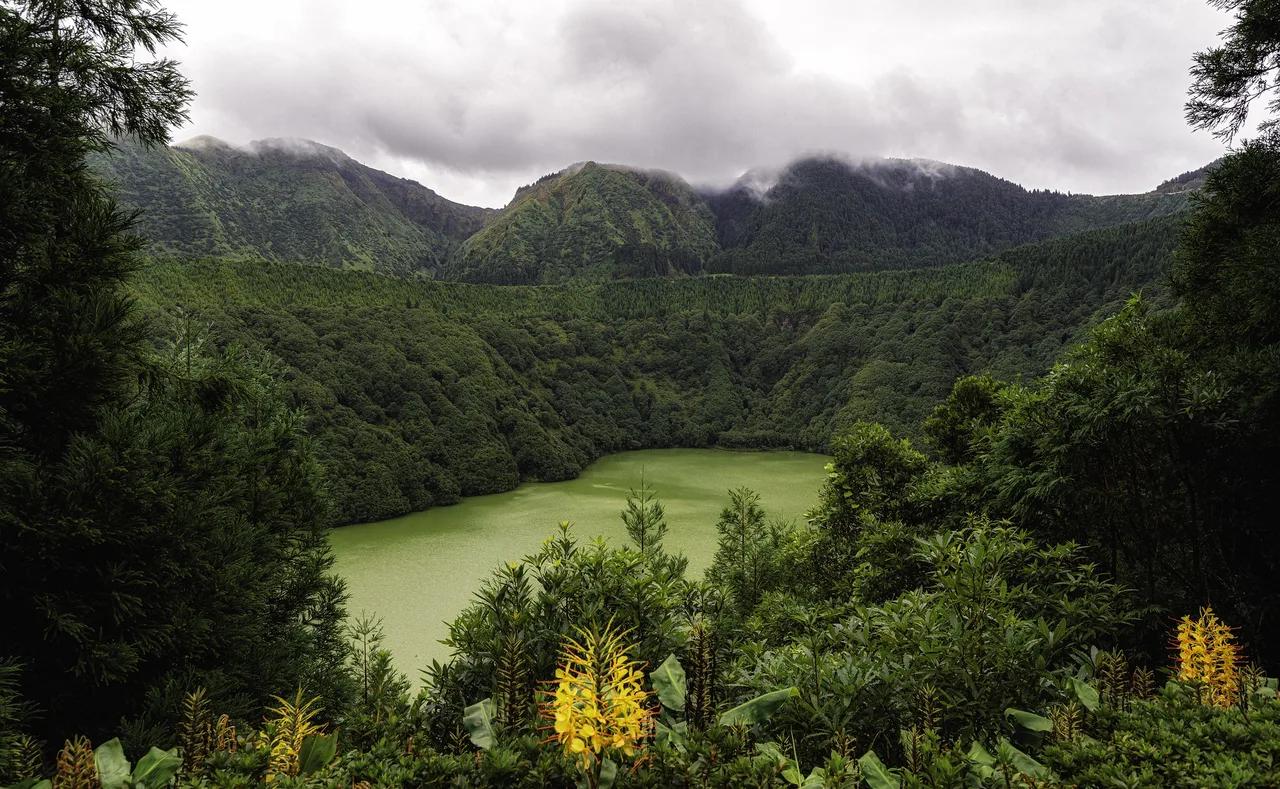
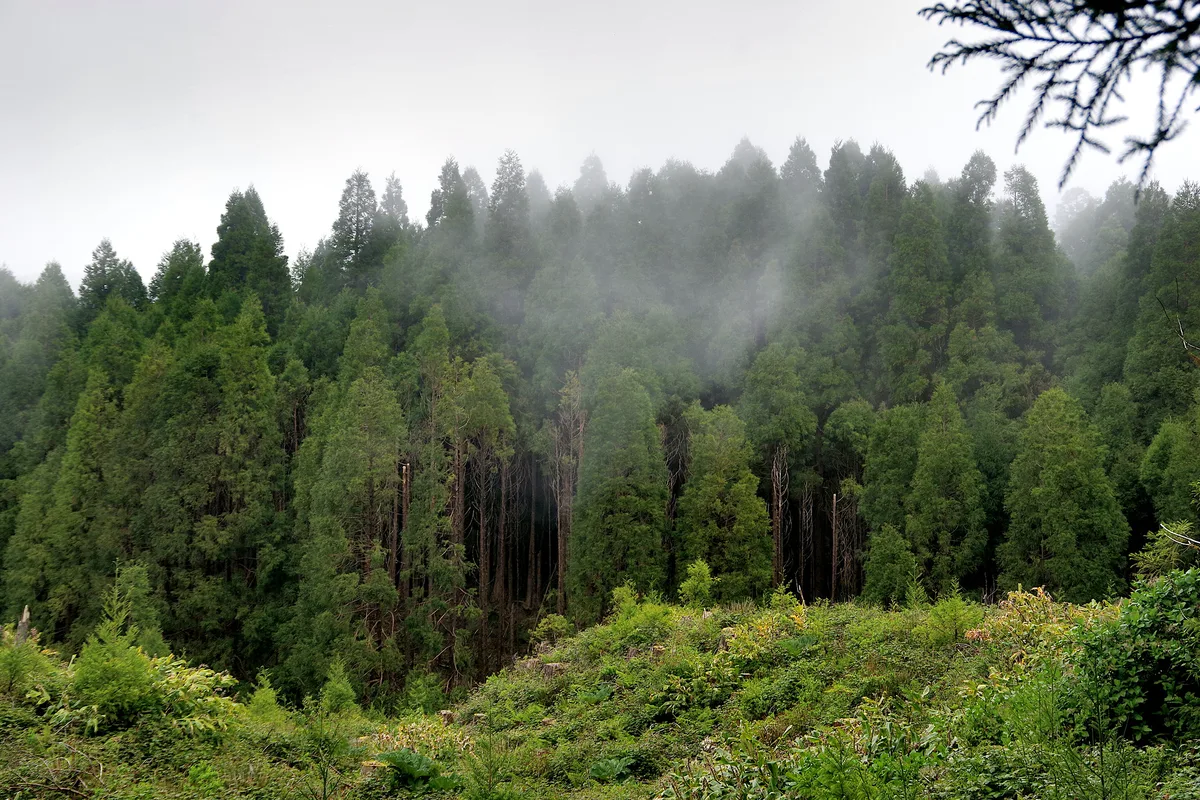
Lagoa de Santiago is one of several lakes around the Sete Cidades crater, in the northwest of São Miguel. It is separate from the twin lakes, Lagoa Azul and Lagoa Verde, which lie beside Sete Cidades village. Lagoa Rasa and Lagoa do Canário are also nearby. The Azores' volcano monitoring service covers the whole island, which is a reminder that these lakes sit in active volcanic terrain. Treat Santiago as a single-lake stop, not a separate destination. It is a side view of the same crater landscape.
Is Lagoa de Santiago worth visiting? How it compares with the other lakes
Pick Santiago when you want a quieter lake to look at, or a walk with a clear target. Skip it when your priority is the classic two-lake postcard. Use the table below to decide.
| Lake | What you get | Best for |
|---|---|---|
| Lagoa de Santiago | A small crater lake, seen from lookouts or on a walk | Visitors adding a second lake to a Sete Cidades loop |
| Lagoa Azul and Lagoa Verde | The two largest lakes, beside Sete Cidades village | First-time visitors and the main panorama |
| Lagoa Rasa | A neighboring lake in the same crater area | Walkers extending a route |
| Lagoa do Canário | A nearby lake with its own guide | Visitors building a multi-lake day |
- Skip it if you have limited mobility and no car, because the lookouts are easiest to reach by driving.
- Skip it if you have only a few hours in Ponta Delgada and want the single best view.
- Skip it if fog is covering the crater, because the lakes will not be visible.
How to see it: viewpoints, walking routes and the drive
There are two ways to see Lagoa de Santiago: from a lookout or from a walking trail. A viewpoint listed as Miradouro da Lagoa de Santiago exists, so do not confuse the lake with the lookout named after it. Check its exact location and parking on the official Azores tourism site before you drive. Most visitors reach the lookouts by car. A small parking area and picnic spot sit about 650 ft (200 m) from Miradouro da Boca do Inferno, and several other lookouts are within a few hundred meters of it. Read our Boca do Inferno viewpoint guide for that stop. Another option is Vista do Rei viewpoint. Hikers can walk down toward the lake, but the return is uphill. Allow time and daylight for the climb back.
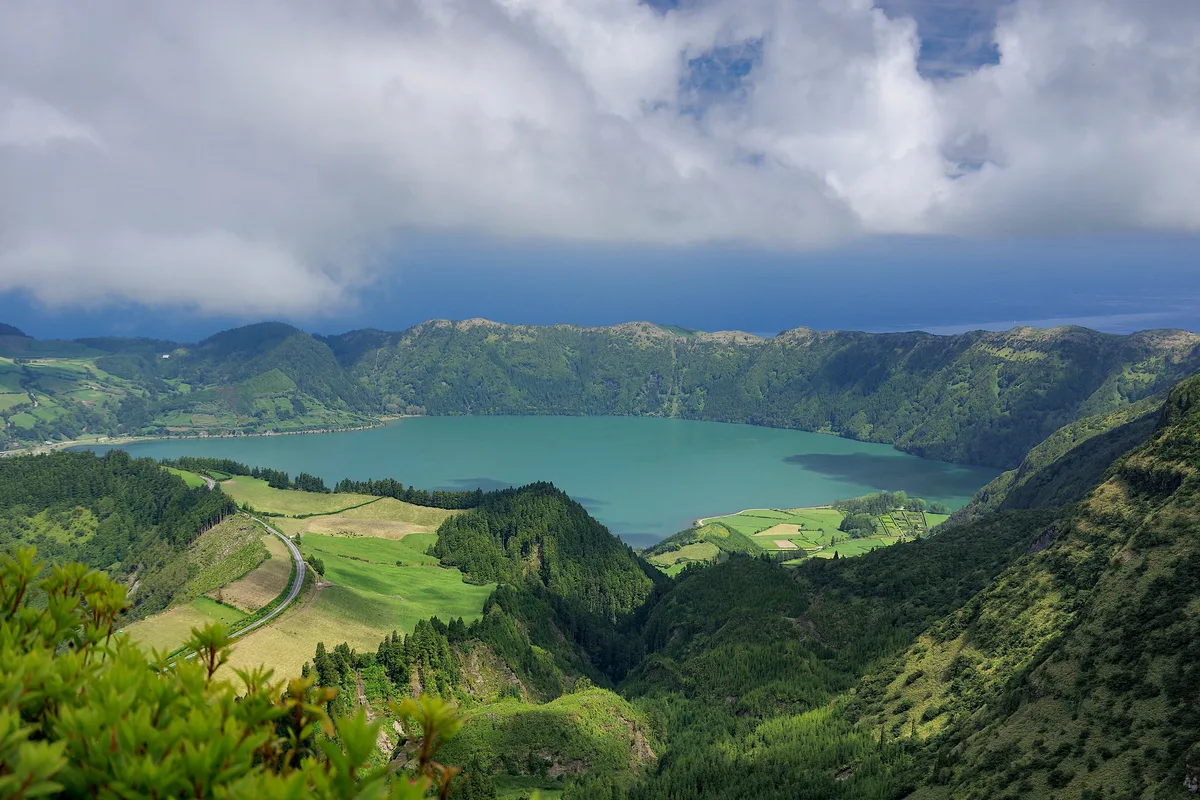
Getting there from Ponta Delgada and Sete Cidades village
Most visitors start in Ponta Delgada and drive west to the crater. Our Ponta Delgada to Sete Cidades transport guide compares a rental car, taxi, tour and public transport. Walkers can start from Sete Cidades Village Guide: Time, Access and Fog, which has modest lodging, small restaurants and a mini-market. Bus schedules change, so check current times with the operator before you rely on them.
When to go: weather, fog and daylight
Crater fog can hide the lakes completely. Use a simple rule before you commit: if the forecast shows low cloud over the crater, delay the lake stop or swap it for a coastal stop. Check the IPMA forecast on the morning you go. For seasonal patterns, see our Sete Cidades weather guide. Winter days are short, so plan any walk with a clear turnaround time.
Costs, access rules and safety
No entry fee for Lagoa de Santiago is documented in our sources. Rules for lake-edge access, swimming and trail conditions are published by Visit Azores, so check there before you go. For paddling on the main lakes, see our Sete Cidades kayaking guide.
Combine it with nearby stops
Build a short loop around the crater. Start at a lookout for Santiago, continue to the Azul and Verde viewpoint, then stop in the village for lunch. Add Lagoa do Canário if you have time to spare. On the west coast, Mosteiros makes an easy ending to the day.
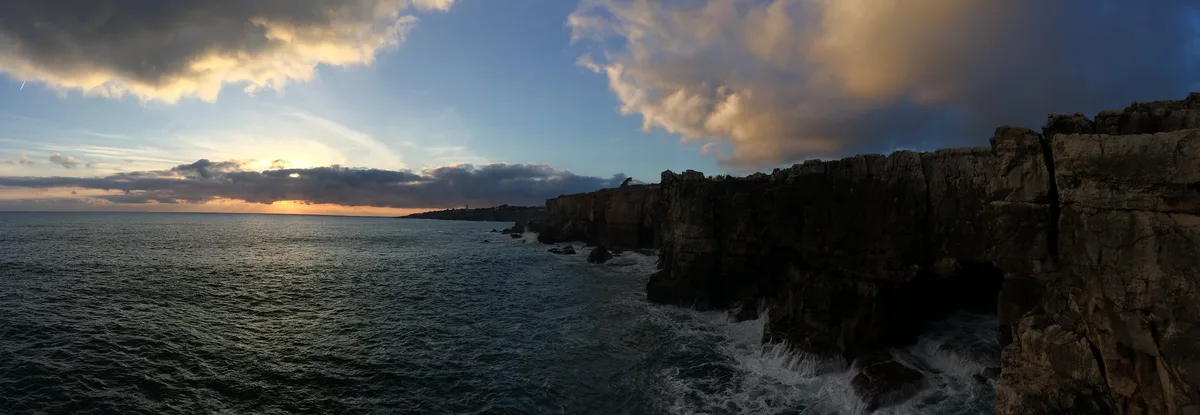
A small parking area sits about 650 ft (200 m) from Boca do Inferno, so a short loop can take in both stops before lunch in the village.
Choose a viewpoint or a walk before you go
Lagoa de Santiago works best when you choose your effort level before setting out. There are 2 basic ways to experience it: see the lake from a lookout, or walk downhill towards it and climb back afterwards. The lookout option suits a short crater-road stop. The walking option needs sound footwear, dry-enough trail conditions and enough daylight for the uphill return.
Use Miradouro da Lagoa de Santiago for the lake-specific view. Do not confuse it with the nearby Boca do Inferno stop. A small parking area and picnic spot are about 200 m from Boca do Inferno, roughly 650 ft. That distance helps make the wider viewpoint area practical for a car-based loop, but it does not replace checking the Santiago viewpoint location before departure.
Choose the lookout if your day already includes Azul and Verde. Choose the walk only when Santiago is the main purpose of the stop. Check the official Azores tourism information for current access and parking details before driving into the crater.
Frequently Asked Questions
What is Lagoa Azul in the Azores?
Lagoa Azul is the Blue Lake in the Sete Cidades crater on São Miguel. It lies beside Lagoa Verde, the Green Lake, close to Sete Cidades village. Our main lakes guide covers both.